

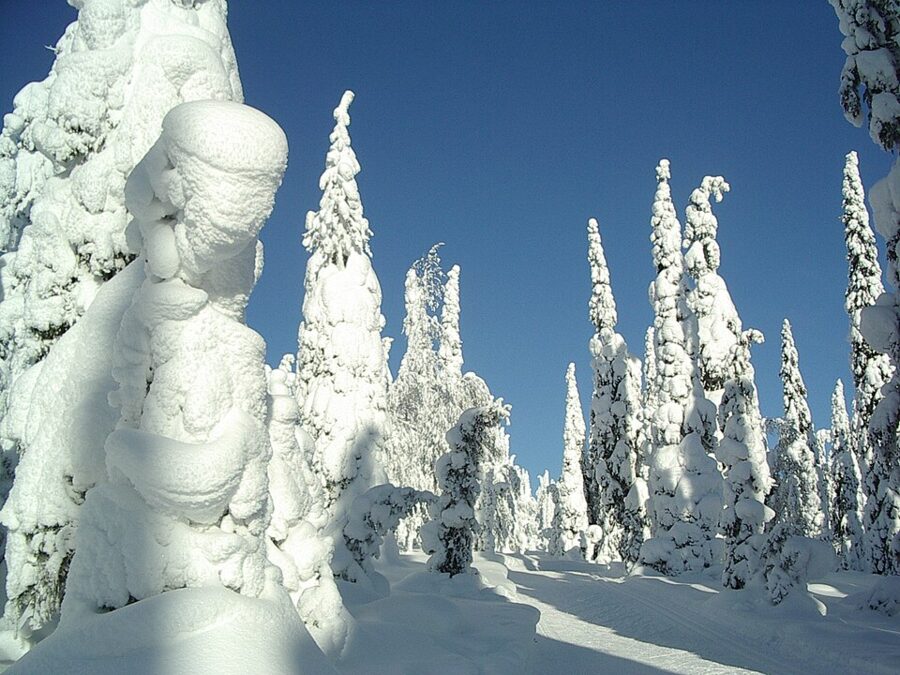

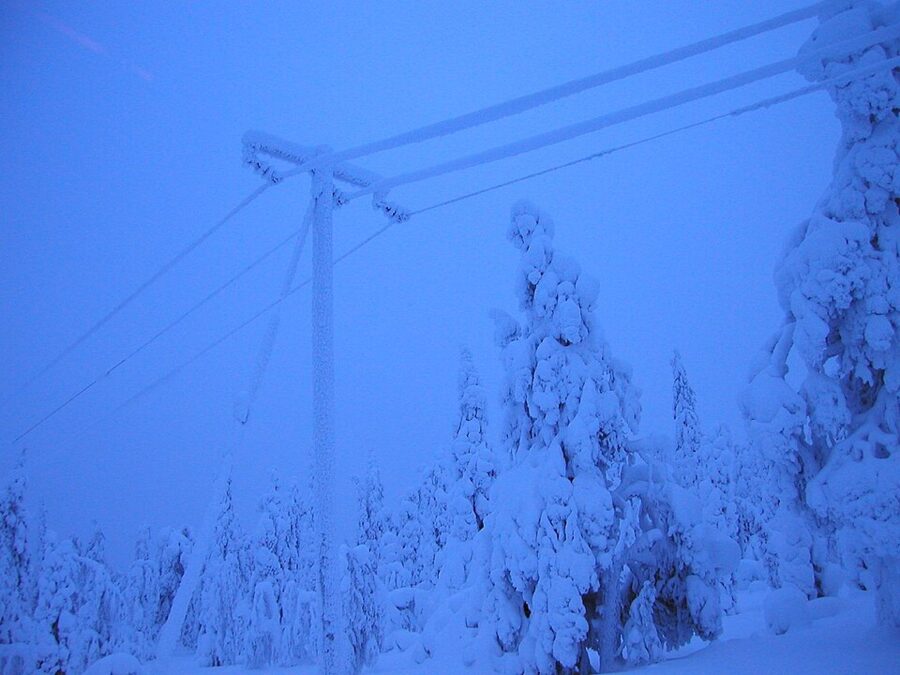
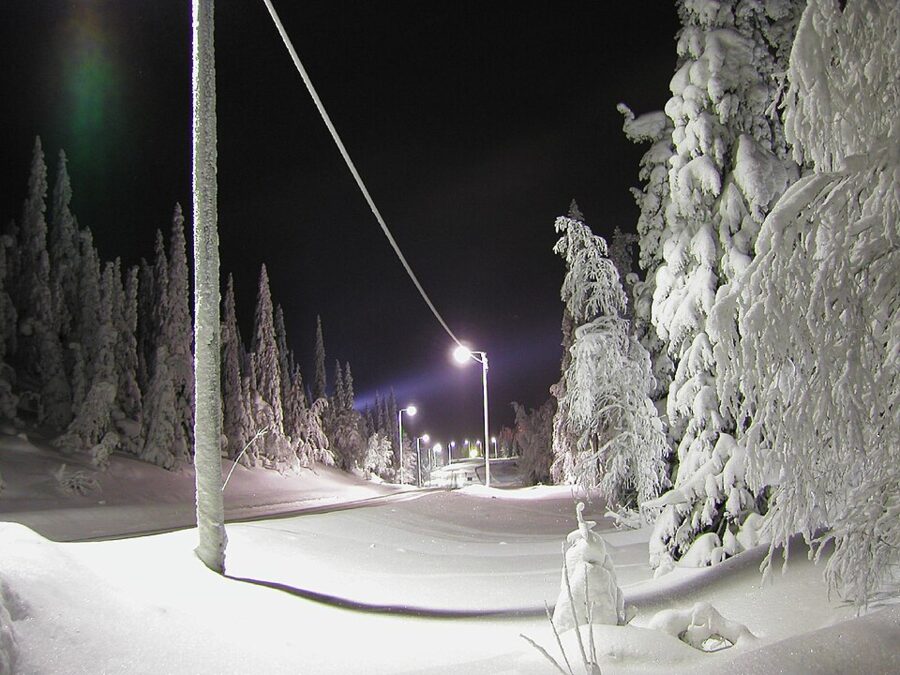
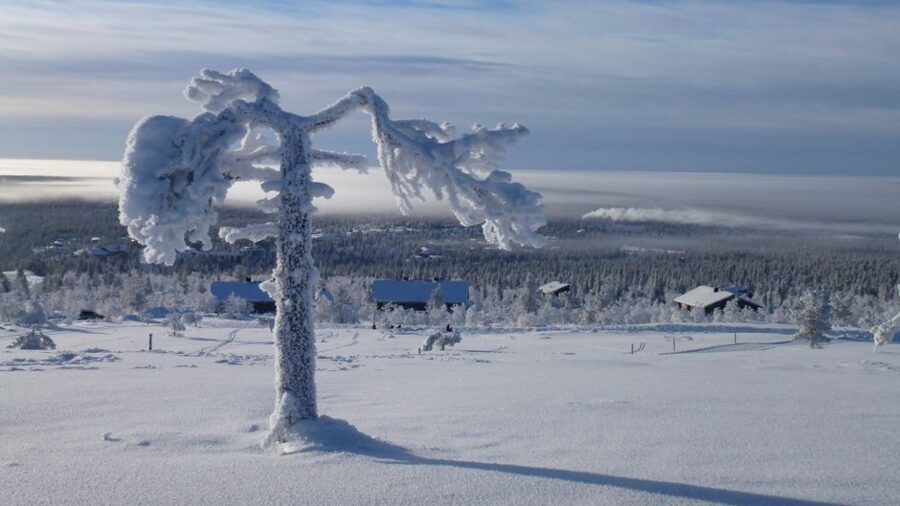
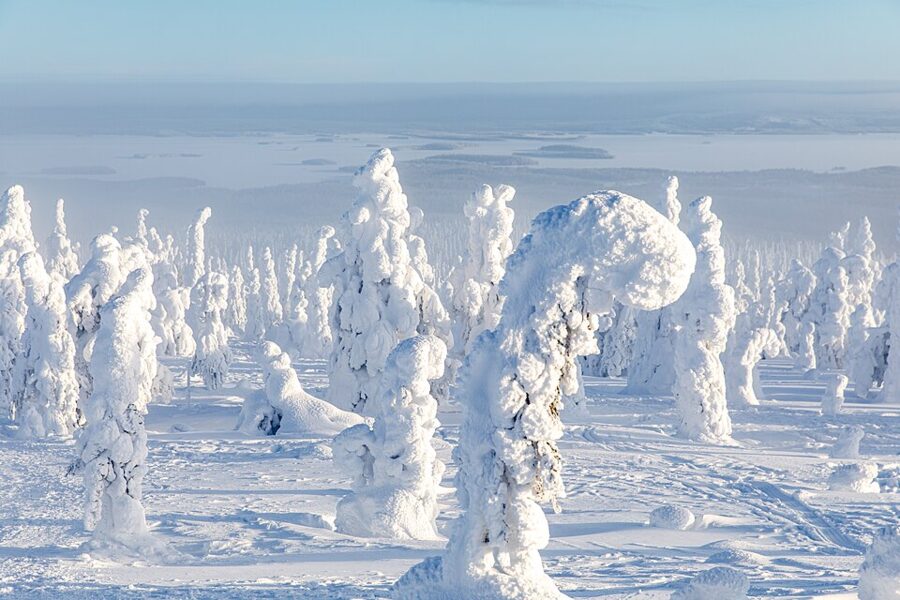
Some time in January the spruces on the hills around Ruka stop looking like trees. Fog drifts up from the valleys, freezes onto every needle, snow sticks to the rime, and by February a full-grown spruce has become a bent white column. The Finns call it tykky, crown snow-load, and it is the reason the Kuusamo uplands look the way they do in the photographs.
It is also a fair introduction to a cabin holiday in Finnish Lapland, because the snow decides almost everything. It decides when the ski tracks open, how deep the drift across the cabin drive will be, whether the power stays on and how far you can walk from the door. Finns have spent a long time talking about it, and have the vocabulary to show for it.
Everything else is a set of practical choices. Which of half a dozen very different areas, which kind of cabin, which month, which airport or train, and what a week costs once the cleaning and the bed linen are added.

Contents 7 parts
Where to rent: six areas, two kinds of cabin
Finland had 495,145 summer cottages at the end of 2024, according to Statistics Finland’s cottage table, and Kuusamo alone had 7,521. Most of the ones you can rent in the north cluster around the fell resorts. The two largest Finnish rental platforms, Lomarengas and Nettimökki, list roughly 1,500 and 1,200 rental properties in Lapland, and both sort them by the same resort names that follow here.
A tunturi is a fell: a rounded hill that rises above the tree line. A vaara is a forested hill that does not. The distinction matters more than it sounds, since the bare fells of the north and west mean wind, open views and early snow, while the forested hills further south and east mean shelter and tykky.
Ruka and Kuusamo: crown snow-load and Oulanka
Strictly, Kuusamo belongs to North Ostrobothnia, not to the region of Lapland. Nobody on the slopes cares. Rukatunturi is a forested hill of about 500 metres whose first ski slope was cleared by volunteers in 1954, and the resort that grew on it now claims the longest ski season in Northern Europe, at around 200 days a year.
The reason to choose Ruka over a bigger name is what lies around it. Oulanka National Park, founded in 1956 and 286 km² in area, lies a short drive north of the resort, and the Karhunkierros trail runs from the park down to Ruka itself. Oulanka had 170,400 visits in 2025 by Metsähallitus’s visitor count, and in winter its river canyons are far quieter than the slopes.
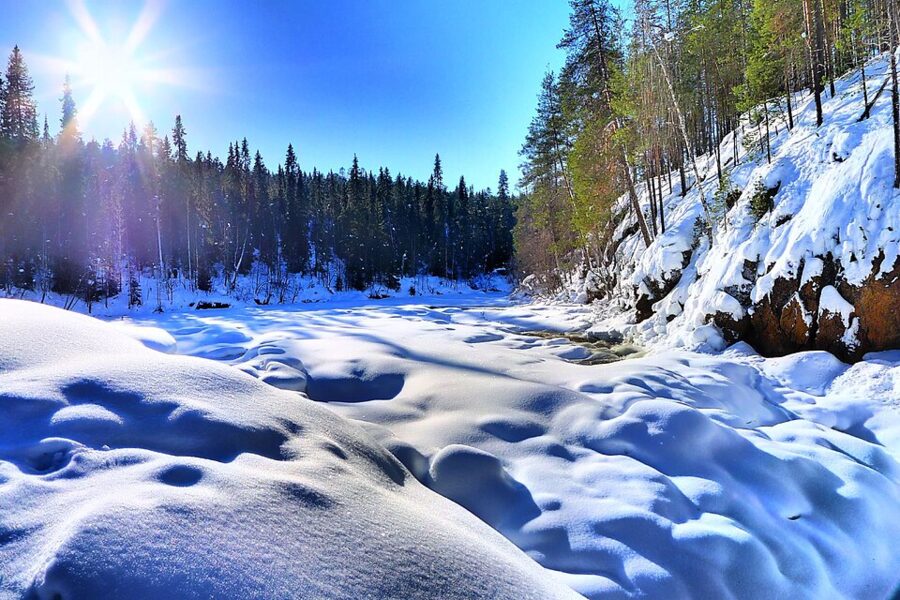

The tykky is the other reason. The Finnish Meteorological Institute’s note on crown snow-load explains that it needs moist air, usually fog or low cloud touching the forest on higher ground, and a moderate wind of three to six metres a second to drive the droplets onto the branches. Koillismaa’s hills supply all three. Riisitunturi National Park, in neighbouring Posio, is the most photographed example.
Levi: the biggest village on a fell
Levi is the opposite proposition: a compact resort town on a fell in Kittilä, with hotels, restaurants and cabin areas spread round the foot of the fell. It is 15 km from Kittilä airport. For winter 2026–27 the resort has added a new chairlift on its south slopes, and Levi’s ski bus is now included in the lift pass, which matters if your cabin is out at the foot of the fell rather than on it.
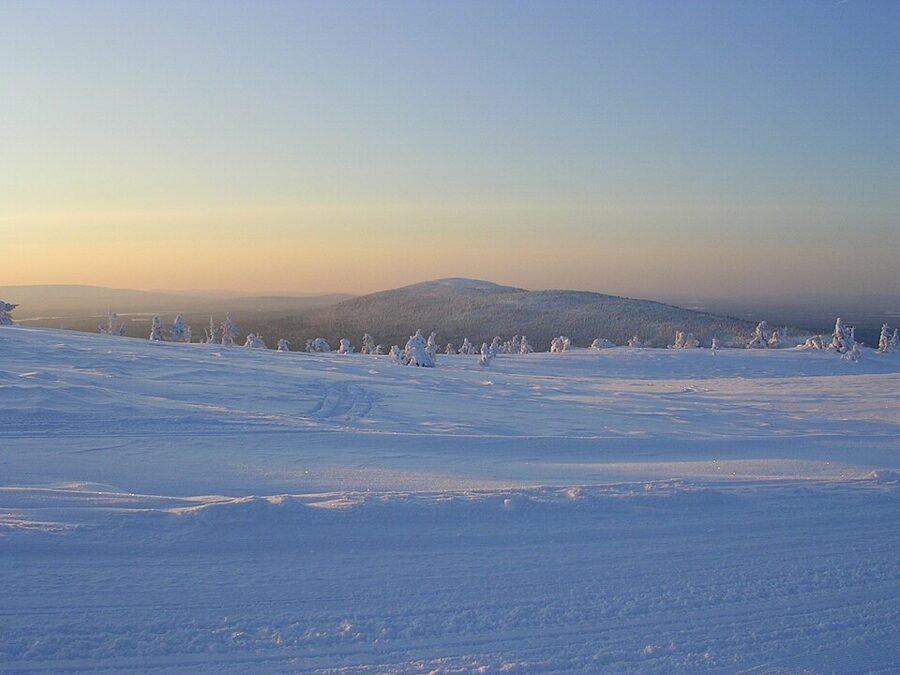

I would pick Levi for a first trip with children or for a group that wants restaurants in the evening. I would not pick it for silence. Christmas and the late-winter school holidays fill it, and the cabin prices show it.
Ylläs: two villages and the longest ski tracks
Ylläs is one fell with two villages, Äkäslompolo on the north side and Ylläsjärvi on the south, and a cabin culture that leans towards cross-country skiing. The resort maintains over 300 km of ski tracks from October to early May, and many of them run straight into Pallas-Yllästunturi National Park.
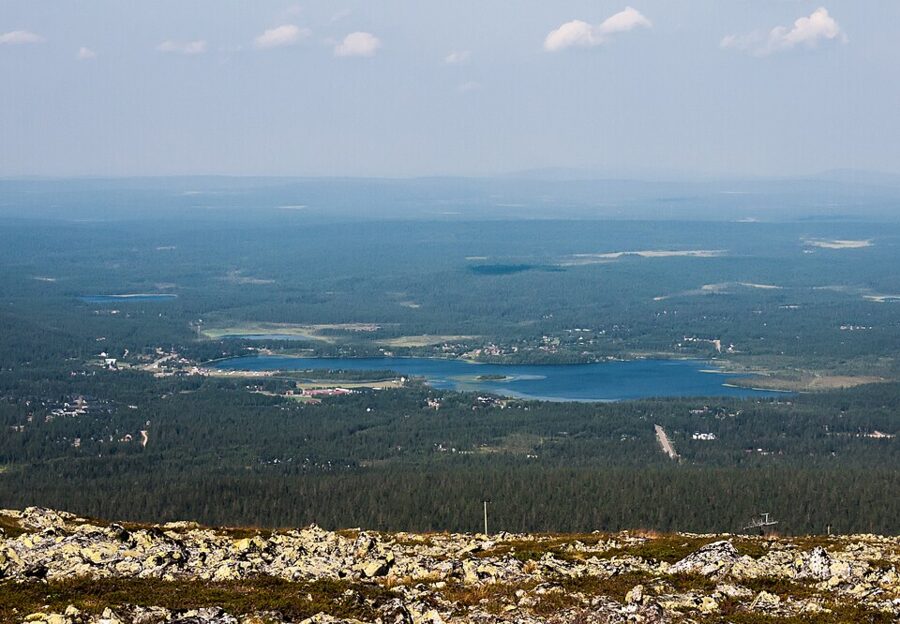

That park is Finland’s busiest: 586,800 visits in 2025 across 1,026 km², per Metsähallitus’s park tables. The numbers spread thinly over a chain of fells running north to Pallas and Hetta, so it rarely feels crowded once you are a few kilometres out on skis.
Pyhä and Luosto: the small pair
Pyhä and Luosto are two modest resorts on either end of Pyhä-Luosto National Park, which absorbed Pyhätunturi, Finland’s oldest national park. Pyhä runs 15 slopes on 9 lifts; for winter 2026–27 it planned to open on 20 November and to keep skiing into May. From 10 November 2026 a bus links Rovaniemi with the two villages four times a day until the end of April, timed to meet trains and flights, and the trip takes under two hours.
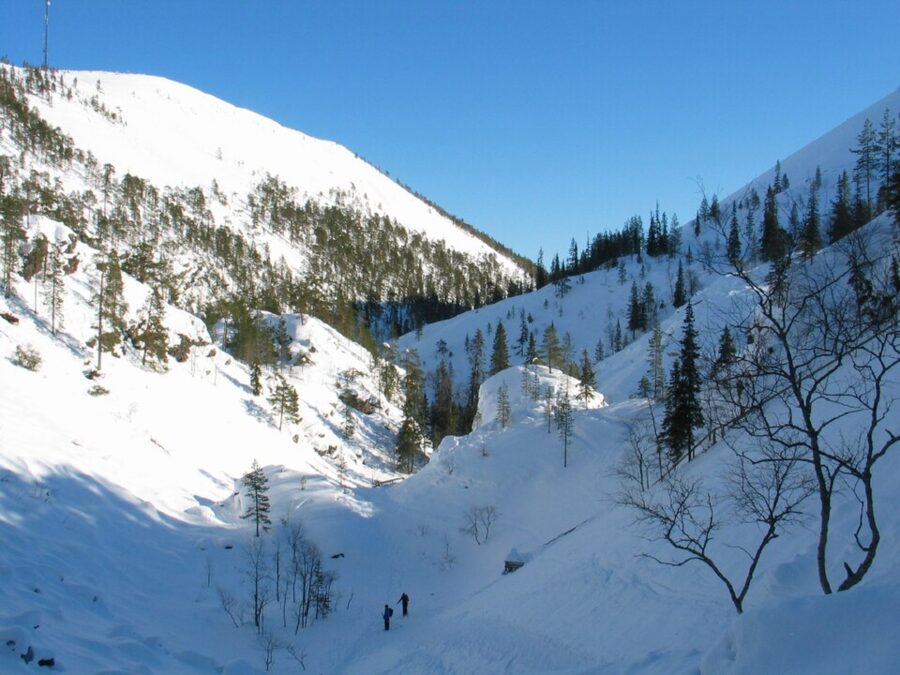

Luosto is the quieter of the two. It is about 90 minutes from Rovaniemi airport, it has the Lampivaara amethyst mine on the fell above the village, and it has started selling itself on dark skies, with glass-roofed rooms and aurora spots within walking distance. The park took 199,000 visits in 2025, a third of Pallas-Ylläs.
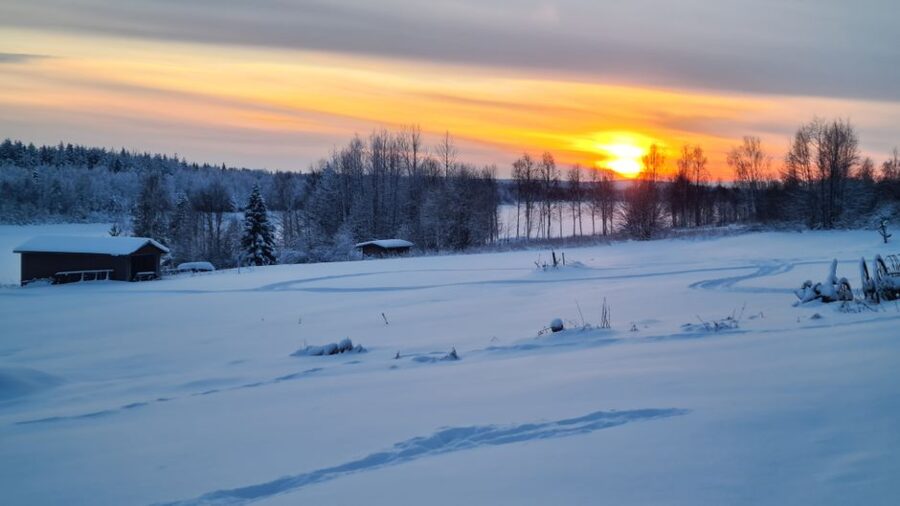
Saariselkä and Inari: wilderness at the end of road 4
Saariselkä is a fell village on road 4, about 30 km south of Ivalo airport, built where the Urho Kekkonen National Park begins. That park is one of Finland’s largest at 2,549 km² and drew 424,900 visits in 2025. The downhill slopes on Kaunispää are small; people come for the open fells, the ski trails into the park and the sense that the road is about to run out.
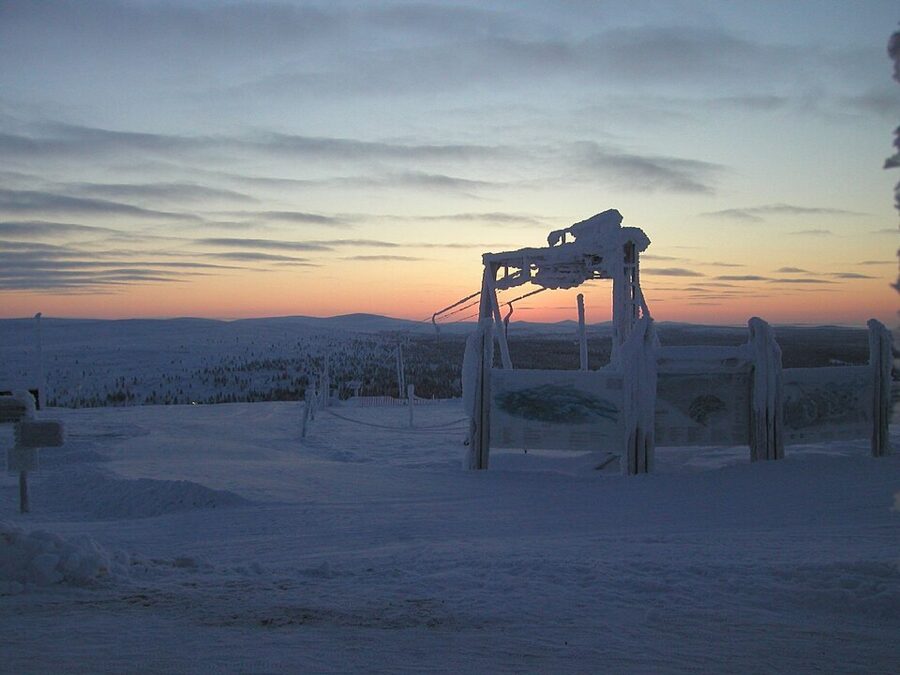

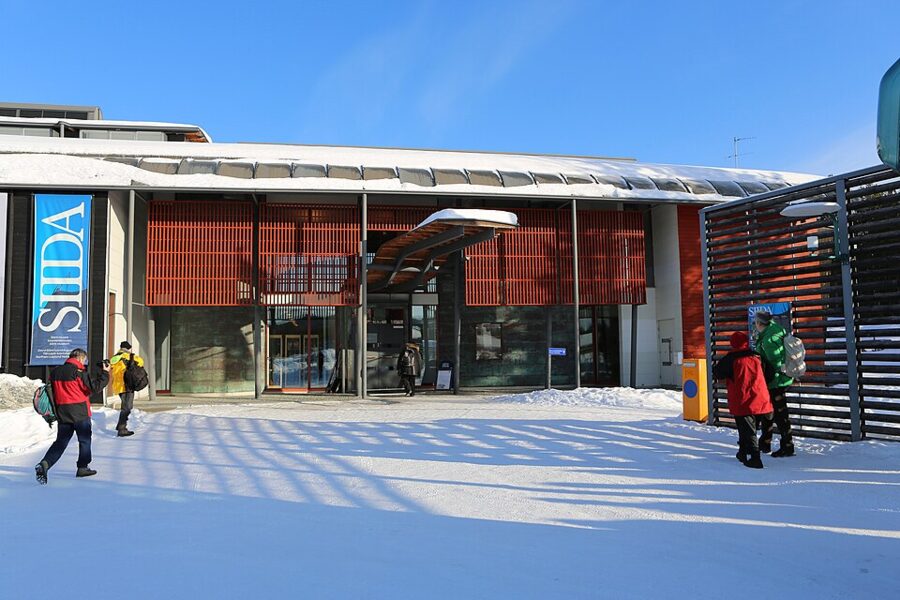
Inari, further north on the shore of Lake Inari, is the centre of Sámi life in Finland, and the place to stay if you want a lakeside cabin rather than a fell. Siida, the national museum of the Finnish Sámi and the Northern Lapland nature centre, stands in the village. Its main exhibition joins Sámi culture to the nature it lives in, which is the right order to learn about both.

Kilpisjärvi: the far north-west
Kilpisjärvi is a village of about a hundred people at the tip of the Käsivarsi arm, on road 21 where it crosses into Norway. Saana fell rises directly behind it, the Malla strict nature reserve has protected the next fell since 1916, and the cairn where Finland, Sweden and Norway meet is about 10 km to the west. Most visitors are Norwegians, and the E8 down to the Lyngen fjord is one of the overland routes to Tromsø.
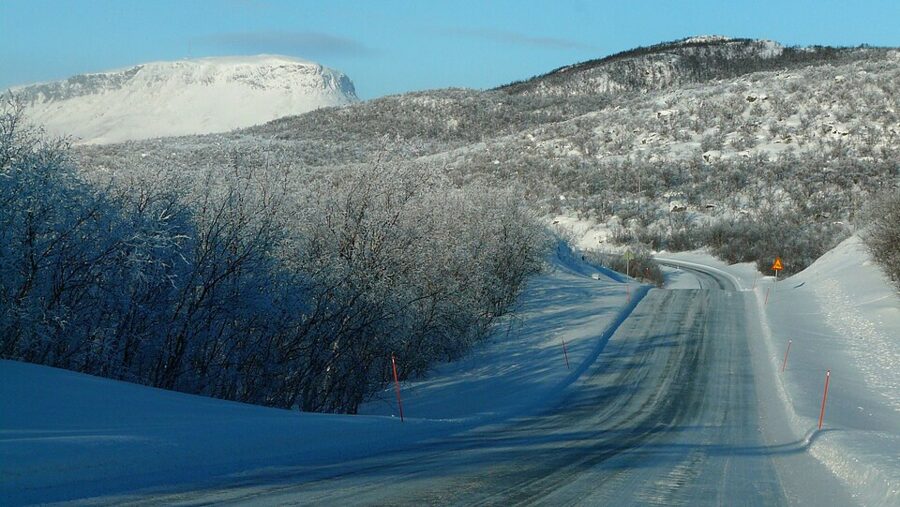

Choose it for spring skiing on bare fells and for the aurora. Do not choose it for a first visit in December: it is the most remote of the six, the days are very short, and nearly everything you need has to come with you up the road.
Fell resort or forest lake?
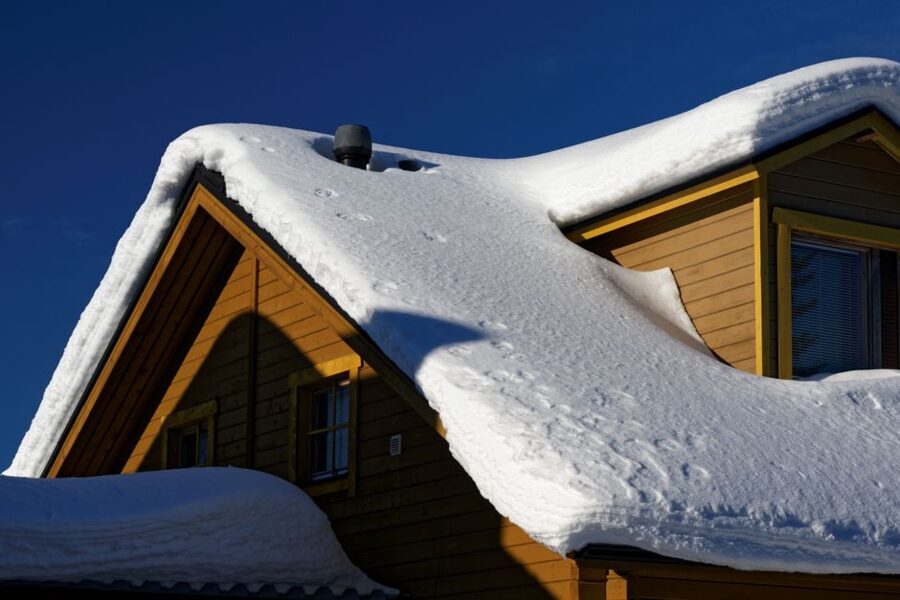
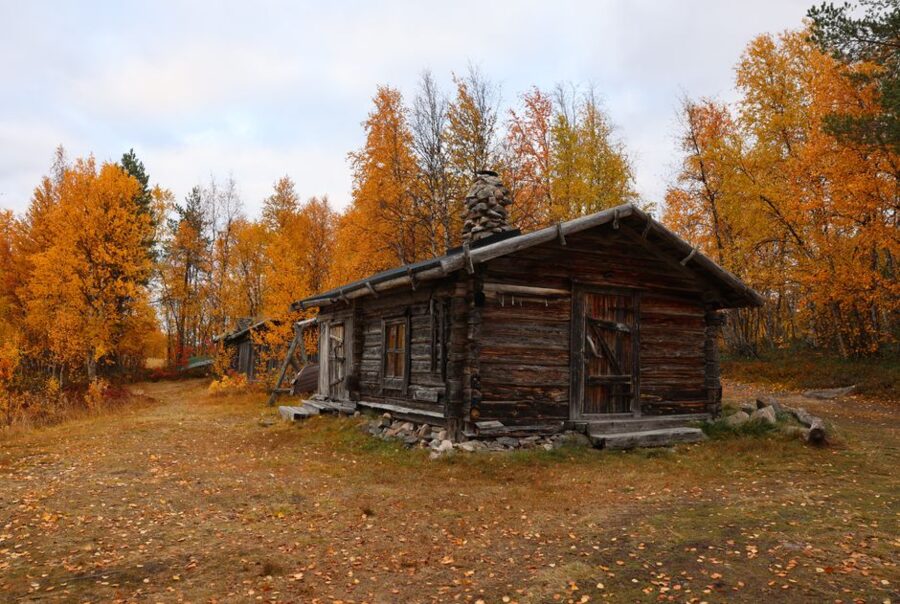
The cabins themselves split two ways. Around the resorts they are mostly modern: semi-detached chalets, log houses on numbered plots, sometimes a lift pass included, with a ski bus at the end of the road. Out in the forest along the lakes and rivers they are older, smaller and further apart, often with a wood-fired sauna on the shore.
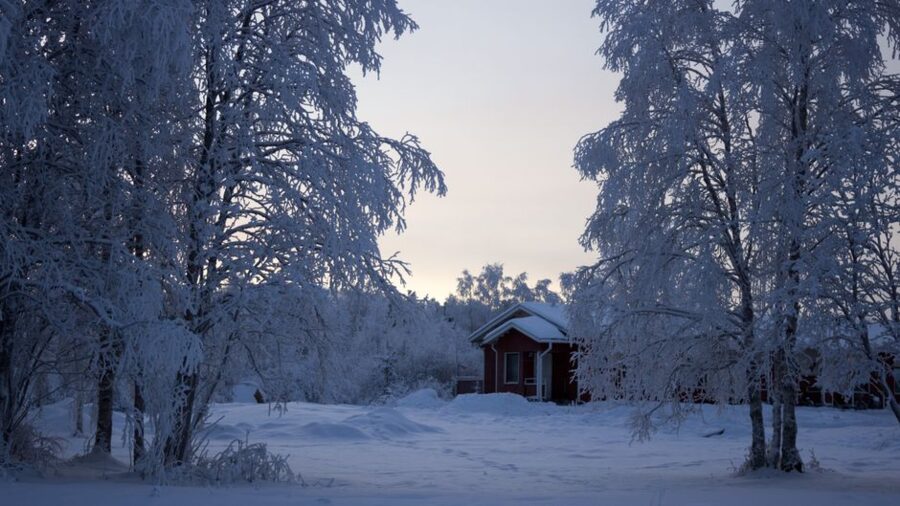
I would take the lake for a week of sauna, skiing from the door and watching the sky. I would take the resort for children, for downhill skiing every day, or for anyone who does not want to drive on winter roads. A good compromise is a cabin a few kilometres outside a resort, which is usually cheaper as well.
Inside a Lapland mökki
The Finnish word is mökki, a cabin or cottage, and it covers everything from a one-room log hut with a woodstove to a 150 m² villa with two bathrooms. The rental platforms let you filter by the features below, and the list of filters is itself a description of what a Finnish cabin is expected to have.
Sauna, fireplace, drying cupboard
Every rental cabin worth the name has a sauna. In resort cabins it is usually electric (sähkösauna), ready in under an hour; in older forest cabins it may be wood-fired (puusauna), which takes longer and smells better. A few have a smoke sauna, savusauna, which takes hours to heat and is worth asking about.
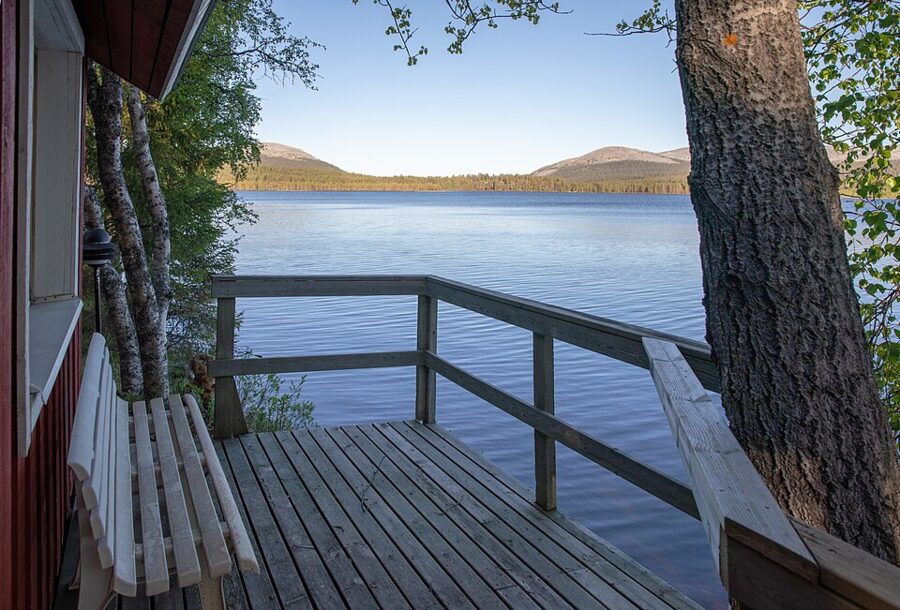

Expect a fireplace, takka; in better cabins it is a heat-storing one (varaava takka) that stays warm through the night after an evening’s fire. The single most useful feature in winter is the drying cupboard, kuivauskaappi, a heated cabinet for wet gloves, boots and ski clothes. Check for it before you book. A cabin without one in March means putting on damp mittens every morning.
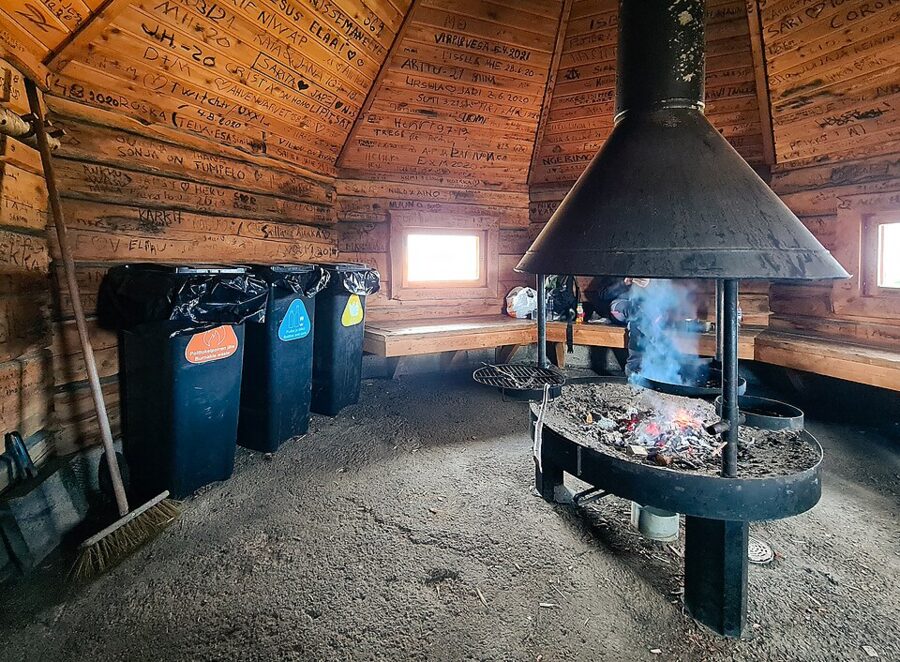
Many cabins also have a grillikota in the yard. A kota is, in the Kielitoimisto dictionary’s definition, a dwelling built on poles joined at the top and covered with hides or bark, or a timber shelter of that shape; the modern garden version is a hexagonal log hut with a fire grill in the middle and benches round the walls.

Log, kelo, chalet or glass roof
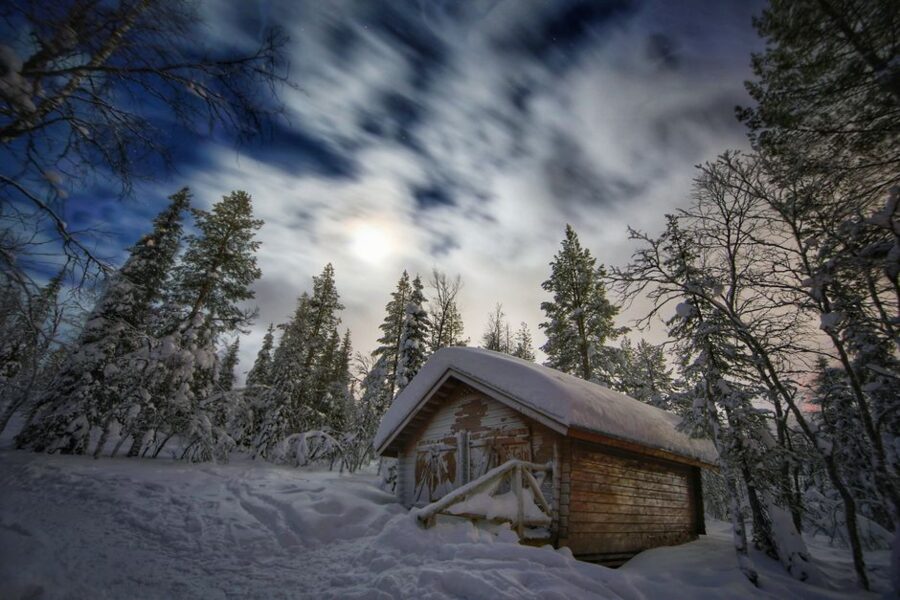
Most Lapland cabins are log-built, whether from round logs or the squared, laminated logs that newer builders prefer. The premium version is kelo, which the Kielitoimisto dictionary defines as a tree that has dried standing and lost its bark, usually a pine. A pine takes decades to turn into kelo and can then stand for centuries; the logs come out silver-grey and twisted, and they cost several times as much as fresh timber.
The resort chalets are often semi-detached, with a sleeping loft (parvi) above the living room. They are practical and warm and not especially romantic. At the top of the market come the glass-roofed cabins and igloos, built for watching the aurora from bed; the best known are the igloo hotels around Saariselkä and Ivalo, and Luosto has glass-roofed rooms. Most of these are hotel rooms with full service rather than cabins you run yourself, and they price accordingly.
Self-catering: shops, firewood, water and the car
Resort villages have supermarkets; a forest cabin may be half an hour’s drive from one, so plan the week’s shopping before you leave the airport town. Firewood is included at some cabins and charged at others, and the listing usually says which. A handful of wilderness cabins have no electricity and carry their water from a well or lake (kantovesi), with an outdoor toilet; the platforms flag both, and they are worth noticing before you book in January.

Parking spaces usually come with an engine-heater socket (lämmitystolppa). Ask the hire company for the heater cable, plug it in an hour or two before you leave on a cold morning, and the engine starts and the windscreen clears. More cabins now offer electric-car charging, at a daily fee, but the sockets are often slow and some ask you to bring your own adapter.
The seasons, month by month
The Finnish Meteorological Institute’s 1991–2020 climate normals for Sodankylä, in the middle of Finnish Lapland, give the shape of the year better than any brochure. Kuusamo’s are close: a January average of −11.5 °C against Sodankylä’s −12.5 °C, and an identical July.
| Month | Mean °C | Mean daily high | Mean daily low | Snow depth mid-month | Sunshine hours |
|---|---|---|---|---|---|
| January | −12.5 | −8.1 | −17.5 | 52 cm | 12 |
| February | −12.1 | −7.6 | −17.2 | 69 cm | 59 |
| March | −7.1 | −1.8 | −12.9 | 79 cm | 141 |
| April | −0.8 | 4.0 | −6.0 | 71 cm | 187 |
| May | 5.6 | 10.5 | 0.7 | 16 cm | 224 |
| June | 11.9 | 16.9 | 6.9 | none | 245 |
| July | 15.0 | 20.2 | 10.1 | none | 251 |
| August | 12.4 | 17.4 | 7.8 | none | 174 |
| September | 7.0 | 11.1 | 3.3 | none | 107 |
| October | 0.0 | 2.9 | −2.8 | 1 cm | 57 |
| November | −5.8 | −2.8 | −9.2 | 14 cm | 18 |
| December | −9.6 | −5.7 | −14.0 | 32 cm | 1 |
Two lines in that table say more than the averages. December has one hour of sunshine in the whole month. And in an average January the thermometer at Sodankylä falls below −10 °C on 23 nights, which is the number to pack for.
Kaamos and Christmas
Kaamos is the polar night, which the Kielitoimisto dictionary defines as the sunless midwinter period in the north. Its length depends entirely on latitude. The Meteorological Institute’s page on the astronomical seasons gives almost two months at Nuorgam, from 25 November to 17 January, and only four days at Sodankylä just before Christmas. Ruka, south of the Arctic Circle, never loses the sun; Pyhä and Luosto, just north of it, lose it for a few days at most; Levi, Ylläs and Saariselkä, further north, for longer.
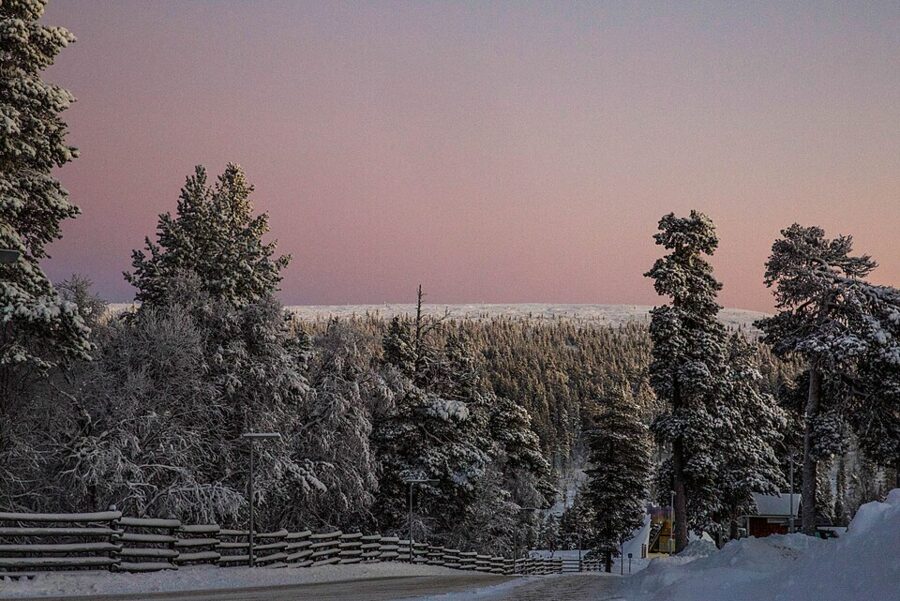

The FMI explains that the polar-night zone lies about half a degree north of the Arctic Circle because the atmosphere bends the sun’s light above the horizon. In practice, Christmas in Lapland means twilight for a few hours around noon, snow that is often still thin, and the highest cabin prices of the year. It is the season people dream about. It is not the best one for a cabin.
March and April: the bright snow months
The best one is spring. The FMI’s snow statistics show the snow cover at its deepest around mid-March in most of Finland, and in Lapland often not until early April; winter in Lapland lasts about seven months, and in the far north the snow stays until the end of May. By then the days are long, the sun has warmth in it at noon, and on a clear morning after a frosty night the crust will hold your weight across open bog and lake.

March has 141 hours of sunshine at Sodankylä against twelve in January. It is also the aurora month the FMI itself recommends. The drawback is the Finnish school winter holidays, which fill the resorts from late February, and Easter.
Ruska in September
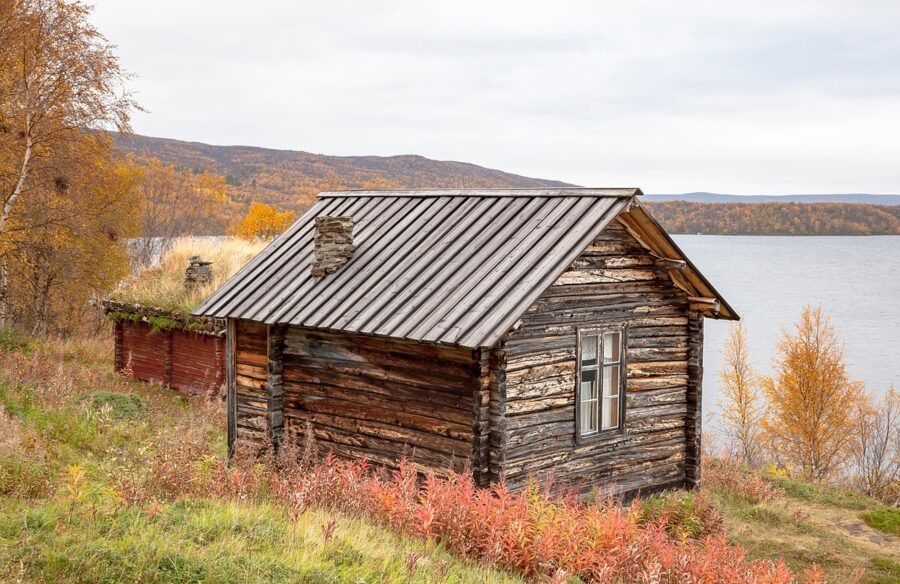
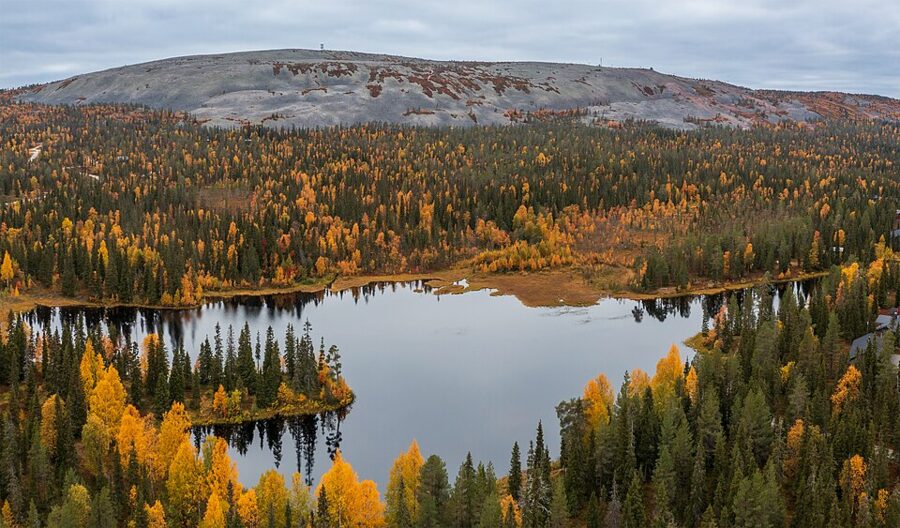
Ruska is autumn colour: the Kielitoimisto dictionary’s example sentence for it is simply Lapin ruska, Lapland’s ruska. On the fells it usually starts in early September and peaks around the middle of the month, when the dwarf birch turns red and the birch forest yellow. Nights are already frosty, the mosquitoes are gone, and the first auroras appear once the nights are dark enough.

Summer and the midnight sun
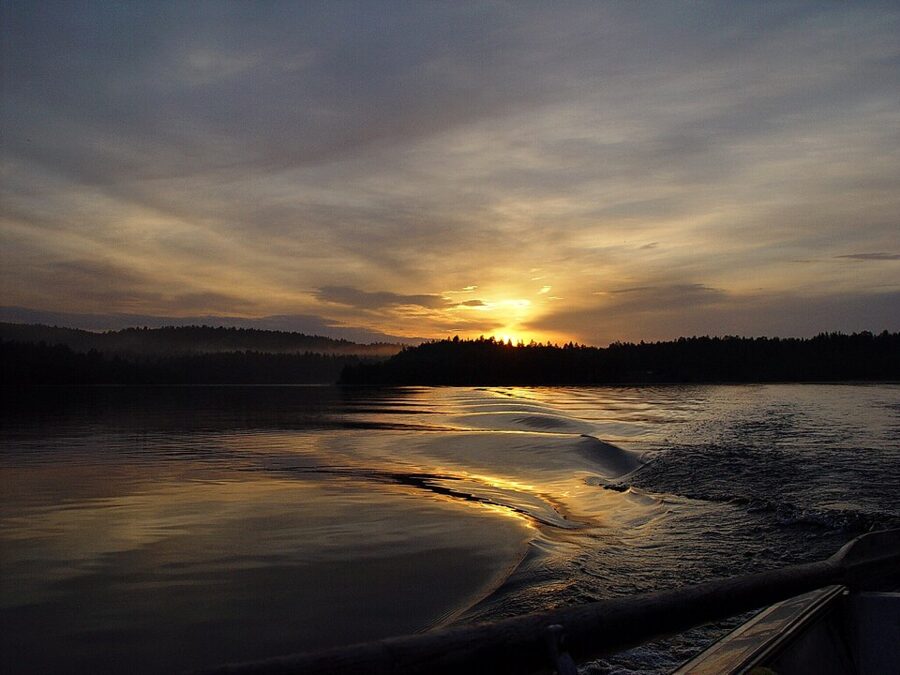
The midnight sun reaches the Arctic Circle at Rovaniemi, and because of the same refraction it even touches the Tornio to Kuusamo line just south of it. At Nuorgam the sun stays up from 16 May to 29 July. Summer cabins are cheaper than winter ones, the lakes are warm enough for a swim after the sauna in July, and the trade-off is insects in the forest and wet ground on the fells.

Getting there
Flying: four airports
Four airports serve the cabin areas, all run by Finavia and all with daily flights from Helsinki. Kuusamo is the airport for Ruka, a 30-minute drive, with regular buses to Ruka and to Salla. Kittilä is 15 km from Levi and about 35 km from Ylläs, and also serves Pallas, Olos, Muonio and Enontekiö. Ivalo, Finland’s northernmost, is the one for Saariselkä and Inari, and Rovaniemi covers Pyhä and Luosto.
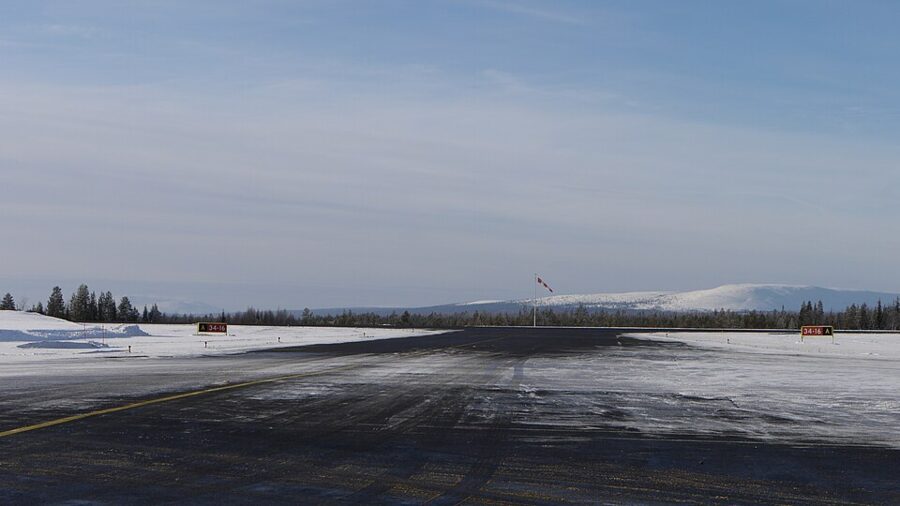

The international winter season runs from 25 October 2026 to 27 March 2027, and Lapland’s direct winter routes now include scheduled flights from London, Manchester, Amsterdam, Paris, Berlin, Munich, Brussels and Istanbul, plus charters. From anywhere else, the connection through Helsinki is the reliable option.
The night train to Rovaniemi and Kolari
VR runs night trains out of Helsinki to Rovaniemi, Kolari and Kemijärvi, and on the busiest evenings of the ski season up to five leave Helsinki, two for Kolari and three for Rovaniemi. In the timetable from 14 December 2026, the 19:29 from Helsinki reaches Rovaniemi at 07:20 and the 23:04 at 10:58, while the 20:24 reaches Kolari, the station for Ylläs and Levi, at 10:55.
A private cabin costs from €59 and an upstairs cabin with its own shower from about €84, per cabin rather than per person; VR’s sleeper cars do not sell single berths in shared cabins. Bring drinking water, because the water on board is not drinkable. Tickets for the period from 13 December 2026 to 25 April 2027 went on sale in May, and sales now run to October 2027.
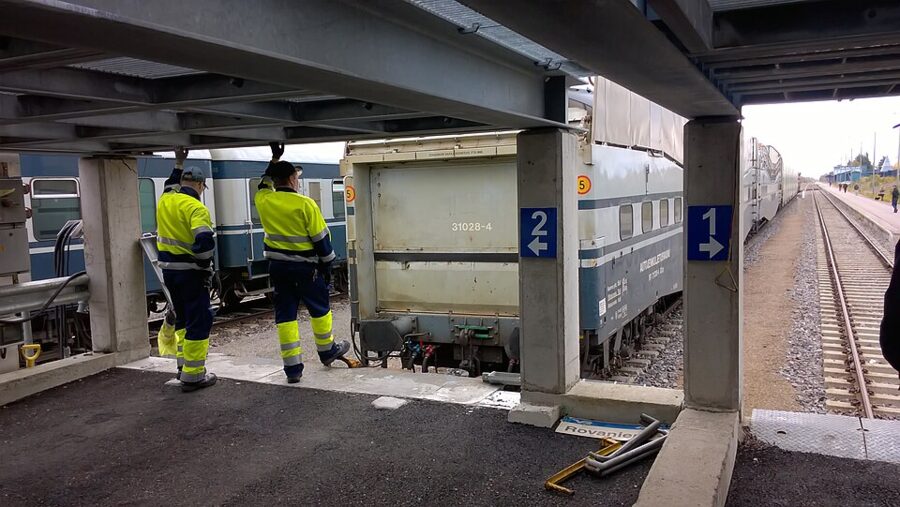

The car-carrier is the overlooked option: a car spot from €49, so a cabin and a car can cost €108 one way, and you save a full day’s driving.
Buses, hire cars and winter roads
Without a car, the resort buses do the job: from Kuusamo airport to Ruka, from Kittilä airport to Levi, from Rovaniemi to Pyhä and Luosto, and the Levi ski bus once you are there. A car makes sense for a forest cabin, for Kilpisjärvi and for anyone who wants to reach the national park trailheads. Check that a hire car has winter tyres and an engine-heater cable before you drive off.
The rules are simple. Traficom’s tyre rules require winter tyres from 1 November to 31 March whenever the weather or road demands it, and studded tyres are allowed in the same period. Main roads are ploughed and gritted; side roads become packed snow, which is easier to drive on than it looks, with long braking distances.

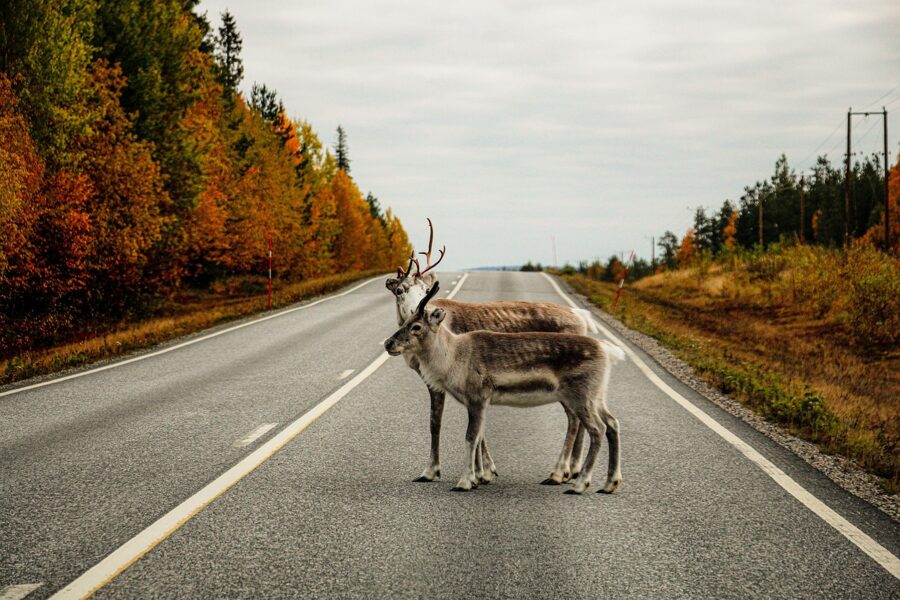
The real hazard is reindeer. They belong to herders, they often walk on the road where the going is firm, and they do not move for cars. In November 2026 the Reindeer Herders’ Association was again asking drivers across the whole herding area to slow down. If you see one reindeer, slow right down: there are usually more behind it.
What to do from the cabin door
Skiing and snowshoeing
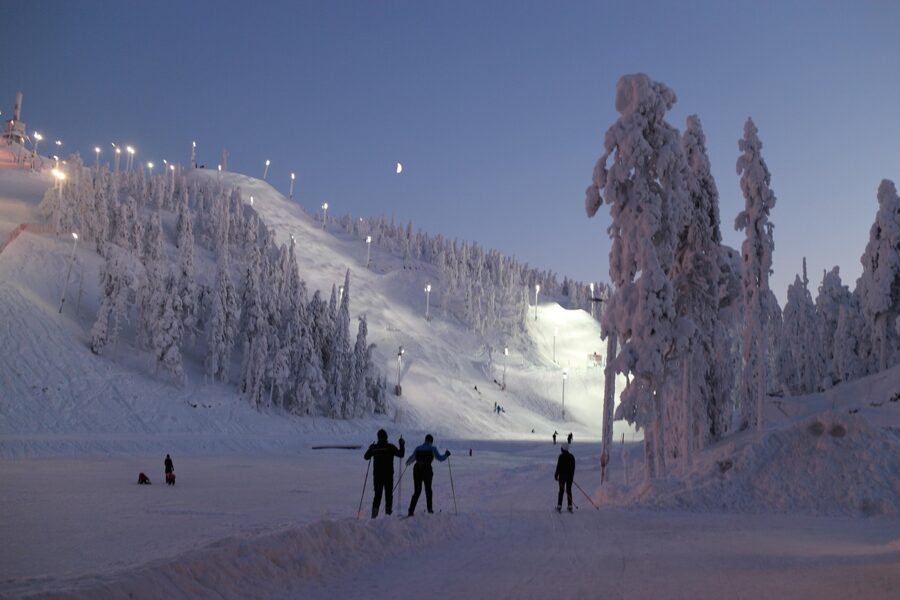
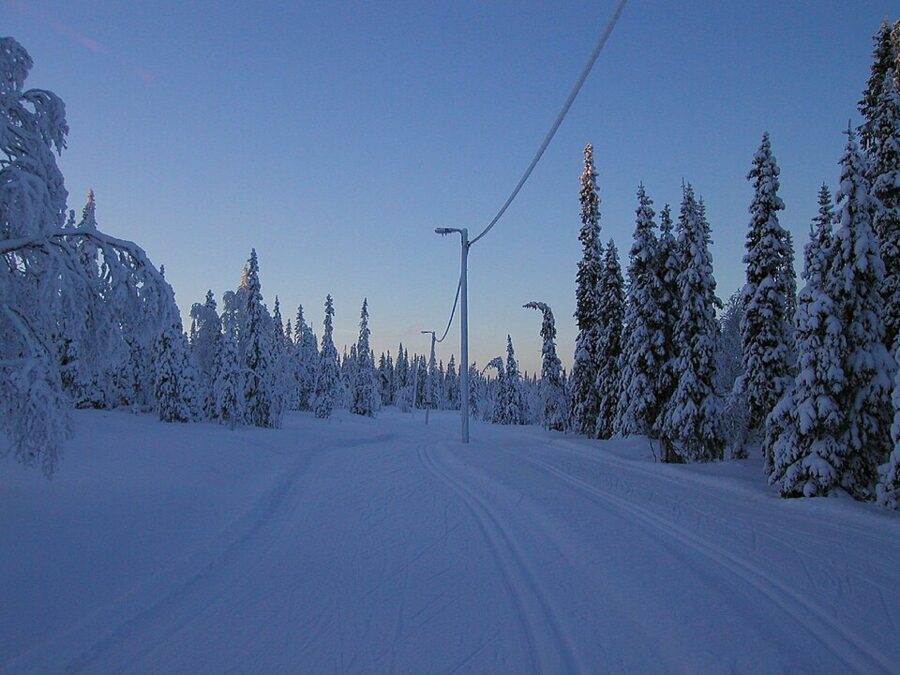
Cross-country skiing is the reason most Finns rent a Lapland cabin in winter, and the tracks often start at the edge of the cabin plot. Ylläs, Saariselkä, Levi and Ruka all groom large networks with lit sections close to the villages; skis can be rented in every resort. Downhill skiing is a short drive or a ski-bus ride from most resort cabins.
Snowshoes open up the national parks, where marked summer trails become winter walking routes and the snow is deep enough to need them. Check conditions on Metsähallitus’s luontoon.fi pages for the park before you go, since some summer routes, with their stairs and bridges, are not maintained in winter.
Ice fishing
Ice fishing with a short rod and jig, pilkkiminen, is one of the general fishing rights in Finland: it needs no permit or state fishing fee on most waters, though rapids and currents in salmon and whitefish waters are excluded, some lakes carry local restrictions, and in Enontekiö, Inari and Utsjoki even ice fishing on state-owned waters needs a Metsähallitus permit. You need an ice drill, which many cabins keep in the shed, and patience. Late winter is the season, when the ice is thick and the sun is back.
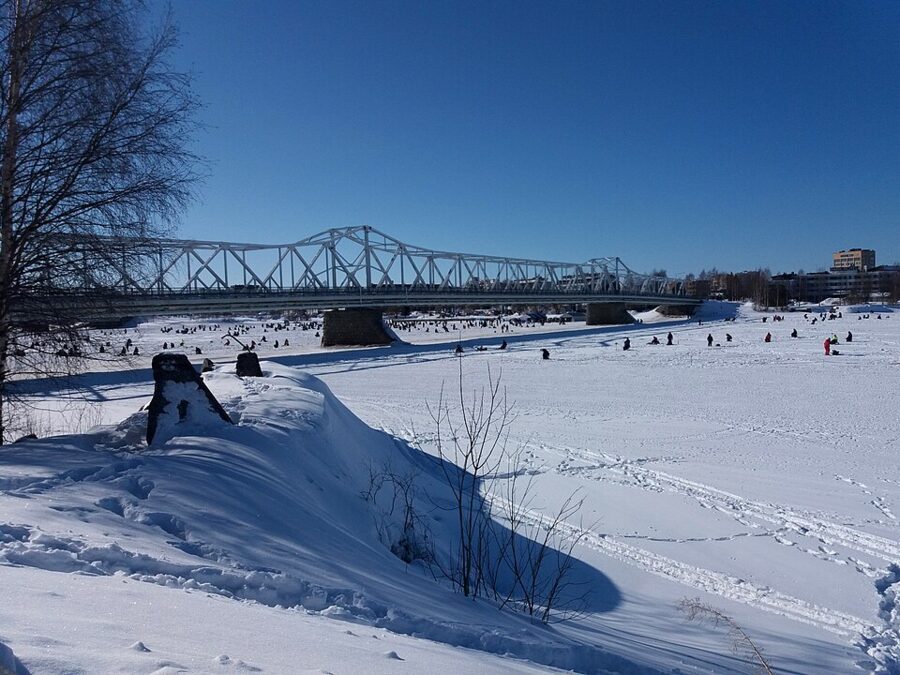

The word to know is kohva: a crust of ice over water or slush lying on top of the lake ice. Snow is heavy, it presses the ice down, and water seeps up underneath the snow. You will find it by stepping through into cold water to the ankle, which is a good reason to wear proper boots on a frozen lake.
Sauna and the hole in the ice
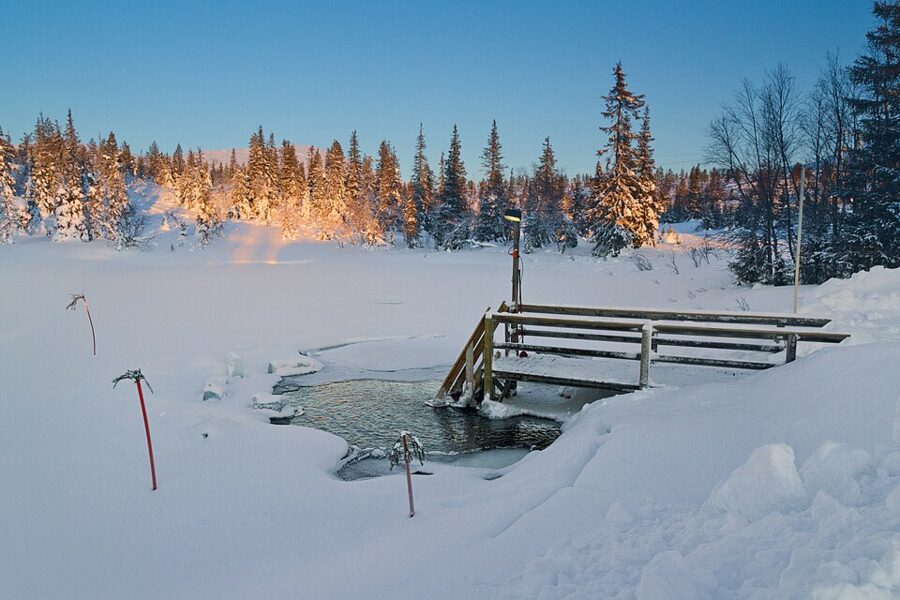
The full cabin ritual is sauna, then a dip in an avanto, a hole cut in the ice, then the sauna again. Some lakeside cabins keep an avanto open through the winter, with steps or a ladder; if yours does, use the ladder, go in with someone watching, and keep the dip short. If it does not, rolling in fresh snow does much the same job.

Northern lights
According to the FMI’s northern-lights statistics, aurora appears on three nights out of four in the far north, at places such as Kilpisjärvi and Utsjoki, provided the sky is dark and clear. The best hours are either side of midnight. Spring and early autumn see the most activity, and March, which is also one of the clearest months, is the one the institute recommends.
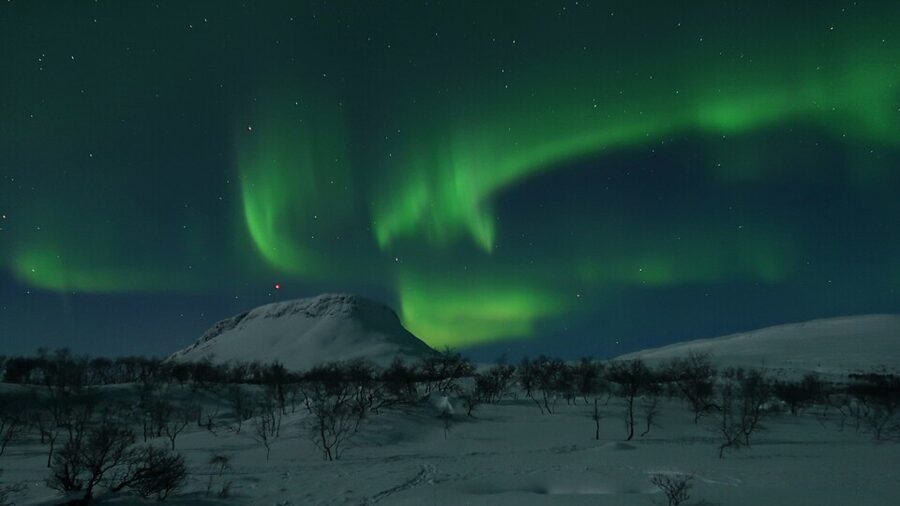

Cloud decides, not the cabin. A cabin with a clear view north and no lights in that direction is worth more than a glass roof under an overcast sky, and the FMI’s own advice is to get away from town and traffic lights and find an open northern horizon.
Huskies and reindeer
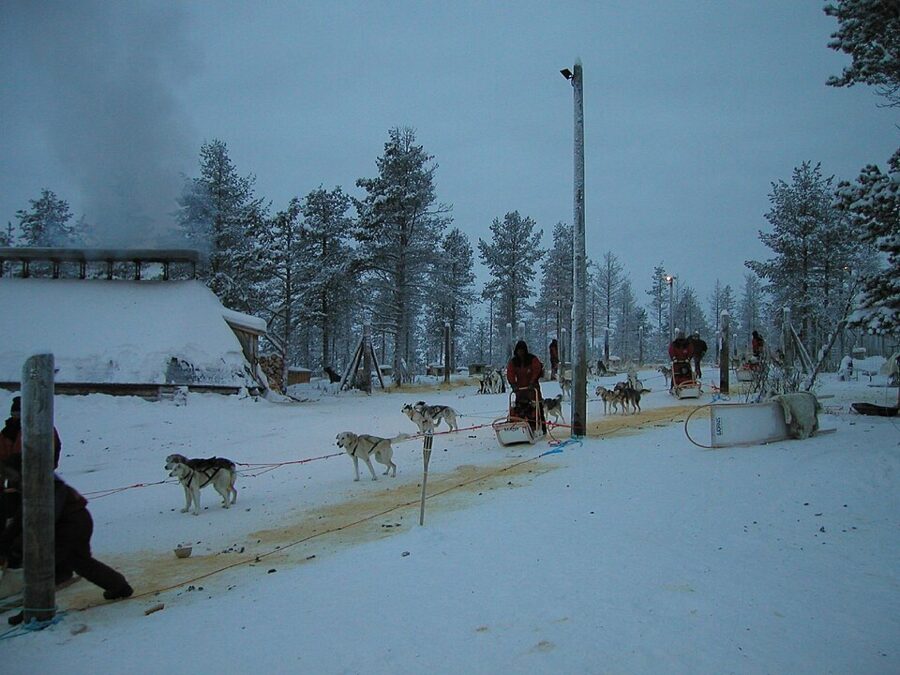
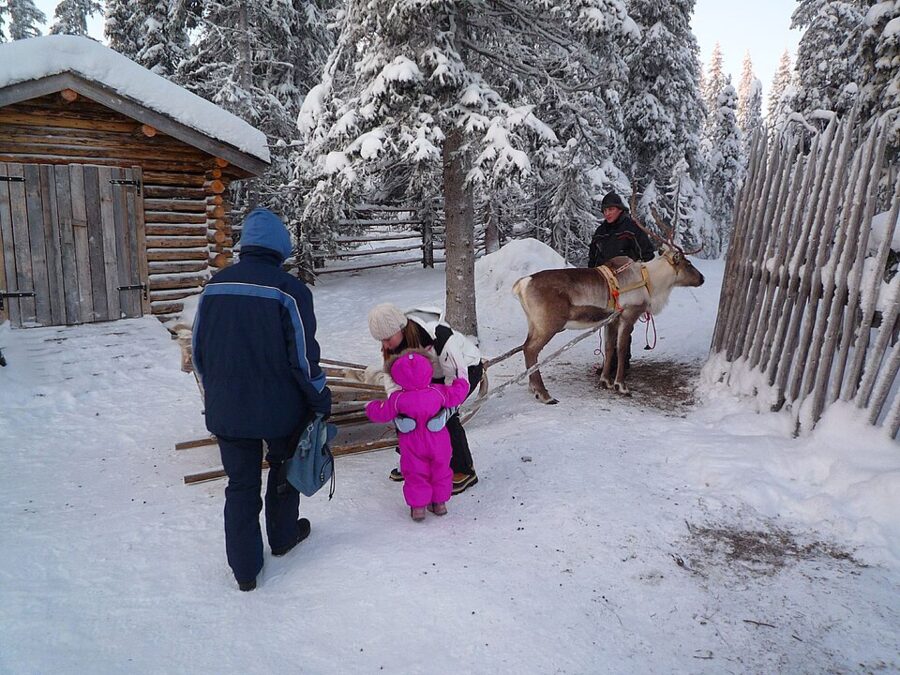
Husky kennels operate around the resorts, and a day behind a team is one of the classic Lapland excursions. Reindeer farms offer sleigh rides and feeding visits; around Luosto two family farms receive visitors from November to April. The questions worth asking before you book, about kennel conditions, how many runs a dog makes in a day and who owns the reindeer, are the ones covered in Arctic animal tourism.


What a week costs, and how to book
Finnish cabins are mostly rented by the week, through the big domestic platforms or the resorts’ own booking services. Prices follow the calendar more than the size of the cabin. These are the weekly rates six Lapland listings on Nettimökki showed for winter 2026–27 in November 2026.
| Cabin | Cheapest week | Dearest week | When the top price applies |
|---|---|---|---|
| Log cabin, 40 m², Äkäslompolo (Ylläs) | €590 | €1,190 | Christmas, and late February to mid-April |
| Lakeside cabin, Rautusjärvi (Kittilä) | €450 | €780 | Peak winter weeks |
| Kelo cabin, 54 m², Salla | €450 | €790 | Peak winter weeks |
| Semi-detached chalet, 50 m², Pyhä | €430 | €730 | Peak winter weeks |
| Cabin for two, Saariselkä (€100 a week per extra adult) | €505 | €1,315 | Peak winter weeks |
| Kelo villa, 56 m², Levi, lift pass included | €900 | €4,000 | 19 December to 3 January |
The Levi villa shows the pattern at its sharpest: €900 a week in January, €2,400 in the weeks before Christmas, €4,000 over Christmas and New Year, and €1,350 from late February to May. The Äkäslompolo cabin charges €590 in early December and in summer, €690 in the ruska weeks, €890 from January to mid-February and €1,190 at Christmas and in the late-winter holidays. January is the cheapest real winter week almost everywhere.
Then come the extras. Final cleaning (loppusiivous) runs to about €100; the Levi villa charges €109 and makes it compulsory in winter, while one Äkäslompolo cabin lets you clean yourself and wants the keys back by 10:00. Bed linen and towels (liinavaatteet) are usually extra at €29 to €35 per person, a little more if the beds are made up. Firewood, electricity and water are normally included; electric-car charging is charged by the day.
What to bring: a headtorch, indoor shoes or thick socks, a flask, a reflector to pin to your coat on dark roads, ice grips for your boots, and enough food for the first evening in case you arrive after the shops close. The big platforms sell cancellation cover, which is worth having for a winter trip. Read the house rules before arrival: no smoking and no pets are common, and one Levi listing charges at least €300 for breaking them.
Hanki, nietos, tykky: the Finnish words for snow
The claim that Finnish has “countless” words for snow, or hundreds of them, has a long life online. The people who keep the language have tested it. The Institute for the Languages of Finland, Kotus, which became part of the Finnish National Agency for Education at the start of 2026, has written about snow vocabulary several times, and the answer depends on what you count.
In standard Finnish, snow simply falls: lunta sataa or tulee. A January 2026 Kielikello article by Susanna Tavi, an editor of the Dictionary of Finnish Dialects, counts a handful of standard verbs for heavy snowfall (pyryttää, tuiskuta, tupruttaa, ryöpyttää, syytää) and fewer for light snow (hiutaloida, tihruttaa). The dialects are another matter. Kotus’s archive column on snow records more than a hundred dialect ways of saying that it is snowing, and a search for lumi across Kotus’s online dictionaries returns 565 results, as its communications editor noted in October 2025.

So the count is this. A few hundred words exist if you gather every dialect verb, every regional name for light frost snow (iisakinsiite, nattura, pakkasenkauna, sarvenkaapotin are four of them) and every compound with lumi in it. The everyday stock that a Finn uses, and that you will hear around a cabin, is closer to twenty. North Sámi, the language of the reindeer herders further north, has a larger working vocabulary again for snow and its conditions, as the Sámi linguist Ole Henrik Magga showed in a 2006 study of herding terminology.
These are the core of them, with meanings from the Kielitoimisto dictionary, the standard dictionary of modern Finnish.
| Word | What it means | Where you will meet it |
|---|---|---|
| hanki | The thick blanket of snow over the ground; also its hard, bearing surface | Umpihanki, deep untracked snow, is why you rent snowshoes |
| hankikanto | The crust’s ability to carry your weight | Clear spring mornings, when you can walk across bogs and lakes |
| kinos | A long heap of snow, usually piled by wind | Across the cabin drive after a windy night |
| nietos | The same as kinos, a drift | The dictionary’s example: the wind heaps the snow into drifts |
| viti | Freshly fallen fine snow of a frosty day | The best skiing snow, light and dry |
| nuoska | Snow softened by thaw but not wet | Snowman snow, and skis that stick |
| loska, sohjo | Wet snow, especially on roads; slush | Town streets in a thaw |
| räntä | Falling wet snow, sleet | October and April forecasts |
| tykky | A heavy deposit of rime, ice and snow on tree crowns and branches | Kuusamo and Posio hills, January to March |
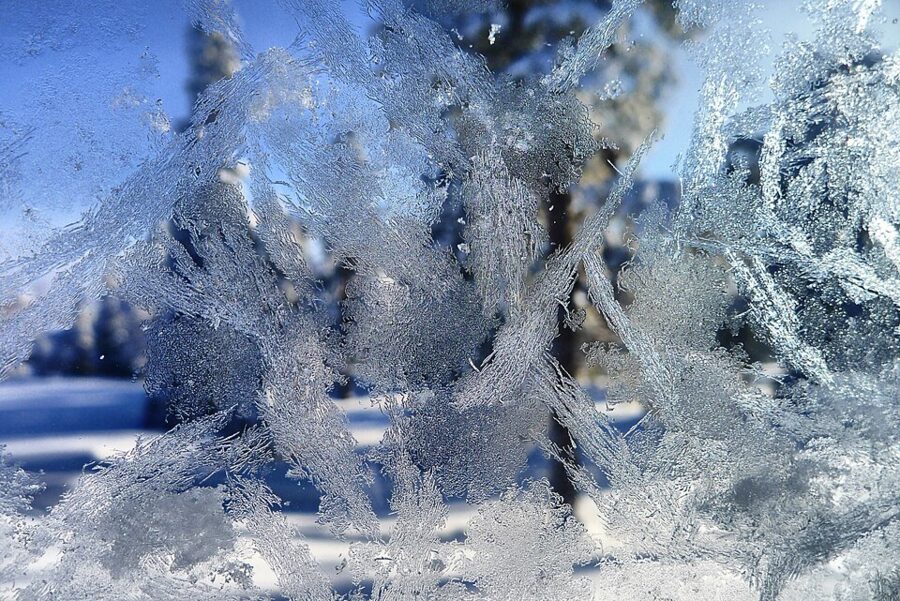
| huurre | A layer of ice crystals forming on surfaces in frost | On beards, eyelashes and the car |
| pyry | Dense snowfall | A reason to stay in |
| tuisku | Wind-driven snowfall, or wind lifting snow off the ground | Open fells and road 21 in a storm |
| polanne | A ridge of hard-packed snow or ice on a road | Side roads to cabins; drive slowly over it |
| kohva | An ice crust over water or slush on lake ice; a hard crust on snow | Lakes in late winter, when your boot goes through |
| avanto | A hole made in the ice | Between two rounds of sauna |
Add kaamos, ruska, kelo, kota and mökki from earlier and you have the vocabulary of a Lapland cabin week. As a Kotus column put it in 2011, the snow words are not a thing of the past: that winter the foreign minister, Alexander Stubb, had just offered Europe the newest of them, snowhow.
The column in question listed kinos, nietos, hahtuva and viti as the precise standard words still in daily use, and that is the right list to start with. They are also the words on the forecasts, the road signs and the ski reports, which is where a cabin guest needs them.
Go back, then, to the spruces above Ruka. The white columns on Valtavaara are tykky, the drift that blocked the road on the way up was a kinos, the snow that squeaked under your boots in January was viti, and the crust that carried you across the bog in April was hankikanto. The easiest place to see the first of them is Valtavaara, next door to Ruka, on a still, foggy morning in February.