

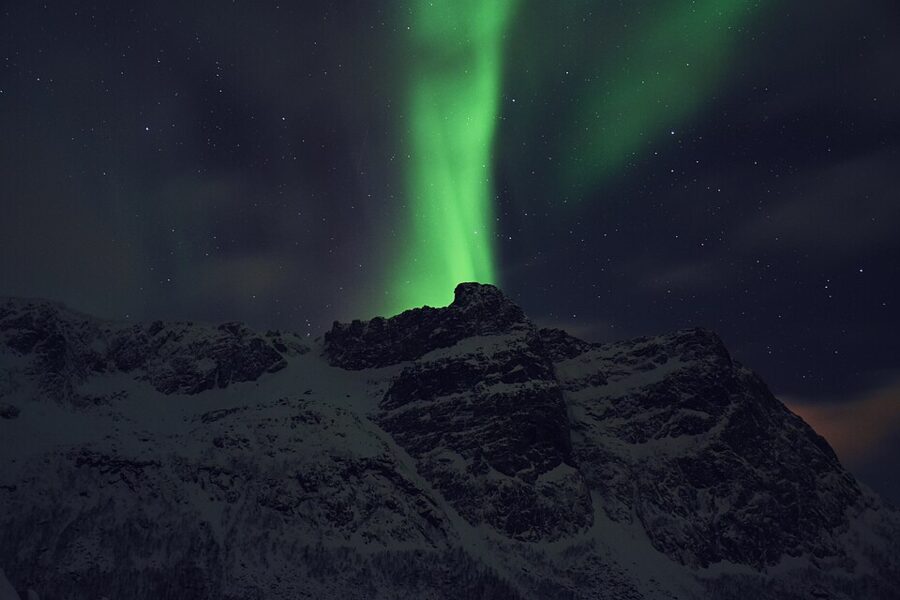
Tromsø gets about three times as much rain and snow in a year as Abisko, a little under 150 km to the south across the Swedish border. Both sit under the same ring of aurora, so on any given night the sky above them is putting on much the same show. What differs is whether you can see it. That gap, between a sky that has aurora and a sky that lets it through, decides more northern lights trips than latitude, money or luck.
So there is no single best place, and anyone who names one is selling something. There is a best band: the stretch of the far north between roughly 65 and 72 degrees, where the aurora is overhead or close to it on most dark nights. Northern Norway, Finnish and Swedish Lapland and Iceland all sit in it, Svalbard sits just north of it, and the Faroes lie at its southern edge. Inside the band, the useful question is not where the lights are strongest but where the clouds are thinnest, and how easily you can move when they are not.


Contents 11 parts
- 01The short answer, by the kind of trip
- 02How the aurora works, in plain terms
- 03Darkness: September to March
- 04Cloud decides
- 05Northern Norway: Tromsø, Alta, Senja and Lofoten
- 06Finnish Lapland: Kilpisjärvi, Inari, Saariselkä and Rovaniemi
- 07Swedish Lapland: Abisko and Kiruna
- 08Iceland and the Faroes
- 09Svalbard: aurora at noon
- 10Raising your odds
- 11Myths, tested
The short answer, by the kind of trip
A city base with tours: Tromsø. It has the flights, the hotels and a large fleet of guided chases, and the road network lets a minibus run inland towards Finland when the coast clouds over. Getting to Tromsø is the easy part, by air, by sea on the coastal ships, or by road from Finland on the E8. Its weakness is its own weather, and the cure is a guide with a van and a willingness to drive two hours.
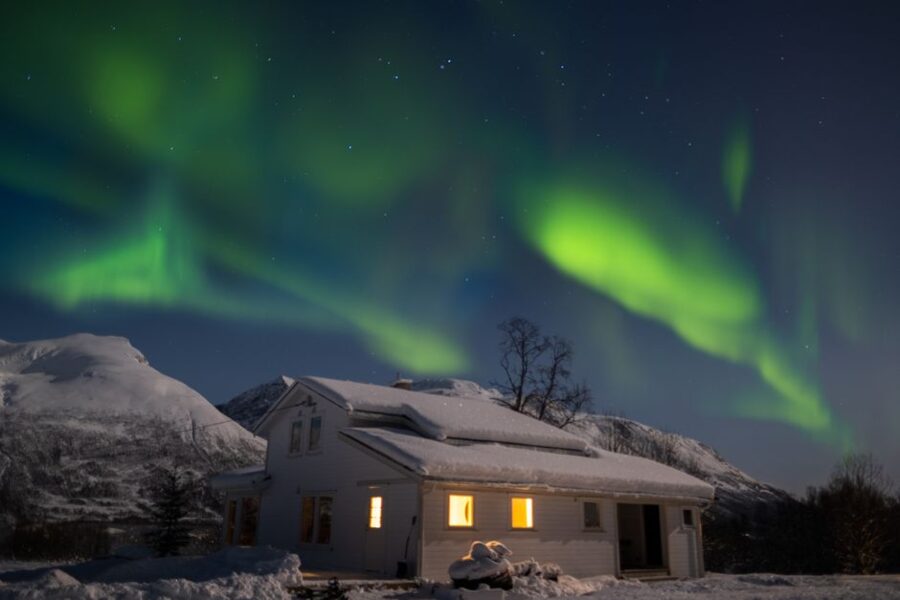
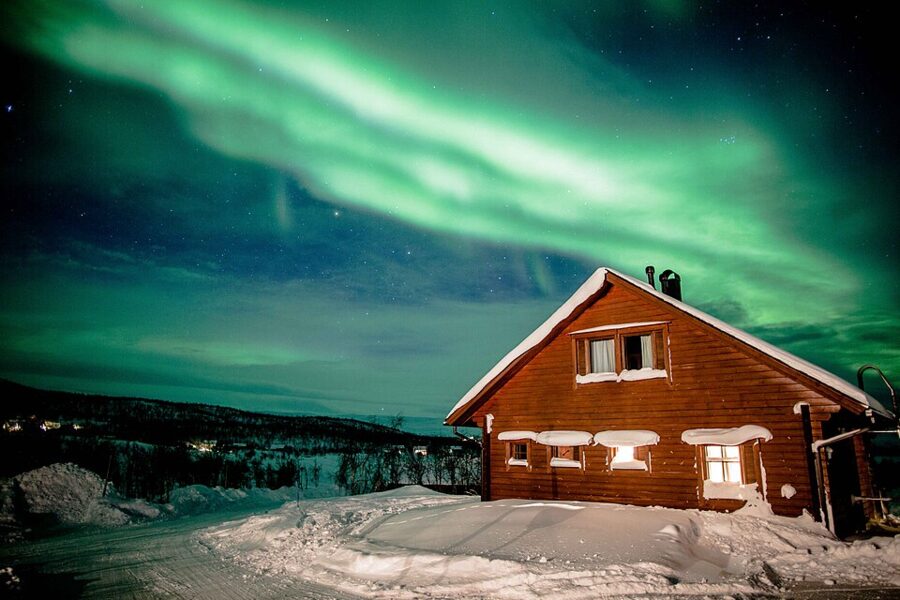
A week in a cabin: Finnish Lapland, ideally the far north. Kilpisjärvi, Utsjoki, Inari and Saariselkä put you under the oval with cold, often clear inland air and no need to go anywhere after dark. On a cabin holiday in Finnish Lapland, the rule is simple: a window facing north beats a glass roof facing cloud.

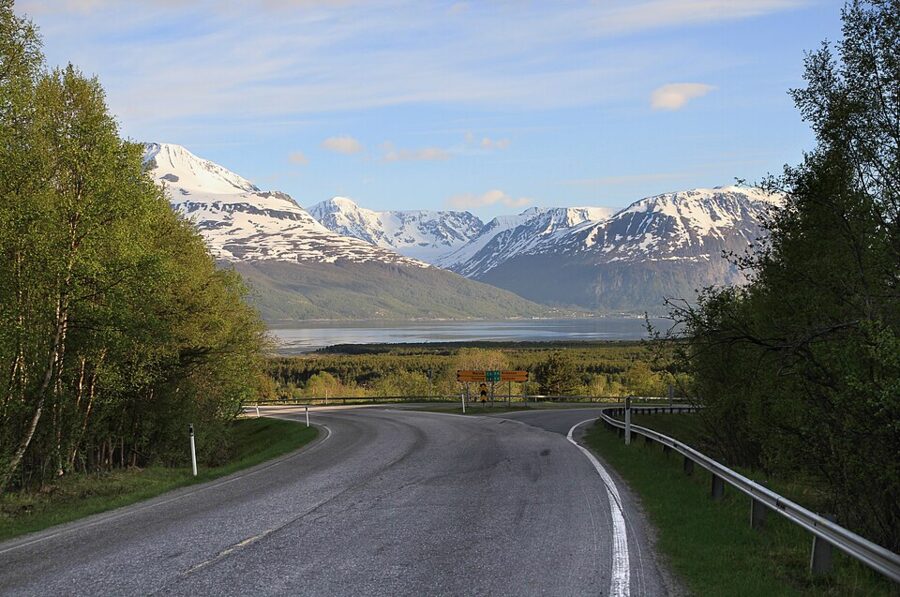
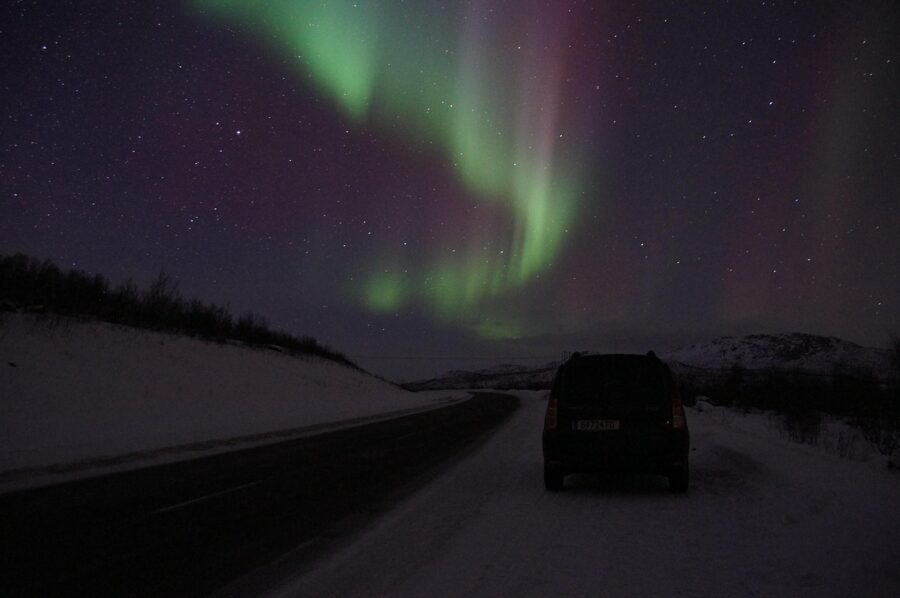
A road trip: the triangle of Tromsø, Kilpisjärvi and Abisko. The E8 runs from the Lyngen fjord coast at Skibotn up into Finland at Kilpisjärvi, about 50 km away, and the E10 links Narvik with Abisko and Kiruna. Between them they put three different weather regimes within a day’s drive, which is the single best way I know to beat cloud. Drive only if you are used to snow, ice and darkness at 15:00.

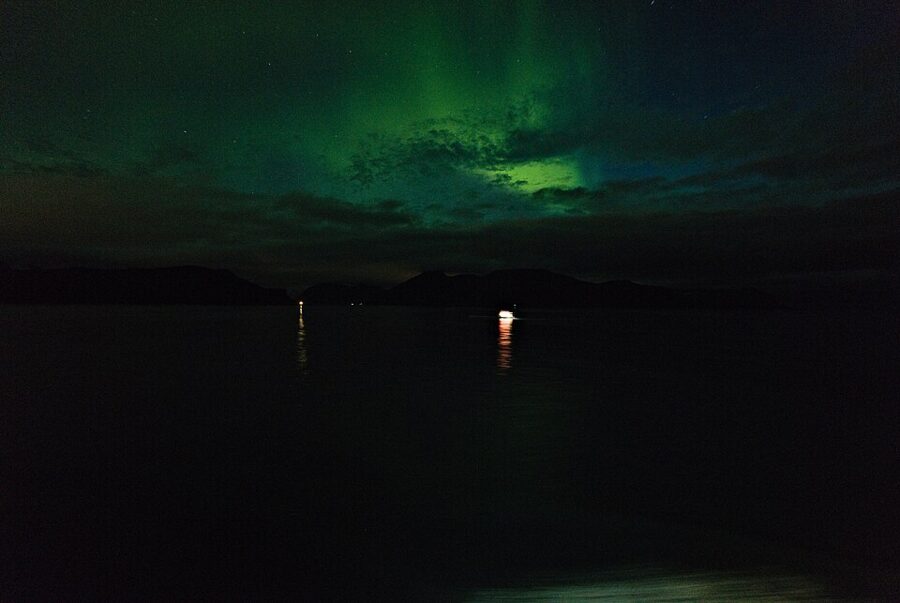
A cruise: the Norwegian coast between September and March. The coastal ships sail through the heart of the band for days at a time, and Hurtigruten’s Northern Lights Promise gives a free 6- or 7-day voyage the following winter if no aurora is recorded by the ship’s officers on a sailing of 11 days or more, departing between 20 September and 31 March. A ship cannot drive inland when the coast is grey, but it moves all night and the cabins get an alert.
Something different: Svalbard. Around Longyearbyen the sun stays below the horizon from late October to mid-February, and in the darkest weeks the aurora can appear at noon. It is a strange trip, expensive and cold, and the midday aurora is often fainter than the photographs suggest. Iceland suits people who want the aurora as one part of a winter road trip, with waterfalls and glaciers by day.
How the aurora works, in plain terms
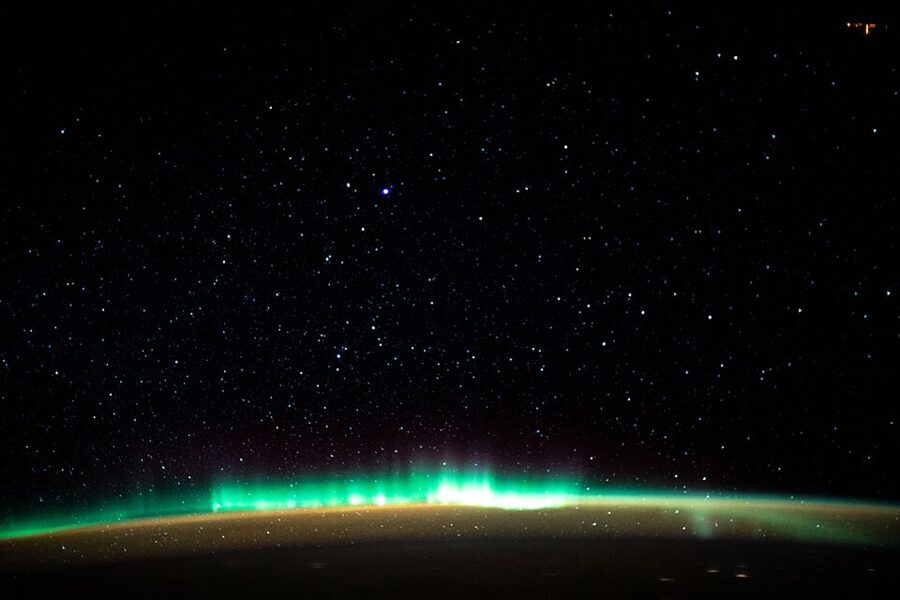
The sun throws out a steady stream of charged particles, the solar wind, and Earth’s magnetic field holds most of it off. Some of that energy gets in and is released in bursts that drive electrons down along the field lines into the upper atmosphere near the magnetic poles. When they hit oxygen and nitrogen, mostly between 100 and 120 km up, the gas glows. That glow is the aurora; Norwegians call it nordlys, Swedes norrsken, Finns revontulet, fox fires, after the old story of a fire fox sweeping sparks off the fells with its tail.
The oval, and why the band is where it is
The particles come down in a ring around the magnetic pole, the auroral oval. According to Store norske leksikon, the oval sits about 23 degrees from the magnetic pole on the night side and about 15 degrees on the day side, and the Earth turns underneath it. In the European sector that puts the night-side oval along the coast of Troms and Finnmark, and the day side over Svalbard.
Averaged over years, the oval traces a zone about ten degrees wide where visible aurora occurs on more than half of all nights, even when the sun is quiet. That zone is the band, and in the Nordic countries it runs roughly from 65 to 72 degrees north. South of it, aurora fades quickly: you need a storm. North of it, over the polar cap, it is weaker and of a different kind, which is why Svalbard’s draw is its daytime aurora rather than its nights.
The solar cycle: after the 2024 maximum
Solar activity rises and falls over roughly 11 years, and with it the number and size of the storms that make big displays. NOAA and NASA announced on 15 October 2024 that the sun had reached the maximum period of Solar Cycle 25. The smoothed sunspot number peaked that same month at 160.9, well above the 115 a forecasting panel had predicted in 2019.
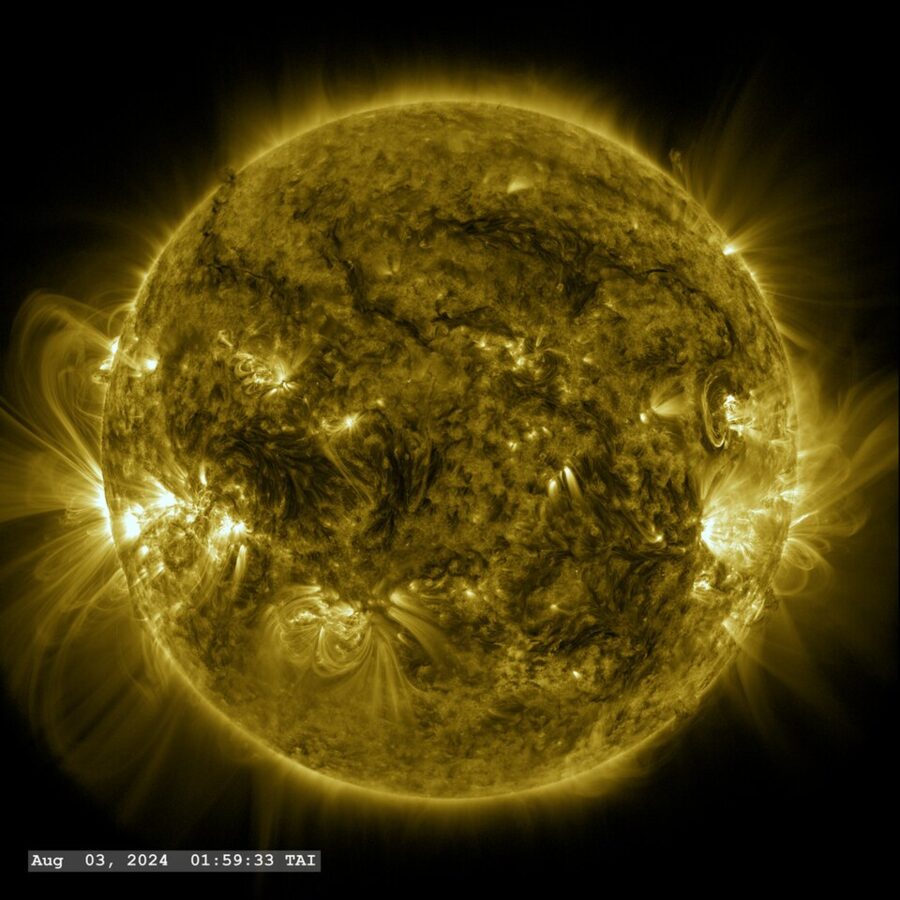
The cycle is now on its way down. NOAA’s solar cycle progression forecast puts the smoothed sunspot number at about 83 through the winter of 2026 to 2027, falling to about 63 by late 2027, with the next cycle due to begin between 2029 and 2032. Good news for the far north, though: NOAA’s own guide notes that the biggest flares and eruptions often come late in the maximum period, as activity starts to wane. And even at solar minimum, fast solar wind from coronal holes produces moderate storms; under the oval, moderate is plenty.
The Kp index, and how little it means up north
Aurora apps lead with the Kp index, a 0 to 9 measure of how disturbed Earth’s magnetic field is over a three-hour period. It is a good guide to how far south the aurora will reach. In May 2024 a Kp 9 storm put it overhead in southern Sweden and made it visible far across Europe, and that is the kind of night that makes the news.
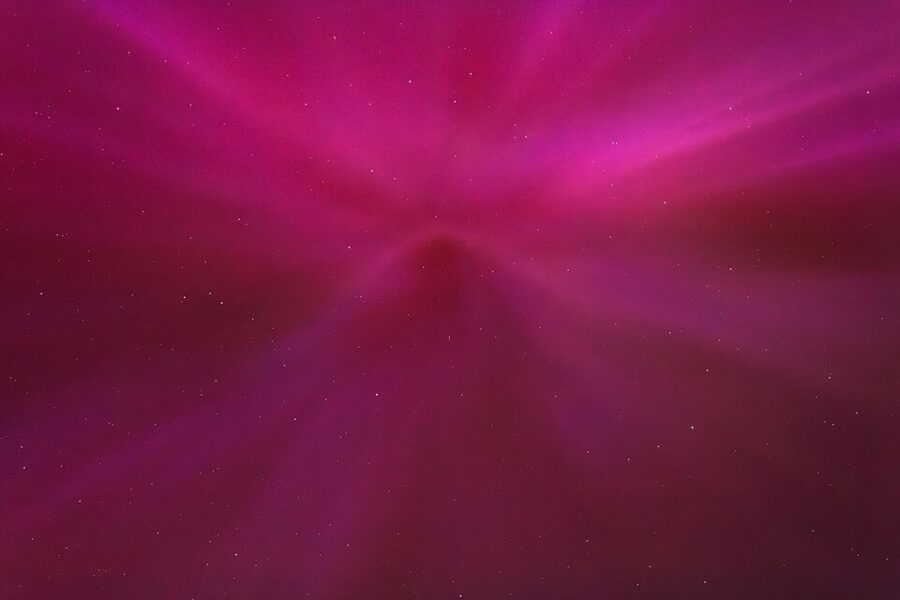

In the band, the logic flips. NOAA notes that even Kp 3 or 4 gives aurora of reasonable brightness and activity, only closer to the pole, which is exactly where you are standing in Tromsø or Kilpisjärvi. Norway’s weather service Yr sets the Kp threshold for its forecast by latitude for that reason. Up north, a Kp of 2 with a clear sky beats a Kp of 6 under cloud, every time.
Magnetic midnight
The most active part of the oval, where the substorms break out, sits on the side of the Earth facing directly away from the sun in magnetic terms. You pass under it once a night, at magnetic midnight, which in northern Norway and Sweden falls roughly an hour before midnight on the clock and on Finnish time close to midnight itself. The Finnish Meteorological Institute’s aurora pages put the best viewing in the hours either side of midnight; the Swedish Lapland tourist board says 21:00 to 02:00.
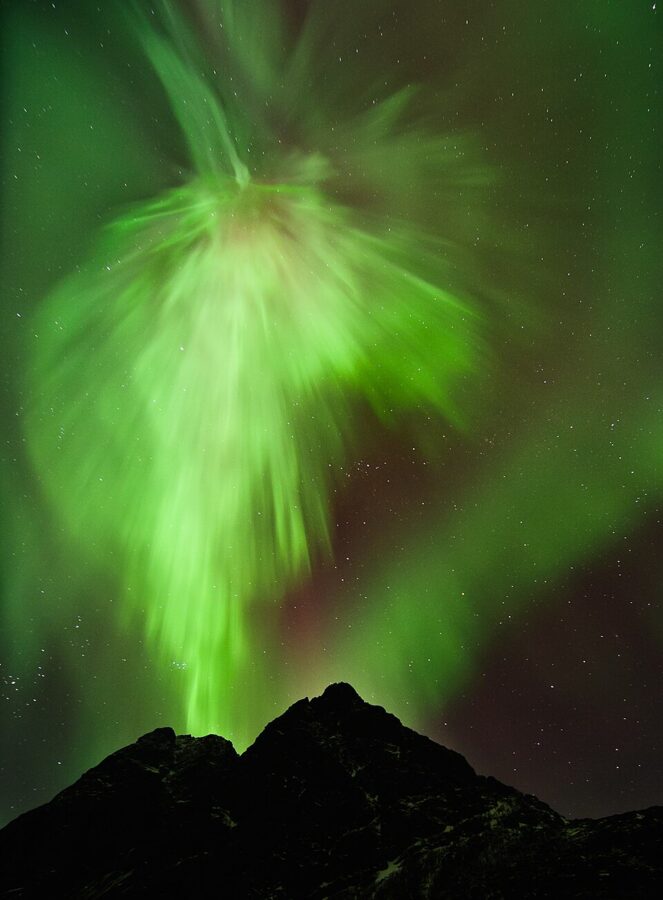

That is an average, not a timetable. Displays often start soon after dark as a quiet green arc low in the north, brighten and break up in an outburst lasting about ten minutes, then fade into pulsing patches towards morning, and a single night can repeat the cycle several times. Go out at 20:00 and stay out, rather than setting an alarm for midnight.
Darkness: September to March
The aurora shines all year, but you need a dark sky to see it, and above the Arctic Circle the summer nights are light. Visit Tromsø gives the season as late August to early April. In practice the useful window runs from early September to the middle of March; in late August the nights in the far north of Finland and Norway are still too light for anything but a strong display.
Within that window, the equinoxes help. The FMI explains that around the spring and autumn equinoxes the Earth’s orientation in the solar wind makes it easier for energy to leak into the magnetic field, so magnetic storms are on average more frequent in March and September than in midwinter or summer. The equinoxes fall on 23 September 2026 and 20 March 2027. The FMI’s own pick is March, because spring is also, on average, the least cloudy part of the dark season.
Polar night is not required, and it is not even an advantage. In Tromsø the last sunrise of 2026 is on 27 November and the next on 15 January 2027. Kilpisjärvi, a little further south, has a slightly shorter polar night. The aurora does not care; it is mostly a night-time event, and February and March nights are dark enough while the days are light enough to ski, drive and sleep normally.
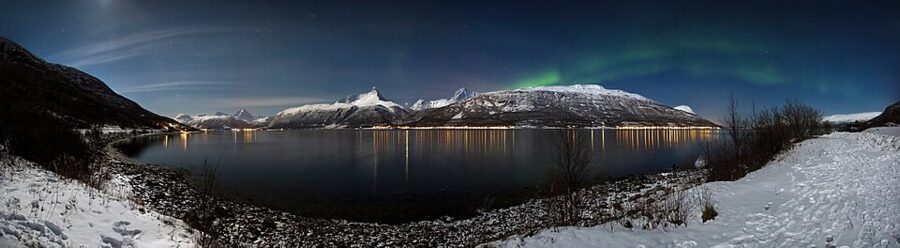

The moon matters more than people expect. Faint aurora vanishes behind a bright moon; strong aurora does not, and a moonlit snowfield makes better photographs than a black one. If you can choose, aim for the week either side of a new moon.
The full moons of the season fall on 24 November and 24 December 2026, and 22 January, 20 February and 22 March 2027. Summer is out everywhere: from May to July the sky never gets dark enough north of the Arctic Circle.
Cloud decides
Every forecast you will read gives a chance of aurora assuming a clear sky, and the assumption carries most of the weight. Low cloud is opaque; high, thin cloud often lets bright aurora through, and Yr’s guide points out that gaps can open in a cloudy sky if you are patient. Neither helps if a front is sitting on you for three days.
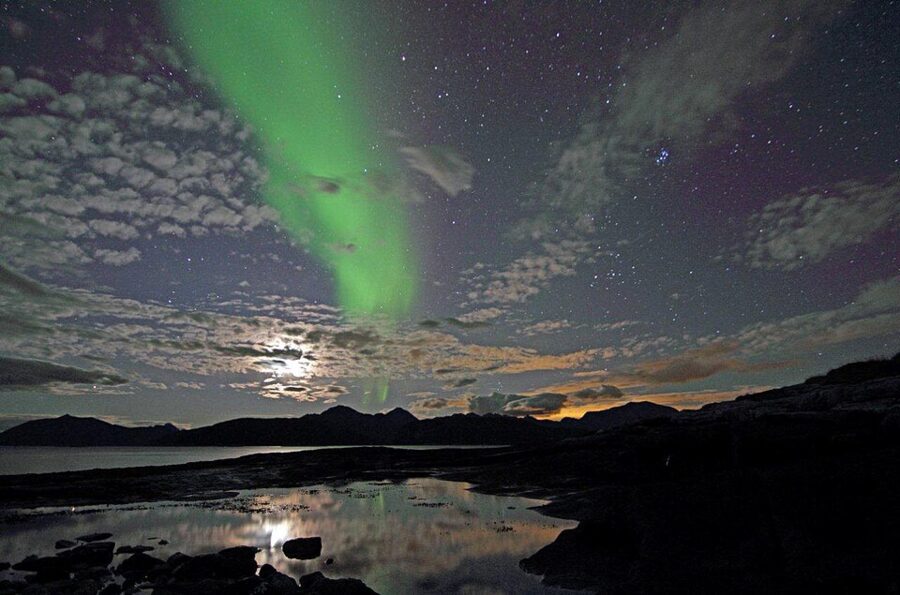

The pattern across the region is simple. The Norwegian coast and Iceland catch Atlantic weather first and get wet, mild winters; behind the mountains, in Swedish and Finnish Lapland, the air is drier, colder and clearer. Precipitation is not the same thing as cloud, but it is a fair guide to how often the weather is unsettled, and the national climate normals show the gap plainly.
| Place | Latitude | Rain and snow a year | January mean |
|---|---|---|---|
| Tórshavn, Faroes | 62.0° N | about 1,400 mm | 4.3 °C |
| Tromsø | 69.6° N | about 1,090 mm | −3.0 °C |
| Reykjavík | 64.1° N | about 880 mm | 0.7 °C |
| Rovaniemi | 66.5° N | about 630 mm | −10.3 °C |
| Kilpisjärvi | 69.0° N | about 515 mm | −12.2 °C |
| Kiruna area | 67.9° N | about 490 mm | −12.4 °C |
| Abisko | 68.4° N | about 350 mm | −10.5 °C |
| Longyearbyen, Svalbard | 78.2° N | about 210 mm | −10.9 °C |
The numbers make the case. Abisko, in the rain shadow of the mountains along the border, is one of the driest places in the Nordic countries, and the Swedish Lapland tourist board is not exaggerating much when it builds its winter around that. Tromsø, on the coast, gets wet weather and clears often, but not on a schedule. The Faroes, wettest of all, see the aurora mainly between fronts.

Reading the forecasts
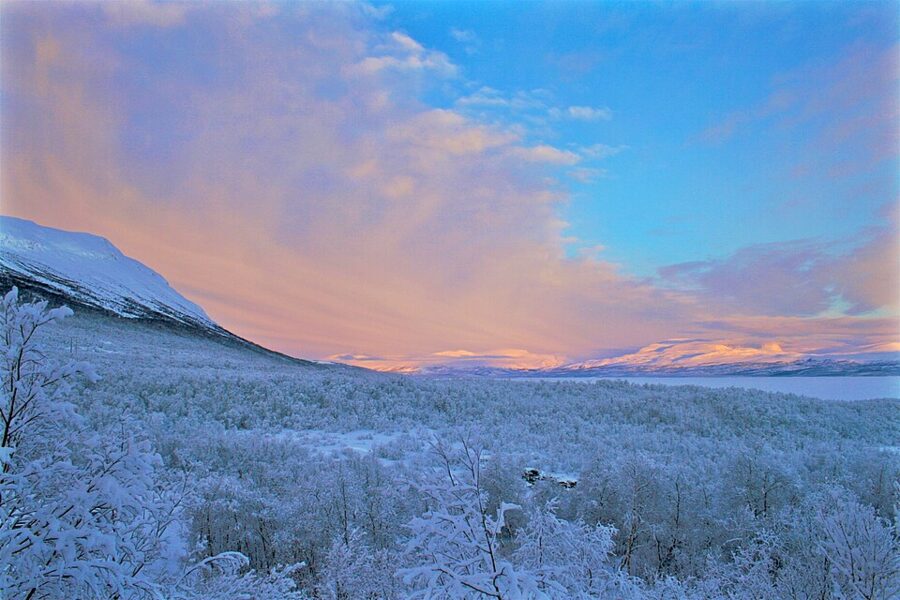
Use two forecasts: one for the aurora and one for cloud, and give the cloud forecast more weight. For Norway and Sweden, Yr’s aurora forecast, under the “Andre varsler” tab for any place, shows the chance of aurora up to three days ahead and a short-term nowcast from 0 to 100 per cent, 30 to 90 minutes ahead, based on solar wind measured on its way to Earth. The Yr app will send a push alert when the nowcast for your place goes over 30 per cent.
For cloud, the hourly cloud cover on Yr for Norway, SMHI’s forecast maps for Sweden and the FMI’s for Finland are all good to a day or so. The FMI’s aurora and space weather service shows the likelihood of aurora across Finland from its own magnetometer network. In Iceland the Met Office’s aurora forecast is built around a cloud map, green for cloud and white for clear, with an aurora activity number from 0 to 9 and the times of darkness and moonrise for Reykjavík. On a road trip, the cloud map is the one that tells you which way to drive.
Northern Norway: Tromsø, Alta, Senja and Lofoten
Northern Norway is the classic answer, and for good reason: the oval runs right along this coast, the towns have airports, and the sea keeps the cold milder than anywhere inland. Tromsø averages −3.0 °C in January, against −12 °C in Kiruna. What the coast does not offer is reliably clear skies, so every base here works best with a car, a tour or a boat that can move.
Tromsø
At 69.6 degrees, Tromsø sits under the oval on most dark nights, and the aurora is often visible from the city itself. The two big islands to the west, Kvaløya and Ringvassøya, are dark within a short drive, with mountains and open sea to the north. When the coast is cloudy, the tours head inland, up the Lyngen fjord to Skibotn and towards the Finnish border, where the weather is often drier.
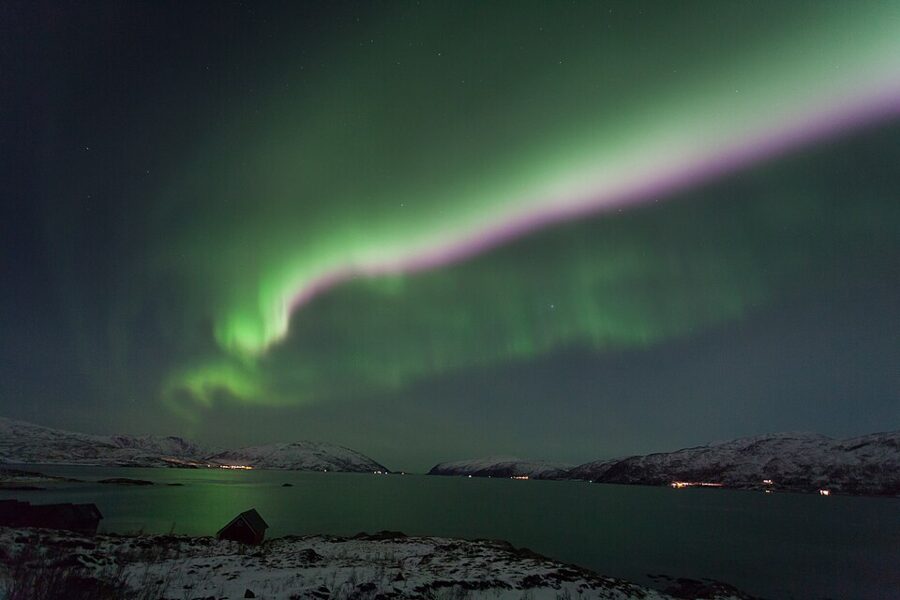

The town has grown fast on the strength of winter tourism, and the municipality and Visit Tromsø publish northern lights guidelines for anyone out after dark: wear reflective clothing, never walk in the road, do not stop on blind bends, keep out of gardens and rest areas used by lorry drivers, and keep any fire at least 10 metres from vehicles and out of lay-bys. Many of the tours run in minibuses; if you go with one, it is the guide’s job to find the gap in the cloud, and the good ones drive a long way to find it.

Alta
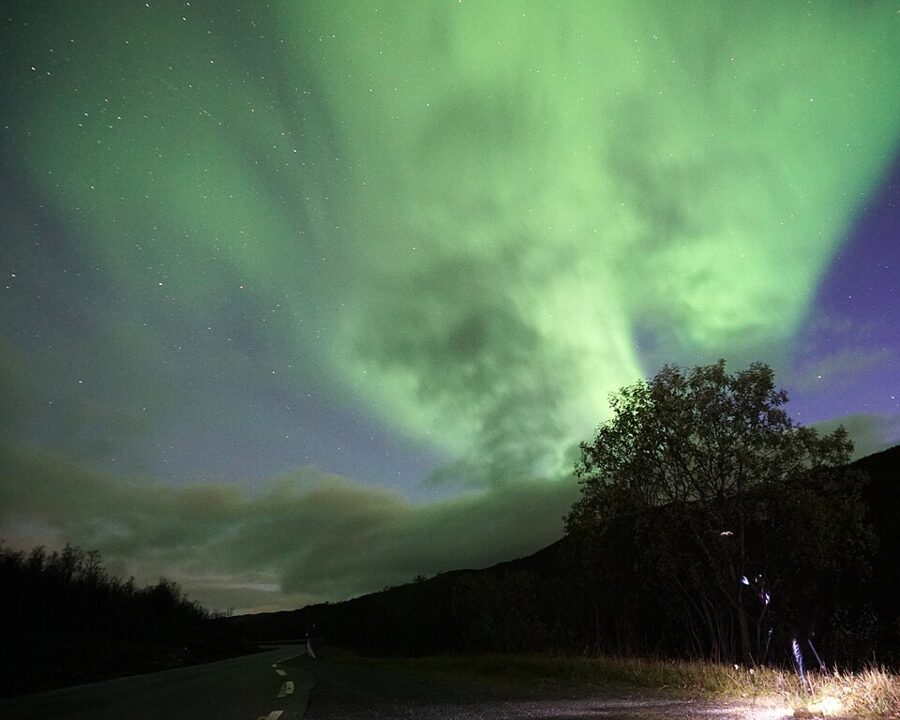
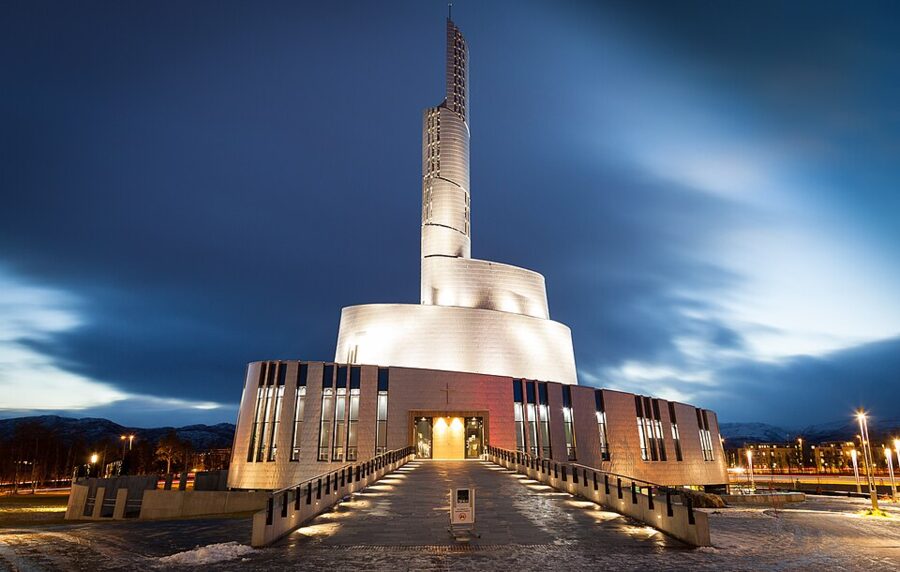
Alta, at the head of the Altafjord in Finnmark, sits farther from the open sea than Tromsø, deep inside a long fjord, and it has as good a claim as any town to the aurora. Its modern cathedral is named after it, and one of Norway’s earliest aurora observatories stood on the mountain above Kåfjord, just west of the town.

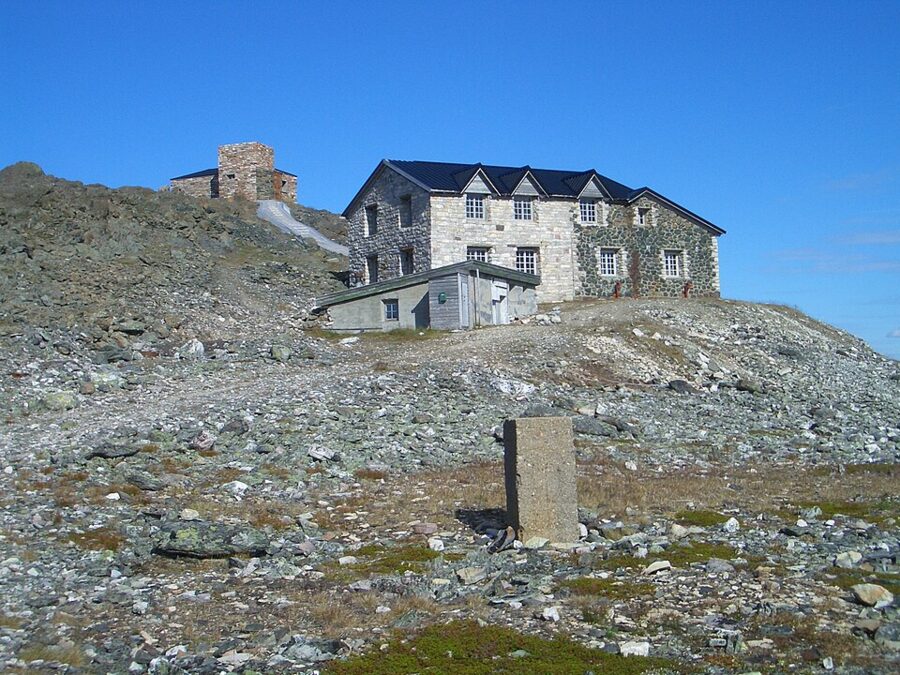
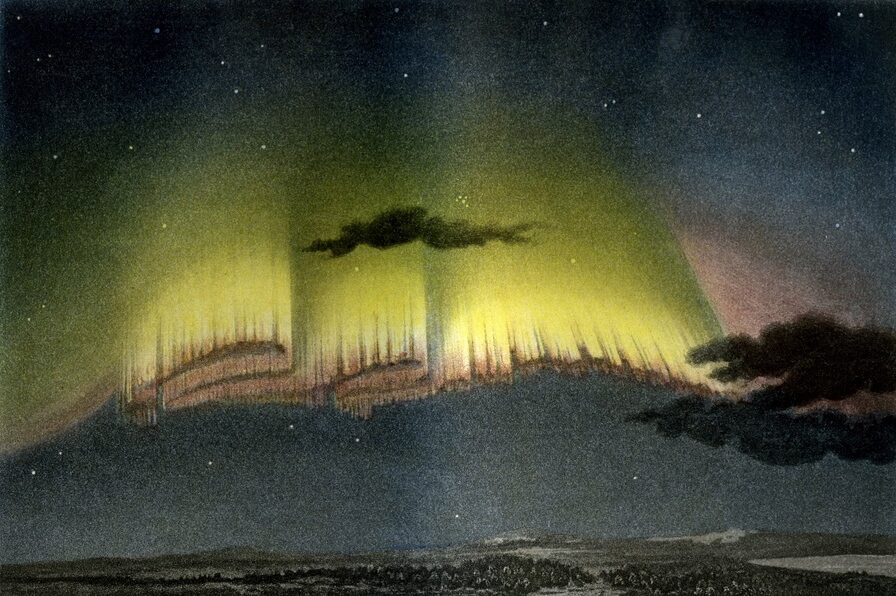
On Lille Halde, at 904 metres above Kåfjord, Norway ran a northern lights observatory in 1899 and 1900 and again from 1913 to 1927, measuring the aurora, the weather and the Earth’s magnetism. German troops wrecked the building in 1945; it has been partly restored and since 2017 has been an unstaffed cabin run by the local branch of the Norwegian Trekking Association, according to Store norske leksikon. The annual Halddemarsjen route climbs 907 metres over 8.5 km from Kåfjord to the summit, a summer and autumn walk rather than a winter one.

Senja
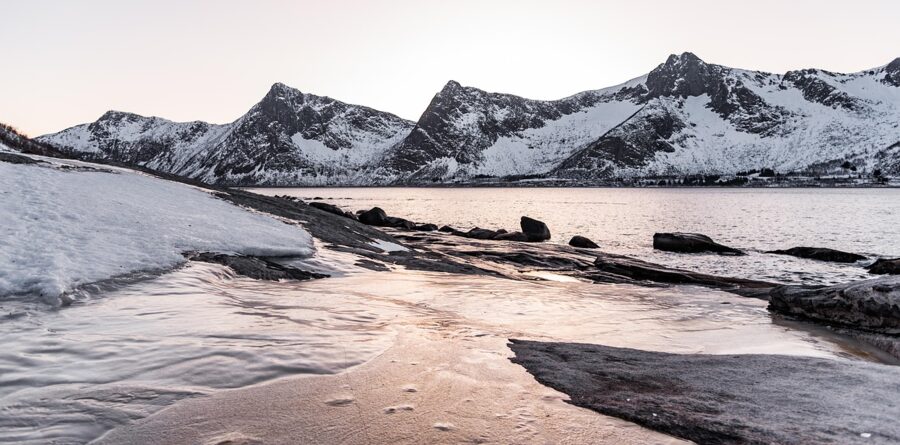
Senja, Norway’s second-largest island, lies south-west of Tromsø, with a bridge to the mainland at Finnsnes. Its outer coast is a line of sharp peaks and deep fjords around fishing villages such as Gryllefjord and Senjahopen, open to the sea on the north and west. It suits people who want Tromsø’s latitude without Tromsø’s crowds and have a car; the trade-off is the same coastal weather, and fewer people to tell you where the clear patch is.
Lofoten
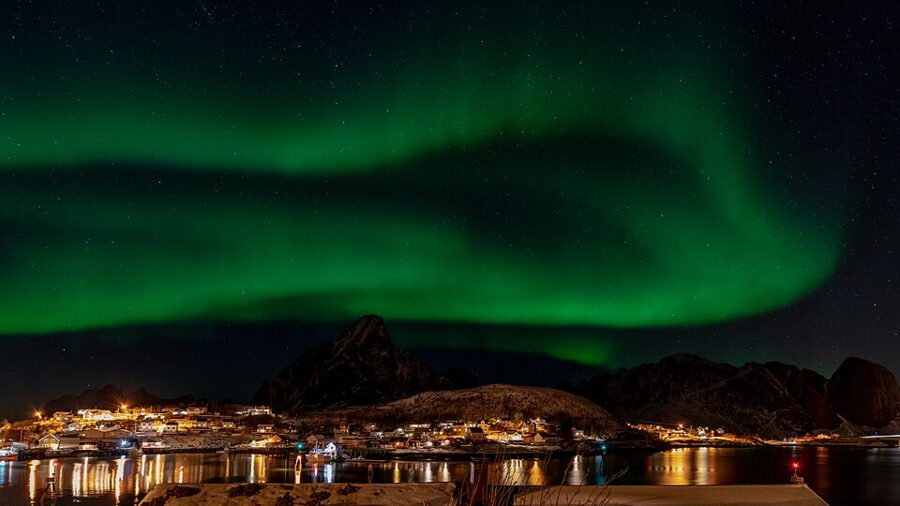
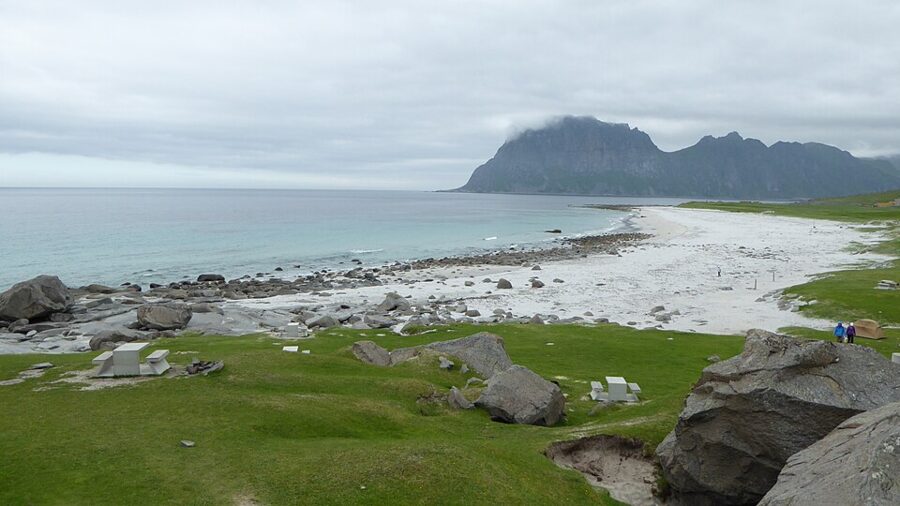
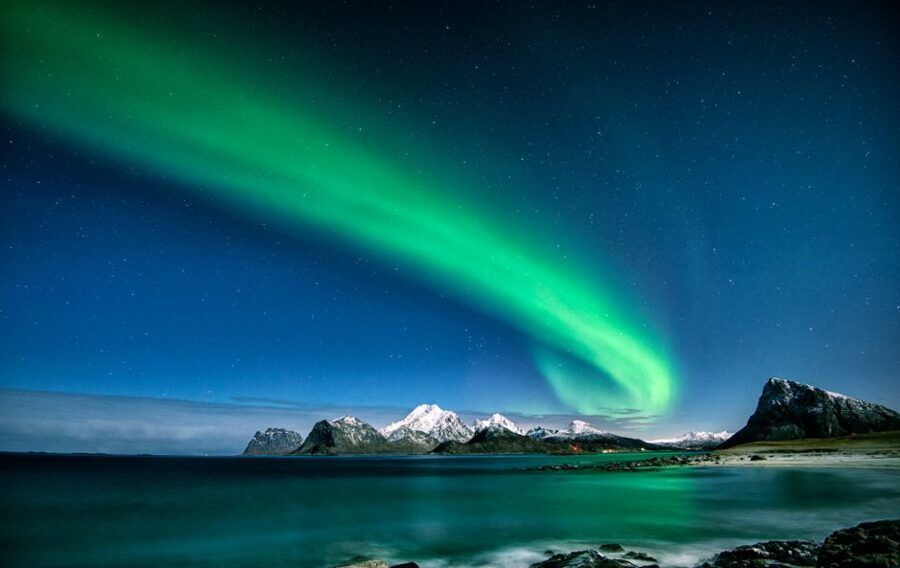
Lofoten sits farther south, at around 68 degrees, towards the southern side of the band. On an ordinary night the aurora is often up in the northern sky rather than overhead, and with mountains rising straight out of the sea it makes some of the best photographs in Norway. The weather is fully Atlantic, and the islands are long and thin, so chasing means driving the E10 up and down the chain. Getting from Tromsø to Lofoten takes a full day by road or a short flight, so a trip that combines them needs planning.


Finnish Lapland: Kilpisjärvi, Inari, Saariselkä and Rovaniemi
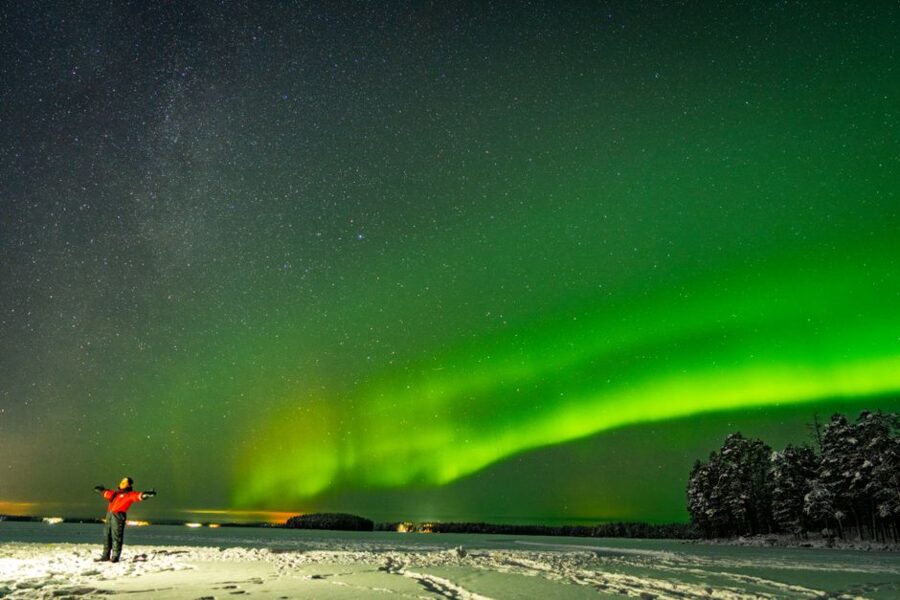
Finnish Lapland is the cabin answer: long, cold, often clear nights inland, and a style of trip built around staying put. The FMI’s statistics say that in the far north, at places such as Kilpisjärvi and Utsjoki, aurora appears on three nights out of four, provided the sky is dark and clear. In Helsinki it happens about once a month in the dark season, though the city lights usually hide it.
Kilpisjärvi and Utsjoki
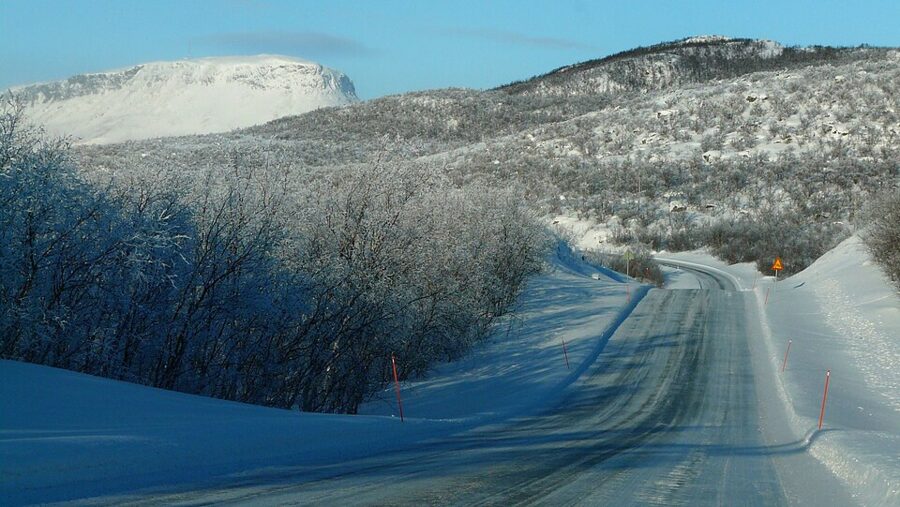
Kilpisjärvi is a village of about 100 people at the tip of Finland’s north-western arm, at 480 metres and less than 100 km from the Arctic Ocean, under the bulk of Saana fell. It is the best aurora spot in Finland on paper and in practice: high, in the oval, on the drier side of the mountains, and with a January mean of −12.2 °C, cold enough that clear nights are common. The trade-off is remoteness, and only a handful of places to stay and eat.
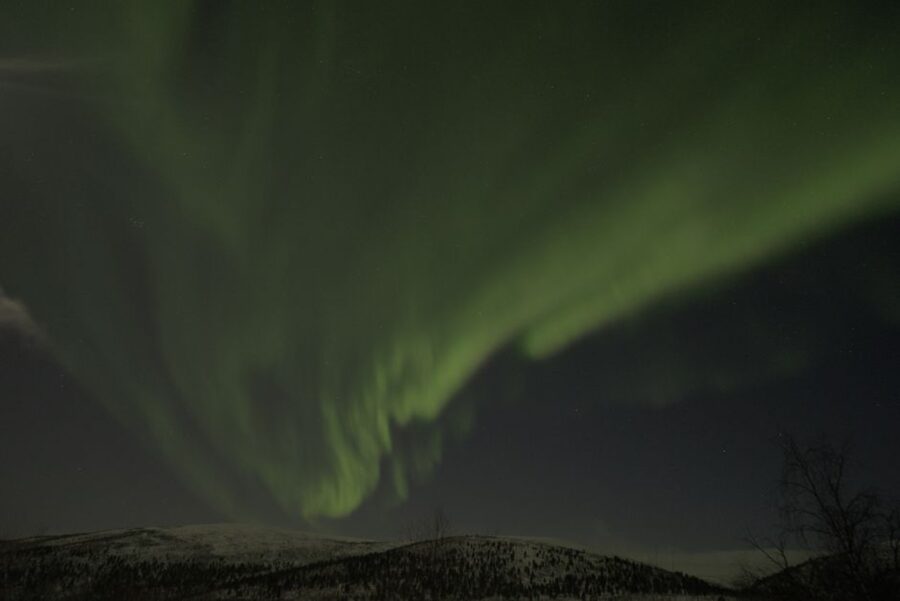
Utsjoki, on the Norwegian border in the far north-east, has the same statistics and far less tourism. Both are long drives from the nearest airports, so plan on a week, not a weekend.

Inari and Saariselkä
Inari, on the shore of Lake Inarijärvi, is a centre of Sámi life in Finland, and Saariselkä, to the south, is a small fell resort built around skiing and aurora watching, with the Urho Kekkonen National Park on its doorstep. Ivalo airport serves both. The roads here are shared with reindeer, which all belong to someone; Sámi reindeer herding is still the working economy of much of this area.
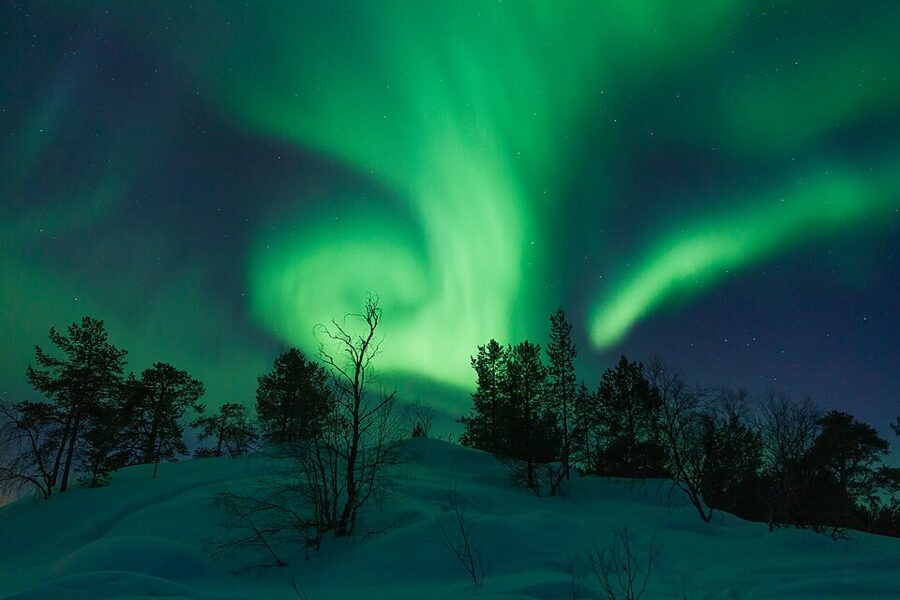

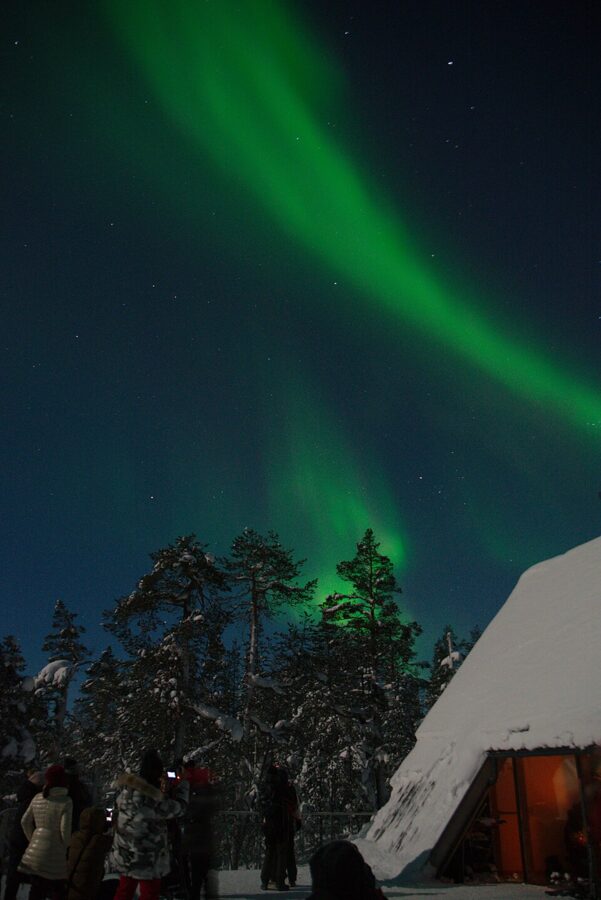

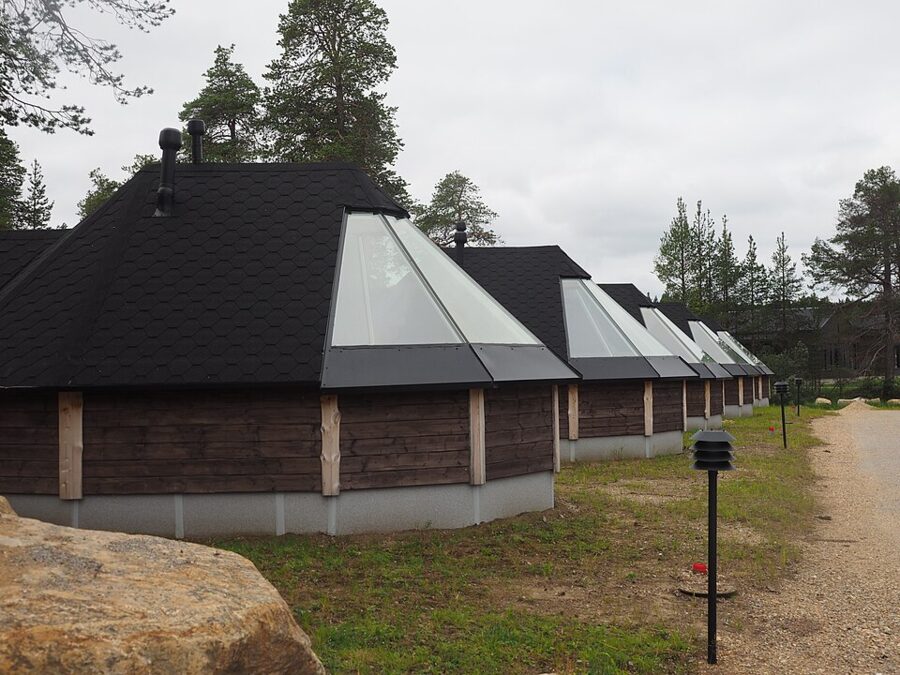
This is where the glass-roofed cabins and igloos are thickest on the ground. They are comfortable, they are expensive, and they work only when the sky above them is clear and the glass is free of snow. A roof shows you the sky overhead, while early in the night the aurora is often low in the north. A good outdoor viewpoint ten minutes’ walk away is worth more than any roof.

Rovaniemi
Rovaniemi, on the Arctic Circle at 66.5 degrees, is the best-connected town in Finnish Lapland and the capital of the region. It is also near the southern edge of the band and gets more rain and snow than the far north, about 630 mm a year. Aurora is common there on clear nights, though more often lower in the northern sky than in Kilpisjärvi or Utsjoki. I would use Rovaniemi as a gateway rather than a base, and push north.
Swedish Lapland: Abisko and Kiruna
Abisko is the strongest single argument against latitude as the measure of a good aurora place. It sits at 68.4 degrees, south of Tromsø and Kilpisjärvi, but in a rain shadow that gives it about 350 mm of rain and snow a year. The village is small: the national park, the mountain station of the Swedish Tourist Association (STF), and the railway between Kiruna and Narvik running through.
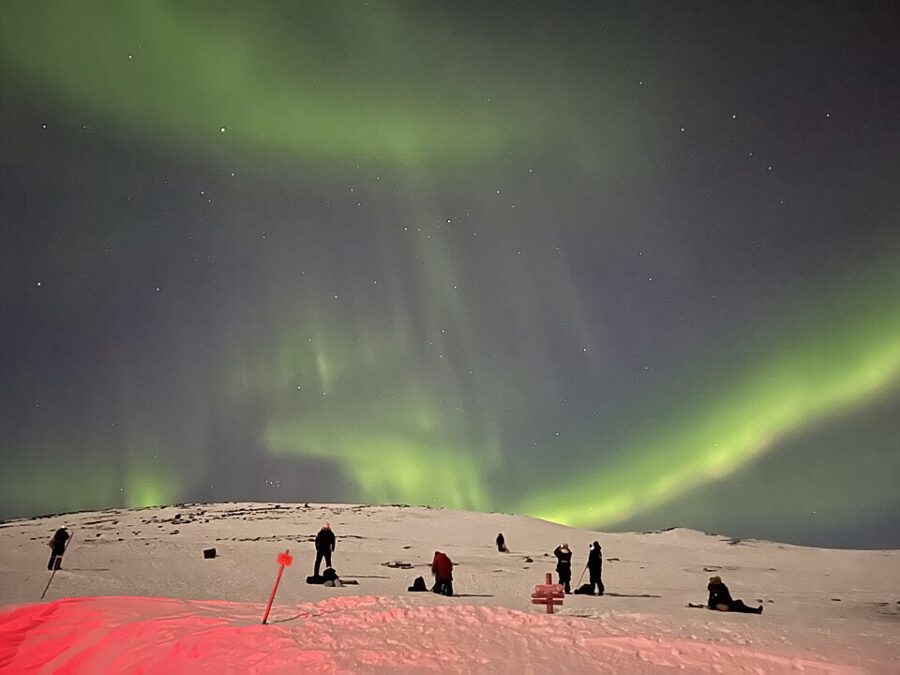
STF runs the Aurora Sky Station, opened in 2007 at 900 metres on Nuolja, reached by a 20-minute chairlift ride. Its Norrskensnatt, the aurora night, runs from 20:30 to 01:00 at the latest, with the lift up, a short talk, a café and a short walk on the mountain, and in bad weather a fallback to a wood-heated lavvu, a Sámi tent, in the national park. Only 40 places are available each night. STF’s own figures say the station is open about 90 per cent of its scheduled time and the aurora is visible on about 70 per cent of the evenings it is open; there is no refund if the weather stops the lift.

Kiruna, south-east along the lake and the railway, is the area’s transport hub and its largest town. Its skies are clear and cold, with a January mean of −12.4 °C, and the open country around it is dark within minutes. The combination I would pick is Kiruna for the flight and Abisko for the nights, with a hire car or the train between them.
Iceland and the Faroes
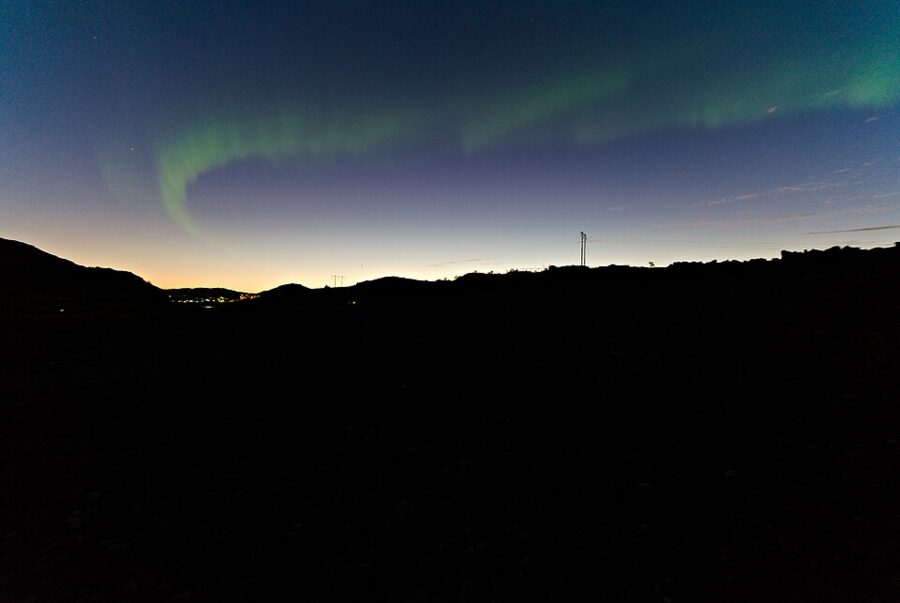
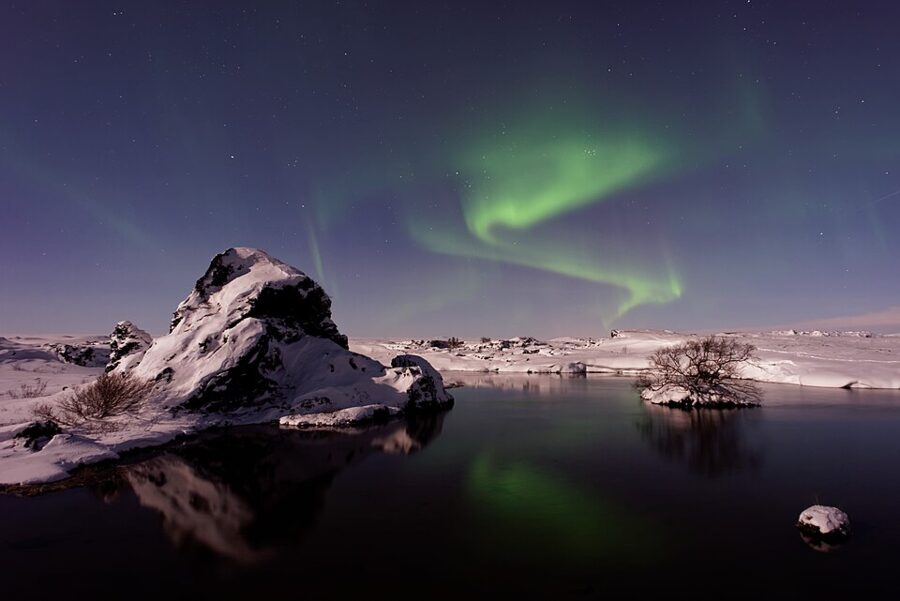
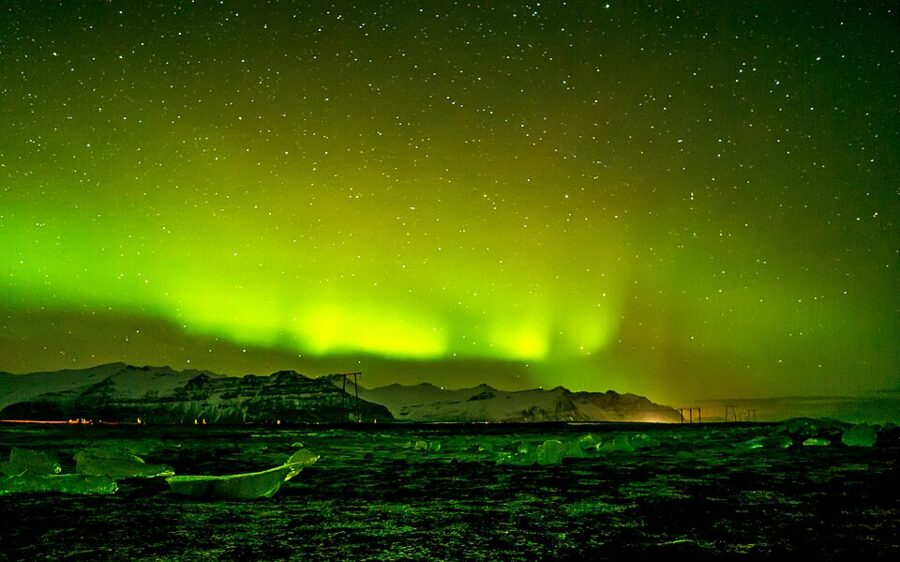
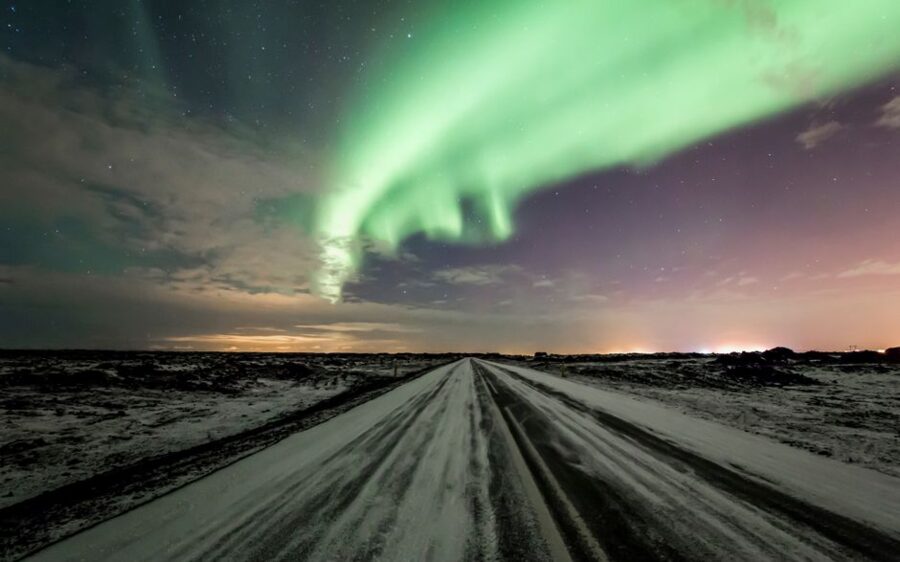
Iceland lies between about 63 and 66 degrees, but the magnetic pole sits on the Canadian side of the Arctic, so in magnetic terms Iceland is as far north as northern Norway and well inside the auroral zone. The aurora itself is not the problem. The weather is: Reykjavík gets about 880 mm of rain and snow a year on 155 days, and in December and January the sun shines for less than a fifth of the short time it is up.
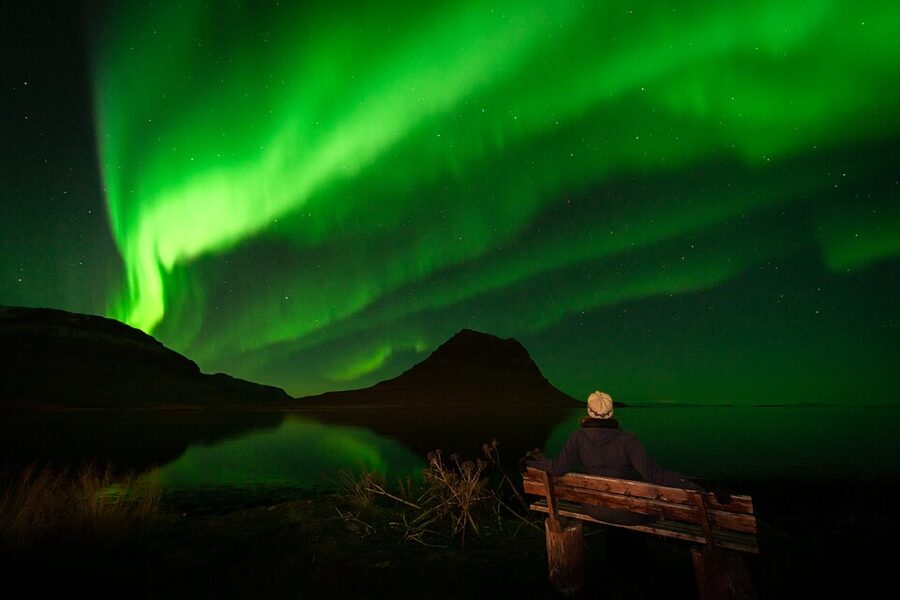

What Iceland has instead is roads. The Ring Road circles the island and the weather on one side is often different from the other, so the Met Office’s cloud map is the most useful aurora tool in the country. Leave Reykjavík’s lights behind; Thingvellir, north-east of the city, is the usual first stop for good reason. I would rate Iceland a strong choice for a combined winter trip and a weaker one if aurora is the only point of going.

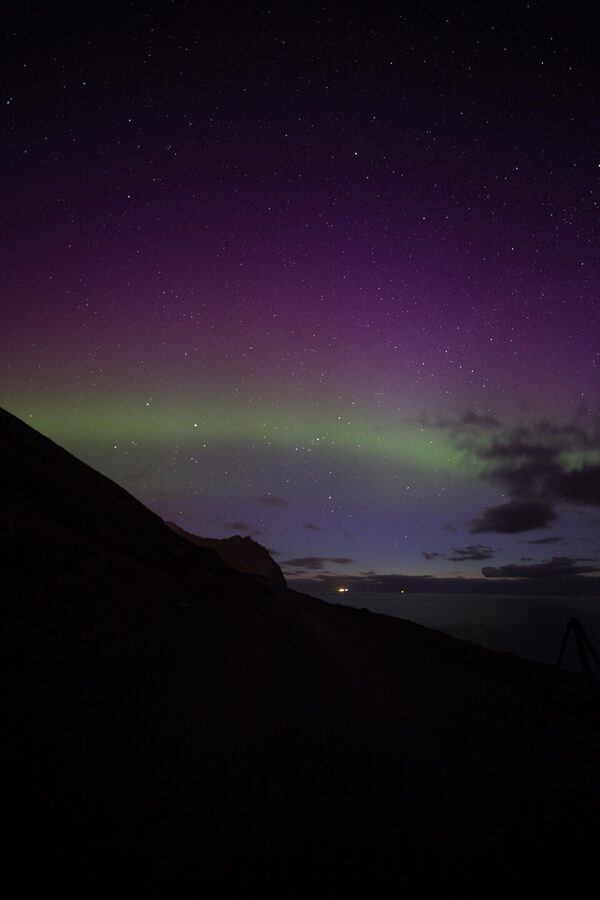
The Faroes, at 62 degrees, see the aurora on active nights and are worth a look up if you are there anyway, but with about 1,400 mm of rain and snow a year on 192 days, and around 1,000 hours of sunshine, they are nobody’s first choice for it.

Svalbard: aurora at noon
On Svalbard, at 78 degrees, the night-time oval lies to the south, and the aurora overhead at night is the weaker, more diffuse kind found over the polar cap. The day-side oval, though, passes right overhead around the middle of the day. In Longyearbyen the sun stays below the horizon from 27 October to 14 February, and in the weeks around the winter solstice the midday sky is dark enough to see the aurora when it comes.
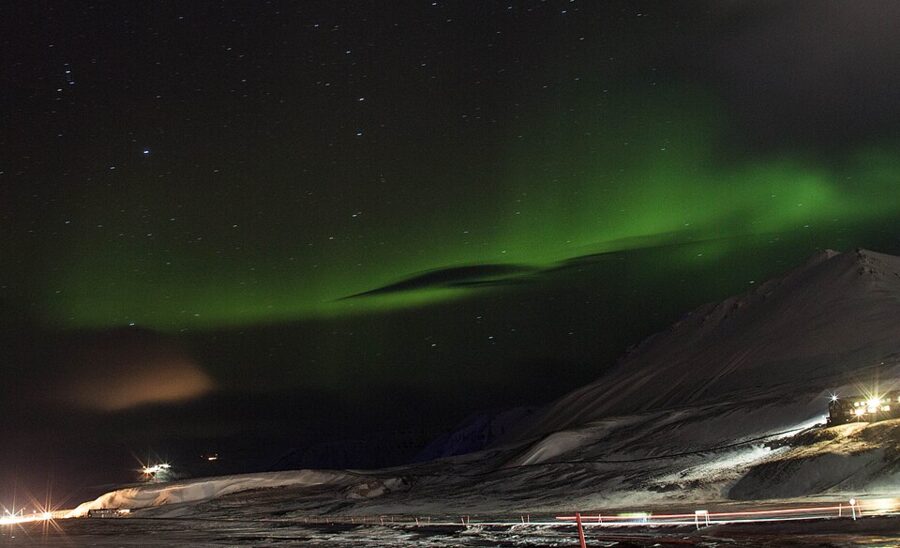

The daytime aurora is real, but keep expectations in check. Store norske leksikon describes it as quiet arcs, usually weaker than the eye can see, glowing mostly in red at 150 to 200 km and above; strong rays and green forms do appear, but less often than in the night-time oval farther south. Visit Svalbard calls the season from 1 October to 28 February its Northern Lights Winter, and in practice most visitors see their aurora in the evening, as you would in Tromsø.
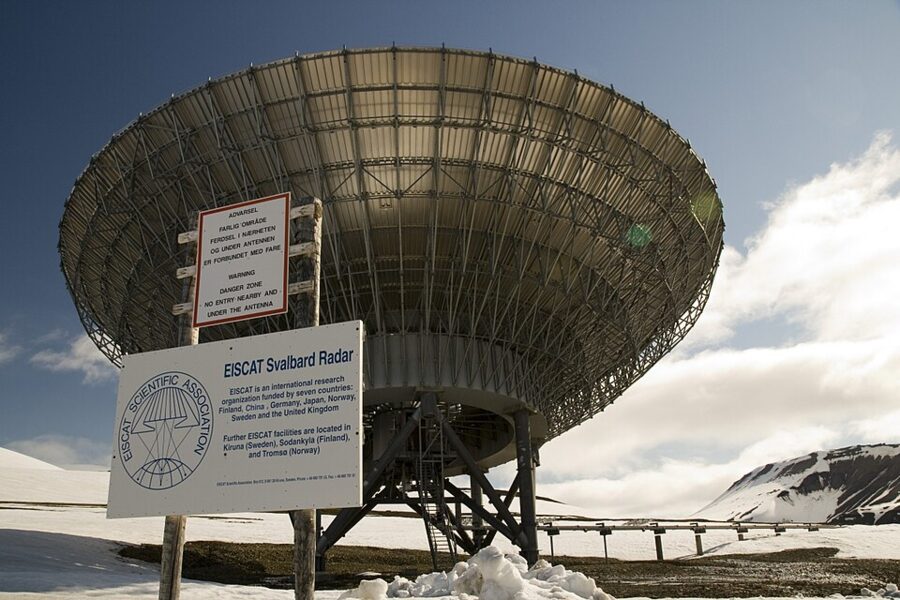
The science base for it is the Kjell Henriksen Observatory, run by the university centre UNIS on Breinosa above Adventdalen, which watches the day-side aurora with instruments from several countries. In July 2026 a team from the National Central University in Taiwan installed an all-sky colour camera there that can image in both night and day conditions. The observatory also publishes an aurora forecast app, Aurora Forecast 3D.

Raising your odds
Nights to stay
Weather comes in spells of several days, so the most reliable way to improve your chances is to stay longer. Three nights is the minimum I would plan for anywhere in the band, and five to seven gives a real margin: enough for a front to pass and the sky behind it to clear.
Chasing by car or tour
A car makes you independent and lets you stop for a 20-minute display on the way back from dinner. It also means driving on snow and ice in the dark, on roads with reindeer and elk, and you will be standing in lay-bys at night. Park well off the road, never on a bend, and switch off your headlights.
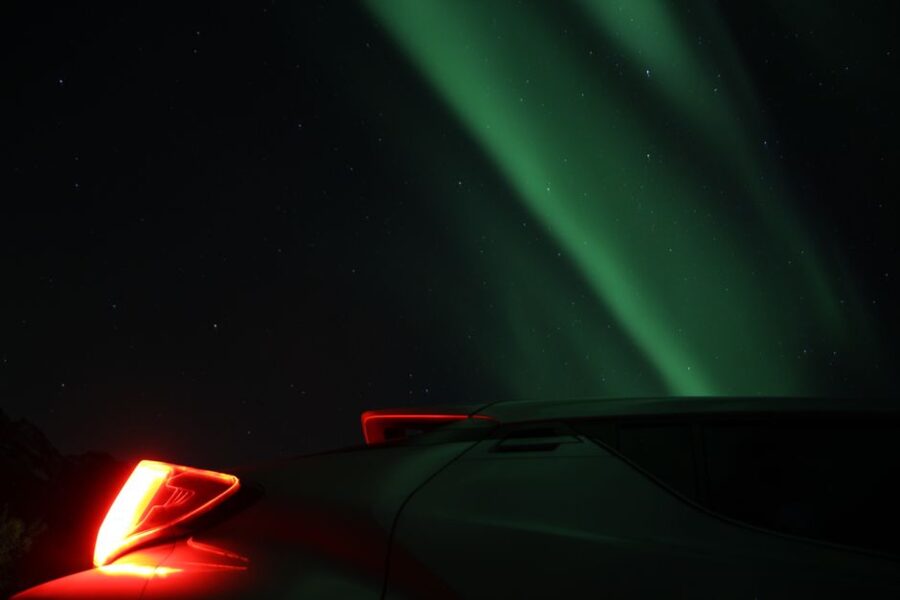
Tours cost more but take away the driving, and the better guides know the local weather patterns well enough to make a call that a visitor cannot. Some combine the aurora with a camp, a fire and food, or with dog sledding or a reindeer visit; ask how small the group is, how far the guide will drive, and what happens if it clouds over.
Getting away from lights
Street lights, a car’s headlights, even a phone screen will cut your view of faint aurora. The FMI’s advice is to stand under a clear, dark sky away from town and traffic lights with an open view to the north, and to give your eyes half an hour to adapt, because human night vision is slow. Bring a head torch with a red light and keep your phone screen dim.
The darkest place of all is a tent or a cabin well away from any road. Winter camping in Scandinavia under the right to roam will put you there, if you have the gear and experience for nights at −20 °C.
What to wear at −20 °C
Aurora watching is standing still in the cold, often for hours, which is harder than skiing in it. Visit Tromsø’s advice on dressing says to be ready for anything from −25 °C to 5 °C on a night out, and inland Lapland is regularly colder than that. The rule everywhere is three layers: wool next to the skin, a warm mid-layer of wool or fleece, and a windproof outer shell, with a down jacket over the top for standing about.
Most cold misery comes from the feet and hands. Wear boots a size larger than usual, with room for thick socks, and mittens over thin gloves so you can work a camera. Many tour operators supply thermal suits and boots. The Aurora Sky Station’s own advice adds one thing people forget: do not use water-based face cream before going out, as it can cause frostbite.
Photographing it with a phone and a camera
Recent phones photograph the aurora surprisingly well in night mode, as long as they are perfectly still. Rest the phone on something solid or use a small tripod, turn off the flash, let the night mode run its full exposure of several seconds, and tap to focus on a bright star or a distant light. If your phone has a pro or manual mode, try ISO 800 to 1600 and an exposure of 3 to 10 seconds.
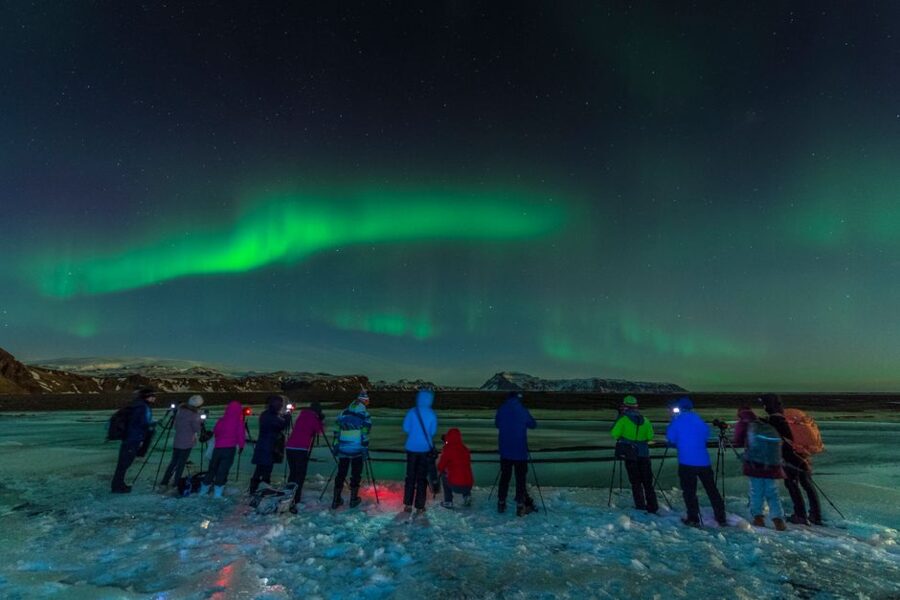
With a camera, use a wide lens at its widest aperture, f/2.8 or wider if you have it, manual focus set to infinity and checked on a star, ISO 1600 to 3200 and exposures of 2 to 15 seconds. Use the shorter end when the aurora is bright and moving, or the curtains blur into a smear. Batteries drain fast in the cold; carry spares in an inside pocket.
What it really looks like to the eye
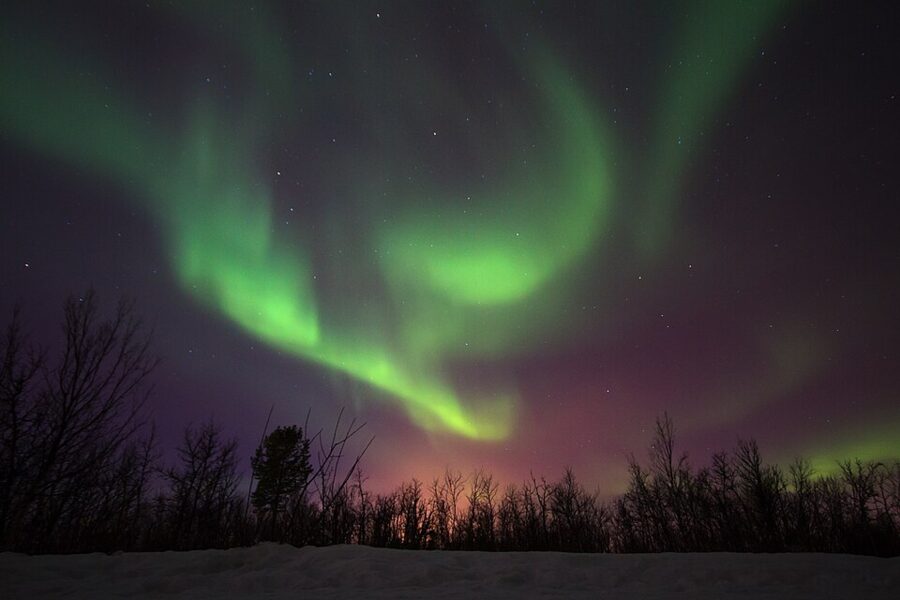
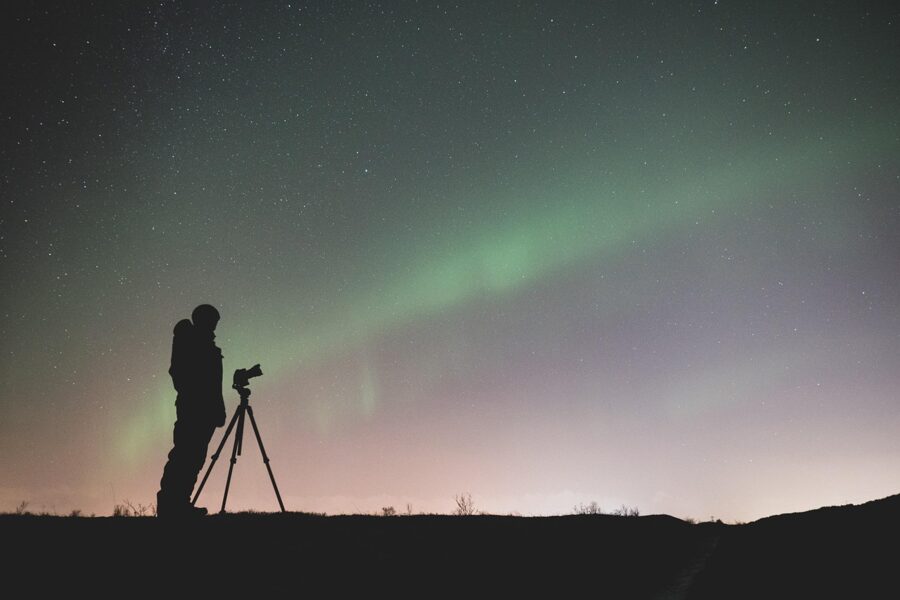
Here is what the photographs do not say. Faint aurora looks pale grey or white to the naked eye, like thin cloud that does not move with the wind; the camera, collecting light for seconds, shows it green. NOAA’s aurora tutorial explains that the eye’s night vision picks out brightness before colour, and only when the aurora is fairly bright can you see the true green, red and purple.
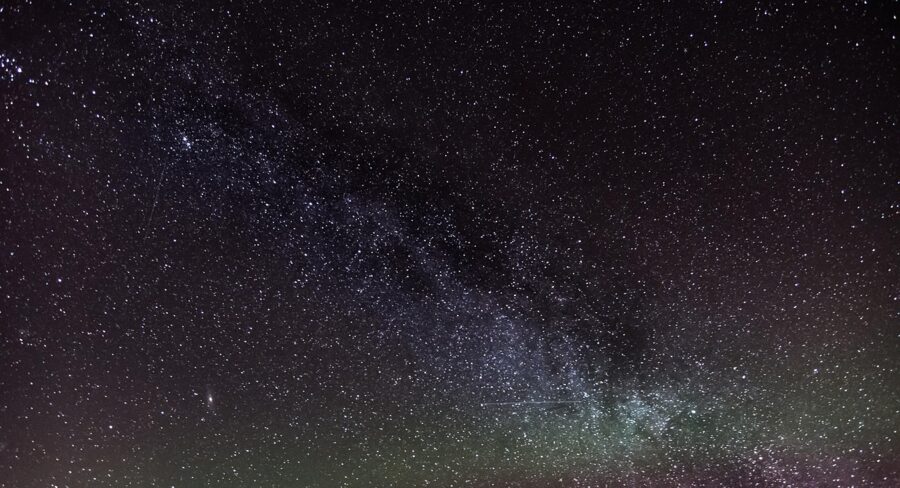
When it is bright, though, nothing in the photographs prepares you for the movement. An active display folds and unfolds, and at its peak, NOAA notes, it can fill the whole sky and cross from one horizon to the other in a few tens of seconds. That is the thing worth the cold.
Myths, tested
You can hear it. Many people in the north say they have heard faint crackling during strong displays. The FMI says that measurements by the acoustics laboratory at what is now Aalto University and by the Sodankylä Geophysical Observatory have produced no confirmed result. Any sound could not come from the aurora itself, 100 km up; it might come from electrical discharges near the ground, or from a brain filling in sound for a silent spectacle.
The colours are as bright as the photos. Only on strong nights. On an ordinary one, most of the colour is the camera’s.
It only happens in midwinter, in hard frost. The aurora is active all year and statistically strongest around the equinoxes. The FMI points out that it shows regardless of temperature; hard frost just tends to come with clear skies, and mild weather with cloud. A September night at −2 °C can beat a January one at −30 °C.
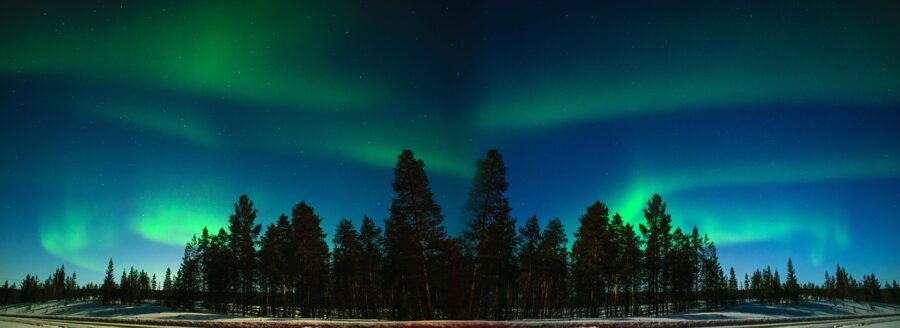
Iceland is the best place. Iceland is a fine place, and its scenery under the aurora is hard to beat. But its winter weather is Atlantic, like the Norwegian coast’s, and it has no large dry interior to retreat to that is open to ordinary drivers in winter. If clear skies are the measure, inland Lapland wins.
Which brings the comparison back to Abisko and Tromsø, under the same ring of light with three times the rain and snow between them. If you are deciding today, pick the base by how you want to spend the days, then give yourself enough nights and enough mobility to go where the cloud is not. And if you are in Tromsø on a grey winter evening, check the cloud cover on Yr for Skibotn and Kilpisjärvi. If it is clearer inland, drive to Skibotn on the Lyngen fjord and turn up the E8 towards the Finnish border, where the road climbs onto the plateau and the sky so often opens.