


You can get to Barentsburg in winter 2026-27, and almost every way of doing it is sold by the company that owns the town. That one fact, more than the distance or the cold, is what separates a trip to Svalbard’s Russian settlement from any other day out of Longyearbyen.
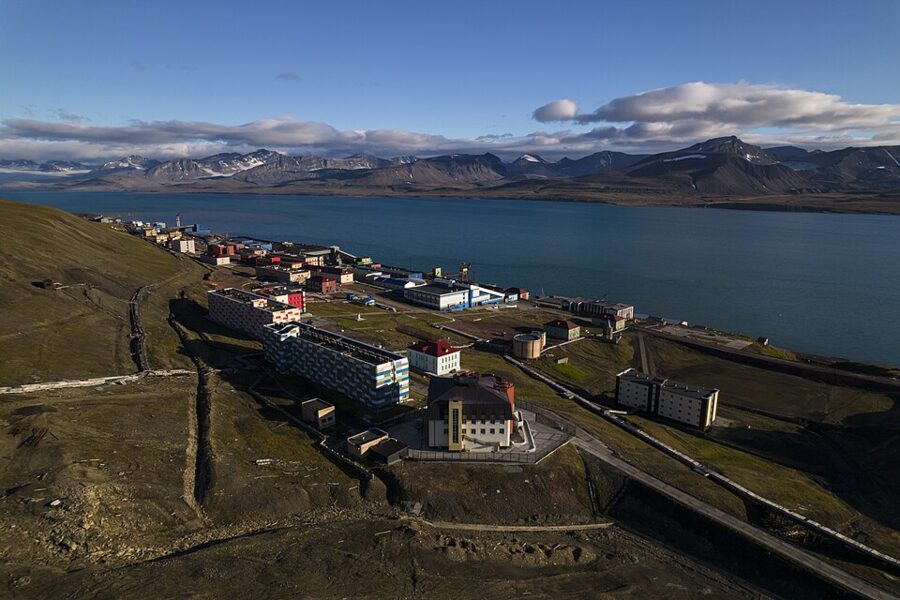
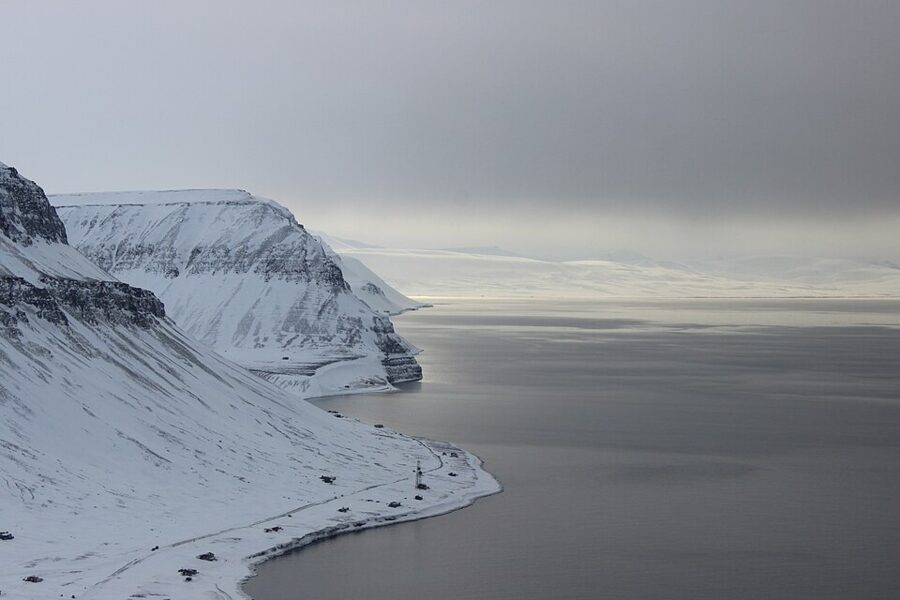
Barentsburg sits on the east shore of Grønfjorden, a side arm of Isfjorden, about 40 km south-west of Longyearbyen in a straight line and 60 to 75 km by the routes you can actually travel. The Russian state company Trust Arktikugol owns almost every building, runs the coal mine and the power station, and pays nearly everyone who lives there. Statistics Norway counted 419 people in Barentsburg and Pyramiden together on 1 July 2026, almost all of them in Barentsburg.
There is no road. From mid-February to early May you go by snowmobile, and from June to September by boat, and in both seasons the regular trips are run by Arctic Travel Company Grumant, Arktikugol’s own tourism subsidiary. Visit Svalbard, Longyearbyen’s destination company, has kept every product linked to the Russian state companies off its platforms since 2022, and its members no longer land guests in the town.
So the practical question comes with a second one attached: whether to go at all. Longyearbyen, the 2025 environmental rules and the rest of the archipelago are in the Svalbard guide.


Contents 9 parts
Barentsburg at a glance
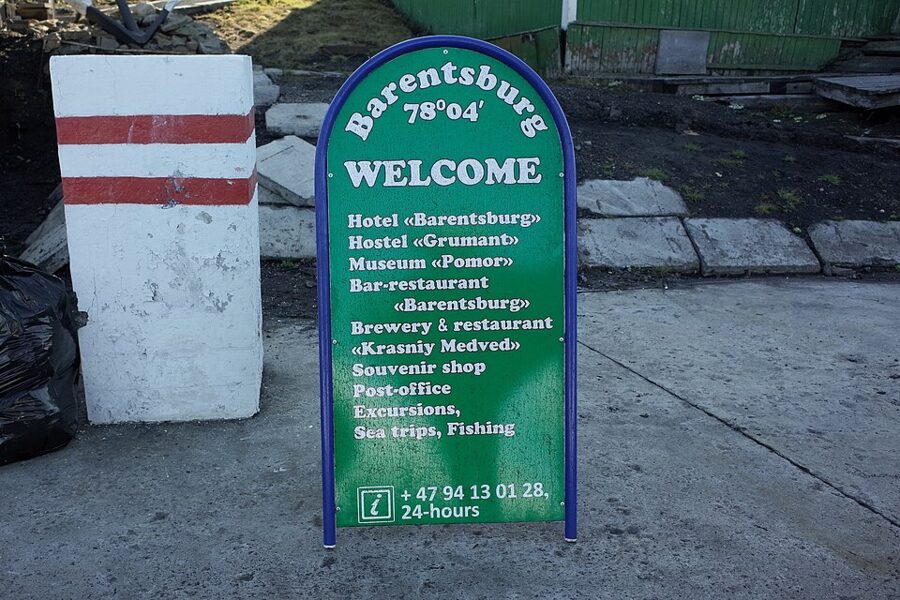
| Where | East shore of Grønfjorden, Nordenskiöld Land, western Spitsbergen, 78°04′N |
|---|---|
| Who runs it | Trust Arktikugol, owned by the Russian state; tourism through its subsidiary Arctic Travel Company Grumant |
| People | 419 in Barentsburg and Pyramiden together, 1 July 2026 |
| From Longyearbyen | About 40 km in a straight line; 2 to 4 hours each way by snowmobile; a full day by boat with stops |
| Winter | Snowmobile, mid-February to early May |
| Summer | Boat, early June to late September |
| Beds | Hotel Barentsburg (46 rooms) and Pomor Hostel (30 rooms), both Arktikugol’s |
| Law | Norwegian, under the Svalbard Treaty; the Governor of Svalbard is the police |
How a Dutch coal claim became a Russian town
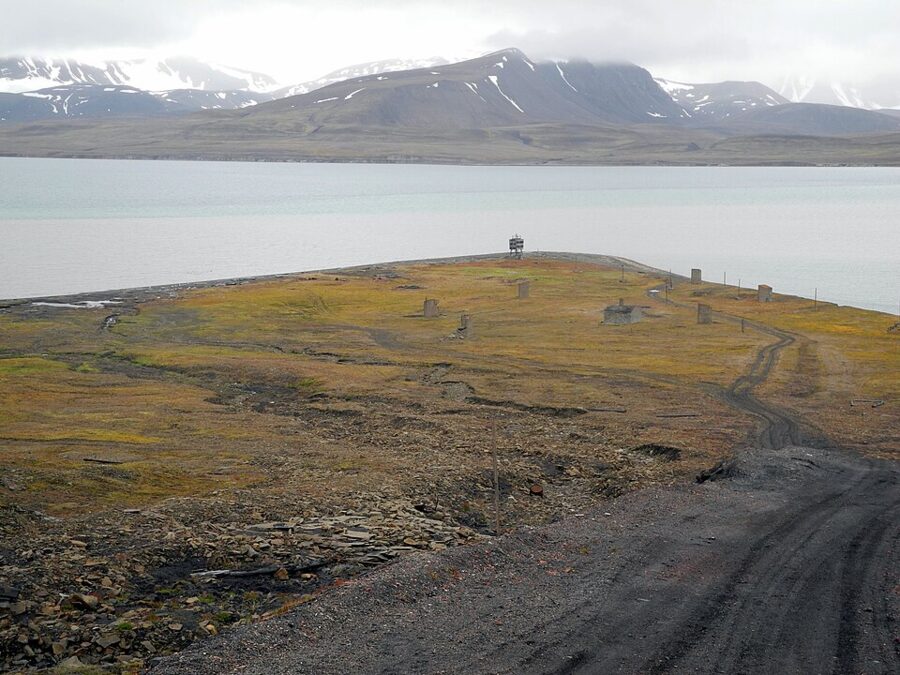
Green Harbour, before Barentsburg
Long before anyone dug coal here, Grønfjorden was Green Harbour, an anchorage for whalers in the 17th and 18th centuries and later for Pomor crews, the hunters and traders of Russia’s White Sea coast, who came for walrus, seal and fox. Norwegian whaling returned for a few years at the start of the 20th century: a company from Tønsberg ran a shore station at Finneset, just south of today’s town, from 1905 to 1912.
Coal turned up at about the same time. Between 1900 and 1917, Norwegian, Russian and other claimants staked fields around Heerodden and in Gladdalen, and a Stavanger company put up the first house on the site of today’s Barentsburg in 1912. None of them made it pay.

The Dutch years, 1920 to 1932
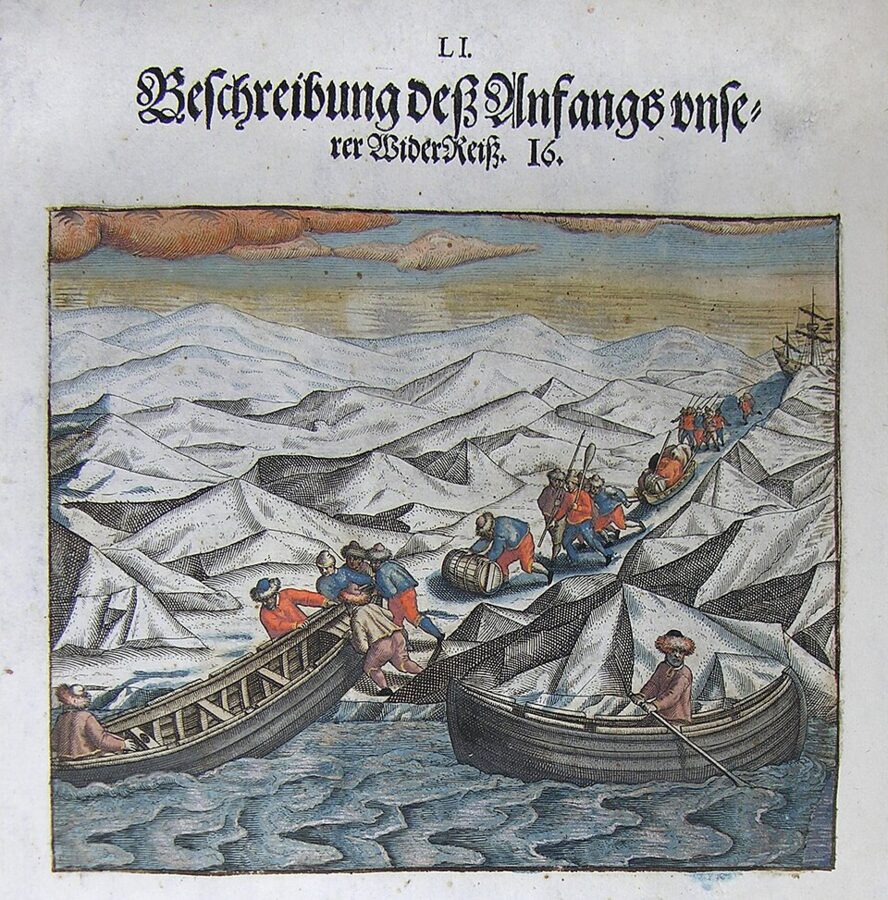
In 1920 the Nederlandsche Spitsbergen Compagnie bought the claims and named the place after Willem Barentsz, the Dutch navigator who sighted Bjørnøya and north-west Spitsbergen in 1596. The company mined from 1921 and spent heavily on quays, housing and machinery, then stopped work in 1926 when the money ran out. In 1932 it sold Barentsburg to the Soviet state trust Arktikugol, whose name means simply “Arctic coal”, and the trust took over the fields east towards Grumantbyen as well.
Soviet town, war and rebuilding
By 1937 more than 1,300 people lived in Barentsburg. In August 1941 an Allied operation evacuated the Soviet miners to Arkhangelsk and the Norwegians of Longyearbyen to Britain, so that the coal could not fuel Germany’s war.
The archipelago did not stay empty. In 1942 German aircraft sank the Norwegian expedition’s icebreaker Isbjørn and the schooner Selis at the mouth of Grønfjorden, and among the dead was the expedition’s leader, Einar Sverdrup; a memorial at Kapp Heer, just north of town, was unveiled in 1949. In September 1943 a German squadron that included the battleships Tirpitz and Scharnhorst shelled Barentsburg and Longyearbyen and left both burning. The departing Soviet owners had set the mine on fire, and it burned until after the war.
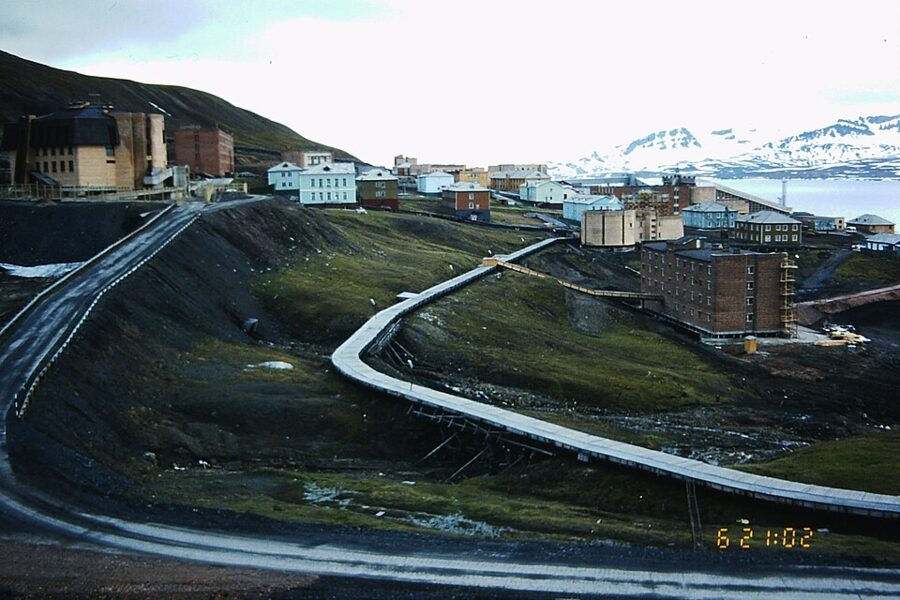
Most of what you see today is post-war. The town was rebuilt, coal mining restarted, and through the Soviet decades Barentsburg and Pyramiden together held around 2,500 men, women and children. From the 1970s the two-storey timber houses gave way to brick and concrete blocks, and the coal power station at the south end of town went up in 1974.

After 1991
The end of the Soviet Union ended the easy money. Wages went unpaid, miners took the trust to court, and the population fell through the 1990s. On 29 August 1996 a Vnukovo Airlines Tupolev Tu-154M chartered by Arktikugol flew into Operafjellet, 14 km east of Svalbard Airport, on its approach from Moscow. All 141 people on board died, 130 passengers and 11 crew, most of them Russian and Ukrainian miners and their families on their way to Barentsburg and Pyramiden.
It is still the deadliest air crash on Norwegian soil, and investigators found nothing wrong with the aircraft: the crew flew a sound plane into the mountain after a chain of navigation errors. A year later, on 18 September 1997, an explosion and fire in the Barentsburg mine killed 23 miners, 13 from Russia and 10 from Ukraine, and the mine was flooded to put the fire out. Arktikugol closed Pyramiden in 1998, and the crash was one of the reasons.

The 2000s brought more trouble: Norwegian inspectors found a smouldering underground fire in October 2006, coal mining did not fully restart until the end of 2010, a Russian helicopter crashed on landing at Heerodden in March 2008 and killed three, and in October 2017 a Mi-8 went down in Isfjorden on its way in to Kapp Heer with eight on board, none of whom survived. In between, Moscow started spending again. From 2012 Arktikugol renovated much of the town, opened a brewery, refitted the hotel and in 2013 set up Grumant to bring in tourists.
The treaty that keeps it Russian
Barentsburg is Russian because of a clause, not a border. The Svalbard Treaty, signed in Paris on 9 February 1920 and in force from 14 August 1925, gives Norway full sovereignty over the islands but obliges it to let citizens and companies of every signatory state mine, fish, hunt and trade on completely equal terms. Russia is the only state besides Norway that still uses that right on any scale.
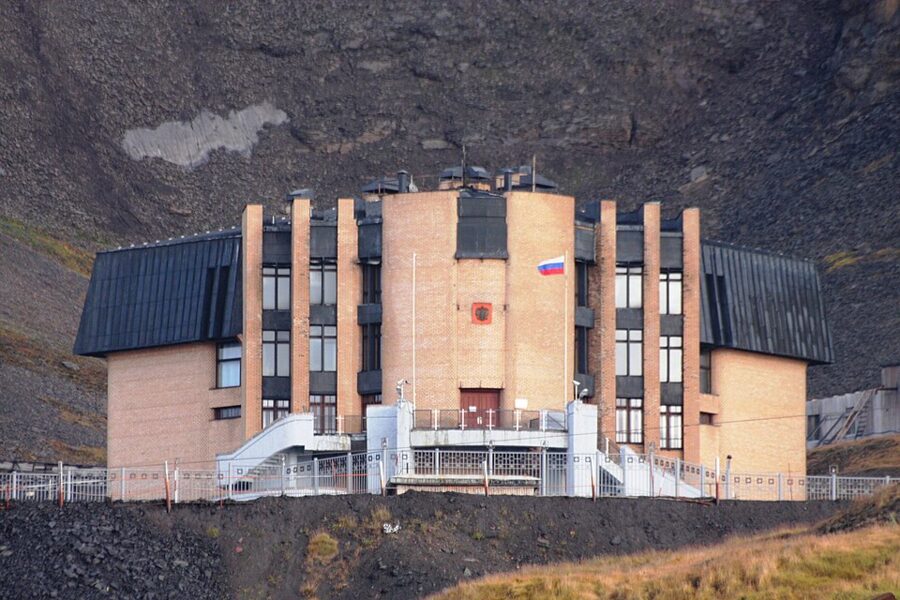
So the town runs on Norwegian law. The Governor of Svalbard, the Sysselmesteren, is the police here as in Longyearbyen, Norwegian inspectors check working conditions in the mine, and since autumn 2024 the residents have been entered in Svalbard’s population register for the first time. Russia keeps a Consulate General in Barentsburg, one of its two in Norway, and the consul acts as the local authority day to day.

Life in Barentsburg now
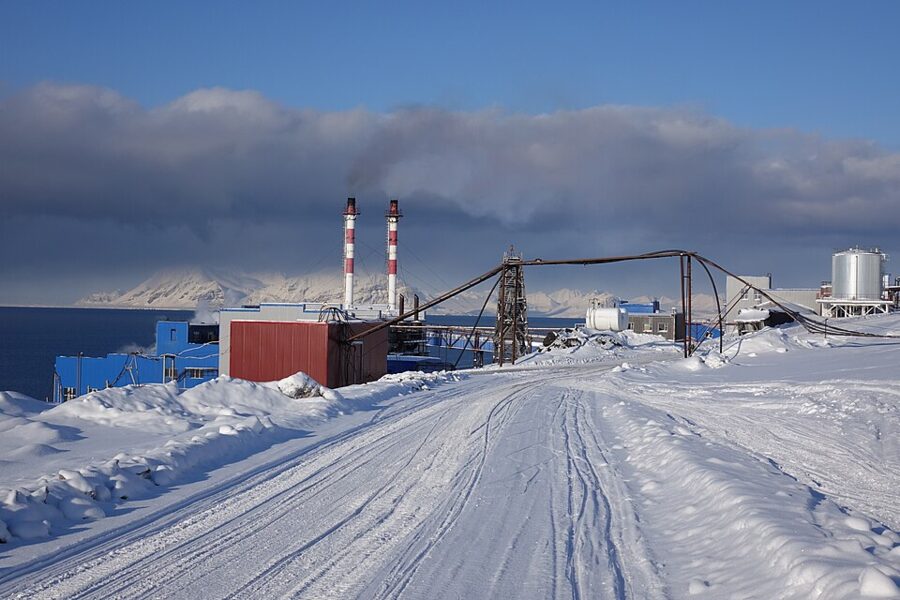
Coal and the power station
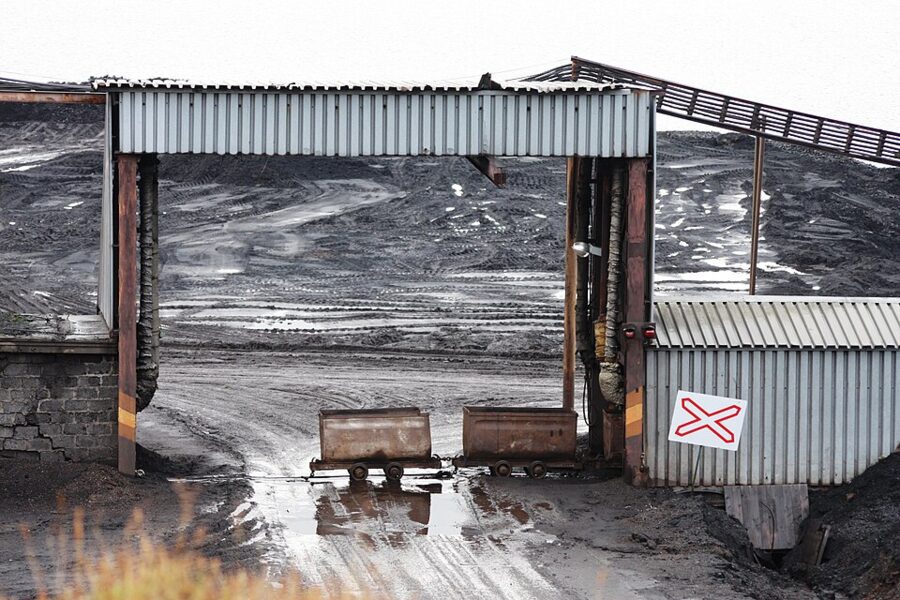
Barentsburg still mines coal, and in May 2026 Svalbardposten described it as the only working coal mine on Svalbard, producing 80,000 tonnes a year. In 2023 Russia’s ministry for the Far East and the Arctic said output would be cut from 120,000 tonnes a year to 40,000 by 2032. Part of what comes out feeds the town’s own power station.
The Russian ministry in charge of the Arctic has set Arktikugol three pillars for the coming years on Svalbard: tourism, international research, and servicing Russian ships in the Barents Sea. Its director told a Murmansk paper in 2025 that supplying and repairing Russian fishing vessels in Barentsburg had brought in more than 70 million roubles the year before.


Who lives there, and the split of 2022
For most of its post-Soviet life Barentsburg was as much a Ukrainian town as a Russian one. Many of the miners came from the coal country of Donbas in eastern Ukraine, where Russian is widely spoken and ties to Russia run deep. When NRK’s documentary team reported from Barentsburg in spring 2022, a few weeks into the full-scale invasion, about 370 people lived there, nearly all from Russia or Ukraine, two countries at war.
The consul told NRK he saw no division, only solidarity, and that people had agreed not to touch the deep questions. Others were less sure how freely they could speak. A 17-year-old born in Crimea called it a non-political, international place; many people simply walked away from the reporters.
The split did not hold. On 1 September 2024 Arktikugol reported 340 residents in its two settlements to the Governor, High North News reported: 219 from Russia, 57 from Ukraine, 62 from Tajikistan, one from Kazakhstan and one from South Africa. Statistics Norway’s count fell to 297 on 1 January 2025 and has since climbed again, to 419 on 1 July 2026.
Timofey Rogozhin, a Russian who ran Arktikugol’s tourism business from 2015, quit after an ultimatum over his criticism of the Russian government and moved to Longyearbyen, where he became one of Svalbard’s best-known opponents of the war. He told NRK that many others had left too, some because of the pandemic and some because they no longer wanted to work for a Russian state company.
The consulate, the school and the farm
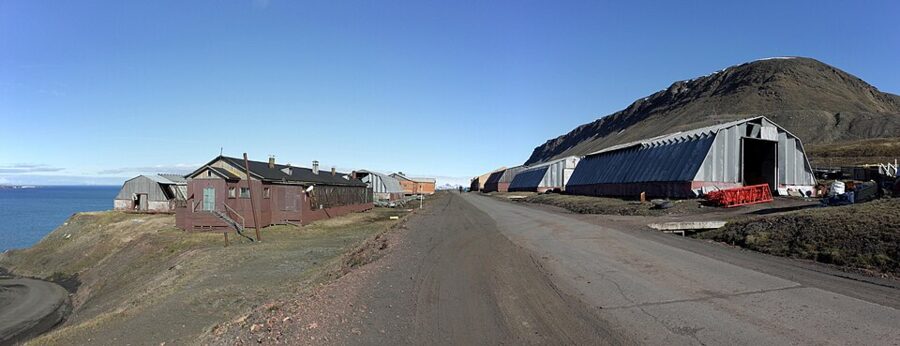
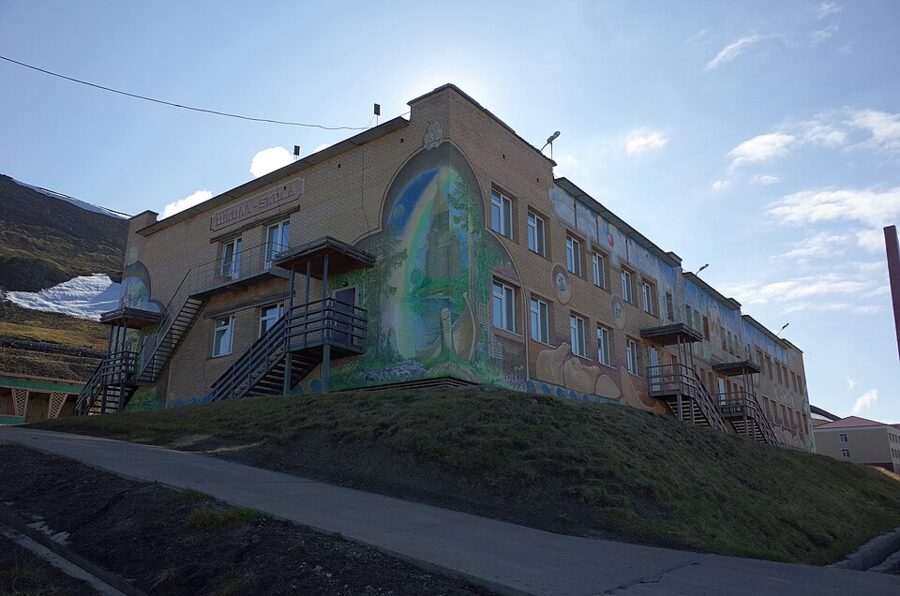
Arktikugol runs everything a small company town needs: a hospital, a kindergarten, a school, a culture house with a 300-seat cinema, a sports hall with a swimming pool, a canteen, and a farm with animal sheds and a greenhouse that has long grown much of the town’s fresh vegetables. Residents pay with company cards; bank cards work where tourists spend.


The research centres
Barentsburg is also a base for Russian science. The Kola Science Centre’s research station opened here in 2016 and hosts 80 to 100 Russian researchers in summer and 8 to 14 through the winter; the state weather service runs a year-round observatory, and the whole effort is coordinated as the Russian Scientific Centre on Spitsbergen. Moscow has also floated an international research station with BRICS countries, planned for Pyramiden.
Not every new institution is scientific. In October 2025 the Russian Geographical Society, chaired by former defence minister Sergei Shoigu, opened what it calls an expedition and tourist centre in Barentsburg, the Barents Observer reported, headed by a former Arktikugol employee who has written that Spitsbergen plays an important role in strengthening Russia’s position in the Arctic.
A year of headlines
On 9 May 2025 about half the population walked in an “Immortal Regiment” procession with photographs of dead soldiers and the orange and black ribbons of St George. Two years earlier a Victory Day parade of 50 vehicles had a company helicopter flying low over it, and the operator was fined for breaking aviation rules.
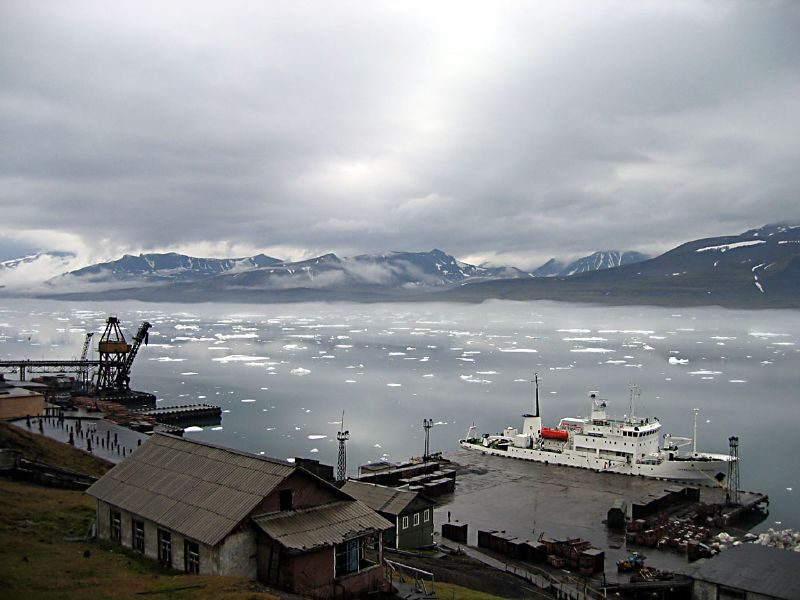
From June 2025 the old research ship Professor Molchanov began sailing passengers direct from Murmansk, so that Russians could reach Svalbard without a Norwegian visa; ten voyages were planned for 2026. When it docked on 12 March 2026, a giant Soviet flag flew from a coal crane in the port, as the Barents Observer reported.
Then the ship became the story. On 2 September 2026 the Governor, acting on a court order won by Ukraine’s state energy company Naftogaz to enforce an arbitration award over assets seized in Crimea, arrested the Professor Molchanov at the Barentsburg quay. Moscow called it piracy and accused Norway of breaking the treaty; on 18 September Norway’s justice ministry passed a regulation that makes it harder to seize goods needed to supply Svalbard’s settlements.

On 28 October the Nord-Troms district court threw out Arktikugol’s bid to have the arrest lifted, and Arctic Today reported, citing Svalbardposten, that other Russian assets on Svalbard had been seized too: the Russkiy Dom tourist centre in Longyearbyen, 62 snowmobiles and 15 cars. That matters to anyone planning a snowmobile trip in winter 2026-27.
Getting to Barentsburg in 2026-27
Why Longyearbyen’s tour companies stopped going
Until 2022 a day in Barentsburg was one of the standard Svalbard excursions, and Longyearbyen’s tourism companies worked closely with Grumant. In March that year the Svalbard tourism council and Visit Svalbard asked their members not to buy services from Russian state-owned companies. In October 2022 the council excluded Arktikugol and Grumant from membership, and from 2023 no ordinary trips to Barentsburg or Pyramiden were sold through Visit Svalbard, winter or summer.
Visit Svalbard’s statement on the two settlements describes Grumant as wholly owned by Arktikugol and calls it the Russian state’s extended arm on Svalbard. The trips it still sells see the settlements from a distance: boats to Nordenskiöldbreen that pass Pyramiden, and snowmobile routes heading west that pass Barentsburg.
The line has held. In October 2026 Visit Svalbard’s managing director, Ronny Brunvoll, told NRK that it was a moral and ethical position taken jointly, and that no new decision would be made until the fighting in Ukraine ends. Members who land guests in Barentsburg anyway get no marketing help from Visit Svalbard for those trips and cannot use its booking system.
Winter: by snowmobile, mid-February to early May
From the middle of February, once there is light and enough snow, Grumant runs a one-day snowmobile tour to Barentsburg for NOK 4,190 per person if you drive alone, or NOK 7,180 for two people sharing one machine. The price covers hotel pick-up in Longyearbyen, the snowmobile, fuel, a suit, boots, gloves and helmet, a set lunch in the hotel restaurant, a guided walk in town and search and rescue insurance.
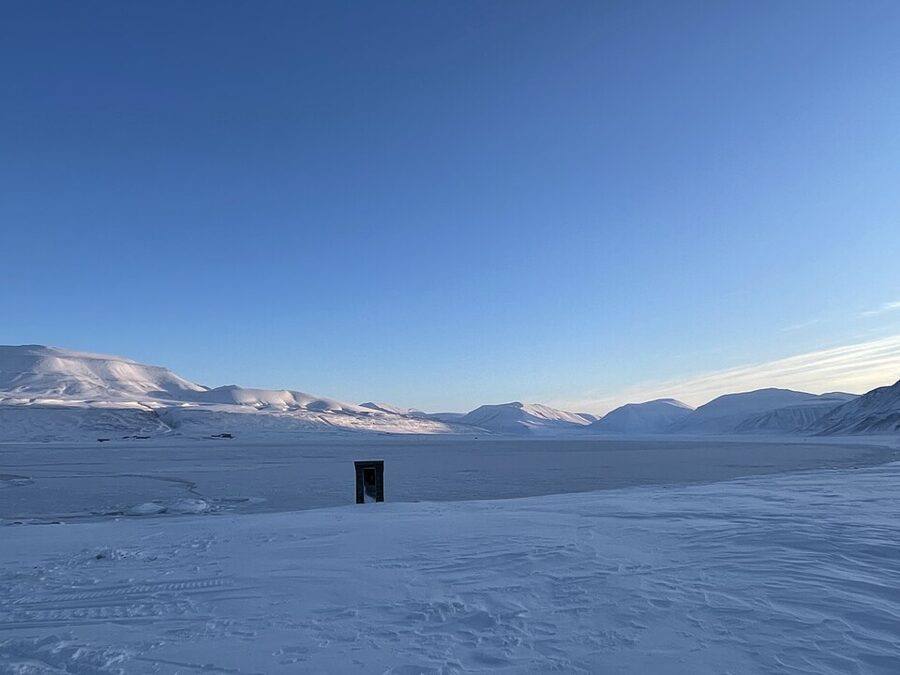
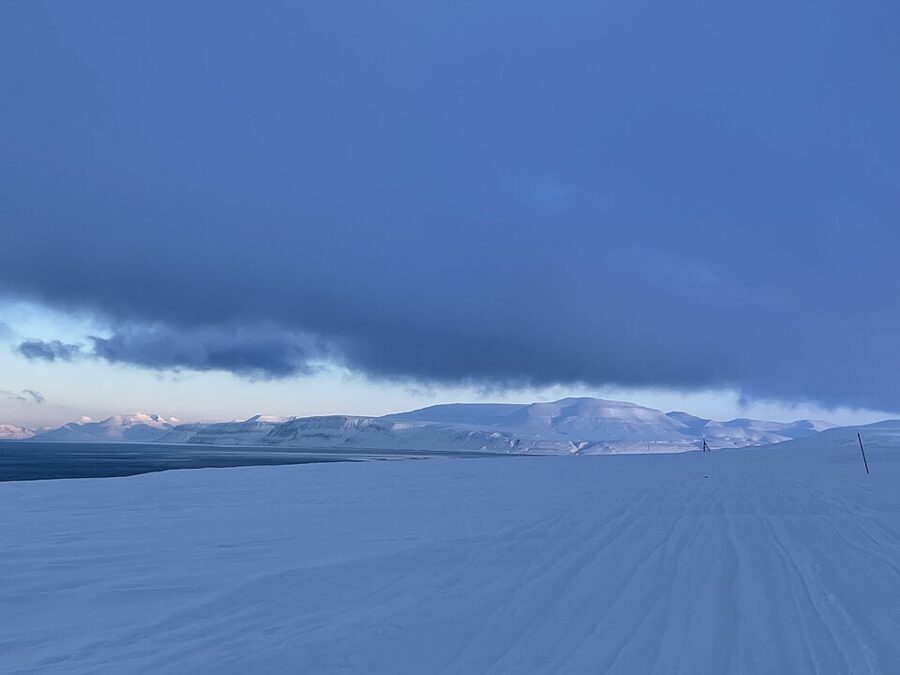
The outward route runs Longyearbyen, Todalen, Skiferdalen, Grøndalen, Barentsburg, about 75 km and three hours on the machine; you come back a different way, about 60 km. Every driver needs a valid driving licence. Cancel seven days or more ahead and you get your money back; inside seven days you do not.
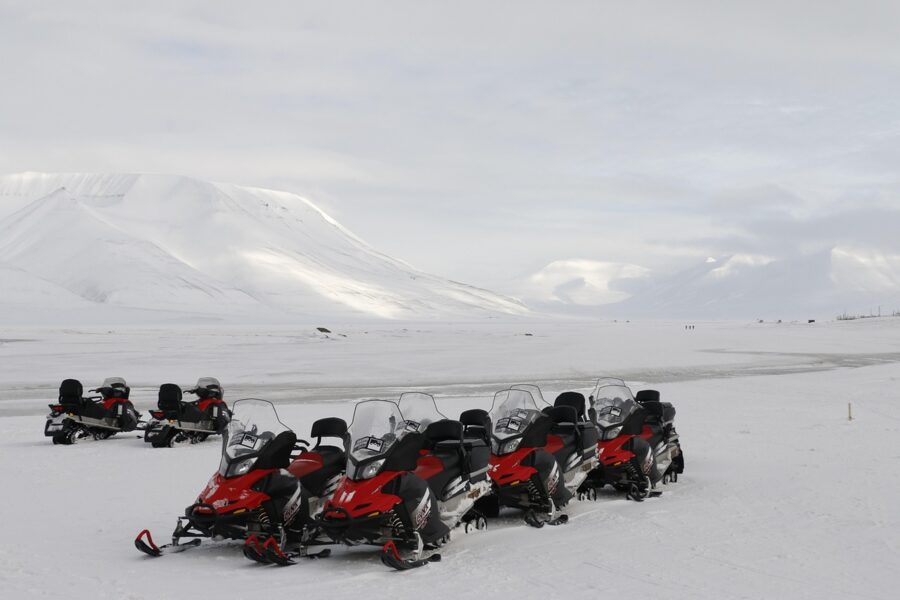
For more time in town, the two-day Boundless Arctic Express adds a night in Barentsburg for NOK 12,990 for a solo driver or NOK 21,980 for two sharing a snowmobile, and a three-day version adds the old radio station at Isfjord Radio on the coast. Grumant stops winter tours in the second week of May, when the snow goes soft.
Two cautions. The 62 snowmobiles seized in Longyearbyen in October 2026 were reported as Russian assets, so ask Grumant what you will be riding before you pay. And the polar night pauses everything: Grumant runs no tours from November to mid-February, when there is neither light nor enough snow.


Summer: by boat, early June to late September
Once the fjords are open, Grumant sails Barentsburg and Esmark glacier by open boat, a nine-hour, 110 km day for NOK 3,790 from age 12. You wear a drysuit in the RIB, cross Isfjorden to the front of Esmarkbreen, land in Barentsburg around lunchtime, eat in the hotel restaurant and get about three hours in town on a guided walk past the Lenin monument, the chapel and the museum, before heading back past the bird cliffs and the abandoned mining settlement of Grumantbyen.
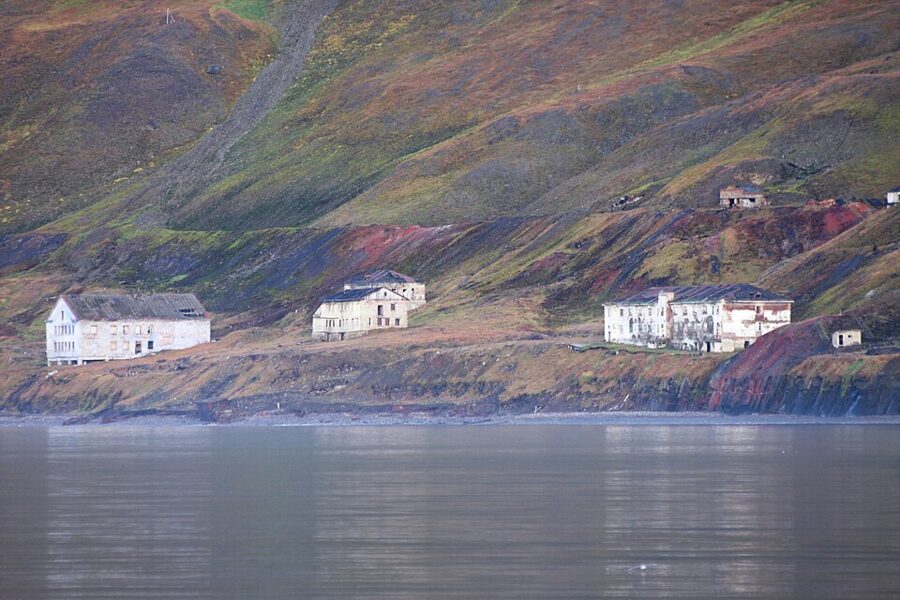

The same day also runs in covered boats, from age 6, including the company’s own MS Princess Lea. The two-day Barentsburg Expedition costs NOK 7,580 for an adult and NOK 6,200 for a child of 12 to 14, with a hike at Alkhornet on the way out, a night in Hotel Barentsburg, a visit to the husky farm and an optional early-morning trip into the mine; you are back in Longyearbyen at about 17:00 on the second day.
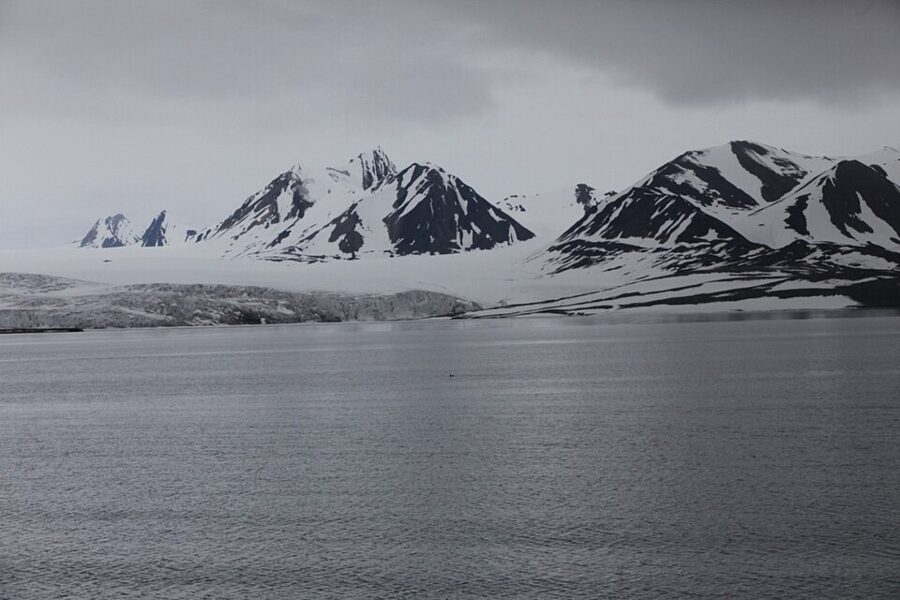

Scheduled summer trips run from early June to late September, and some boats keep going into October, weather and daylight allowing. Grumant also charters boats and RIBs to Barentsburg on request, and its 2026 dates for the overnight trips were on request as well, so write well ahead if you have only a few days.
Going on your own
You can go without Grumant, but very few people do. Whether an independent trip needs the Governor’s approval depends on whether your route leaves the central zone, the old management area 10 now called the ferdselsområdet; outside it you must apply at least four weeks ahead. Everywhere outside the settlements you must be able to protect yourself against polar bears and carry the means to scare one off, which in practice means a rifle and a permit for it.
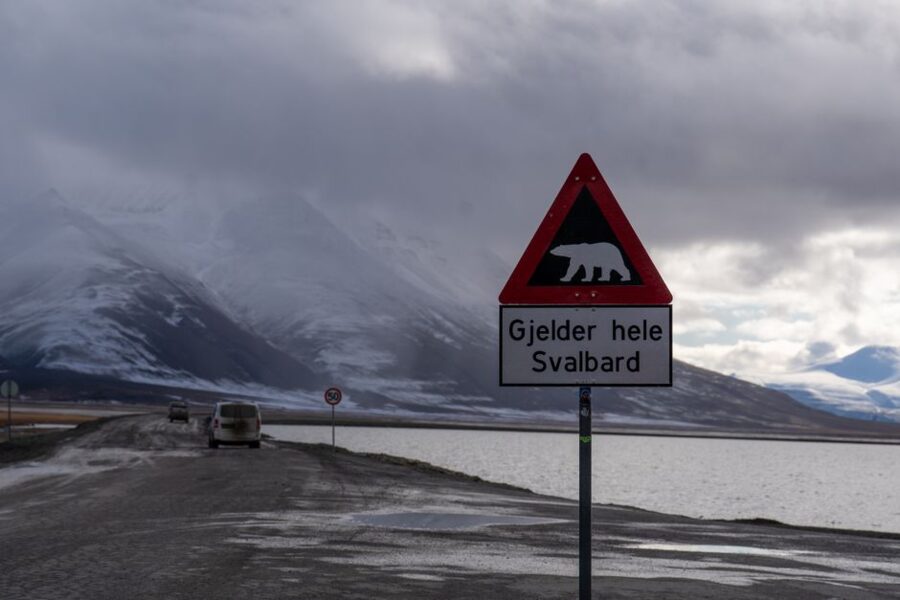
Under the field-safety regulation in force since 1 January 2026, tour companies working outside the settlements must have approved Svalbard guides with them from 1 July 2027. The Governor’s page on trips that need notice lists Barentsburg as an inhabited area, alongside central Longyearbyen, Pyramiden and Ny-Ålesund, so the requirement covers the journey there, not the walk around town.
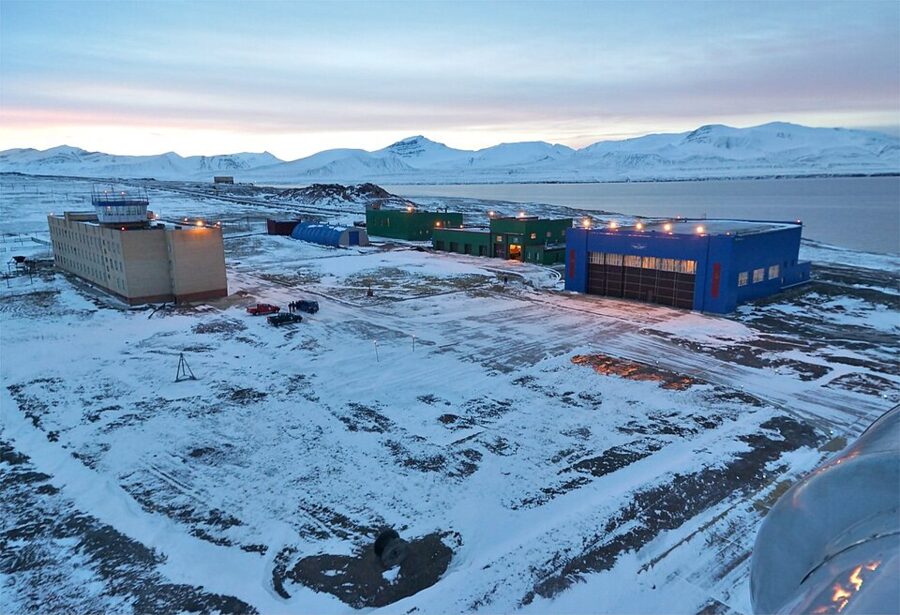
There are no public flights or ferries. Arktikugol’s Mi-8 helicopters fly from their base at Heerodden, mainly for the company’s own rotations, and aircraft may not be used for tourism on Svalbard. Russian citizens had another way in until September 2026, the voyages from Murmansk; everyone else starts in Longyearbyen, which you reach by air from Oslo or Tromsø.


What you see in Barentsburg
The stairs and the main street
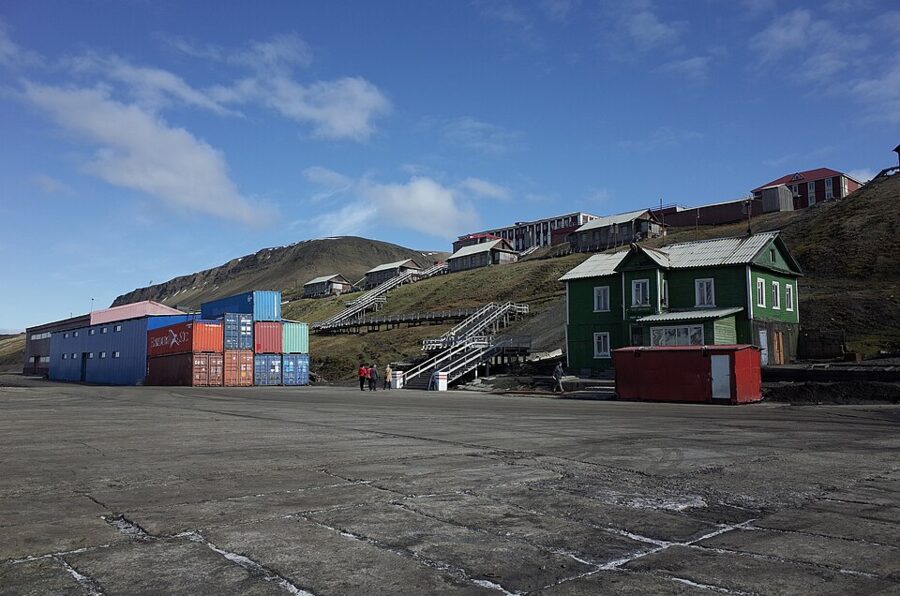
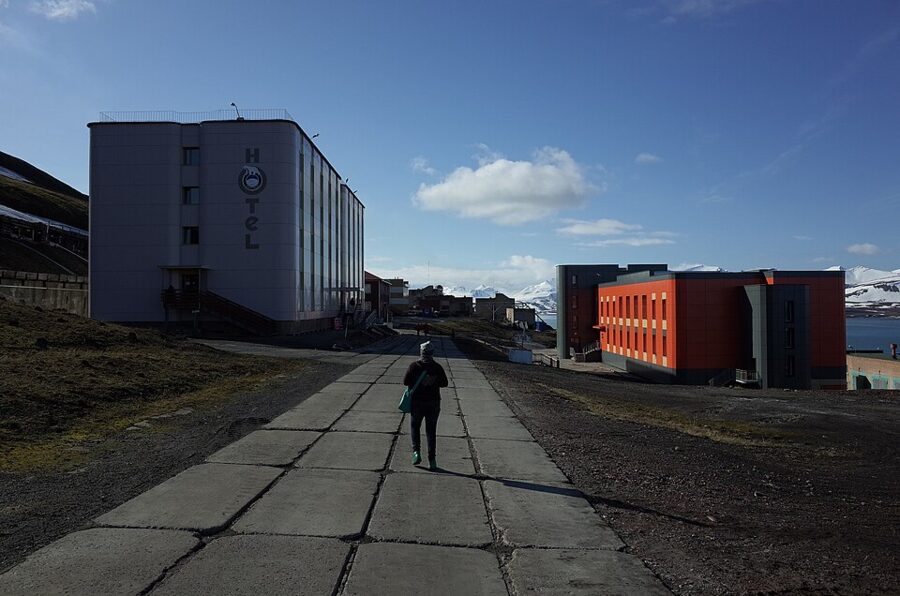
Boats tie up at the quay below town, and the first thing Barentsburg asks of you is a climb: a long wooden staircase of some 260 steps from the harbour to the centre. At the top a single main street runs north to south along the slope, with the hotel, the hospital, the Arktikugol offices, the brewery and the culture house strung along it.


Lenin and the slogan on the hill
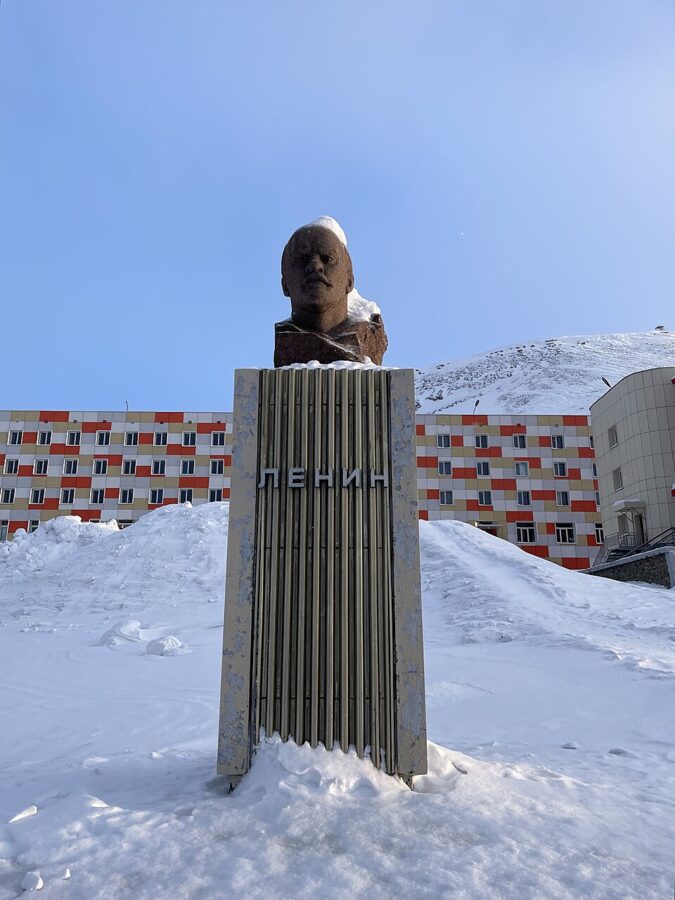
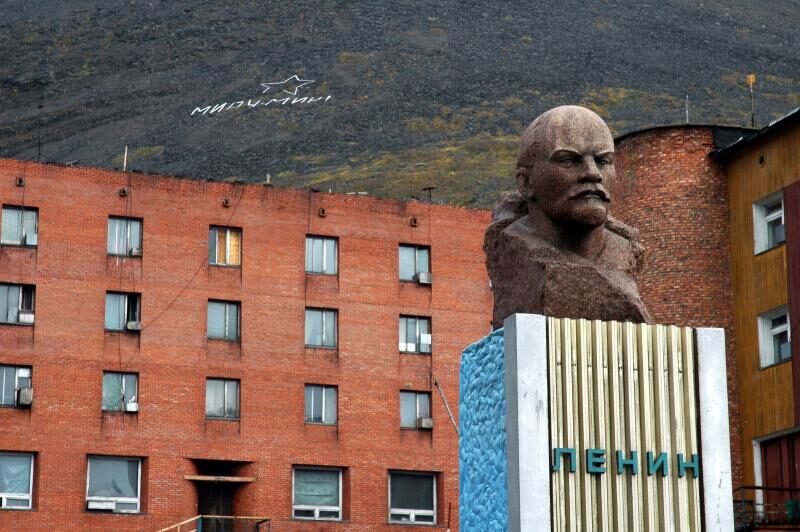
The bust of Lenin stands in the main square in front of the apartment blocks, looking out over Grønfjorden. It was cleaned of its coal dust when Arktikugol began courting tourists, and it is the picture everyone takes. Pyramiden’s Lenin is further north, so this one is only the second most northerly in the world.
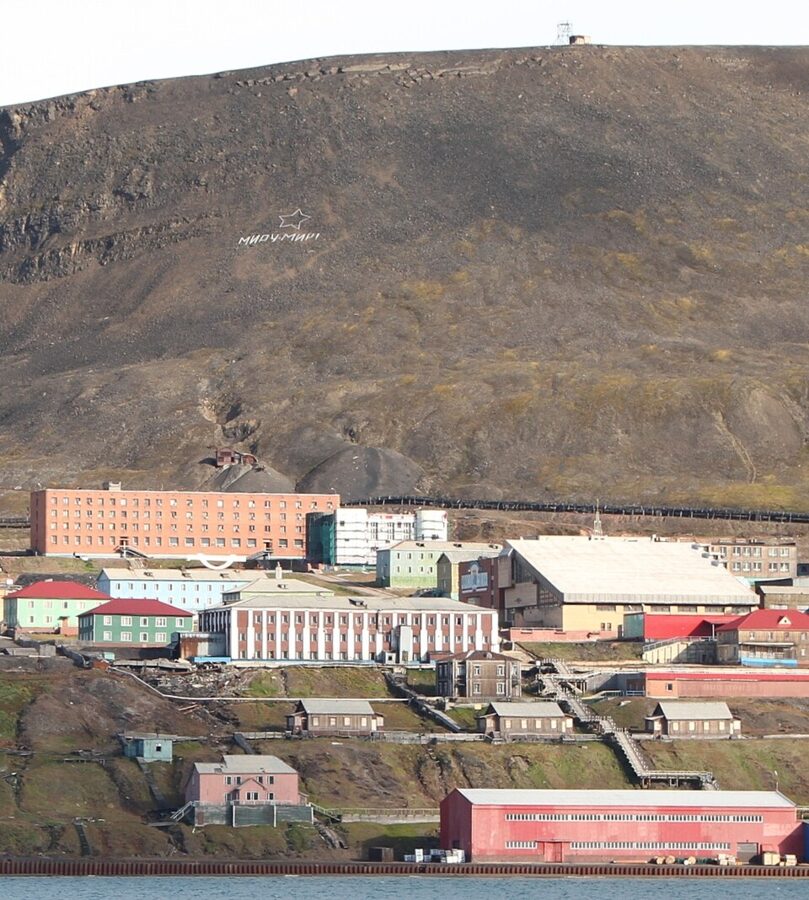
Above the town, on the bare hillside, white letters spell out the Soviet slogan Миру мир, “peace to the world”. Below the letters are slag heaps and the traces of early 20th-century mine workings, protected as cultural heritage like everything on Svalbard from before 1946.


The chapel
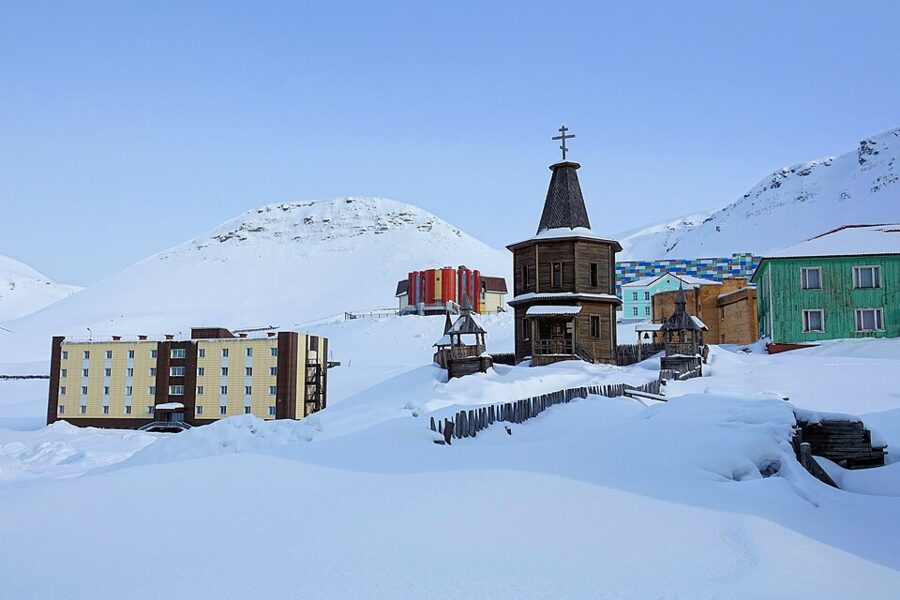
The small wooden Orthodox chapel, with its pointed tower, was built after the Operafjellet crash of 1996, in memory of those who died. It is often called the most northerly Russian Orthodox church in the world, and Grumant’s guided walks stop there. The 141 dead were taken home to Russia and Ukraine for burial, so this is their memorial on Svalbard; keep your voice down inside.
The museum
Barentsburg’s museum began as the Pomor museum complex, opened on 1 July 1995 by Arktikugol together with the Institute of Archaeology of the Russian Academy of Sciences and a polar geological expedition from St Petersburg. It now fills the old Soviet consulate, the turquoise building near the chapel, with about 520 square metres of Pomor history, Arctic animals and plants, and archaeological finds preserved in the permafrost.

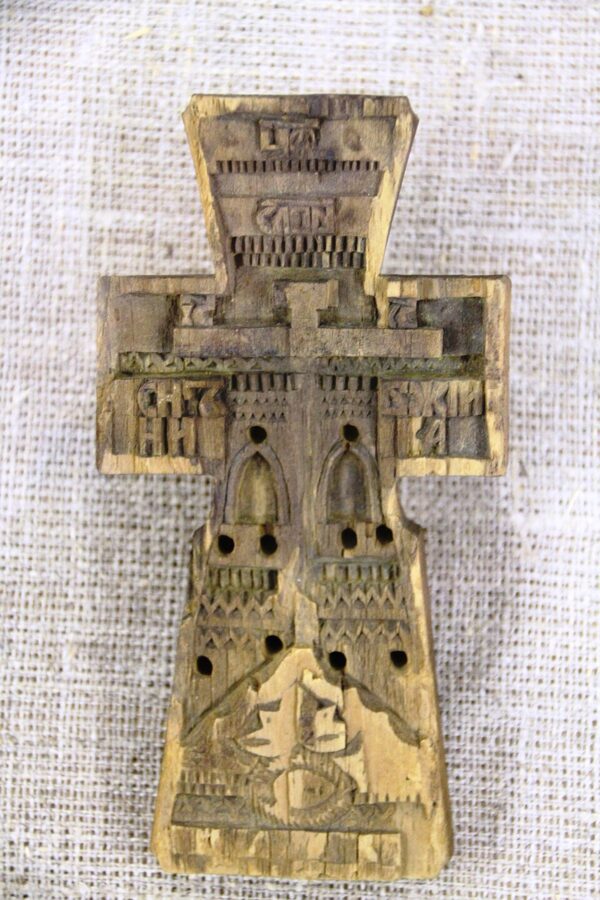
The Pomor collection is the reason to go in. Russian accounts put Pomor crews on Svalbard before Barentsz arrived in 1596, on the strength of crosses, household objects and boat remains; Norwegian researchers date the oldest Pomor sites later, and the question is still argued. The museum puts the Russian case, with crosses, tools and inscribed objects; read the labels knowing it is one side of an argument that has political weight here.

Murals, monuments and signs
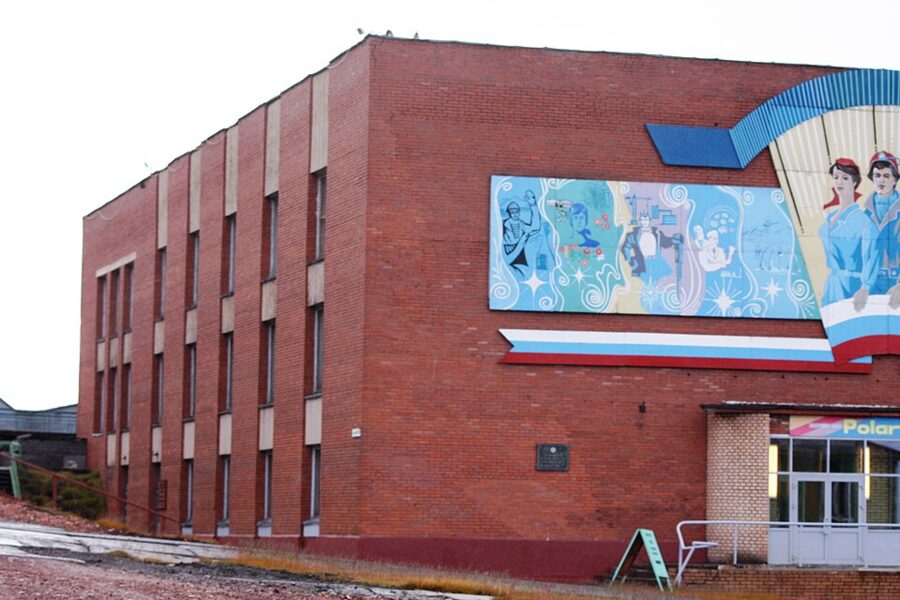
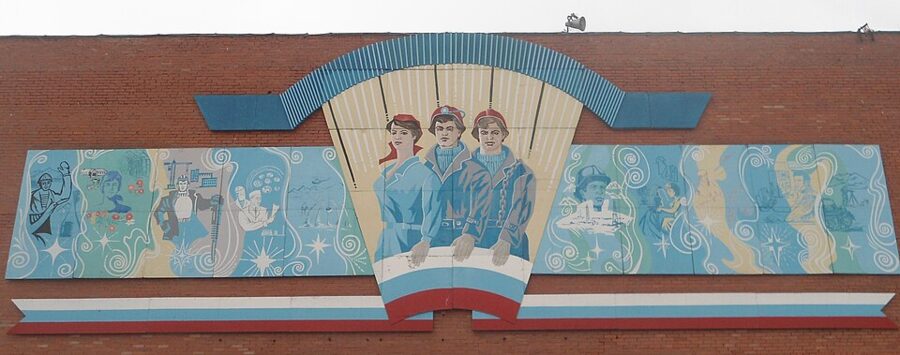
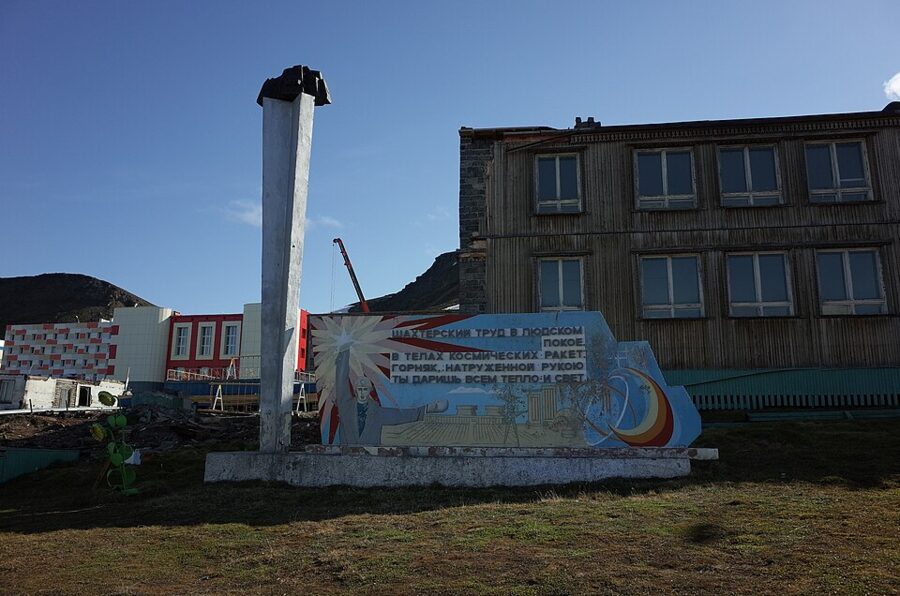
Much of Barentsburg’s character is painted on. Soviet mosaics and murals of miners and young workers cover the end walls of public buildings, and a monument to the miners, a concrete column with a painted relief, stands in the centre. A stele at the entrance to town reads 1932 Баренцбург 2015, for the year Arktikugol arrived and the year the stele went up.


The brewery, the bar and the restaurant
Red Bear, Krasny Medved in Russian, opened in 2012 as the first brewery on Svalbard, three years before Longyearbyen got one. Until 2014 Svalbard’s rules allowed beer of no more than 2.5 per cent to be brewed locally, so the first Red Bear was a light beer; today it brews with English malt and water from a glacial lake near town, and serves burgers and soups with it. It is closed Monday to Wednesday and opens from 12:00 the rest of the week, until 23:00 on Thursday and Sunday and 01:00 on Friday and Saturday.
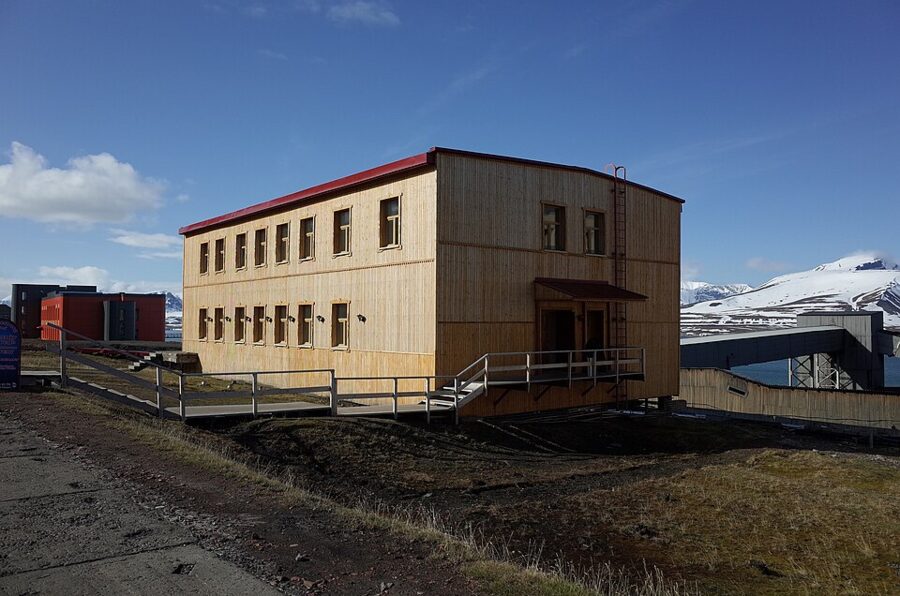

In the hotel, the Rijpsburg restaurant, renovated in 2020, serves the lunch that comes with the day tours; Rijpsburg was also the name of a Dutch mining camp of 1920 across Isfjorden. Next to it, the Icebreaker Bar Krasin is fitted out like the saloon of a 1950s Soviet icebreaker and stocks 18 kinds of aquavit.
The mine, the cinema and the dogs
Barentsburg sells something no other mine on Svalbard can: a tour of a working coal mine, led by miners, in English or Russian, for groups of no more than ten at NOK 990 each. You get overalls, boots, a helmet with a lamp and a self-rescuer, sign a safety record first, and leave your phone above ground; the guide takes the photographs.
The culture house cinema dates from the 1960s, seats up to 300 and still shows films most weekends on two Soviet projectors built in 1968 and restored after 30 years out of use. Grumant runs short tours of the projection room and the film archive. North of town its husky farm, founded in 2017, keeps about 50 dogs of seven northern breeds for dog sledding on snow or wheeled carts; a kennel visit costs from NOK 200 and a cart ride NOK 890.
For the view over the whole place, Grumant guides a walk up to Olavsvarden, the 520-metre cairn on Grønfjordfjellet above town, with Grønfjorden below and the Greenland Sea beyond; in the polar night it is a dark-sky spot for the northern lights. A coastal route goes north past the old cemetery, the wartime gun and the helicopter base to Kapp Heer and Selisbukta, with a chance of seals and walruses offshore.

Where to stay
Most people sleep in Longyearbyen and go to Barentsburg for the day, and on a first visit to Svalbard I would do the same: the boats and snowmobiles start there, and a weather day costs you less. If you do stay, both places in town belong to Arktikugol.
Hotel Barentsburg has 46 rooms, five of them suites, with a 24-hour reception, sauna, dry rooms for snowmobile gear and the Rijpsburg restaurant downstairs. Arktikugol’s 2027 rates are NOK 2,600 for a double or twin, NOK 2,100 for a single and NOK 3,500 for a suite.
Pomor Hostel has 30 refurbished twin and triple rooms with 72 beds, shared showers and toilets, and a kitchen on every floor. A twin costs NOK 1,200 and a triple NOK 1,700 in 2027, with breakfast NOK 250 a head on top.
Grumant’s base in Longyearbyen, the Russkiy Dom guesthouse, sleeps 16 in four bunk rooms and has a small shop of Russian food and souvenirs; its 2027 prices are on request. It is the building reported seized in October 2026, so check that it is open before you count on it.
Should you go?
This is the question people in Longyearbyen argue about, and Svalbardposten ran a series on it through 2026, with its own reporting trip to the settlements and interviews with Russians and Ukrainians. Nothing stops you going: the treaty guarantees access, and Norway has not closed the town. The case is a moral one, with serious people on both sides.
The case against
Every krone you spend in Barentsburg goes to a company owned by the Russian state, whose tourism arm Visit Svalbard calls that state’s extended arm on the archipelago. Russia’s own plans for Svalbard name tourism as one of three pillars of its presence there, and the people who run the Russian settlements now have used them as a stage: the parades, the Soviet flags, the separatist flag of the so-called Donetsk People’s Republic at a 2023 event in Pyramiden, a naval youth group at the May 2026 ceremony at Kapp Heer.
Kari Aga Myklebost, a professor of Russian history at UiT The Arctic University of Norway, describes these events as Russia asserting its presence through symbols while testing how Norway responds. On that view, a full tour boat at the quay is part of the picture Moscow wants to show, and the money pays for it.
The case for
The people who live in Barentsburg did not start the war, and many of them are not Russian. When the tourism council first moved to exclude Grumant in 2022, Grumant’s then director, Tatiana Ageeva, wrote an open letter pointing out that most residents were Ukrainians from Luhansk and Donetsk and asking whether they too should be punished. Longyearbyen residents interviewed by NRK in October 2026 split the same way: one, who had lived near the Russian border in Kirkenes, said people should be free to travel where they like and that dialogue beats isolation.
Terje Aunevik, who leads Longyearbyen’s local council, told NRK he would not call it a boycott at all, only individual choices, and that Svalbard depends on dialogue whatever anyone thinks of Russia’s war. And there is the plainer argument that you understand a place better by seeing it: Barentsburg is the clearest view in Norway of how the Russian state presents itself, and a guided walk shows you more of it than a photograph from a passing boat.
Who gets the money
Your ticket, your lunch, your beer and your bed are all Arktikugol’s, through Grumant or the hotel; there are no independent cafés, guides or shops to spend with instead. Residents are paid by the same company whether you come or not, so your money supports the town’s wages only in the sense that it supports the company’s accounts.
What I would do
I would not tell anyone they must not go, and I would not pretend the money is neutral. If Barentsburg is the reason for your trip, go knowing who you are paying, take the guided walk, listen more than you ask, and do not push residents for opinions on the war; in 2022 some told NRK that the tightening at home was felt in Barentsburg too, in the mine as much as at the school. If it is one option among many, Svalbard has plenty of days out that do not raise the question at all.

Pyramiden
Svalbard’s other Russian settlement lies on Billefjorden, north-east of Longyearbyen. Sweden founded it in 1910 and sold it to the Soviet Union in 1927, more than 1,000 people lived there in the 1980s, and Arktikugol shipped its last coal in 1998 and closed it. A few caretakers live there now; the culture house, the swimming pool and the northernmost Lenin are much as they were left, and in 2024 a giant hammer and sickle was set up on the mountain above.
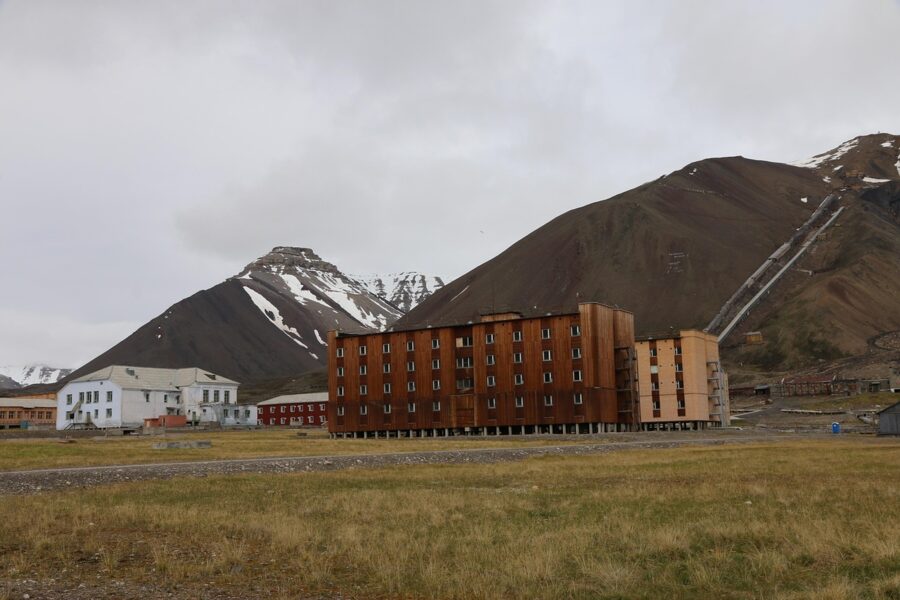
The same politics apply. Grumant runs Pyramiden by boat from mid-June to late September and by snowmobile from mid-March, a five- to six-hour ride each way, while the Visit Svalbard boats to Nordenskiöldbreen only pass it.
Practical notes
- Money: Norwegian kroner. Bank cards have worked at the hotel since its 2013 refit and now work almost everywhere tourists pay.
- Phone: Barentsburg has 4G coverage from the Norwegian operator Telenor as well as from Russian networks.
- Light: the polar night runs from November to mid-February, and Grumant pauses all tours. Snowmobile season and the returning sun start together in mid-February.
- Insurance: Grumant’s day trips include search and rescue insurance; your own travel insurance should cover Svalbard and the activity, since some European policies treat Svalbard as outside Europe.
- Photographs: none in the mine. Ask before you photograph people, and accept a no.
The snowmobile route out of Longyearbyen runs up Todalen, over into Skiferdalen and down Grøndalen, and three hours after you leave, Barentsburg appears on the shore of Grønfjorden: the power station chimneys first, then the blocks, then Lenin in the square. If you make that ride in spring 2027, end it at the chapel, built for 141 people who never arrived. It is the one building in town that tells you something no company sells.