

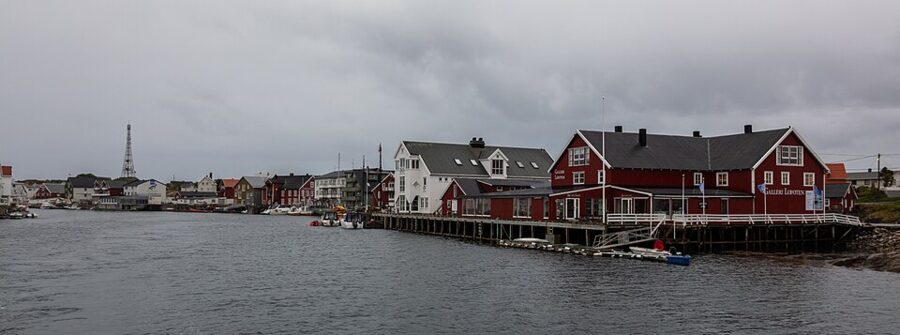

The southbound coastal ship leaves Tromsø at 01:30 and ties up in Svolvær at 18:30. A Widerøe turboprop closes the same gap in 55 minutes, but it lands in Leknes, not Svolvær, and it flies once a day. Everything else between Tromsø and the Lofoten Islands, the express boat, the buses, the long drive round the fjords, fits somewhere between those two numbers.
On the map the two look close. By road they are about 420 km apart, a long day at the wheel even in July, and the shortest line by air does not exist on most days. What decides the trip is less the distance than the timetable: which day you travel, which month, and whether you want to see the coast or simply get past it.


Times below come from the operators’ timetables for the 2026-27 winter, and summer where they have been published. Fares are for one adult, one way. If you have not reached Tromsø yet, the flights, ships and buses that get you there are in getting to Tromsø.


Contents 8 parts
The short answer
Fly if time matters more than scenery. The direct Widerøe flight to Leknes is the only way to do the trip in an afternoon, and on Saturdays there is a direct flight to Svolvær as well. On other days, Svolvær by air means a change in Bodø and two and a half to three and a half hours, runway to runway.
Take the coastal ship if you can spend a day on it and travel between March and October, when the afternoon run through Raftsundet is in daylight. In midwinter the same ship is still a comfortable way to arrive, but the best of the scenery passes in the dark.
Take the express boat and bus if you want to stay on the ground and move fast: on a weekday, the 07:00 boat to Harstad and two buses have you in Svolvær at 13:50. Drive only if you want a car in Lofoten anyway, and in winter only if you have driven on snow and ice before.
| Route | Time (Tromsø to Svolvær unless noted) | Fare, adult one way | When |
|---|---|---|---|
| Widerøe direct to Leknes | 55 minutes to Leknes, in the middle of Lofoten | Set by demand; from about NOK 840 in November 2026 | Daily: 15:05, Saturday 13:05 |
| Widerøe direct to Svolvær | 55 minutes | Set by demand | Saturday only, 17:15 |
| Widerøe via Bodø | 2 hours 20 minutes to 3 hours 30 minutes, airport to airport | Set by demand | Three or four a day, Sunday to Friday |
| Coastal ship, Hurtigruten or Havila | 17 hours (01:30 to 18:30) | Priced by date; no cabin needed | Daily |
| Express boat to Harstad, then two buses | About 7 hours (07:00 to 13:50) | Boat NOK 630, or NOK 277 on Saturdays; buses priced by zone | Monday to Friday for the fast connection |
| Bus 100 to Bjerkvik, then bus 300 | About 7 hours 30 minutes (06:20 to 13:50), or 9 hours 30 minutes from the 10:30 | Priced by zone in two apps | 06:20 Monday to Friday; 10:30 daily |
| Car via E8, E6 and E10 | About 420 km; 6 hours 30 minutes to 7 hours without stops | Fuel, plus a one-way fee if you leave the car in Lofoten | Year round; no ferry |
The cheapest single ticket on any of these routes is the Saturday express boat at NOK 277; add the bus fares, and an afternoon in Harstad waiting for the 16:40. The most scenic is the ship in daylight, or the car in summer with a detour over Senja and Andøya.
By plane
There are three ways to fly, and which one you get depends mostly on the day of the week. All of them are Widerøe, the regional airline that flies the short hops along this coast.
Direct to Leknes
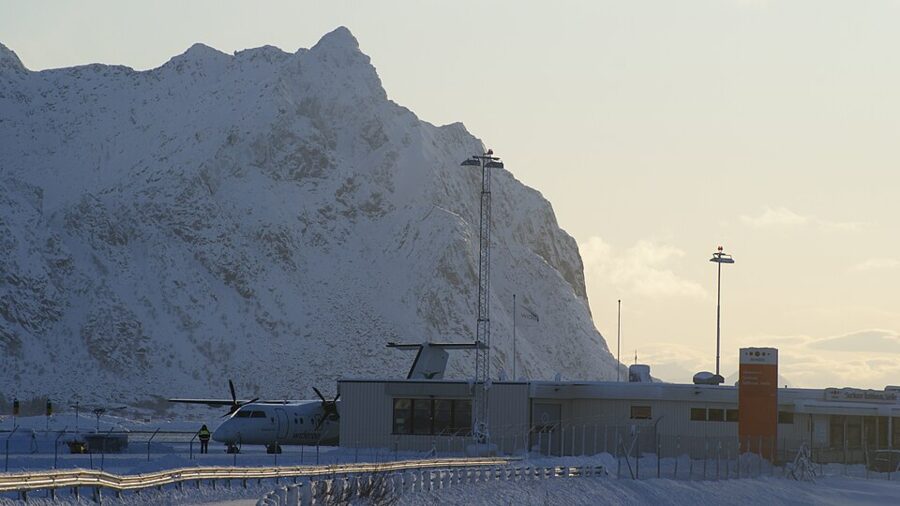
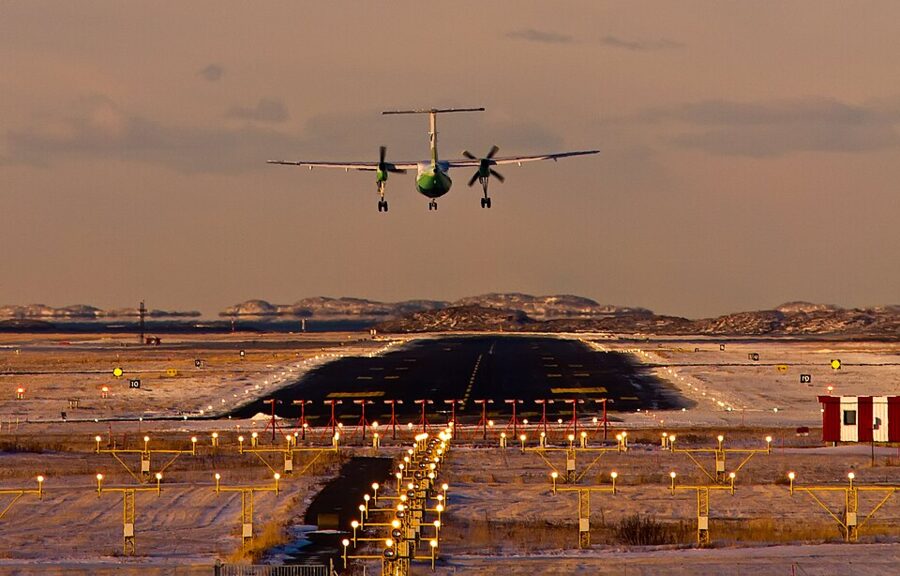
Widerøe started flying Tromsø to Leknes direct in spring 2025, and it is the route that changed this trip. In the winter timetable it leaves Tromsø at 15:05 and lands at Leknes at 16:00, every day except Saturday, when it goes two hours earlier, at 13:05.
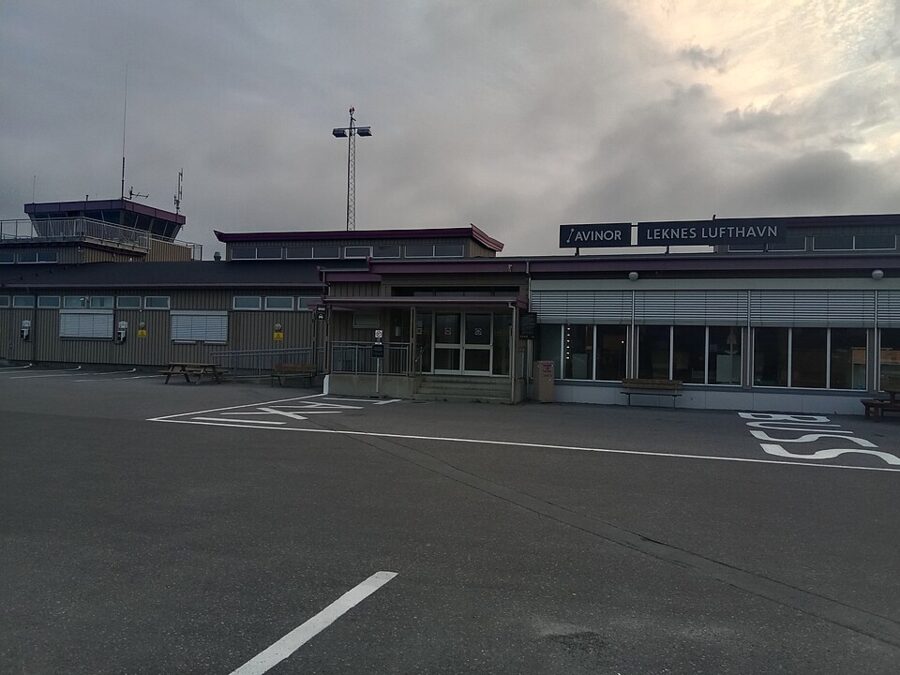
Leknes is in the middle of Lofoten, on Vestvågøya. That is good for Reine, Hamnøy and the western islands, an hour or so further on, and less good for Svolvær, which is 69 km back east. The airport is a 20-minute walk from Leknes centre, and buses 741 to Svolvær and 742 to Reine and Å leave from there.
Mind the evening, though. After the 16:00 landing on a January weekday, the next bus east to Svolvær leaves the airport road at 21:47 and arrives at 23:10. On the days Havila sails north, its ship leaves Stamsund, a short bus ride from Leknes, at 19:40 and reaches Svolvær at 21:20. If Svolvær is the goal, hire a car at Leknes or fly via Bodø instead.

Direct to Svolvær, on Saturdays
One flight a week goes straight to Svolvær: the Saturday 17:15 from Tromsø, which lands at 18:10 and carries on to Bodø. If your dates are flexible, this is the flight to build them around. Svolvær Airport is at Helle, about ten minutes east of the centre on bus 300.
Via Bodø, every other day
On the other six days, Svolvær means changing in Bodø. In the January timetable there are three ways to do it on a weekday: the 08:15 from Tromsø, which stops at Stokmarknes in Vesterålen and reaches Bodø at 09:55, then the 10:55 to Svolvær, landing at 11:20; the 11:20 from Tromsø with a two-hour wait in Bodø for the 14:25; and the 17:50 from Tromsø with a connection at 20:15, landing at 20:40.
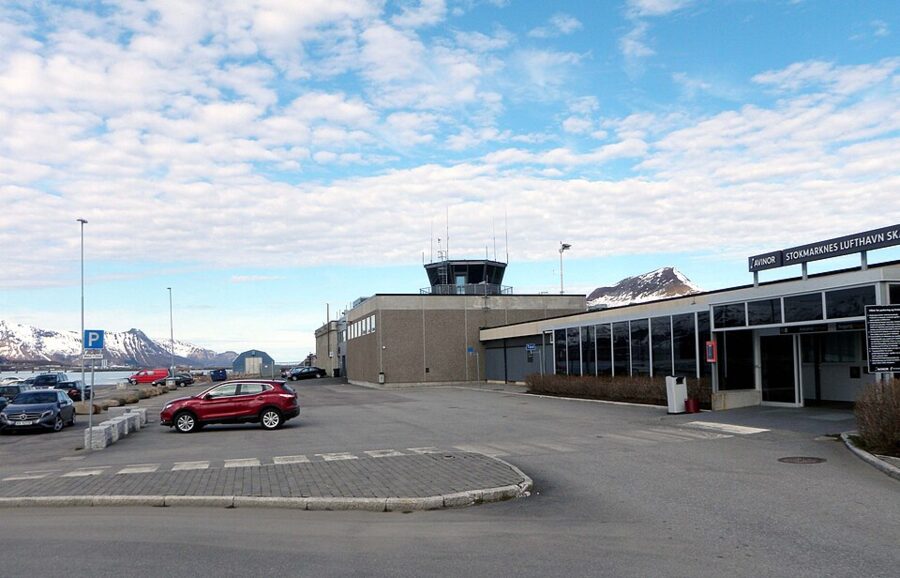

The Bodø legs are short, 25 minutes, and the same banks of flights serve Leknes, so the via-Bodø route also works for western Lofoten in the morning, when the direct flight is not flying. Thursdays, Fridays and Sundays add an afternoon option, the 14:10 from Tromsø with the 16:05 from Bodø, which makes the whole trip 2 hours 20 minutes.

Harstad/Narvik Airport, Evenes
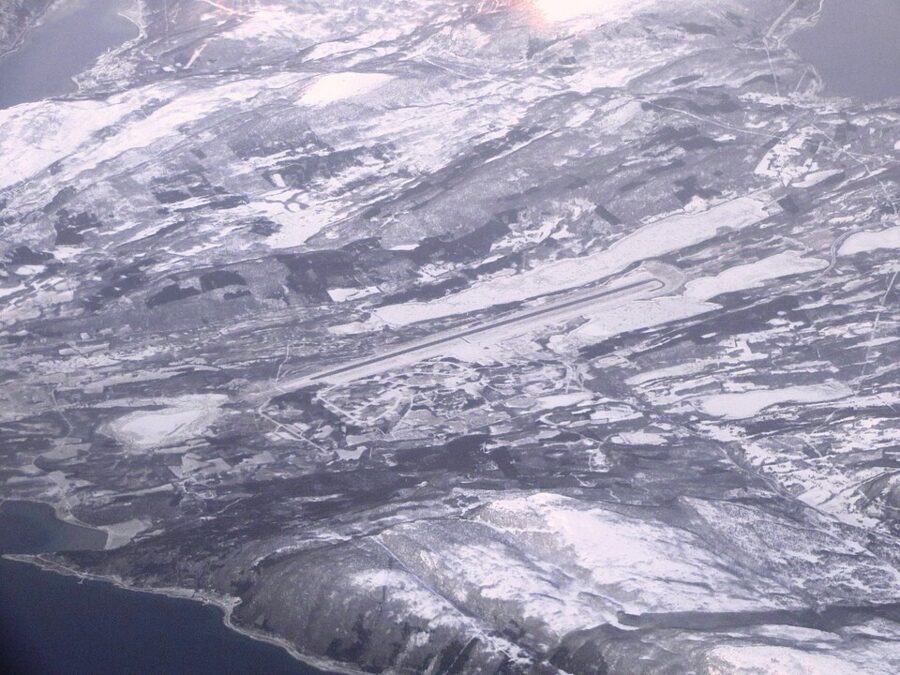
There are no flights from Tromsø to Evenes, the airport shared by Harstad and Narvik. It matters for a different kind of trip: one where you fly into Tromsø from Oslo or abroad and fly home from Evenes, or the reverse, with Lofoten in between. Evenes has the big rental desks (Avis, Budget, Hertz, Europcar, Enterprise and Sixt are all listed by Avinor at Harstad/Narvik), and Svolvær is 166 km from it by road, under three hours.

What the flights cost
Widerøe prices by demand. In November 2026 one-way fares on the direct Tromsø to Leknes flight started at about NOK 840 for winter dates, and they climb as the plane fills. Book early for February and March, when the light comes back and Lofoten fills up.
The winter timetable runs to the end of March 2027; the summer schedule had not been filed by late November 2026, so confirm the days of the direct flights before you build a summer trip around them.
By the coastal ships
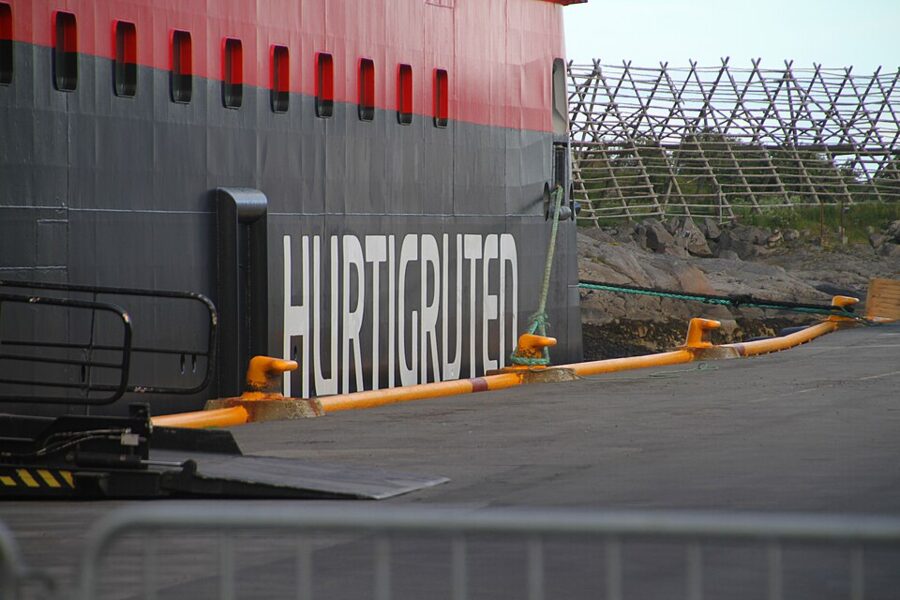
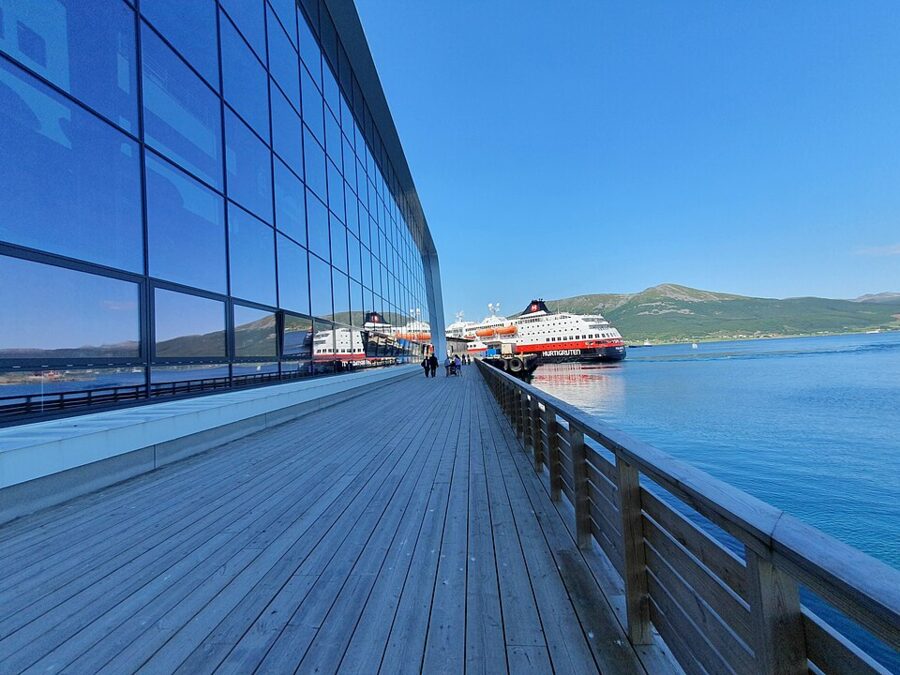
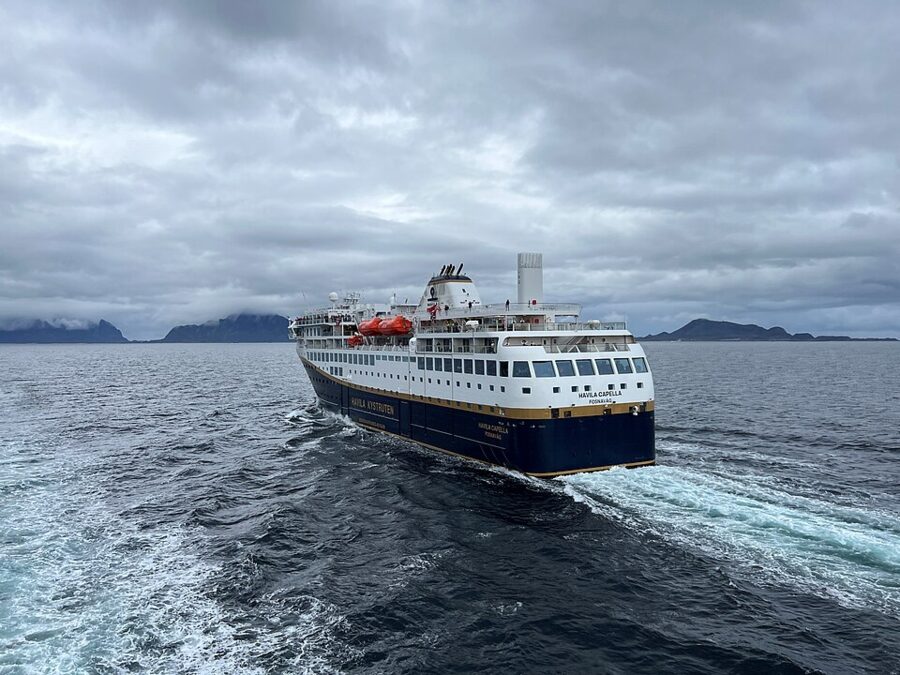
Two companies run the coastal route between Bergen and Kirkenes, Hurtigruten and Havila, and between them one ship leaves Tromsø southbound every night. Both sell tickets from port to port, so you can ride a single day of the voyage the way locals do.

The timetable
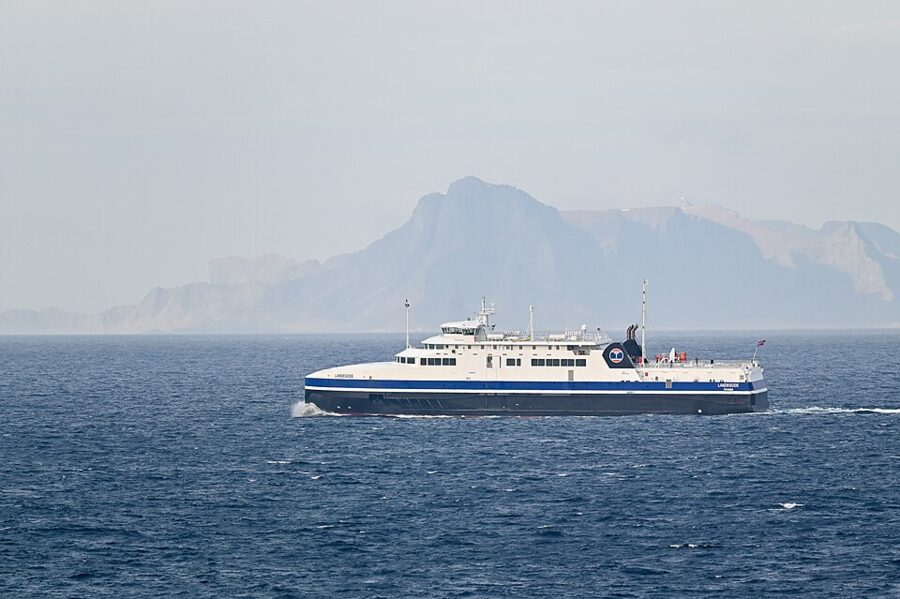
The southbound ship reaches Tromsø at 23:45 and sails at 01:30. You sleep through Finnsnes (04:20) and probably Harstad (08:00 to 08:30), then the day is spent in Vesterålen: Risøyhamn at 10:45, Sortland at 12:30, and an hour at Stokmarknes from 14:15 to 15:15. Svolvær comes at 18:30, after the run down Raftsundet.
The times are the same in Havila’s sailing schedule and in the Hurtigruten departures, summer and winter, so the only question is which company sails on your date. In January 2027 it alternates without a pattern you can guess: Hurtigruten on most nights, Havila on others. If you want to stop in Lofoten’s west, the ship calls at Stamsund at 22:15.
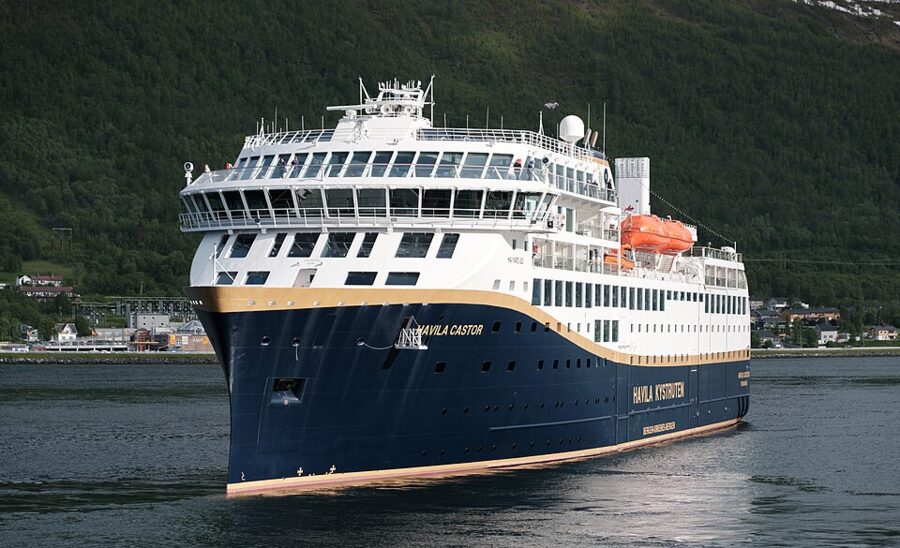

Gaps do happen. Hurtigruten’s MS Richard With is out of service until 10 December 2026 and its port calls are cancelled until then; Havila Castor comes out of service from 27 March to 28 April 2027. On those dates one company’s nights simply have no ship, and you take the other company or another day.

Raftsundet and Trollfjorden
Between Stokmarknes and Svolvær the ship leaves the open Hadselfjorden and enters Raftsundet, a strait 20 km long and in one place only about 220 m wide, with mountains near 1,000 m on the Austvågøya side. This is the stretch people mean when they call the southbound day the best of the voyage.
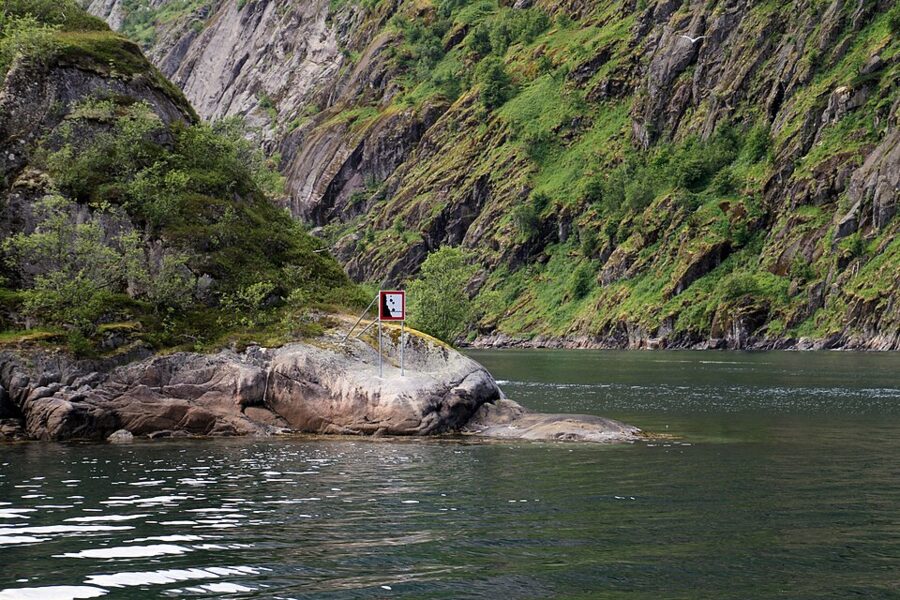
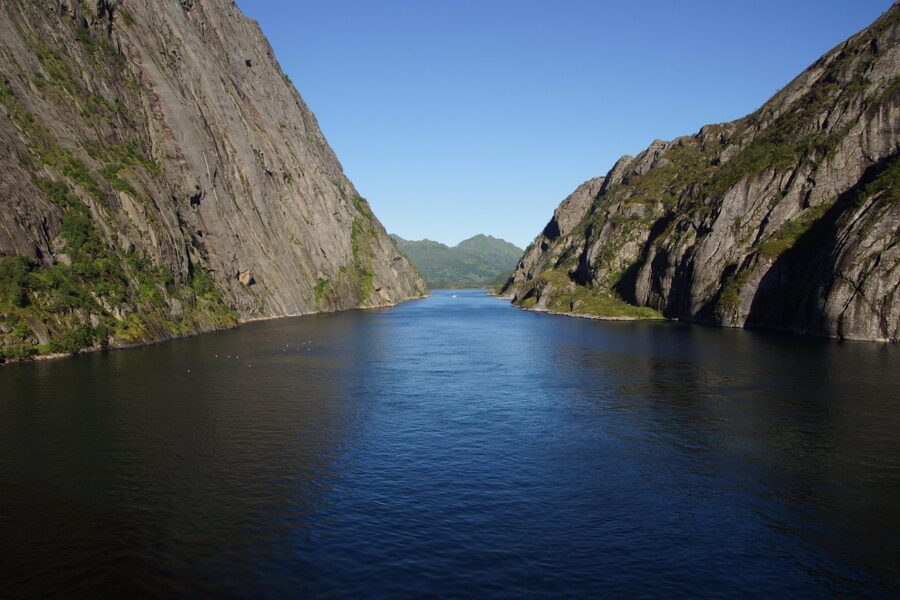
Halfway down, on the western side, is Trollfjorden: 2.5 km long, 100 m wide at its narrowest, with a reef of fallen rock at the entrance only 30 m down. The ships turn into it when the weather allows, which is a captain’s decision made on the day, not a promise in the timetable.

Light decides whether you see any of this. The ship is in Raftsundet roughly between 16:00 and 18:00. On 15 February the sun sets there at 16:07; on 15 March at 17:57; by mid-May it barely sets at all, and from June to mid-July it does not. On 15 October sunset is 17:25, on 15 November 14:10, and from early December to early January there is no sunrise.
So from about March to early October the strait goes past in daylight or long dusk, and in midwinter you are sailing between black walls you can only sense. It is still a calm, warm way to arrive. It is not the sightseeing trip the brochures show.

Tickets, cabins and food
Port-to-port tickets go on sale six months before the date, and both companies price them by date and demand rather than from a fixed table, so the only way to know the fare is to search the date you want. Neither puts the port-to-port option front and centre on its English pages; Hurtigruten’s is under port to port, Havila’s under port-to-port.
You do not need a cabin. On Hurtigruten a cabin is compulsory only on journeys over 23 hours, and Havila lets you choose between a deckchair and a cabin on overnight sailings. With a 01:30 departure, though, a cabin buys you a real night’s sleep and a door to lock, and I would take one.
Meals are not included on either line. You can add them when booking (Havila takes 15 per cent off meal packages booked online) or buy in the café. According to the Hurtigruten port-to-port rules, children under 6 travel free, 6 to 17 year olds get 75 per cent off the fare, residents of the EEA aged 67 and over get 50 per cent off, a bicycle costs NOK 250, and a car can come too if you book the space in advance.
Hurtigruten or Havila
For a one-day hop, the difference matters less than the date. Both lines carry local passengers and cargo as well as travellers on long voyages, both stop at the same quays at the same times, and both sell the same kind of seat-only ticket. Pick the one that sails the night you need.

By express boat and bus
This is the route for anyone without a car who would rather not fly. It is also the one most tripped up by the day of the week, so the days matter as much as the times.
The express boat to Harstad
Norled runs route 2, Tromsø to Finnsnes and Harstad, for Troms county’s transport company, Svipper. The boats leave from the express-boat quay at Prostneset in the centre of Tromsø, call at Finnsnes on the mainland side of Senja, and take three hours to Harstad.
In the 2026-27 winter timetable, Monday to Wednesday has two sailings, at 07:00 and 16:15. Thursday and Friday add a 13:45 and a 20:30. Saturday has 08:00 and 15:00. Sunday has 15:45 and 20:00 only, with nothing in the morning.
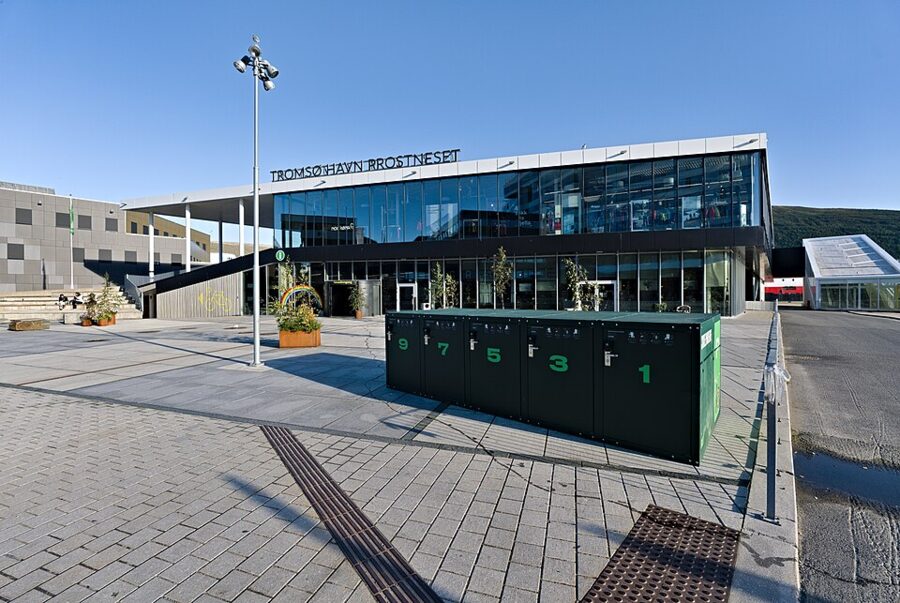
The fare from Tromsø to Harstad is NOK 630, except on Saturdays, when a one-way Saturday ticket costs NOK 277, according to Svipper’s express-boat fares. Since 1 February 2026 every express boat in Troms runs on guaranteed seats: you buy a ticket for a named departure before you board, in the Svipper app, and you can no longer simply turn up and pay.
Weather stops the boats more often than the buses. In storms, sailings between Tromsø and Harstad can be cancelled at short notice. Check Svipper’s traffic messages the evening before.
Harstad to Svolvær by bus
From Harstad bus terminal, bus 200 leaves at 10:40 and 16:40 for Tjeldsund Kro, a road junction on Hinnøya. There, ten minutes later, you change to bus 300, which runs from Narvik to Svolvær, Leknes and Å. The morning pair reaches Svolvær at 13:50; the afternoon pair at 20:05.
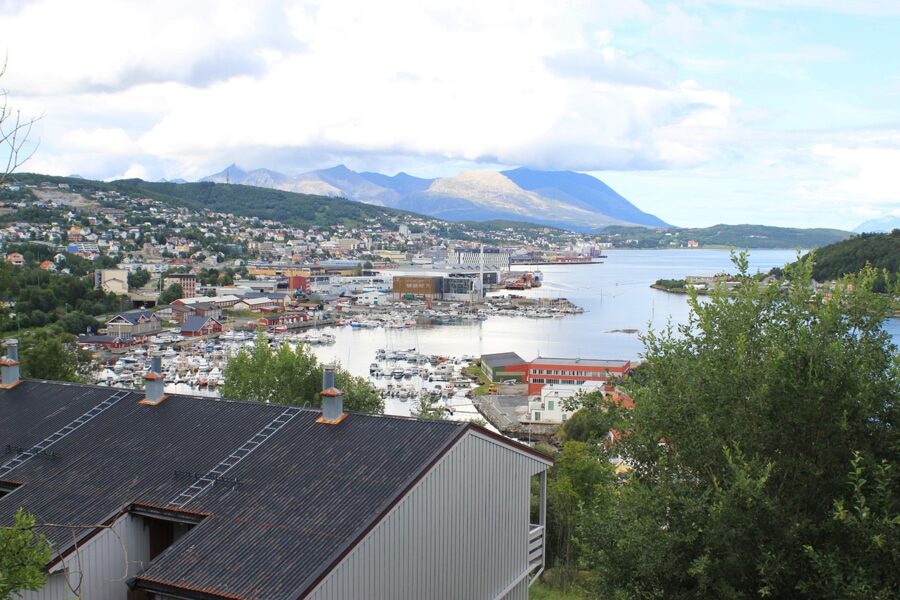
Bus 200 belongs to Svipper and bus 300 to Reis Nordland, which matters for tickets (below). That makes one clean same-day connection: the 07:00 boat from Tromsø, Monday to Friday, reaches Harstad at 10:00, with time for a coffee before the 10:40 bus. On Saturdays the 08:00 boat lands at 11:00, too late, and you wait for the 16:40. On Sundays there is no morning boat at all.
There is a variation for Sundays and for anyone who likes ships: take the coastal ship from Tromsø at 01:30, get off at Harstad at 08:00, and catch the 10:40 bus. You reach Svolvær at 13:50 instead of 18:30, but you give up Raftsundet.

Buses all the way, via Bjerkvik
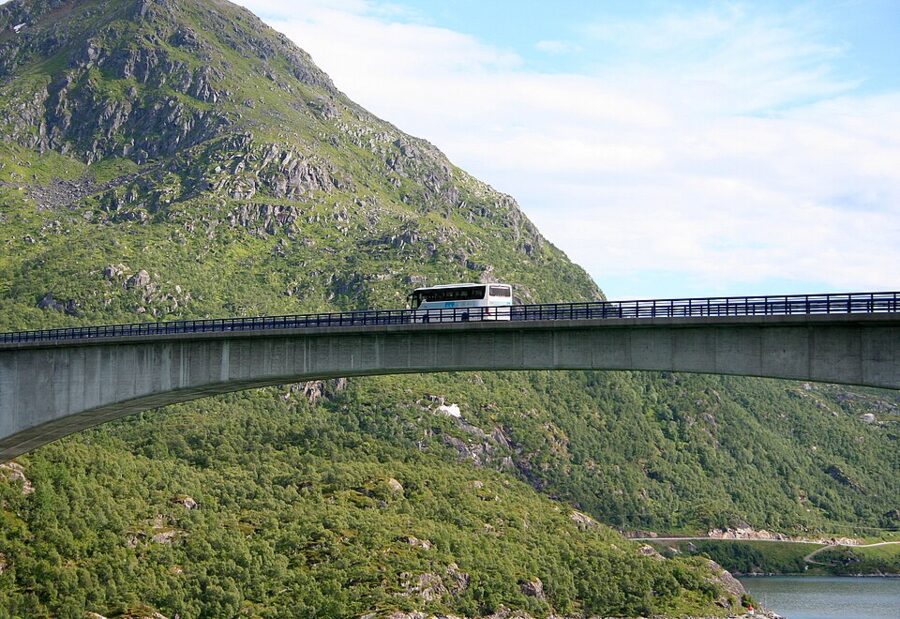
Bus 100, run by Tide, goes from Tromsø Prostneset to Narvik and passes Bjerkvik, the junction where the E10 to Lofoten leaves the E6. Bus 300 picks up there. The useful connections in the winter timetable are two.
- Monday to Friday: bus 100 at 06:20, Bjerkvik 09:48; bus 300 at 10:10, Svolvær 13:50, Leknes 15:25, Å 17:25.
- Every day: bus 100 at 10:30, Bjerkvik 13:58; bus 300 at 16:10, Svolvær 20:05, Leknes 21:35, Å 23:15.


The second one involves more than two hours at a road junction in Bjerkvik, and in winter that wait is in the dark. If you can only travel at the weekend I would break the trip in Narvik instead, where the 300 starts at 09:45 the next morning and gets you to Svolvær at 13:50.
The summer bus that has gone
For several summers Best Arctic ran a through bus between Tromsø and Svolvær in June, July and August, by way of Senja, the Gryllefjord to Andenes ferry and Vesterålen, 13 hours end to end. It has stopped for good: Best Arctic’s own route page now says the service is permanently discontinued and will not return in future summers. Some travel pages still list it. Ignore them.
Tickets for the buses
The trip crosses from Troms into Nordland, and each county sells its own tickets. The Troms legs (bus 100, bus 200 and the express boat) are sold in the Svipper app, priced by zone: an adult single runs from NOK 50 for one zone to NOK 706 for eight or more, under Svipper’s bus fares.
The Nordland leg, bus 300 and the local Lofoten buses, is sold in the Reis app, also by zone, from NOK 45. You can buy on board with a bank card for NOK 20 more, but not with cash, and Reis Nordland’s tickets are also sold in the national Entur app. Neither county’s buses take seat reservations.
Two passes are worth knowing. Svipper’s summer ticket, sold from 1 June to 24 August, gives seven days on every bus and express boat in Troms for NOK 1,210. Reis Nordland’s Travel Pass Nordland does the same for Nordland, seven days of buses and express boats, for NOK 1,990, which pays off only if you plan to ride the Lofoten buses a lot.
By car
The drive is long rather than difficult in summer, and both long and difficult in winter. Since 2007 it has needed no ferry: the E10 runs onto the islands over bridges and through tunnels the whole way.
The route
From Tromsø take the E8 south to Nordkjosbotn, 71 km, and join the E6 there. Follow the E6 south through Bardu to Bjerkvik, about 217 km from Tromsø, then turn west on the E10. From there it is 206 km to Svolvær: past Evenes, over Tjeldsundet, across Hinnøya to Gullesfjordbotn, then along the Lofast road and over Raftsundet onto Austvågøya.
That makes about 420 km to Svolvær, 490 km to Leknes and 545 km to Reine. Route planners give six and a half to seven hours to Svolvær without stops, which assumes bare roads and no lorries. In winter I would plan on longer and break the trip, Narvik and Harstad being the obvious places to sleep.
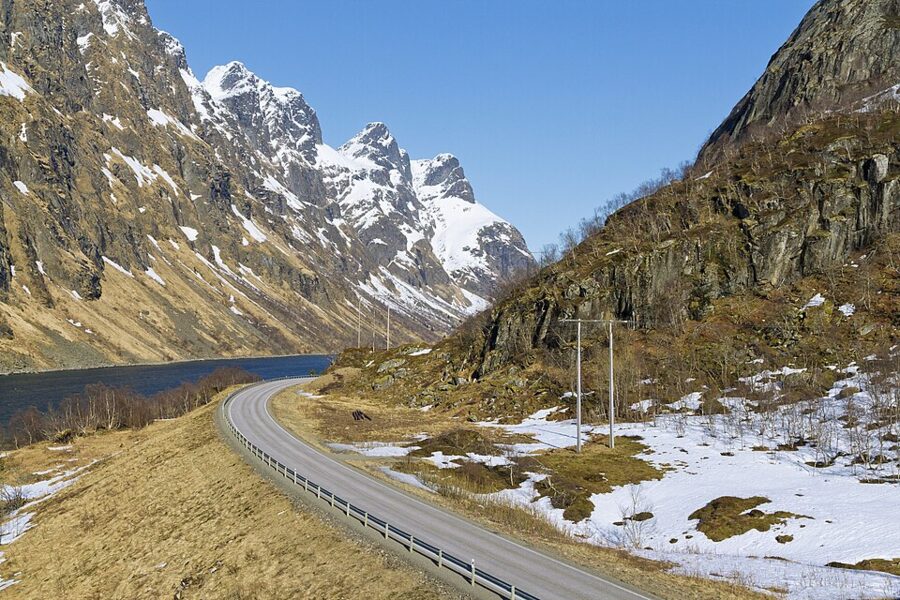

The crossings: Tjeldsund, Gullesfjord and Raftsund
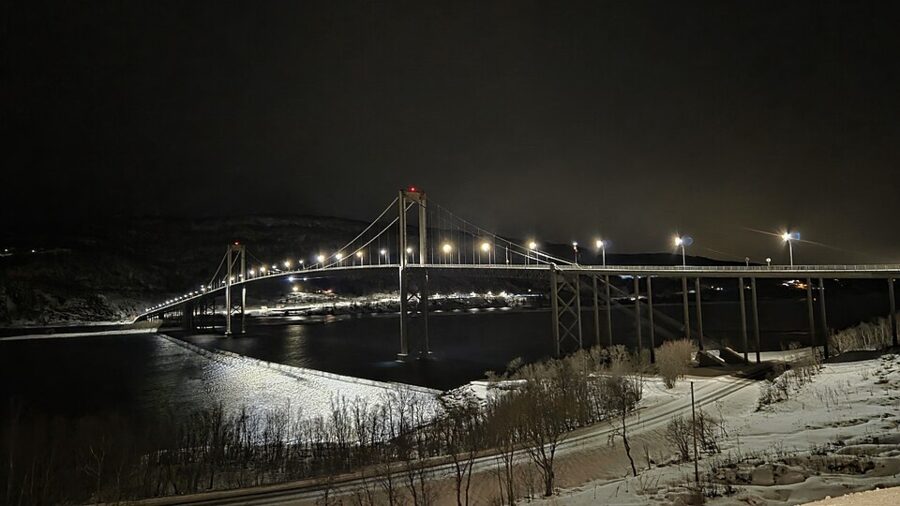
Tjeldsundbrua, 59 km from Bjerkvik, is a suspension bridge 1,007 m long and 41 m high that has carried the E10 onto Hinnøya since 1967. It is exposed to the wind funnelling up the sound, and in strong wind it can be closed. Some winters it has needed convoy driving, kolonnekjøring, where a snowplough leads a line of cars across.
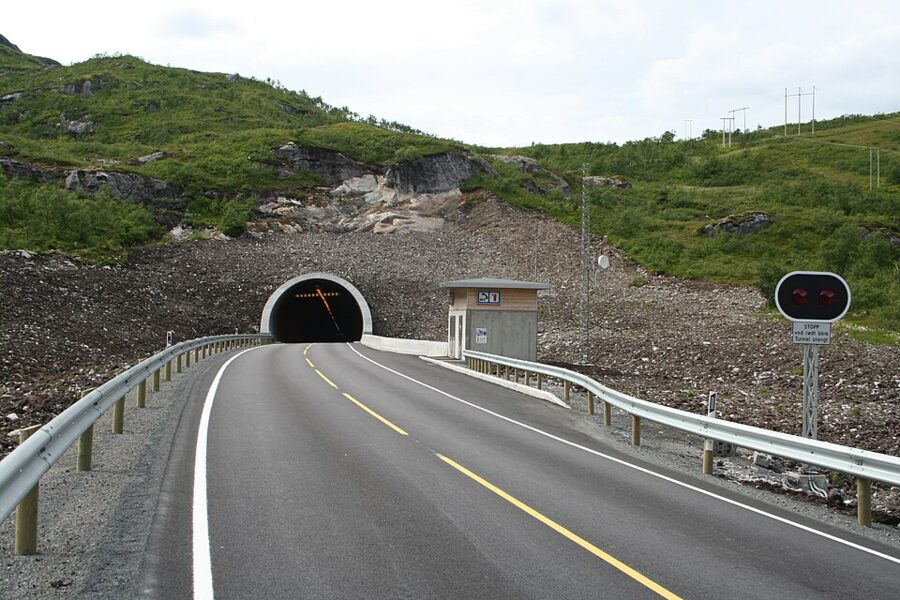
Gullesfjordbotn is not a bridge but a roundabout at the head of Gullesfjorden, 34 km on, where the road to Sortland and Vesterålen splits from the road to Lofoten. Lofast begins here and runs 51 km to Fiskebøl on Austvågøya: through Sørdalen and a tunnel 6.3 km long, over the bridges across Øksfjorden, along Ingelsfjorden and over Raftsundbrua.
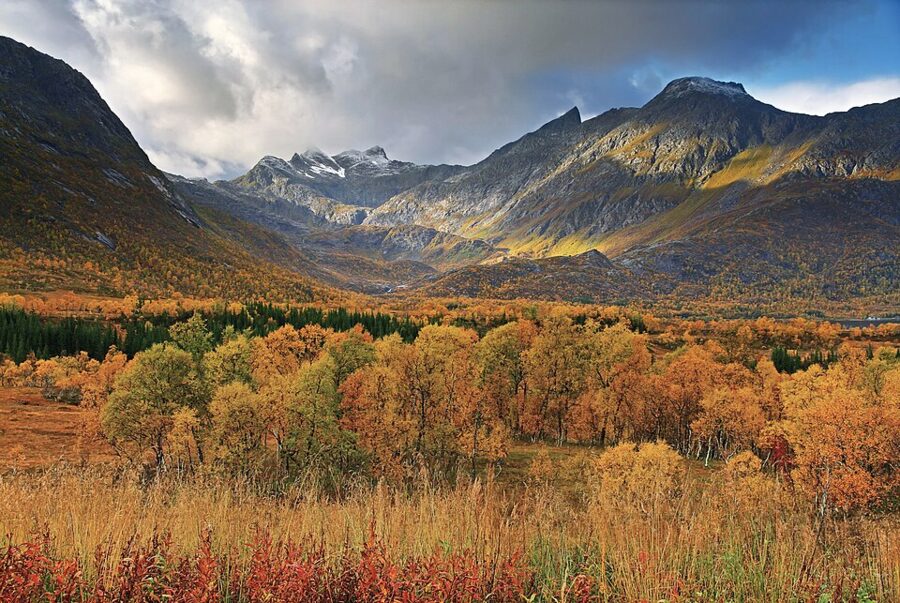


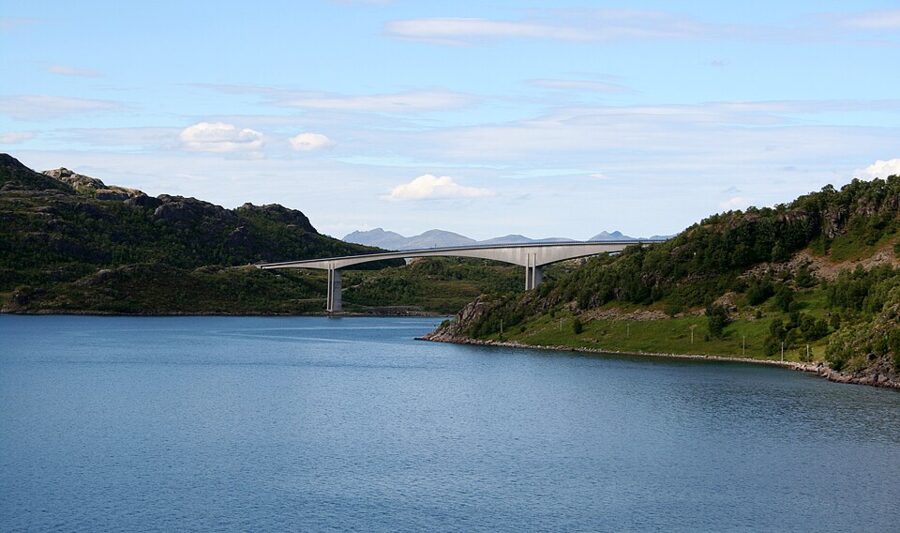
Raftsundbrua is 711 m of concrete with a main span of 298 m, the longest of its type in the world when it opened in 1998, and 45 m of clearance for the coastal ships passing underneath. From Fiskebøl it is another 35 km, about 45 minutes, to Svolvær.

Driving it in winter
The E8 and E6 are the main roads north, and the E10 is narrower and slower once it reaches the islands. Snow, ice, drifting snow and wind can each add hours, and the mountain stretches can go over to convoy driving at short notice. A plan that works in July, Tromsø to Reine in a day, is a bad plan in January.
Daylight is the other limit. On 15 January the sun is up in Tromsø from 11:35 to 12:12, and in Svolvær there is no sunrise at all between 7 December and 5 January. You get a few hours of blue twilight around midday and drive the rest in the dark.
Check Statens vegvesen’s traffic map before you leave and again at your overnight stop: it shows closures, convoy driving and the webcams on the bridges and passes. If a pass or bridge is closed, wait it out in Narvik or Harstad rather than push on in the dark.
Hire cars and one-way fees
Hiring in Tromsø and leaving the car in Lofoten, or the reverse, carries a one-way fee that can change the sums, so ask for it before you book. Svolvær and Leknes airports each have Avis, Hertz, Europcar and Sixt, according to Avinor’s pages for Svolvær and Leknes, so flying in and hiring there is often the better trade.
The summer detour over Senja and Andøya
In summer there is a slower, prettier way that uses two ferries. From Tromsø, cross Kvaløya to Brensholmen and take the ferry to Botnhamn on Senja, 45 minutes; it runs year round, four times a day in the winter timetable. Drive the outer coast of Senja to Gryllefjord, then take the summer ferry to Andenes at the top of Andøya, and come down through Vesterålen to Lofoten.

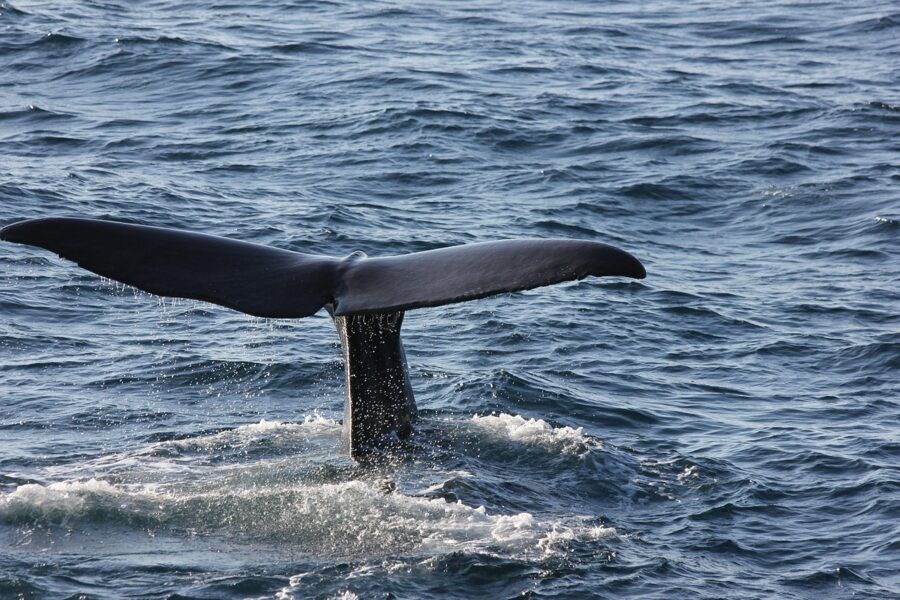
The Gryllefjord to Andenes ferry, Svipper’s route 180, runs only in summer, and its 2027 timetable had not been published by late November 2026. Since 15 June 2026 adult foot passengers between 30 and 66 have to buy a ticket for it, under Svipper’s ferry fares; children, young adults and over-67s travel free. If you go this way, the whale trips from Andenes are the obvious stop, and whale watching is worth reading up on before you choose a boat.

Seasons
The route you choose depends as much on the month as on the budget. The same trip is three different journeys in December, March and July.
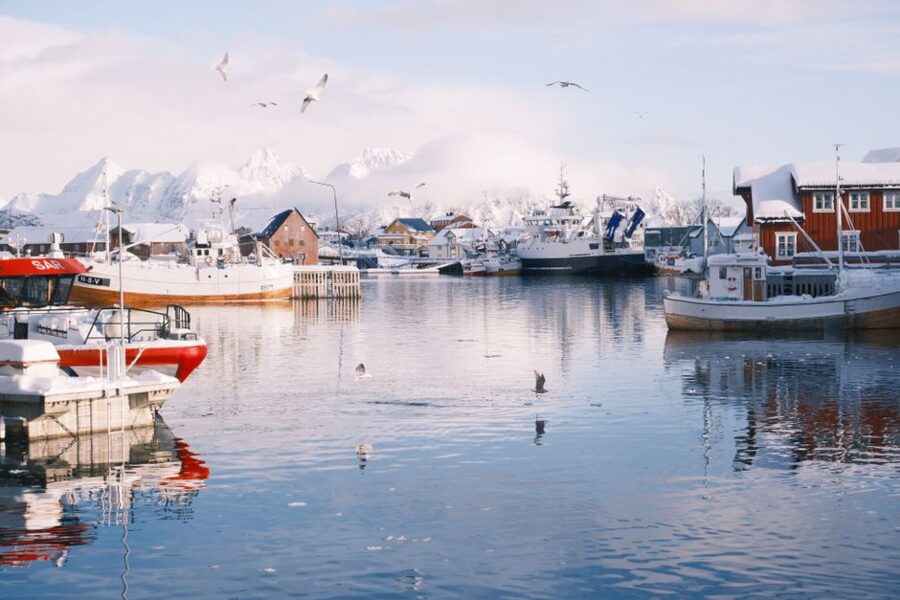
Winter, November to February
Fly, or take the ship and accept the dark. The 16:00 landing at Leknes or the Saturday 18:10 at Svolvær puts you in town without a night drive. If you drive, split the trip and travel in the middle of the day.
The express boat is the most weather-exposed choice in winter. It is fine on a calm morning and miserable, or cancelled, in a gale. It also runs the outer coast in the dark for most of December, so the views that make it worth taking in summer are not there.
Spring, March and April
This is the best time for the ship. By mid-March the sun sets in Raftsundet at about 18:00, so the whole southbound afternoon is in light, with snow still down to the water. Roads are usually easier than in January, but snow and ice can come back to the E6 and the E10 into April.
Summer, late May to August
In Svolvær the sun stays above the horizon from 26 May to 17 July. Any route is in daylight at any hour, the Senja and Andøya ferries run, and the drive becomes a trip in itself. The cost is traffic, and it shows most at the ferry quays.
The ferry that feels it most is Bodø to Moskenes. Torghatten, which runs it, calls it a route under very heavy pressure in high season, gives travellers to Værøy and Røst priority when it is full, and lets you reserve part of the space in advance. If you are taking a car in July, book.
A one-way loop: in by Svolvær, out by Moskenes
The islands run in a line from east to west, so the best trip does not go back the way it came. Arrive in Svolvær from Tromsø, by ship, express boat and bus, or car, then work west through Henningsvær, Leknes and Reine. At the far end, take the ferry from Moskenes to Bodø and leave from there.
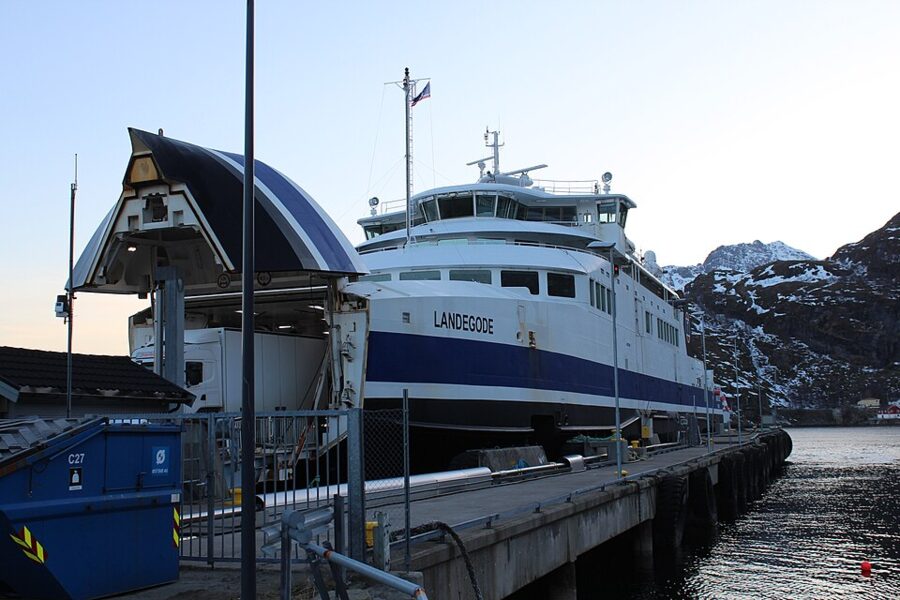

The ferry is the bargain of the trip. Foot passengers travel free; you pay only if you want a guaranteed place, NOK 65 for an adult, booked by 20:00 the day before. A car up to 6 m costs NOK 605 at full price, plus NOK 130 for a reservation. Some sailings call at Værøy and Røst on the way and take much longer, so choose a direct one.
From Bodø, Widerøe flies back to Tromsø in under an hour, which closes the loop if your flight home leaves from there. With a hire car, the loop only works if you return it in Bodø and pay the one-way fee. Otherwise a driver’s loop is the summer one: out over Senja and Andøya, back along the E10.

Arriving in Lofoten
Each route leaves you in a different place, and Lofoten is long enough, about 125 km by road from Svolvær to the Moskenes ferry, for that to matter.
Svolvær: the ship, the bus and Saturday’s flight
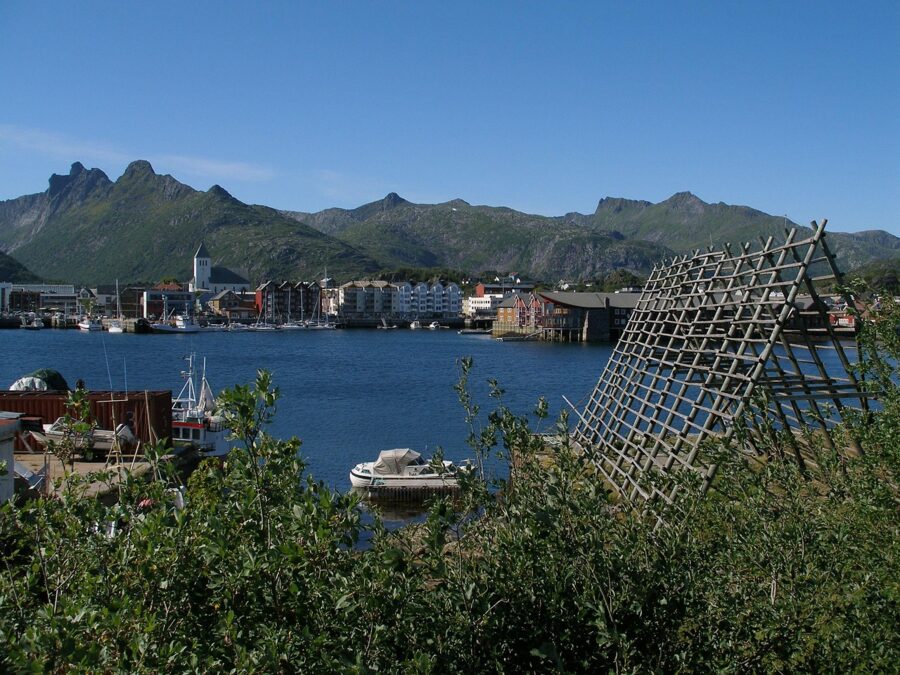
The coastal ship, bus 300 and the Lofast road all arrive in Svolvær, the main town of eastern Lofoten and the easiest place to start. The ship’s quay and the Lofotgata bus stop are both in the centre; the airport at Helle is ten minutes out by bus. Henningsvær is 25 km away, about 35 to 55 minutes on bus 743.
Leknes: the direct flight
The direct flight puts you in Leknes, the middle of the chain. From there it is about an hour by car to Reine, or bus 742 from Leknes centre, which takes a little over an hour to Reine and goes on to Å. Svolvær is 1 hour 25 minutes back east on bus 741.


Getting around once you are there
Buses run, but not often. On a winter weekday the 741 and 742 together get you from Svolvær to Reine four or five times a day, in two to three and a half hours with the change at Leknes. Bus 300 does the whole length twice a day. Plan days around them and check the evening return before you go anywhere.
For most people a car is the better answer once in Lofoten. Hire it where you land, at Svolvær or Leknes airport, and hand it back at the other end if the company allows. If you came by car from Tromsø, you already have the answer.
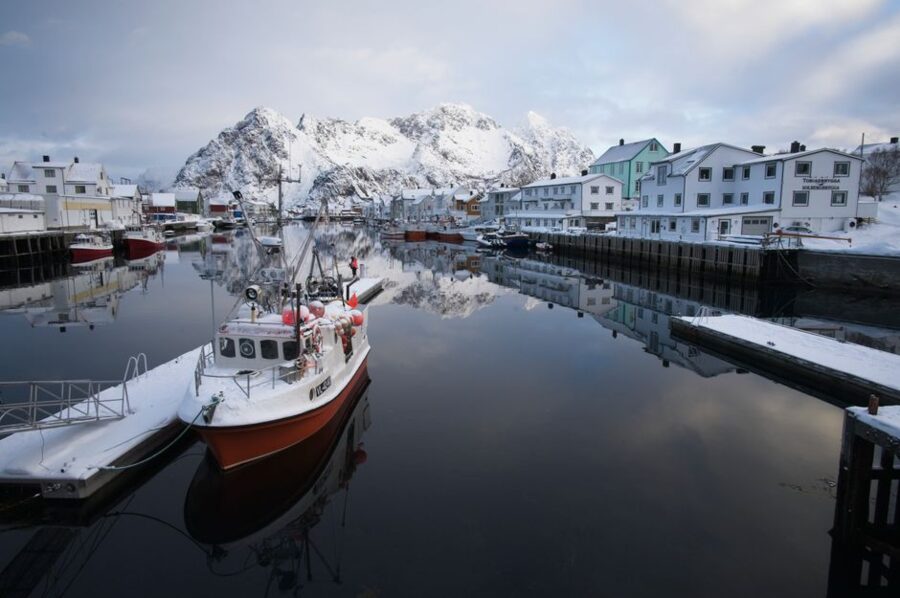
The first decision, then, is the one from the top: 01:30 on the ship or 15:05 on the plane. Between March and October I would take the ship, sleep through Finnsnes and Harstad, and be on deck when it leaves Stokmarknes at 15:15, with Raftsundet a little over an hour ahead and Svolvær’s quay at 18:30.