


On 21 December 2026 the sun rises over Oslo at 09:18 and sets at 15:11. On 21 June 2027 it comes up at 03:53 and goes down at 22:43. Between those two dates sits almost every decision you will make about a trip to Norway: which part of the country, which month, and whether you need a car to get between the places you want to see.
Those are the three decisions, and they lock together. The fjords of the west are at their easiest from late May to September, when the mountain roads are open and the boats run full timetables. The north is a winter destination as much as a summer one, and in winter it does not need a car at all. The car question follows from the first two: a train-and-boat trip through the fjords works well, a road trip through the high passes works only in the months the passes are open.

My verdict for a first visit: go to the west between June and early September, fly into Oslo or Bergen, and give it ten days. Ride the Bergen Line and the Flåm Railway, take a boat through the narrowest fjord, spend two nights in Bergen, and only then decide whether a car is worth it for the Geiranger and Trollstigen roads. If your trip falls between November and March, turn the plan upside down and go north instead, to Tromsø and Lofoten, for the northern lights and the low blue light of the polar night.
Contents 9 parts
Choose the region first
Norway is long. The coastal ships take twelve days to sail from Bergen to Kirkenes near the Russian border and back, calling at 34 ports, and the train from Trondheim to Bodø, which still leaves you short of the far north, takes 9 hours 49 minutes. A first trip that tries to do the fjords and the Arctic in one week spends most of it in transit. Pick one or two of the regions below.
Oslo and the east
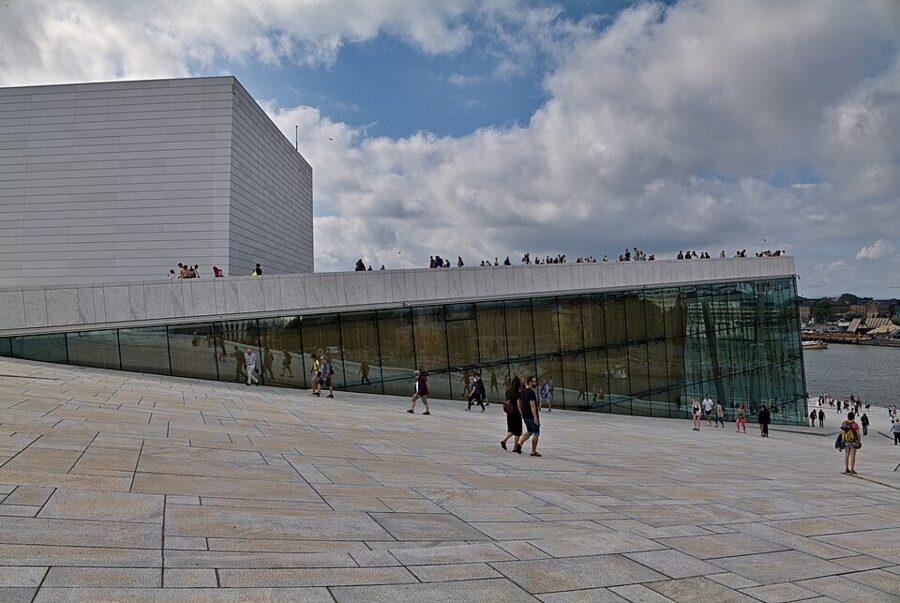
Oslo is where most long-haul flights land, and it is worth two days rather than a night on the way through. The waterfront from the Opera House to the MUNCH museum and the National Museum is walkable, the city has a forest and lakes on its northern edge reachable by metro, and it is the hub for the train lines to Bergen, Trondheim and Stavanger. Inland, the east is forest, long valleys such as Gudbrandsdalen and the ski towns, Lillehammer the best known. It is quieter than the west, and its draws are walking, skiing and cabin life rather than fjords.
The fjords of the west
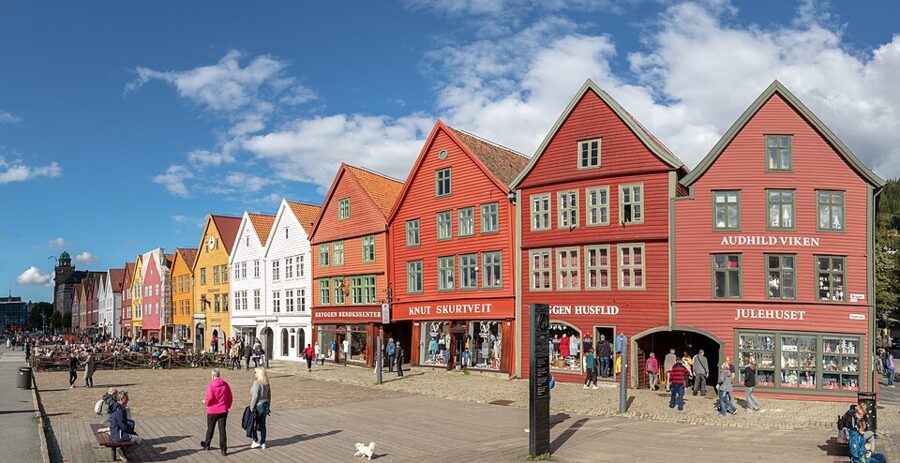
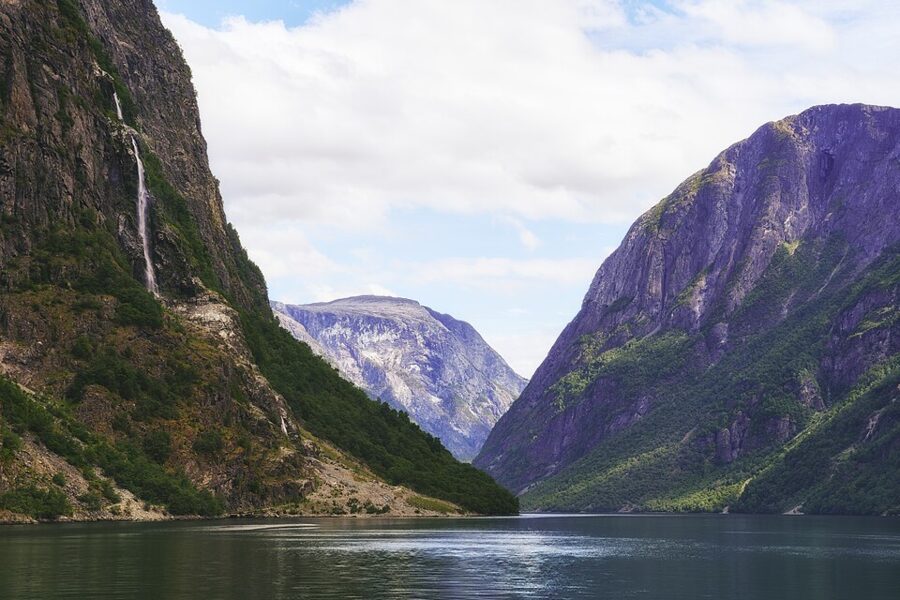
This is the Norway on the posters, and it is in Vestland and Møre og Romsdal counties. Bergen is the gateway: Norway’s second city, built around a harbour between seven mountains, with the Hanseatic wharf of Bryggen on one side and the fish market at its head. North of Bergen the Sognefjord, the country’s longest, runs more than 200 km inland, and one of its far arms is the Nærøyfjord, the narrowest, which ends at Gudvangen a short way from Flåm.

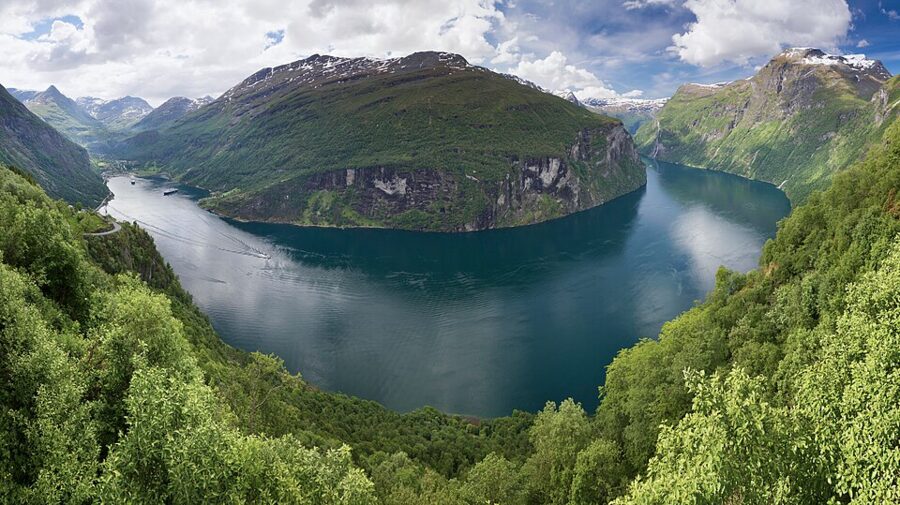
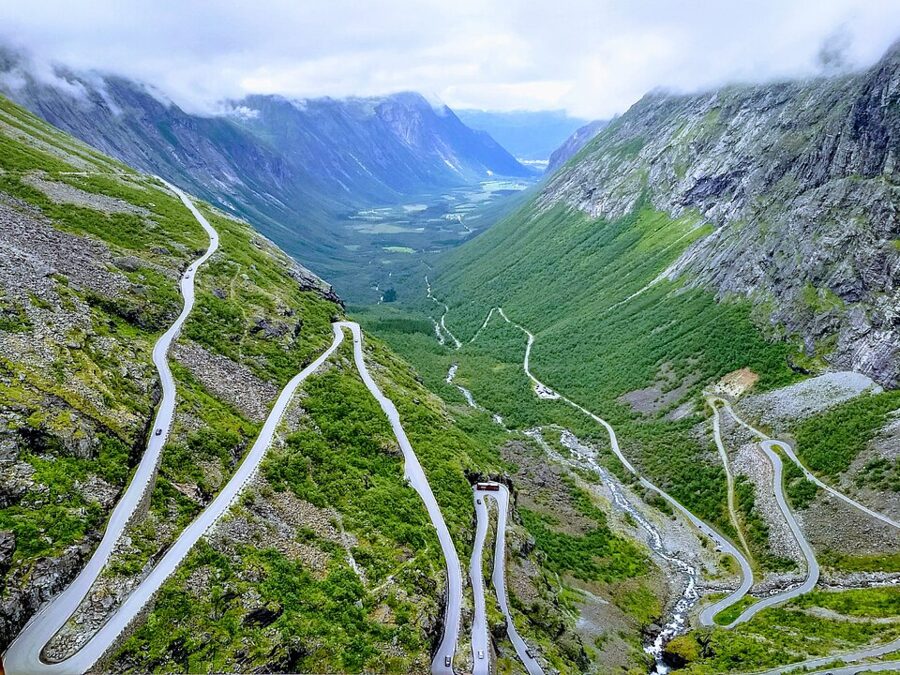
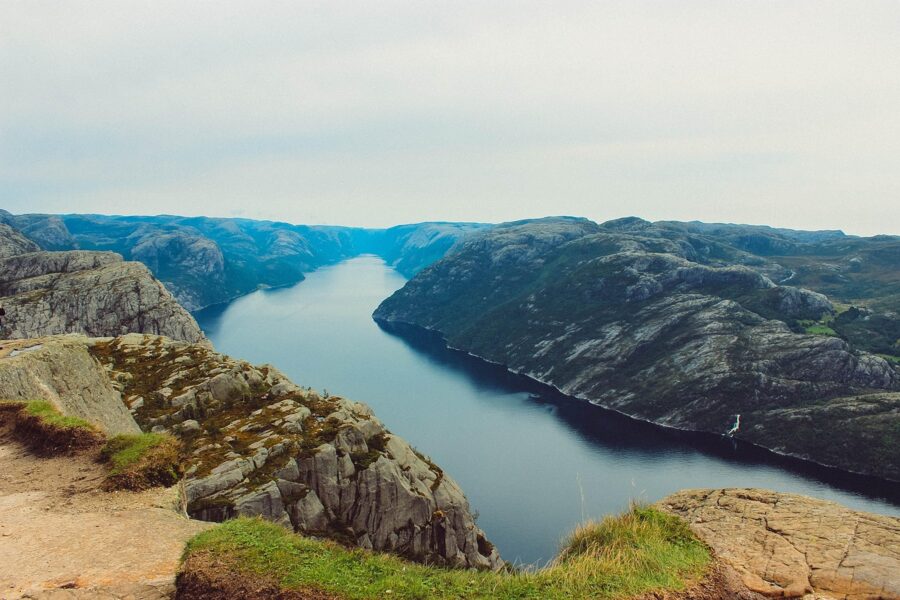
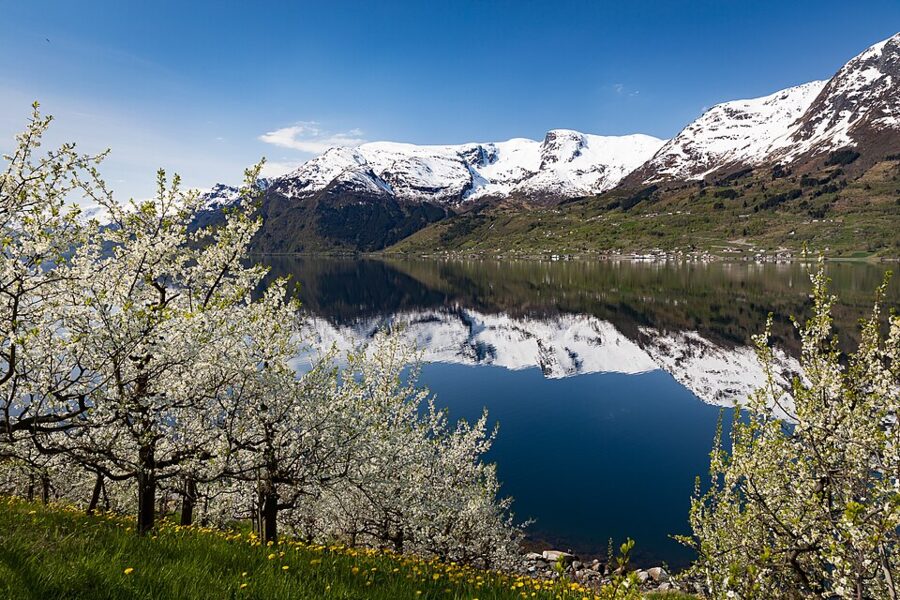
North of the Sognefjord the mountains get higher and the roads more dramatic: the Geirangerfjord, listed with the Nærøyfjord as a World Heritage site, Trollstigen, the Romsdal valley at Åndalsnes, and the Art Nouveau port of Ålesund on the coast. South of Bergen, Stavanger is the base for Preikestolen above the Lysefjord, a half-day walk there and back that is crowded from June to August. Hardanger, the fjord of orchards and waterfalls, sits between the two cities and is easy to reach from either.

Trøndelag
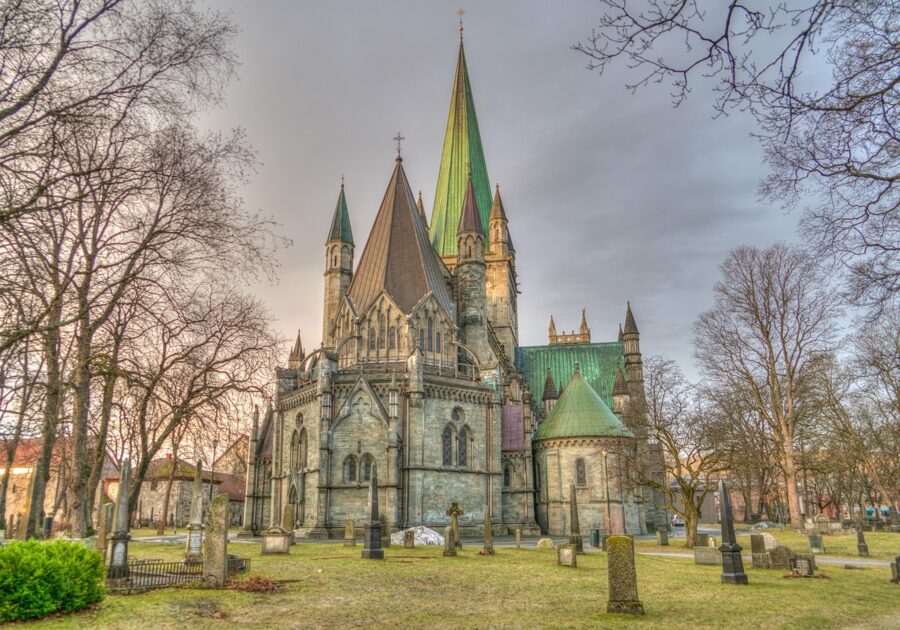
Trondheim, Norway’s third city, sits halfway up the country where the Dovre Line from Oslo meets the Nordland Line to Bodø. It has Nidaros Cathedral, the pilgrims’ goal for centuries, a riverside of old warehouses at Bakklandet, and food worth staying a night for. Inland, Røros, the copper-mining town on the World Heritage list, is famously cold and at its best in winter. Trøndelag is the region people skip, and it is the natural break if you are travelling between the fjords and the north by train.
Northern Norway
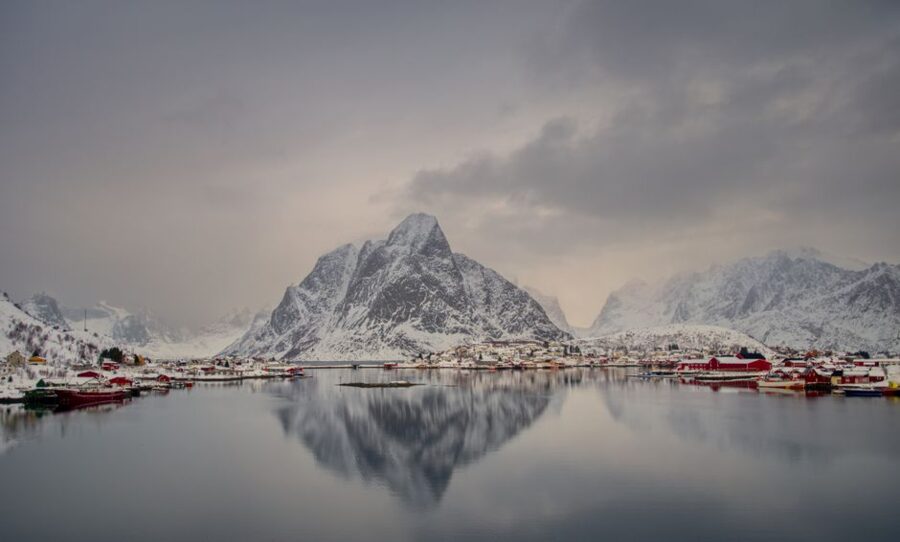
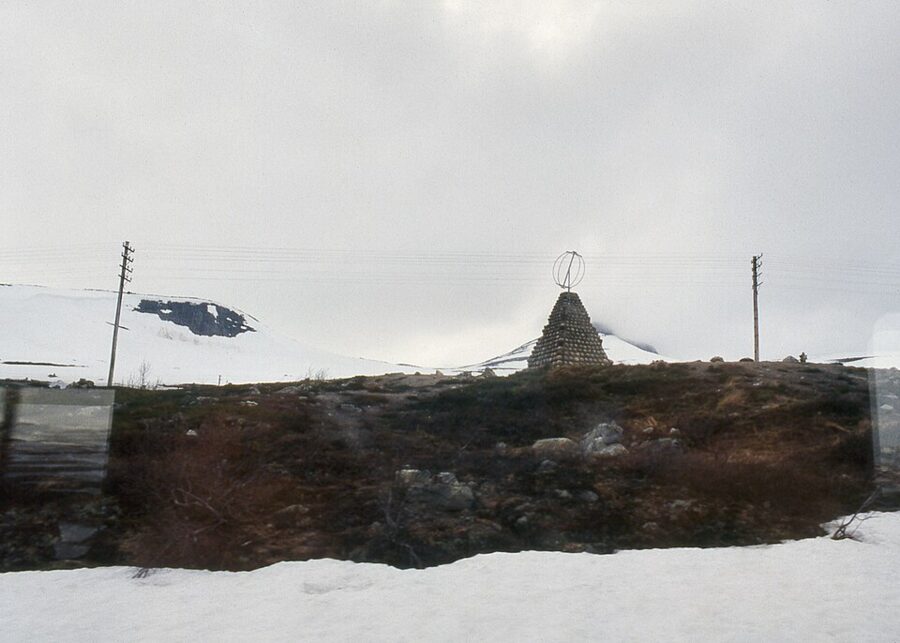
Northern Norway, the counties of Nordland, Troms and Finnmark, covers more than a third of the mainland, most of it north of the Arctic Circle. The places most people come for are Tromsø, the largest town, with flights from Oslo and direct ones from several European cities in winter, and Lofoten, the island chain of steep peaks and fishing villages to the south-west. The town itself, with its cable car, Arctic Cathedral and polar museums, rewards two or three days, and the Tromsø city guide takes it season by season. Flights, the coastal ship, the night train and bus via Narvik, and a 1,600 km drive are the four ways of getting to Tromsø, and the plane, the ship, the buses and the car all make the hop from Tromsø to Lofoten.
Further north still are the North Cape, the Sámi heartland of inner Finnmark around Kautokeino and Karasjok, and Kirkenes on the Russian border. They are a second trip, not an add-on.

Svalbard
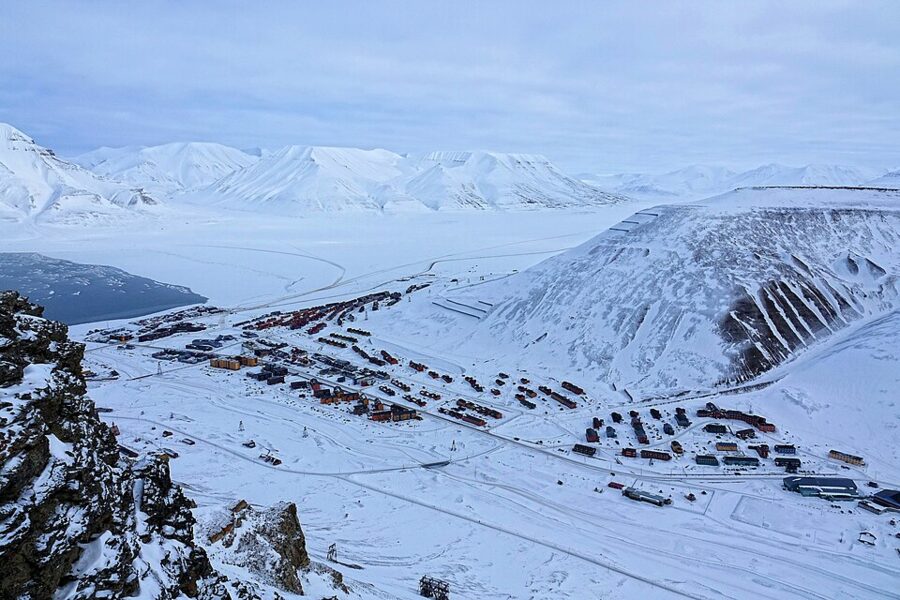
The archipelago halfway to the North Pole is reached by scheduled flights from Oslo, some via Tromsø, and works as a trip of its own; the Svalbard guide has the flights, the seasons and the rules, including the NOK 150 environmental fee every visitor pays, and Barentsburg, the Russian coal settlement, is the other town most visitors see. Svalbard is outside Schengen, so you show a passport or national ID card on the way in and out, even on a domestic flight.

Choose the season
Norway has two tourist seasons that barely overlap. Summer is the fjord season and the road-trip season; winter is the Arctic season. Spring and autumn are cheaper and quieter, and each has its drawback.
Summer: June to August
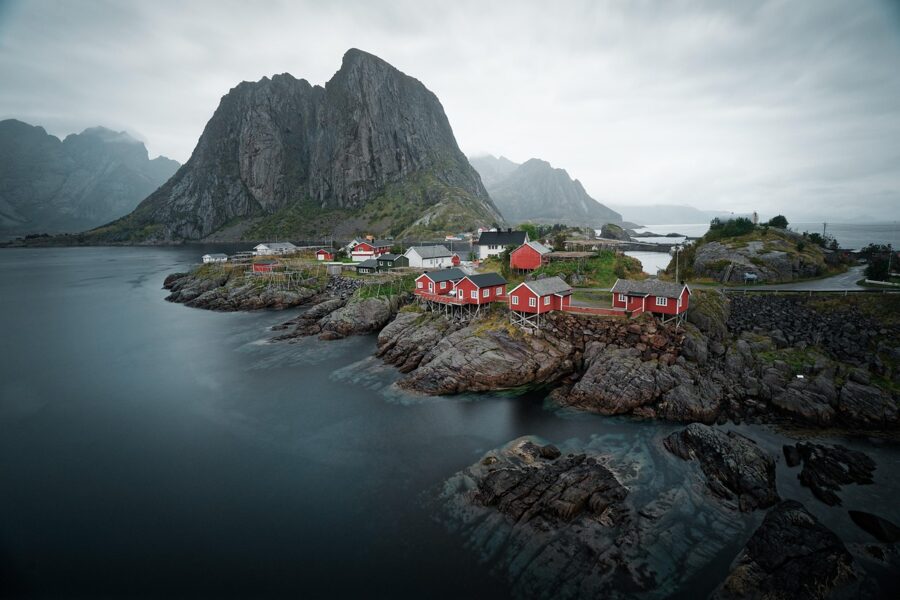
Everything is open, the ferries and boats run their full timetables, and the light hardly fades. Bergen’s sun sets at 23:11 at midsummer and in Tromsø the midnight sun lasts from about 20 May to 22 July. The price of summer is the crowd and the bill. Norwegian hotels recorded 4 million guest nights in July 2026, the most ever in a single month, and the average room price in July was NOK 1,600 before VAT, against NOK 1,568 in September.
July is also the month Norway goes on holiday itself. Under the holiday act workers can claim three weeks of main holiday between 1 June and 30 September, most take it in July, and the weeks of fellesferie (the shared summer holiday) fill campsites, cabins and the car ferries in the west. Schools in Oslo break up on 18 June 2027 and go back on 16 August. If you can travel in June or the last week of August, do.
Autumn: September and October
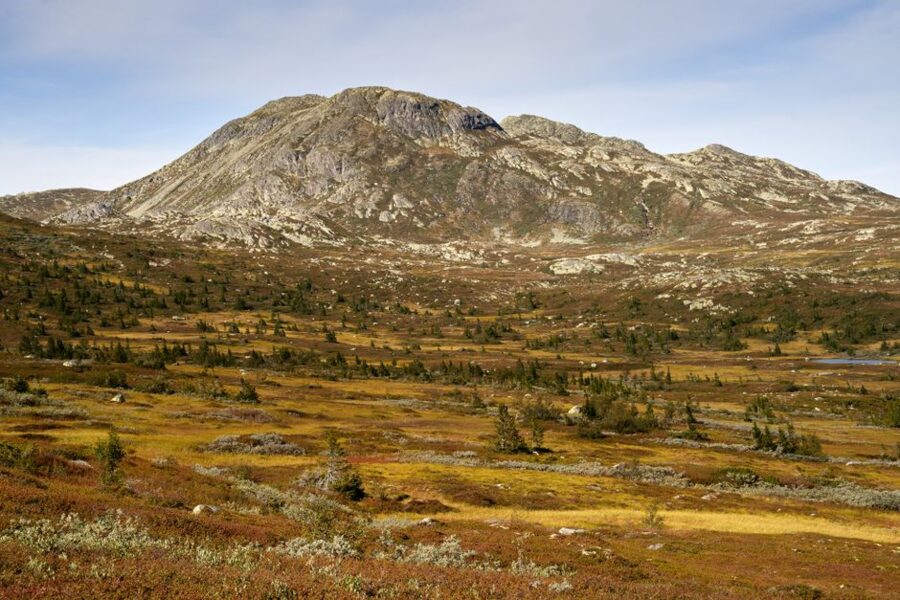
September is my favourite month for the fjords and the mountains. The crowds go when the schools go back, the birch on the high plateaus turns yellow and the heather red, and the first dark nights bring the first auroras in the north. The drawbacks are rain on the west coast, which gets wetter through the autumn (November 2025 was Bergen’s wettest month that year, with 321.8 mm), and the first closures of the high roads: Gamle Strynefjellsvegen has shut as early as 15 September and Aurlandsfjellet as early as 7 October.
Winter in the north
From late September to late March the sky above Northern Norway is dark enough for the aurora, and the weeks either side of the polar night are the core season. In Tromsø the polar night lasts from about 27 November to 15 January, but it is not black: around noon there are a few hours of blue and pink twilight. The town’s winter average is −4 °C, mild for the latitude because of the sea. The best place to see the northern lights compares Tromsø, Lofoten, Finnmark, Svalbard and the Finnish and Swedish options.

Winter in the north does not need a car and is better without one: the roads are icy, it is dark for most of the day, and the tour operators collect you. It does need the right clothing and a plan for the weather; the things not to do in Tromsø list starts there. Whale watching, dog sledding and reindeer visits are the other winter draws, and Arctic animal tourism covers what to ask before you book one.
Winter in the west
Winter in the fjords is a different thing. Bergen is mild, about 8 °C on average across the year, and wet: its normal is 2,495 mm of rain a year. In Oslo the sun is up for under six hours at midwinter.
Many of the scenic roads are closed, and the fjord boats and sightseeing trips run reduced winter timetables. A short winter break in Bergen or Oslo works; a winter fjord road trip mostly does not.

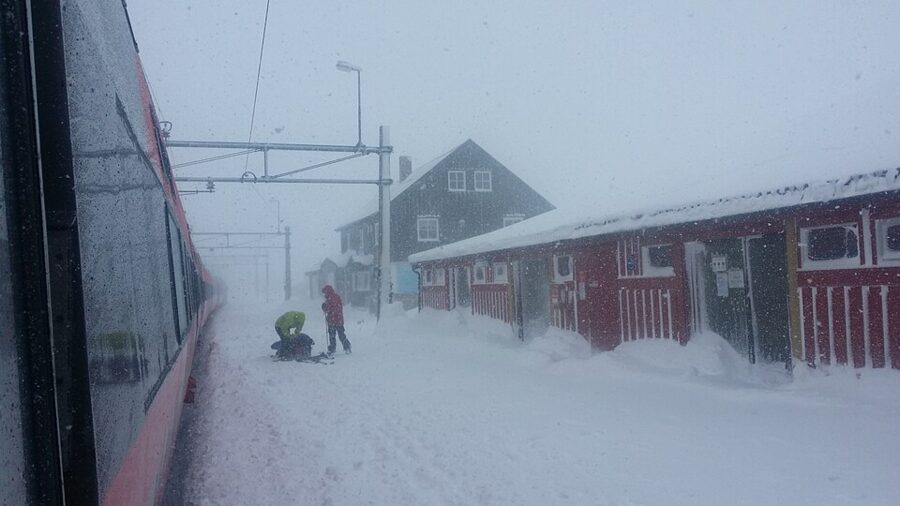
The exception is the trains. The Bergen Line runs all year, and crossing the Hardangervidda plateau in snow, with Finse station half buried, is one of the best winter days out in Europe.
Spring: April and May
Spring is light and quiet. By late April the sun is up for more than fifteen hours a day in Oslo, and the far north has the light of summer with the snow of winter, which makes March and April the ski-touring season in the Lyngen Alps and Lofoten. The drawback is that the high roads are still closed: Trollstigen has opened as late as 12 June, the Sognefjellet road as late as 1 May, and the old Strynefjellet road as late as 29 June. Easter is a national holiday week when Norwegians head for the mountains; in 2027 Oslo’s schools are off from 22 to 30 March, and shops close on the public holidays.

How long to give it
Distances are the whole question. Oslo to Bergen by train takes 6 hours 35 minutes to just over 7 hours; Oslo to Stavanger nearly 8; Trondheim to Bodø 9 hours 49 minutes on the one through train a day in the December 2026 timetable. Across the fjords a road that looks like 100 km on the map is often two hours with a ferry in the middle.
- Four or five days: Oslo, the Bergen Line, Flåm and the Nærøyfjord, Bergen. Or Tromsø alone in winter, with three nights out after the aurora.
- A week: the fjords by public transport, or Tromsø plus Lofoten in winter.
- Ten days to two weeks: the western fjords properly, by car from Bergen to Geiranger and Åndalsnes and back, or by train and coastal ship from Bergen to Trondheim and on to the north.
- Three weeks or more: the fjords and the north in one trip, joined by a flight or a few days on the coastal ship.
Whatever the length, put two nights in each base rather than one. The weather is the reason. A clear morning for the Nærøyfjord or Preikestolen is worth more than another stop, and in the west you get far more of them with a spare day in hand.
Getting there
Oslo Gardermoen is the main gateway, with flights from most of Europe and a few from further away. The Flytoget airport express leaves every ten minutes and takes 19 minutes to Oslo S; an adult ticket was NOK 276 in November 2026, and Vy’s regional trains on the same tracks are slower and cheaper. Bergen, Stavanger, Trondheim and Tromsø all have direct flights from other European cities, and flying into Bergen and out of Oslo, or the reverse, saves you a day of backtracking.
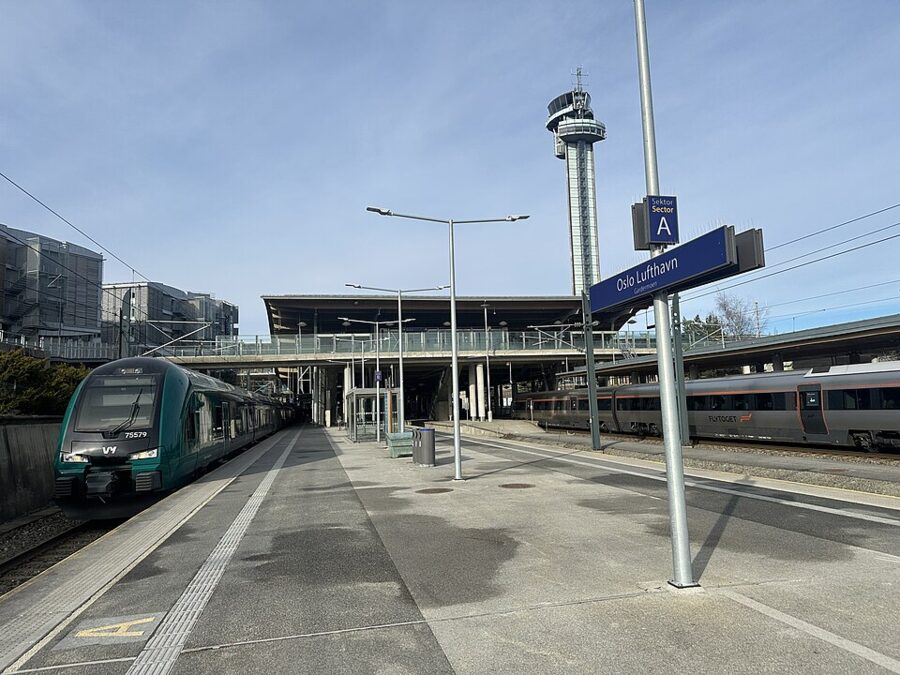

By land, SJ runs trains from Stockholm to Oslo in 5 hours 37 minutes to 6 hours, and there are direct trains from Gothenburg in about 3 hours 30 minutes. By sea, Color Line sails from Kiel to Oslo and from Hirtshals in Denmark to Larvik and Kristiansand, and Fjord Line sails from Hirtshals to Kristiansand, Stavanger and Bergen. The ferries make sense if you are bringing your own car; otherwise, fly.
Getting around without a car
You can see most of the classic Norway on public transport, and the trains and boats are a large part of the point. Entur, the national journey planner, covers every train, bus, ferry and express boat in one search and sells most of the tickets.
Trains
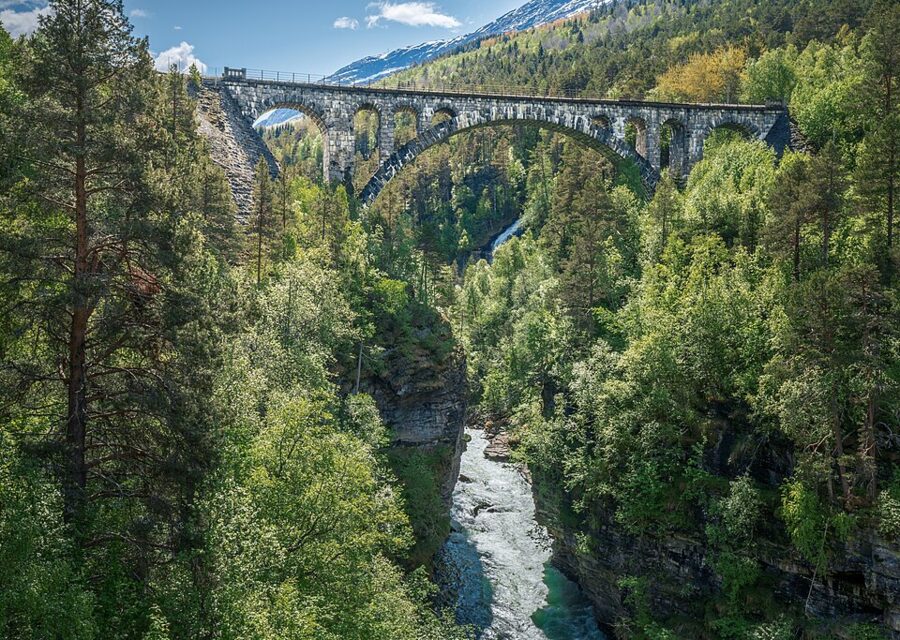
Three companies run the long-distance trains. Vy runs the Bergen Line, 471 km over Hardangervidda with its highest point at 1,237 metres, six or seven trains a day and a night train leaving Oslo at 23:03 and arriving at 06:23. SJ Nord runs the Dovre Line to Trondheim (6 hours 38 minutes on the fastest trains, and a night train at 22:50), the Rauma Line from Dombås down to Åndalsnes (1 hour 22 minutes), and the Nordland Line from Trondheim to Bodø. Go-Ahead runs the Sørland Line from Oslo to Kristiansand and Stavanger.

Book early. Vy’s cheapest fares, called Lowfare, are limited and go first, and SJ Nord sells cheap advance fares the same way. Vy’s site and app also sell tickets for SJ Nord, Go-Ahead and some of the regional bus companies, so one account covers most journeys.

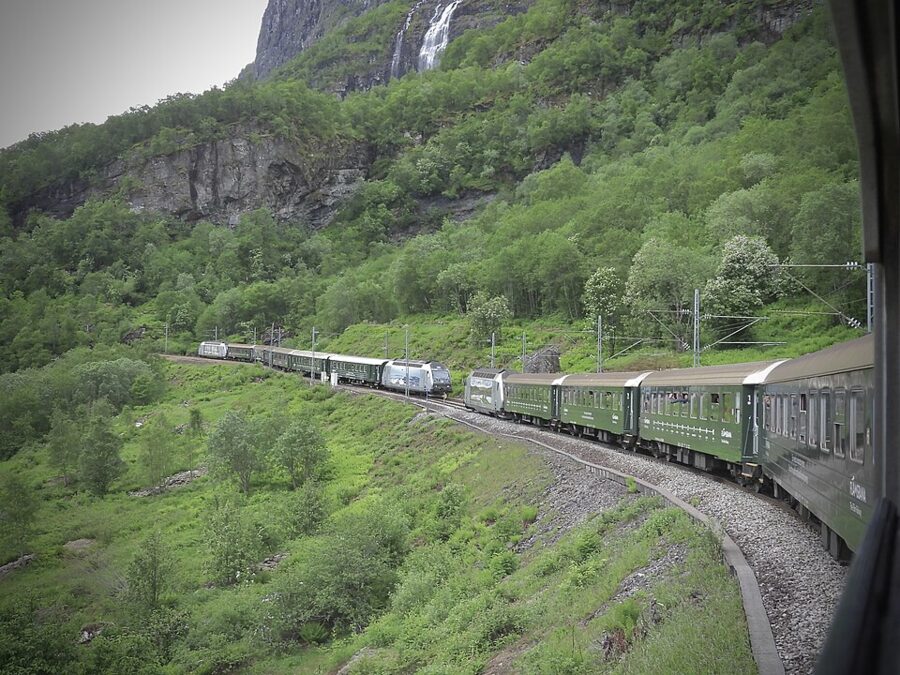
The Flåm Railway is the branch everyone wants: 20 km from Myrdal on the Bergen Line, 867 metres up, down to Flåm at the head of the Aurlandsfjord, at a gradient of 5.5 per cent for most of the way. It takes about an hour, with a five-minute stop at the Kjosfossen waterfall, and runs all year on a reduced winter timetable (four trains a day from Myrdal in December 2026).
The coastal ships
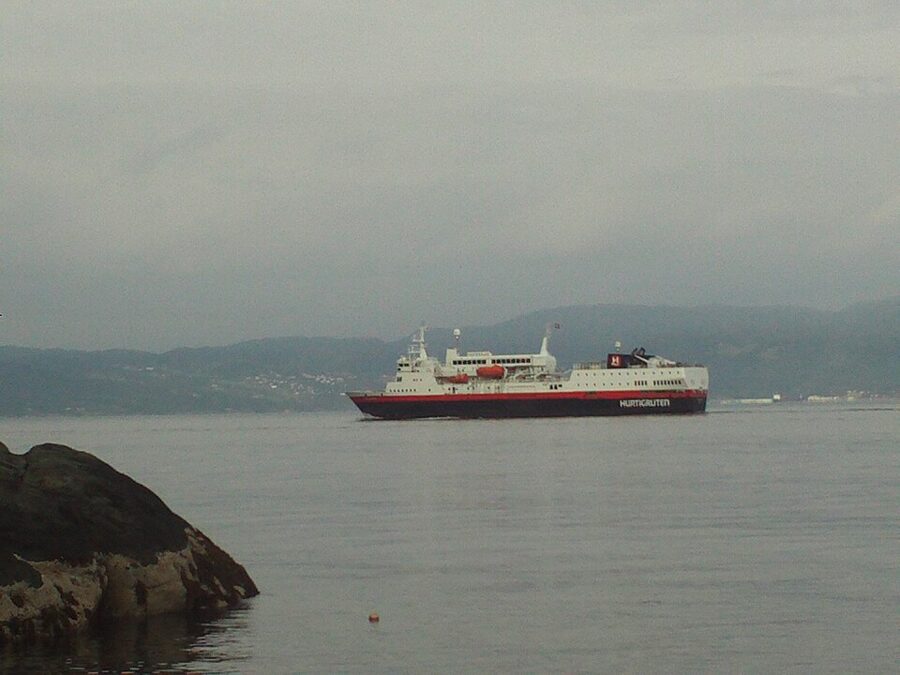
The coastal route between Bergen and Kirkenes has run since 1893, and two companies sail it now: Hurtigruten, whose original route is a 12-day round voyage, and Havila, whose four newer ships call at the same 34 ports all year. Both sell the full voyage as a cruise and shorter port-to-port tickets, and some stretches are worth doing for a night or two even if you are travelling otherwise by train: Bergen to Ålesund, which passes Geiranger in summer, and Bodø to Lofoten and Tromsø.
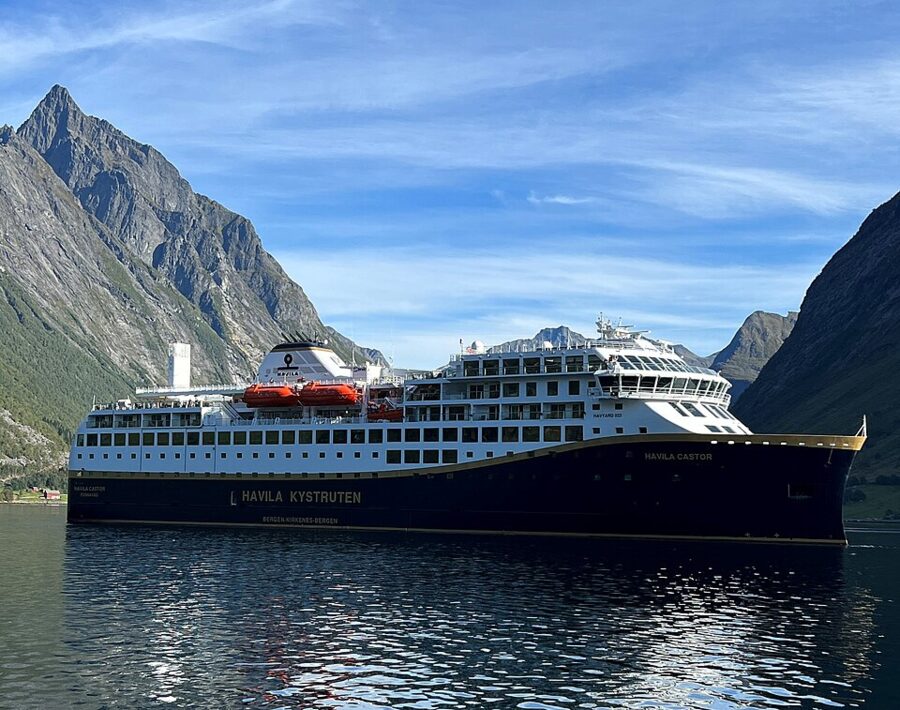

The ships are not cheap transport. Bergen to Tromsø takes three days 17 hours 45 minutes and costs from NOK 5,992 with the compulsory cabin and no meals; shorter hops where a cabin is not required, such as Bodø to Tromsø, cost far less. Prices are set by date and demand, so the same ticket costs more in July than in November.
Ferries, express boats and buses
Fjord Norway runs on ferries. Car ferries are part of the road network, shuttling all day across the busy crossings and less often on the side routes, foot passengers pay a small fare, and passenger express boats link Bergen with the Sognefjord and the islands. Regional buses fill the gaps, though not often: many rural routes run a few times a day, fewer on Saturdays and less again on Sundays, which is the thing that breaks most public transport plans in Norway.
Domestic flights
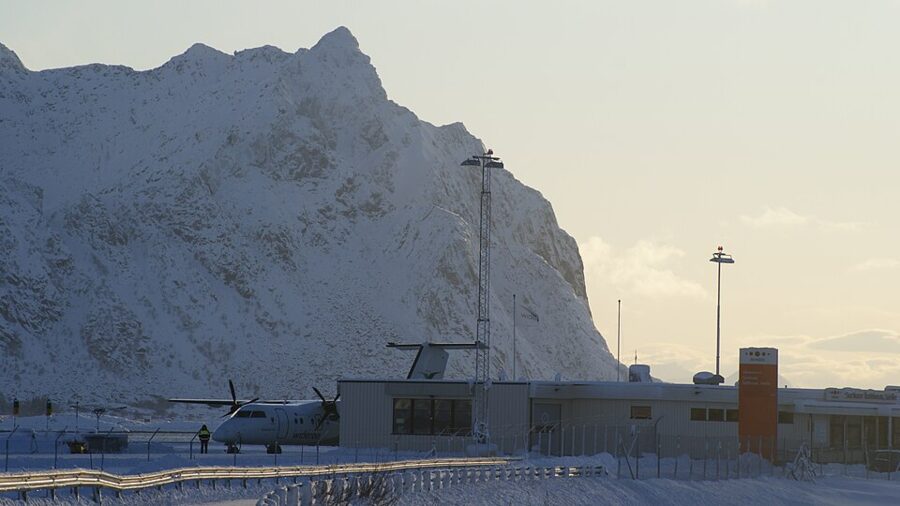
For the north, fly. Oslo to Tromsø is about two hours in the air, and Widerøe’s small turboprops connect the regional airports of Northern Norway and the west, from Leknes and Svolvær in Lofoten to Florø and Førde. Book well ahead for Christmas, Easter and summer weekends.

Norway in a Nutshell
Norway in a Nutshell, sold by Fjord Tours, is a ticket that bundles the Bergen Line, the Flåm Railway, a boat on the Nærøyfjord and the bus from Gudvangen to Voss, with timed connections. Every one of those legs is a service you can book yourself, often for less, with a night in Flåm or Gudvangen that the day version leaves out. What the package buys is one booking and someone else’s job to fix it if a connection breaks.
Driving
A car gives you the scenic routes, the viewpoints the buses pass, and the small hotels away from the railway. It also gives you tolls, ferry queues, narrow roads and, in winter, ice. My rule: on public transport for the Flåm and Bergen corner and the cities, a car for the Geiranger, Romsdal and Jotunheimen country and for Lofoten in summer.
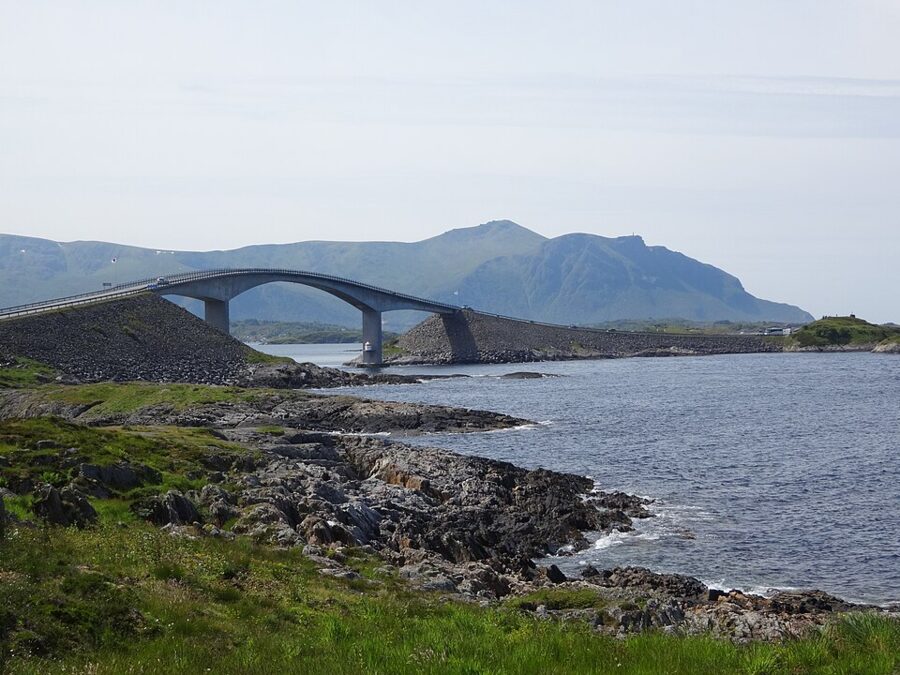

Tolls and ferries
All vehicles pay road tolls in Norway, and nearly all of it is automatic. Gantries read the number plate or an AutoPASS tag, and the bill follows. With a rental car, the company pays the tolls and passes them on to you afterwards. If you drive your own foreign-registered car, AutoPASS’s page for foreign vehicles gives two options: register the car with Epass24 before you go, which saves the fee for looking up your car in your home register, or get a tag from a toll service provider, which also gives 20 per cent off every toll.
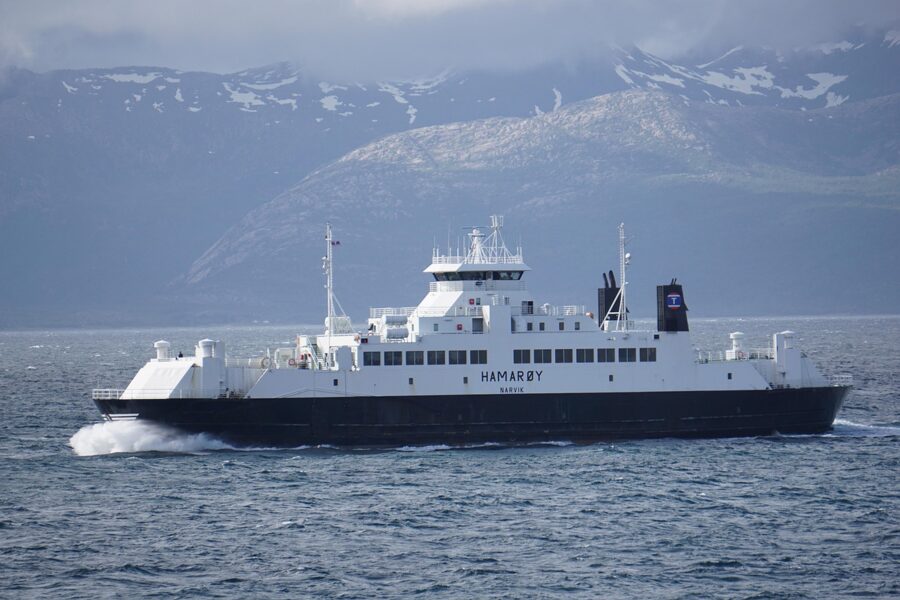
Most car ferries take payment the same way, by number plate or tag. An AutoPASS ferry agreement, linked to a tag and paid in advance, gives private customers 50 per cent off most crossings, which adds up on a long road trip; foreign vehicles without one are invoiced afterwards through Epass24. A few routes in Trøndelag and the Moss to Horten ferry are outside the scheme.
Narrow roads and passing places
Many roads in the west are single-track with a møteplass (passing place) every few hundred metres, marked with an M sign. In practice the car nearest the passing place pulls in or reverses to it, whichever side of the road it is on. Coaches and camper vans own these roads in summer: give them room, and never stop on a bend to take a photo.
Mountain roads closed in winter
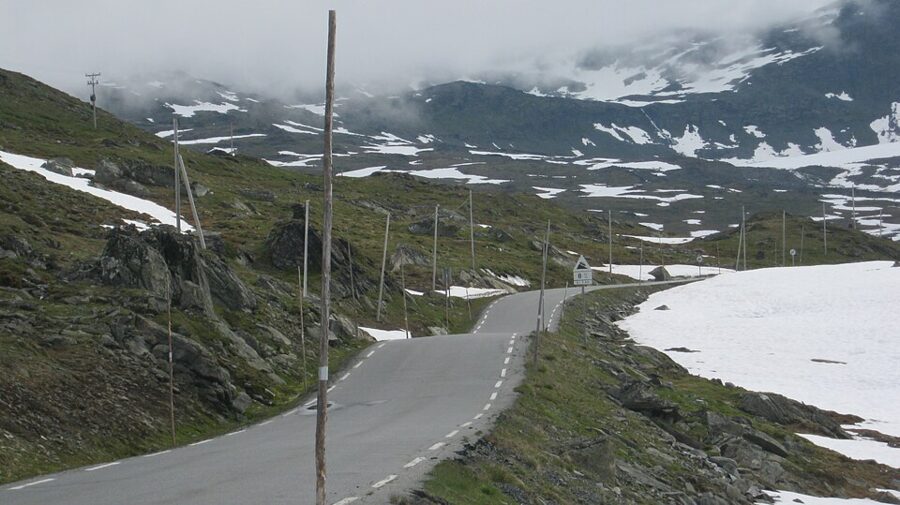
Several of the best roads close every winter, and Statens vegvesen publishes the range of past dates for each on its National Tourist Routes pages. These are past closures and openings, not a timetable; each year depends on the snow.
| Road | Earliest closures | Latest openings |
|---|---|---|
| Trollstigen (Fv63) | 5 October to 7 December | 29 April to 12 June |
| Langvatnet to Geiranger (Fv63) | 18 November to 9 January | 27 April to 17 June |
| Sognefjellet (Fv55) | 17 November to 17 December | 12 April to 1 May |
| Aurlandsfjellet, the Snow Road (Fv243) | 7 October to 6 November | 7 May to 3 June |
| Gamle Strynefjellsvegen (Fv258) | 15 September to 11 October | 15 June to 29 June |
| Valdresflye (Fv51) | 15 December to 9 January | 22 March to 5 April |
After opening, these roads can still close at night and in bad weather. The main crossings between east and west are kept open in winter, but Hardangervidda (Rv7) and the other high passes often run as kolonnekjøring, convoy driving behind a snowplough, or close for hours in a storm. The Aurlandsfjellet road has an all-year alternative underneath it: the Lærdal Tunnel, 24.5 km long. Check the Vegvesen trafikk app or vegvesen.no before you set out on any mountain crossing between October and May.
Speed, winter tyres and electric cars
The default limits are 50 km/h in built-up areas and 80 km/h outside them, with signs raising it to 90, 100 or 110 km/h on better roads. Speed cameras are common and signposted, and speeding fines are fixed amounts that rise steeply with the speed; well over the limit, the police can take your licence on the spot. In winter, check that a rental car has winter tyres, and if you bring your own car, check the rules and fees for studded tyres in the cities you will pass through. If you rent an electric car, plan charging around meals, and expect the range to fall in the cold and on the long climbs.
What it costs, and how to keep it down
Norway is expensive, and the gap is widest on the two things you buy every day: a bed and a meal out. Transport, once booked early, is closer to the rest of northern Europe, and the outdoors is free.
Daily budgets for 2026
Statistics Norway gives the average price of a hotel room sold in July 2026 as NOK 1,600, before VAT and without meals. Møre og Romsdal, the county of Geiranger and Ålesund, averaged just under NOK 2,200, and Svalbard nearly NOK 2,900. Those are averages across every room sold that month, city business hotels included; a popular fjord hotel on a July Saturday costs well above them.
With that as the anchor, these are realistic daily ranges per person for two people sharing, before long-distance transport:
- Tight, about NOK 700 to 1,000: campsite cabins or hostels, supermarket food, free walks, a museum every few days.
- Comfortable, about NOK 1,500 to 2,500: a mid-range hotel or a rented apartment, a restaurant dinner most days, one paid activity.
- Easy, NOK 3,500 and up: fjord hotels with dinner, a boat trip or guided outing every day, wine with meals.
Long-distance transport sits on top. Book trains early, buy the coastal ship only for the stretch you want, and price the car with its ferries and tolls before you choose it over the train.
Supermarkets and Vinmonopolet
The supermarket is where Norway gets affordable. The discount chains, Kiwi, Rema 1000 and Extra, are in most towns, and the online grocer Oda’s prices on 24 November 2026 give the scale: a litre of milk NOK 21.50, a loaf of bread NOK 39 to 47, a 500 g block of brunost (sweet brown whey cheese) NOK 56.40, a Grandiosa frozen pizza from NOK 29.90, and a six-pack of half-litre beers about NOK 180 to 220. Norwegians take a matpakke (packed lunch) to work, to school and up the mountain, and doing the same cuts a day’s spending more than anything else.


Alcohol is where it gets expensive again, and where the rules matter. Supermarkets sell beer and cider up to 4.7 per cent, and the alcohol act stops those sales at 20:00 on weekdays and 18:00 on Saturdays at the latest; municipalities can set earlier times, and there are no sales on Sundays or public holidays.
Wine, spirits and stronger beer are sold only at Vinmonopolet, whose usual opening hours are 10:00 to 18:00 on weekdays and 10:00 to 16:00 on Saturdays, shorter in small branches. You must be 18 to buy wine and beer and 20 for spirits. A drink in a bar or restaurant costs several times the shop price, so if you want wine at the cabin on Sunday, buy it before 16:00 on Saturday.
Cabins, huts and the right to roam
Norway is a country of hytter (cabins). Campsites rent simple cabins by the night across the country, often with a kitchen, and shared between four they are among the cheapest roofs in the fjords.
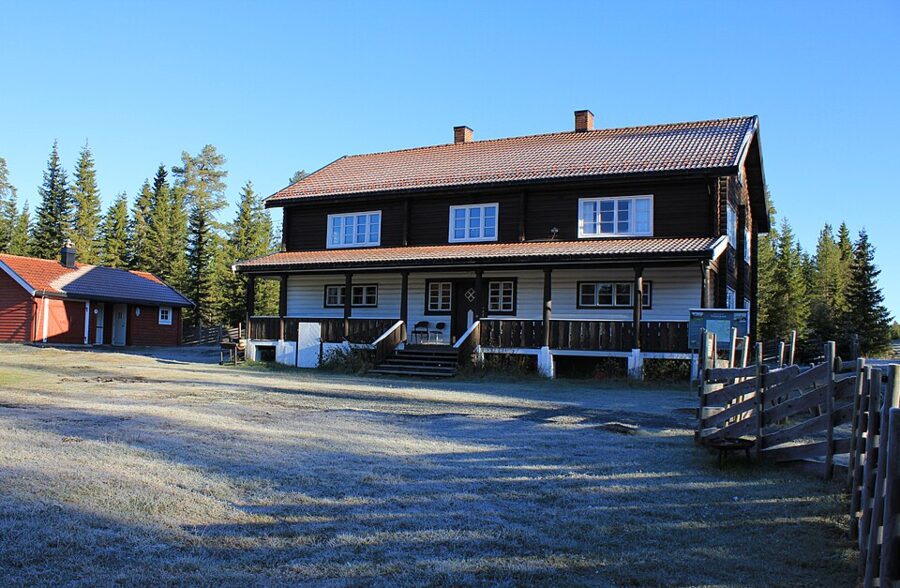

For walkers there is DNT, the Norwegian Trekking Association, with over 600 cabins and 23,000 km of marked trails. Staffed lodges serve dinner and breakfast; self-service cabins have a stocked larder you pay for; unstaffed ones have beds, a stove and nothing else.
At the self-service and unstaffed cabins one person in your group must be a member, most are locked with the standard DNT key (members borrow one for a NOK 100 deposit), and you pay in the DNT app. Membership runs by calendar year and costs NOK 885 for an adult in 2026 and NOK 375 for anyone aged 13 to 25. Members pay a lower rate for every night, so if you plan more than a couple of nights in huts, join.
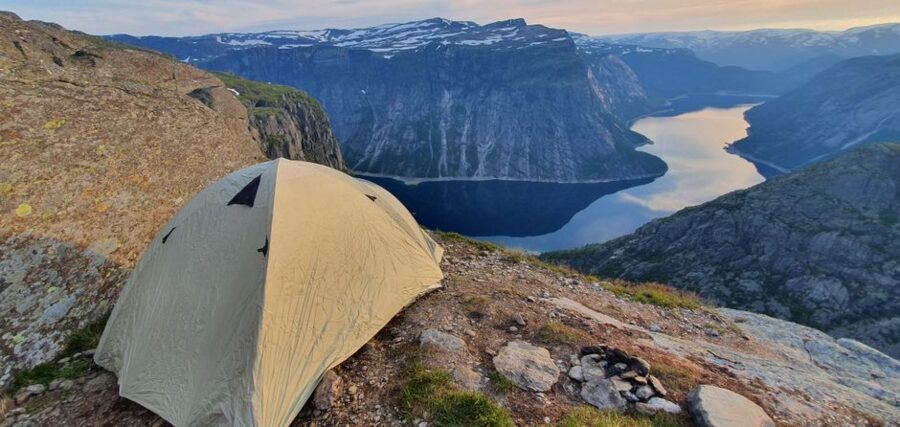
Then there is allemannsretten, the right to roam. Under the outdoor recreation act you can walk and camp on uncultivated land, not farmland or gardens, for up to two nights in one place without asking, at least 150 metres from the nearest inhabited house or cabin; in the high mountains and far from houses the two-night limit does not apply. It does not cover parking a camper van wherever you like. Camping in Scandinavia and the right to roam has the full rules for Norway, Sweden and Finland side by side.
The visitor contribution from 2027
Norway now lets municipalities charge a besøksbidrag, a visitor contribution on overnight stays. The law passed by the Storting in June 2025 came into force on 1 July 2026. It sets the charge at 3 per cent of the price of the stay, applies it to rooms, apartments and cabins in hotels, hotel ships, hostels and other lodgings, private rentals included, for stays of under 30 days, and requires it to be shown on the bill; a municipality can limit it to certain months.
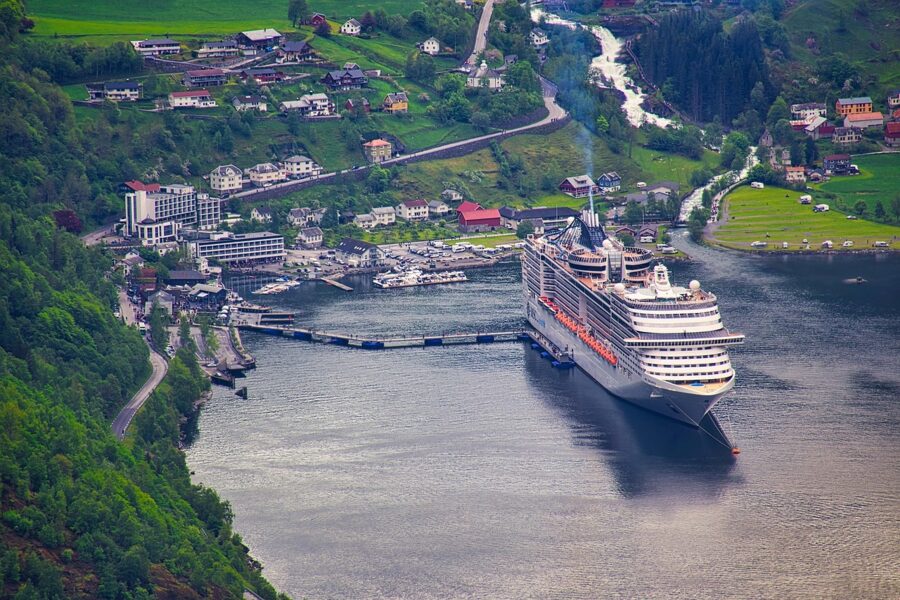
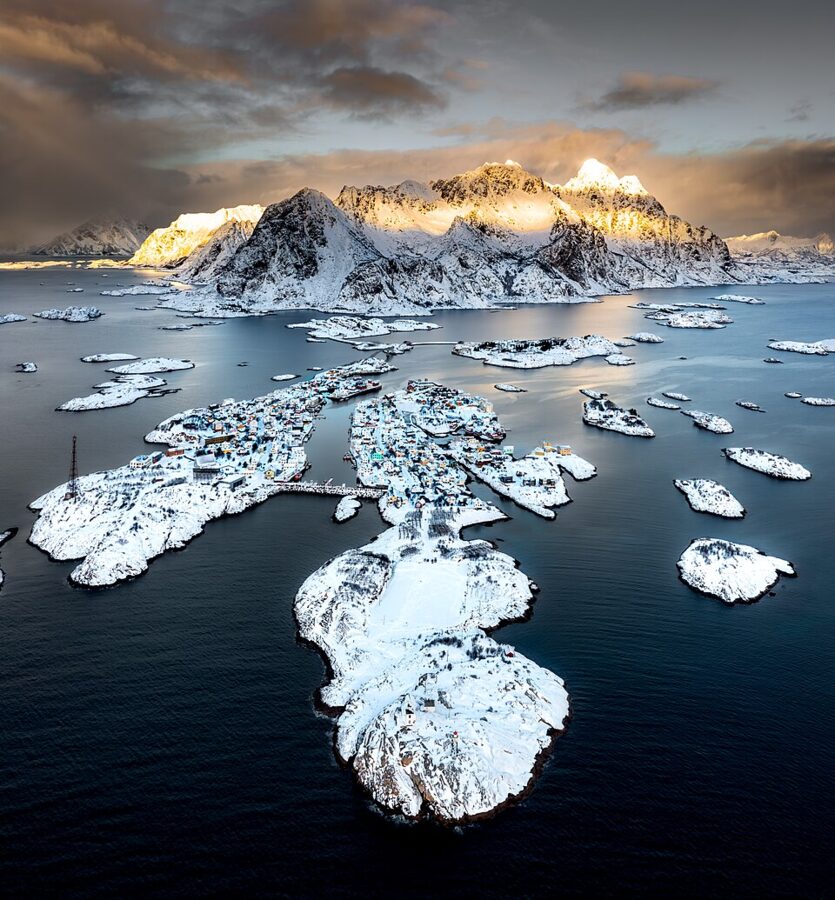
At the end of October 2026 the government approved the first three: Tromsø, Stranda, which includes Geiranger, and Vågan in Lofoten, home to Svolvær and Henningsvær. They may charge from 2027, though Stranda’s mayor has said it will not start straight away. Applications from Lyngen, Karlsøy, Vega, Bodø and several other Lofoten municipalities were still being considered at the end of October. On a NOK 2,000 room the charge is NOK 60 a night, so it will not change your plans, but expect to see it on bills in the north and in Geiranger.

Money, papers and practicalities
Cards, Vipps and tipping
Norway pays by card. Contactless cards and phones work for almost everything, from the bus to a waffle at a ski hut, and many people never carry cash. You will see Vipps signs everywhere: it is the phone payment app Norwegians use to pay each other, small sellers and farm stalls, and it is set up through a Norwegian bank, so most visitors never use it and do not need to. Carry a little cash for the odd roadside stall or remote kiosk.
Service is included in restaurant prices and tipping is not expected; rounding up for good service is a kindness, not a duty.
Plugs, data and VAT
Sockets are the continental European kind at 220 volts, according to Visit Norway’s travel tips, so bring a two-pin adapter if you are coming from Britain or North America. Norway is in the European Economic Area, so an EU mobile plan normally works at home prices; from elsewhere, buy a local prepaid SIM, called a kontantkort, or an eSIM. Shops that offer tax-free shopping refund the VAT to visitors from abroad, as long as you show your passport or ID card when you buy.
Schengen, the EES and ETIAS
Norway is not in the EU but is in Schengen, so the Schengen rules on visas and length of stay apply. Since 10 April 2026 the EU’s Entry/Exit System has been fully running at Schengen’s external borders, Norway’s airports and ports included: if you are not an EU, EEA or Swiss citizen, your first entry records your fingerprints and a facial image, and passport stamps have been replaced by the electronic record. Allow extra time at passport control on your first arrival.
The next step is ETIAS, an online travel authorisation for visa-free visitors, which will cost €20. Its start date had not been set by late November 2026, and the EU says it will announce it several months ahead, so you do not need it yet.
Weather and what to pack
Pack for four seasons in a week, whatever the month. In summer a hot day and a cold drizzle on the deck of a fjord boat can fall in the same week; even rainy Bergen reached 31 °C on 2 July 2025. The mountains are always colder than the coast.
The answer is layers: a waterproof jacket that is actually waterproof, a fleece or light down jacket, a warm hat and gloves even in July if you are going above the tree line, and boots or trail shoes with grip. In winter in the north add thermal underwear, a proper insulated jacket, and boots that take a wool sock; Visit Tromsø’s clothing advice is to be ready for anything from −25 °C to 5 °C on Arctic outings. The forecast to use is Yr, run by the Norwegian Meteorological Institute and NRK, and for the mountains in winter, the avalanche warnings at Varsom.
Three sample routes
A week in the fjords by public transport
- Days 1 and 2, Oslo. Arrive, walk the waterfront, one museum, the Opera House roof at dusk.
- Day 3, the Bergen Line to Flåm. In the spring 2027 timetable the 08:25 from Oslo S reaches Myrdal at 13:03, and the Flåm Railway takes you down to the fjord in about an hour. Sleep in Flåm.
- Day 4, the Nærøyfjord. A boat from Flåm along the Aurlandsfjord and up the Nærøyfjord to Gudvangen, then the bus to Voss (50 minutes to an hour) and the train to Bergen (about 1 hour 10 minutes).
- Days 5 to 7, Bergen. Bryggen, the funicular up Fløyen, and a day trip by express boat into the Sognefjord or by bus and boat into Hardanger.
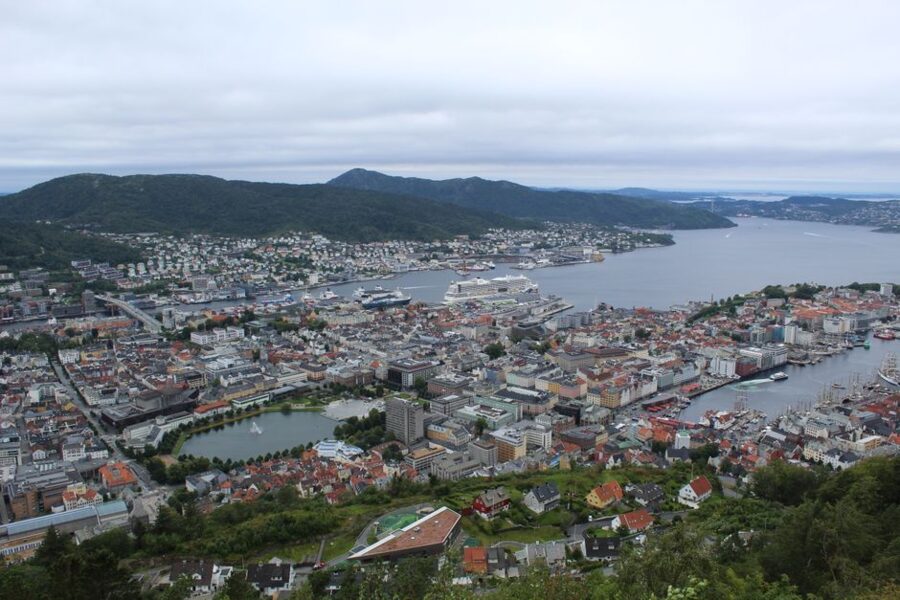
This is the Nutshell route at walking pace, and it works best from late May to September. It runs in winter too, on reduced timetables, so check the Flåm to Gudvangen leg on Entur for your dates before you book the beds.
A winter week in the north
- Days 1 to 4, Tromsø. Fly from Oslo. Three nights out after the aurora, by tour or on your own on Kvaløya if you have a car and winter driving experience, and a day for the fjords, whales in season or a dog sled.
- Day 5, to Lofoten. Widerøe’s direct flight to Leknes (55 minutes, 15:05 daily and 13:05 on Saturdays in the 2026-27 winter timetable), or the coastal ship, which leaves Tromsø at 01:30 and reaches Svolvær at 18:30.
- Days 6 and 7, Lofoten. A rented car from Leknes or Svolvær for the villages: Henningsvær, Nusfjord, Hamnøy and Reine.
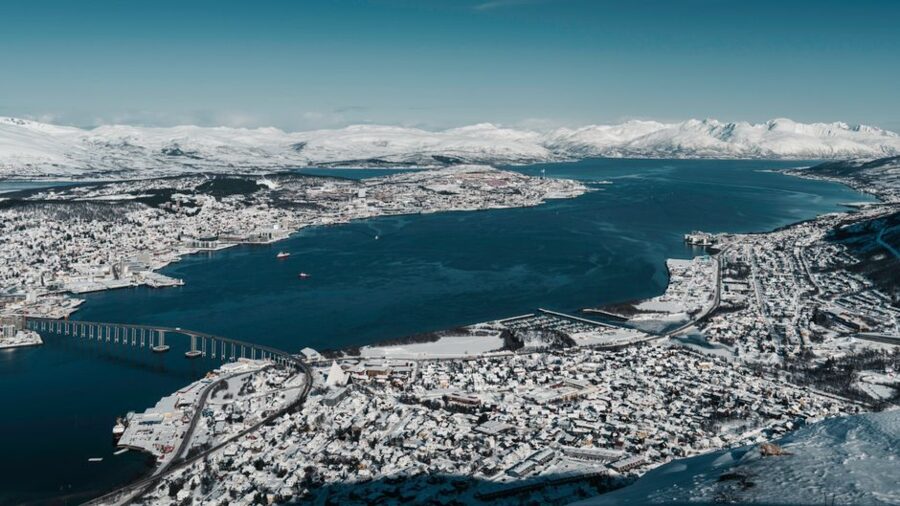
In December and early January the light is a few hours of twilight, which is beautiful and short, so build the days around noon. February and March have more daylight and still have long dark nights.
Two weeks by car
- Days 1 and 2, Bergen. Collect the car on the way out, not on arrival.
- Days 3 and 4, Hardanger. Along the Hardangerfjord to the orchards around Lofthus and Ulvik.
- Days 5 and 6, Aurland and Flåm. Over the Aurlandsfjellet road if it is open, through the Lærdal Tunnel if not, then the ferry across the Sognefjord.
- Days 7 and 8, the Sognefjellet road and Jotunheimen. Norway’s highest mountain pass road, between glaciers and the highest peaks in the country, then a night near Lom.
- Days 9 and 10, Geiranger. Up the Otta valley to Grotli, past the Dalsnibba turn-off and down the hairpins to the fjord, with a boat on the Geirangerfjord the next day.
- Days 11 and 12, Trollstigen and Åndalsnes. Up Ørnevegen, the Eagle Road, then the ferry from Eidsdal and over Trollstigen to Romsdalen, and a walk up to the Rampestreken viewpoint above town.
- Days 13 and 14, the Atlantic Ocean Road and Ålesund. Then fly home from Ålesund via Oslo, or drive the long road back to Bergen.

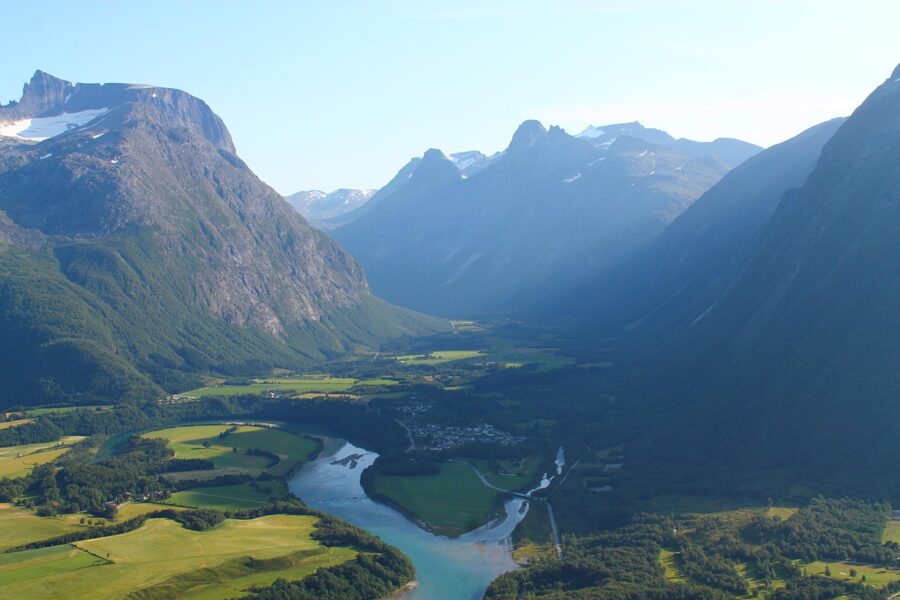
This is a mid-June to mid-September route, because four of its roads close in winter. Book the Geiranger and Flåm nights first: they fill before anything else in the west.
Back to the sunrise at 03:53 on 21 June. If that is the light you want, book the Bergen Line now, on the morning train from Oslo, and change at Myrdal for Flåm; if you want the dark, book the flight to Tromsø for the last week of January, when the sun is just back above the horizon and the nights are still long.