

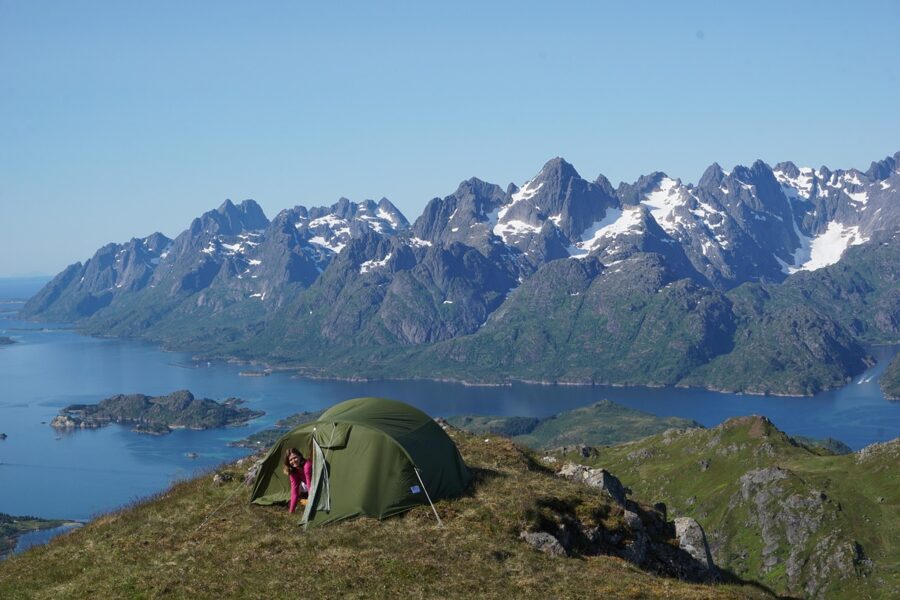
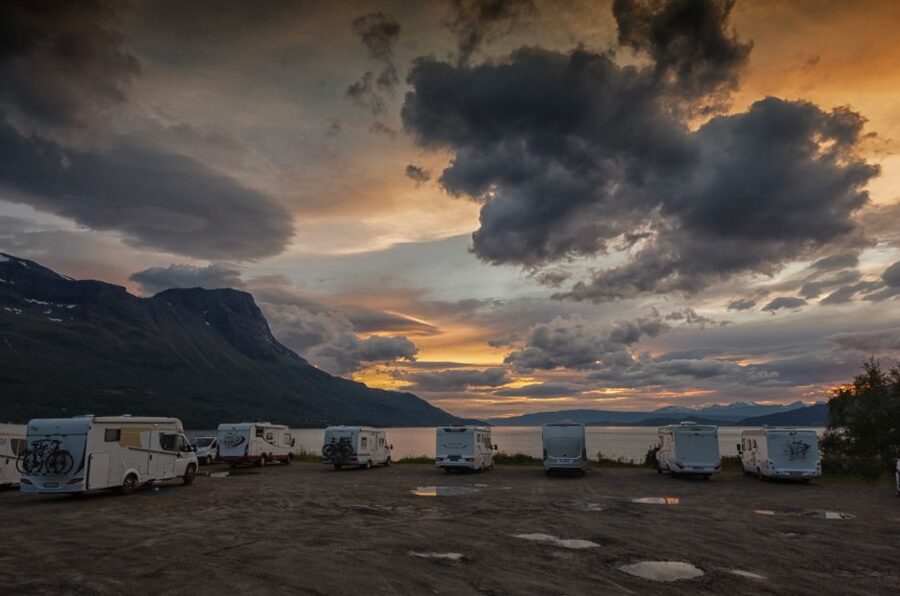
One night in August 2024, the Norwegian Public Roads Administration counted 365 motorhomes parked along the E10 between Reine and Kabelvåg in Lofoten. The campsites on the same stretch of road still had free pitches. That count, published when the agency announced time limits on Lofoten’s rest areas in July 2025, explains most of what has happened to camping in the Nordic countries in the last few years.
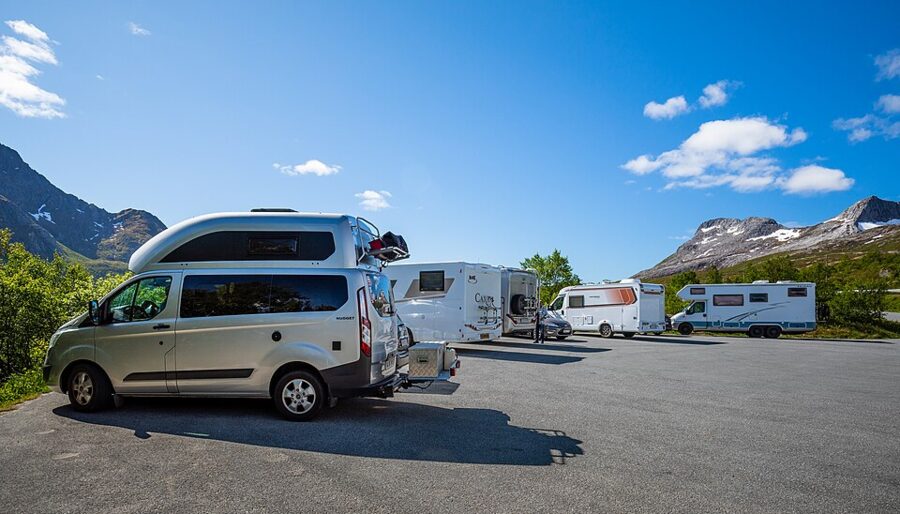

The short version is this. Norway, Sweden and Finland give everyone a legal right to walk across land they do not own and to sleep on it in a tent, for free, within limits. Denmark does not, and offers instead free shelters, primitive pitches and 275 state forests where a small tent is allowed for one night.
The limits are where the trip is won or lost. Norway writes its rules into law with numbers: 150 metres from the nearest house, two nights in one place, no fires near woodland from 15 April to 15 September. Sweden prefers judgement to numbers. Finland is generous about where you sleep and strict about fire.
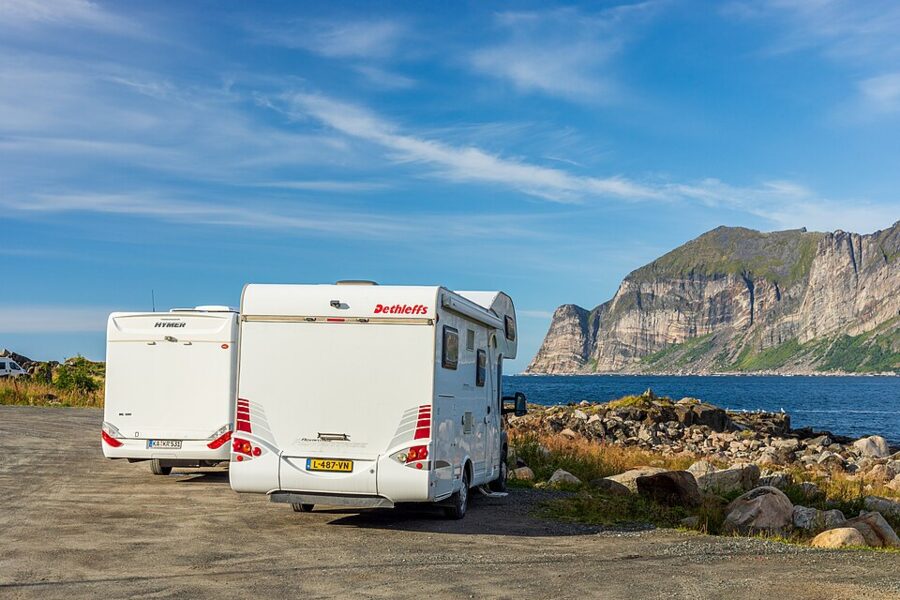
None of these rights was designed for vehicles. A tent carried in on foot is covered almost everywhere in three of the four countries; a motorhome parked on a beach is covered almost nowhere. Most of the new bans, fees and signs of the last five years are aimed at that gap, and they cluster in famous places: Lofoten, Senja, the Atlantic Road, the car parks below Preikestolen and Trolltunga.
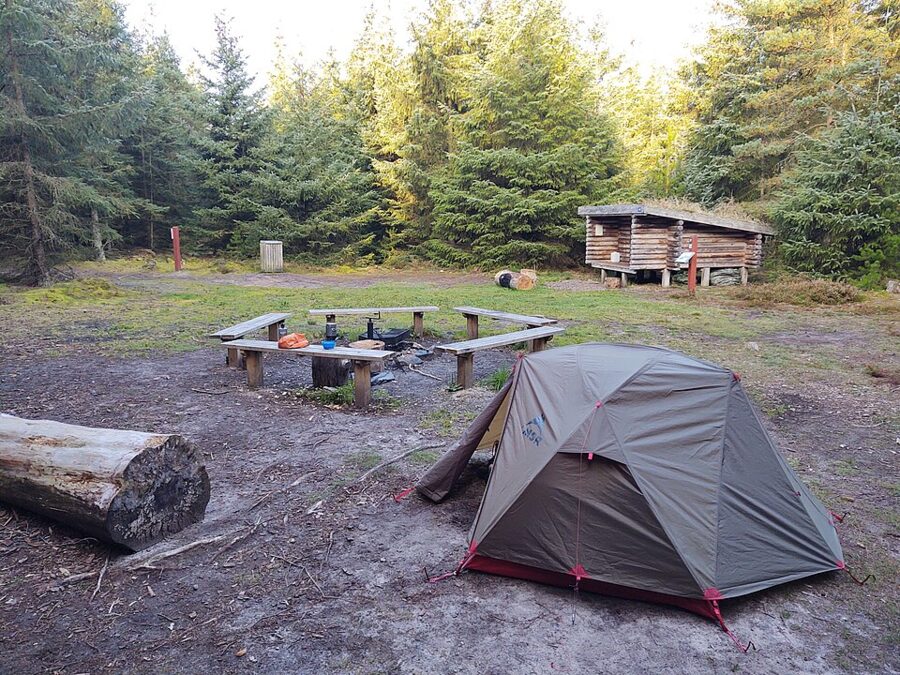

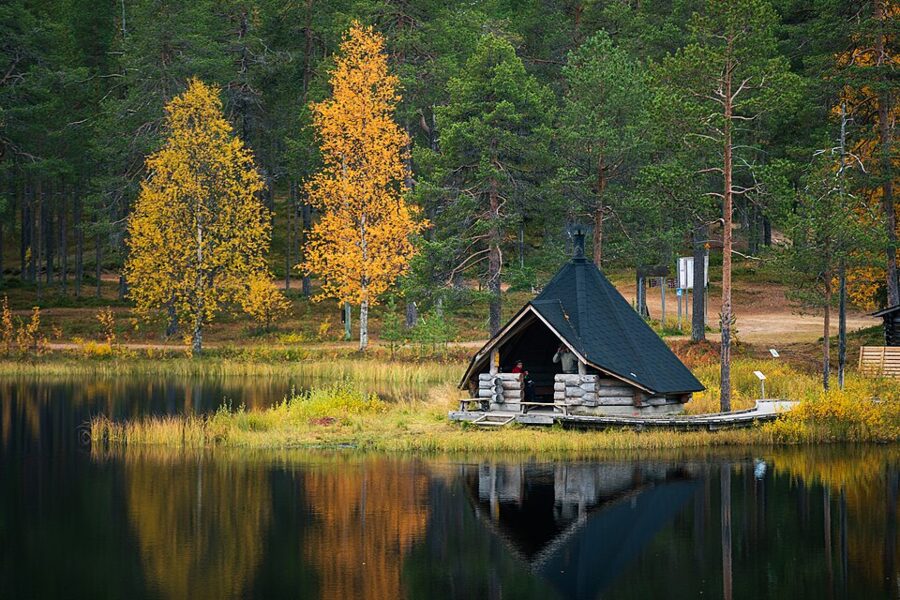

Contents 12 parts
- 01Where you may pitch a tent tonight
- 02Norway: allemannsretten and the 150-metre rule
- 03Sweden: allemansrätten and the judgement call
- 04Finland: jokamiehenoikeus, generous on sleep, strict on fire
- 05Denmark: shelters instead of a right to roam
- 06Where the right to roam stops
- 07Campsites: how Nordic camping works
- 08Campervans and motorhomes
- 09Weather, light and insects
- 10Huts instead of a tent
- 11Kit and costs, briefly
- 12Back on the E10
Where you may pitch a tent tonight
Every country lets landowners, municipalities and park authorities narrow the right in particular places.
| Norway | Sweden | Finland | Denmark | |
|---|---|---|---|---|
| Free tent on private land | Yes, on uncultivated land (utmark) | Yes, on hard-wearing ground away from homes | Yes, temporarily, away from homes | No, except in 275 state forests and at primitive sites |
| Distance from houses | At least 150 m | No figure: well away | No figure: not disturbing home peace | Out of sight of buildings and roads |
| How long | 2 nights, longer in the high mountains | 1 or 2 nights | Short stays | 1 night (forests), 2 nights (primitive sites) |
| Campfires | Banned near woodland and utmark 15 April to 15 September | Not a right; banned locally when dry | Not a right; landowner’s permission | Only at marked fire sites |
| Motorhomes in nature | No; may park by public roads | No; rest areas 24 hours | No; short overnight at car parks | No; not in forests or on beaches |
Two rules hold in all four countries. You may not drive off the road to reach a spot, and you take your rubbish with you; grey water and toilet waste from a vehicle never go on the ground.
Norway: allemannsretten and the 150-metre rule
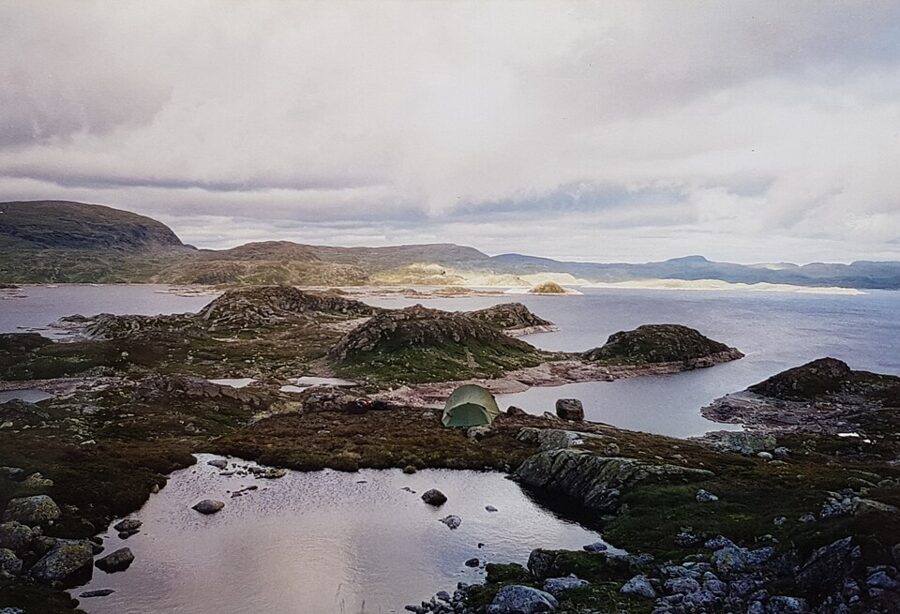
Norway’s right to roam, allemannsretten, has been written into law since 1957, in the Outdoor Recreation Act, friluftsloven. The act splits the country into two kinds of land. Innmark is infield: gardens, farmyards, ploughed and mown fields, young plantations. Utmark is everything else, which in Norway means most of the map.
On utmark you may walk, rest and sleep without asking the owner. On innmark you need consent before you so much as sit down to rest. Whether the land is privately owned does not matter; whether it is cultivated does.

The numbers in section 9
Section 9 carries the rules campers quote. A tent must not be pitched so close to an inhabited house or cabin that it disturbs the people living there, and in any case not closer than 150 metres. You may stay in one place for two days at a time without consent; on the high mountains, or far from any settlement, you may stay longer unless that would do appreciable damage or cause a nuisance.
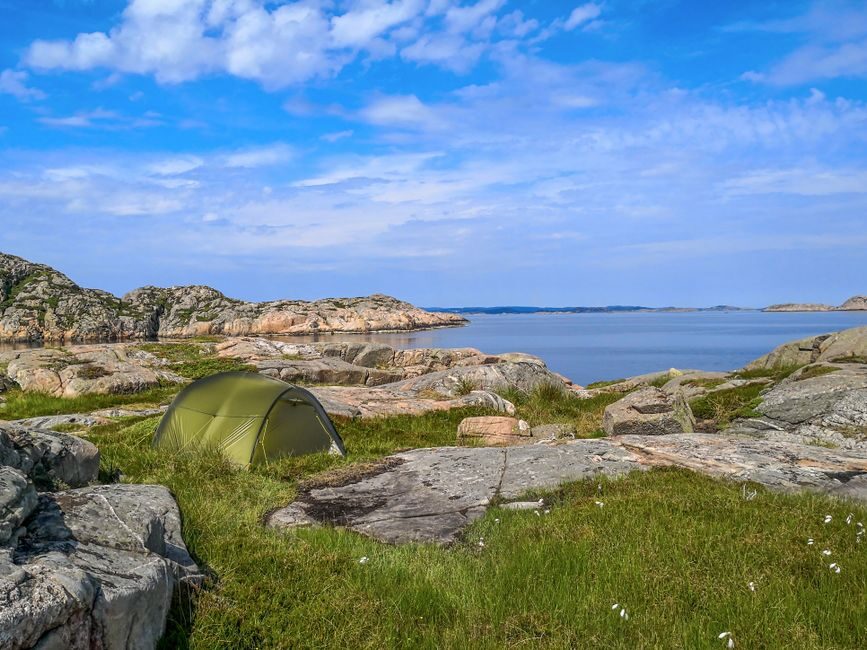
The distance is measured from the house, not from its owner’s fence. A field next to a cabin can be innmark well beyond 150 metres, and a slope that looks like a garden from the road can be open land. If you are unsure, ask at the nearest house; I would rather spend a minute asking than an evening wondering.
Landowners cannot close utmark on a whim. Section 13 forbids signs or barriers against lawful passage and camping unless they serve a legitimate interest. Municipalities, on the other hand, can set rules for busy recreation areas under section 15 and, with the owner’s consent, close a heavily used property for up to five years under section 16; those two sections are behind most of the local bans, Lofoten’s included.
Fires: 15 April to 15 September
Norway’s fire prevention regulation makes it illegal to light a fire in or near forest and other utmark between 15 April and 15 September. The exceptions are places where the municipality has given permission, and situations where it is obvious that a fire cannot start. A small fire on a wet shingle beach in August may qualify; a fire in a dry pine forest in May never does.
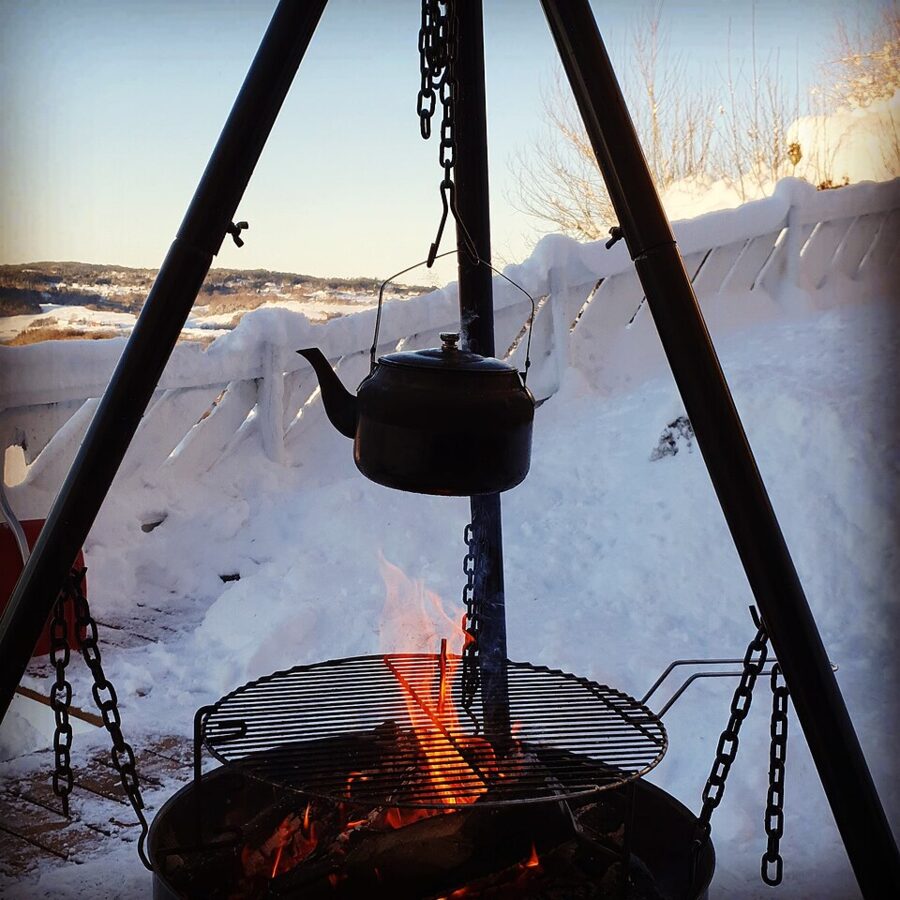

Many municipalities keep marked fire sites that may be used during the ban, and fire services tighten the rules in drought. A gas or spirit stove is the sensible default from April to September.
Dogs, berries and the cloudberry exception
Norway’s Dog Act requires dogs to be on a lead or securely enclosed from 1 April to 20 August. Berries and mushrooms are free to pick and take home, with one exception in Nordland, Troms and Finnmark: on cloudberry land where the owner has expressly banned picking, you may eat cloudberries on the spot but not carry them away.
Sweden: allemansrätten and the judgement call
Sweden’s allemansrätten has no single act that sets it out in numbers. The authority that explains it, the Swedish Environmental Protection Agency (Naturvårdsverket), gives advice that reads more like etiquette than law, and its test is always whether you disturb anyone or damage anything.
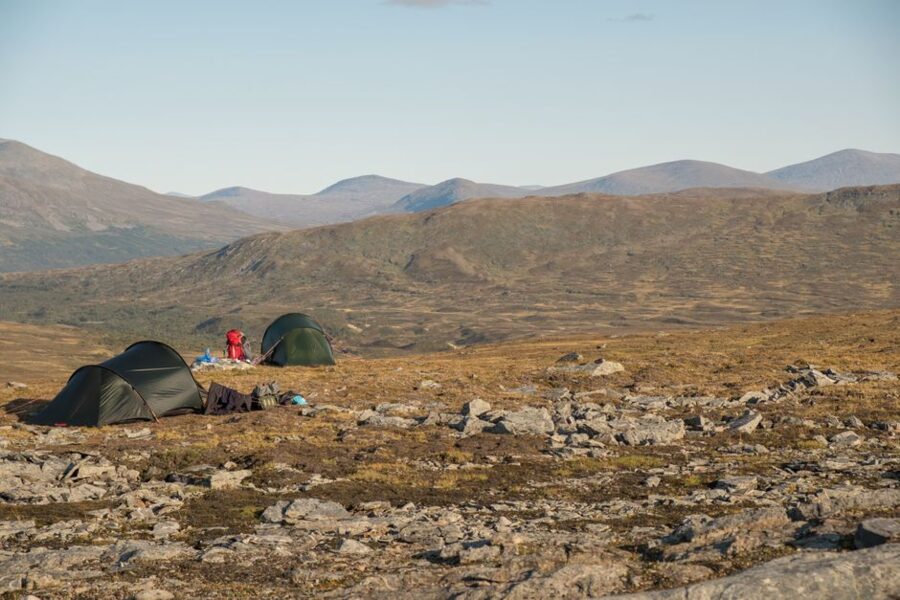
The agency’s camping guidance allows a tent in nature for a single day and night, with a rule of thumb of one or two nights. Choose hard-wearing ground, stay off crops and pasture with animals, and keep well away from houses: the more secluded, the better. There is no fixed distance, which is both a freedom and a trap, because “well away” is judged by the people living there.
The right covers two or three tents. Larger groups need the landowner’s permission, because damage and sanitary problems grow with numbers. Many municipalities ban camping in parks and sports grounds, and some nature reserves and national parks allow tents only at marked sites or not at all.
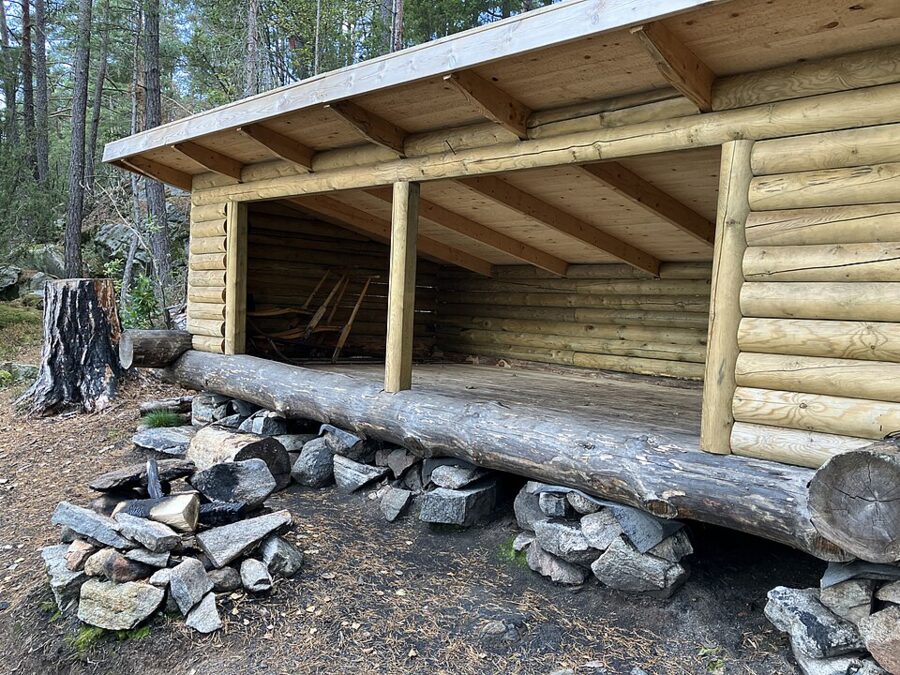
Fire, food and the ham sandwich rule
Fire is not part of the Swedish right. The agency’s fire guidance asks you to use a fixed grill site or gravel and sand, to avoid moss, peat and forest soil where fire can creep underground, and not to light fires on rock slabs, which can crack permanently. You may burn sticks lying on the ground; you may not cut trees or strip bark, and fallen trees belong to the landowner.
In dry weather the county administrative board or the municipality can ban fires, and a stricter ban forbids even grilling at fixed sites; checking is your job. The same guidance adds a request: never leave a ham or sausage sandwich in the woods, because Sweden is trying to keep African swine fever out of its wild boar.
The mountains and the reindeer
In the mountains the agency asks for more care: a stove instead of a campfire, a tent site that spares the vegetation, and distance from trails, huts and streams. The fjäll is Sámi country, and 33 of Sweden’s 51 reindeer-herding communities, or samebyar, work in the mountains for parts of the year.
The Reindeer Husbandry Act makes it an offence to frighten or disturb the animals, and the sensitive months are April to June, when the calves are born. If a herd moves away from you, you are already too close.
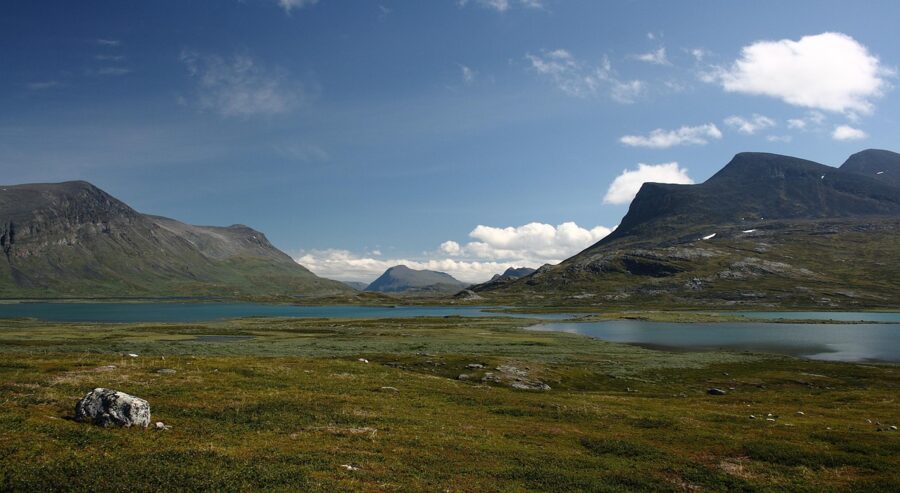
Where a herd will be follows the herding year: calving grounds in May, high summer pasture in July, the autumn gathering from September. The Sámi reindeer herding year runs on eight seasons, not four.
Fishing is not included
Hunting and fishing are not part of the Swedish right. The agency’s page on hunting and fishing tells you to check with the county administrative board whether a fishing permit is needed before you cast.
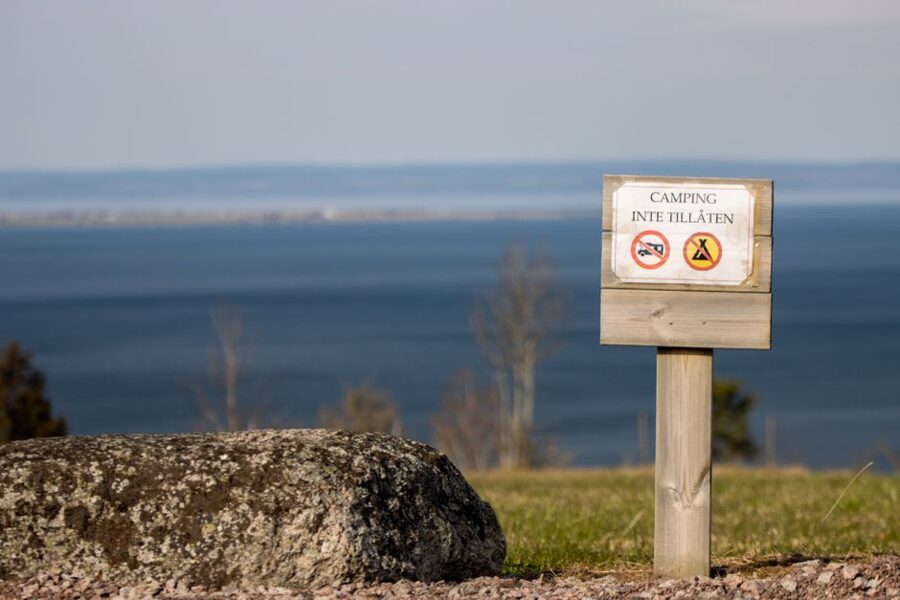
Finland: jokamiehenoikeus, generous on sleep, strict on fire
Finland’s everyman’s right, jokamiehenoikeus, now usually written jokaisenoikeudet (everyone’s rights), lets you be in nature regardless of who owns the land, without permission and without paying. Metsähallitus, the state forest and parks agency, lists what it covers: walking, skiing and cycling in forests, natural meadows and on lakes and rivers; staying and sleeping temporarily anywhere you may move; and picking wild berries, mushrooms and unprotected plants.
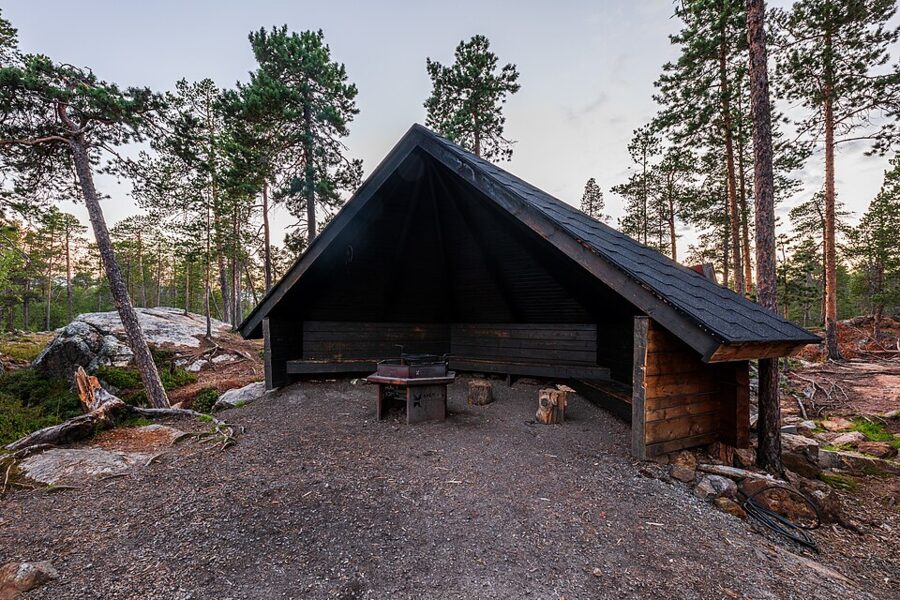

The same list says what the right does not cover. You may not disturb anyone’s home peace by camping too close or making noise, cross yards, planted ground or fields under crops, or disturb nesting birds. Dogs must be on a lead from 1 March to 19 August. Finland gives no distance in metres, and I would treat any spot within sight of a house as too close.
National parks are different. In most of them camping is allowed only at designated sites, while in mire reserves you may usually camp freely. Strict nature reserves are closed except with a permit, though Kevo and Sompio in Lapland allow camping at marked sites along their trails.
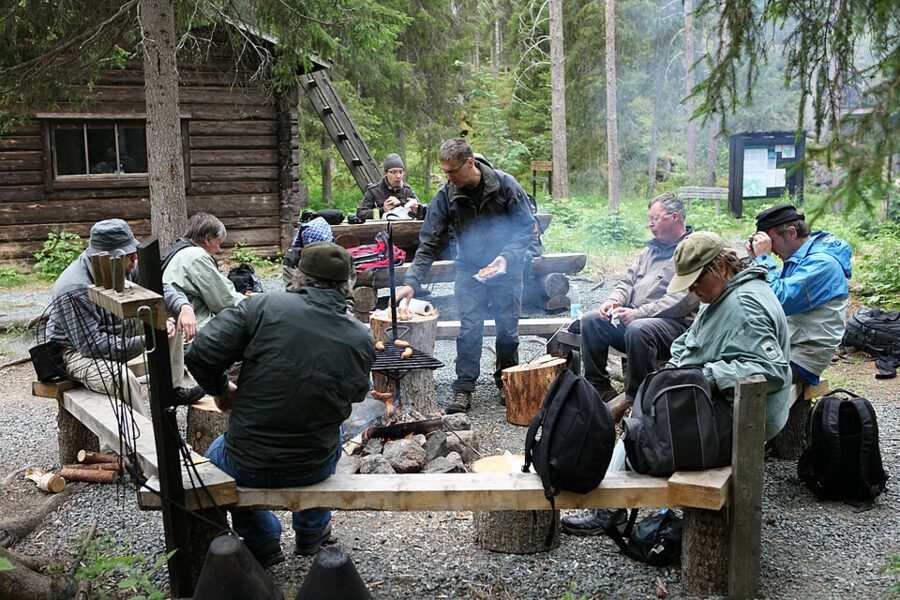

Fire is not an everyman’s right
Here Finland is stricter than its neighbours. Metsähallitus’s fire guide states plainly that an open fire always needs permission and is often banned. Finland has thousands of maintained fire sites, many with firewood supplied, and those are the default.
On state land in Lapland, North Ostrobothnia, Kainuu and North Karelia, Metsähallitus has given a general permission for campfires outside official sites, with exceptions in many protected and wilderness areas. Use an old fire ring, or an official site if there is one within 500 metres, burn only fallen sticks and small stumps, and avoid fires on the treeless fells. Elsewhere on state land, fires belong only at official sites.
When the Finnish Meteorological Institute issues a forest fire warning, open fires are banned almost everywhere, official sites included; only covered fireplaces raised off the ground with a chimney are exempt. Spirit and gas stoves are not open fires and may still be used; a twig stove counts as an open fire and may not.
The rules are moving, too. On 21 October 2026, Metsähallitus announced that from summer 2027 fires on the Hetta–Pallas trail will be allowed only inside the huts and Lapp-style kota shelters at each rest stop. The 50-kilometre route through Pallas-Yllästunturi National Park, marked in 1934, takes about 12,000 hikers a year, and the agency may apply the same principle to other trails.

Fishing: angling free, lures for a fee
Simple rod-and-line angling and ice fishing are part of the Finnish right, except in restricted waters such as the rapids of salmon and trout rivers. Fishing with a lure needs the national fishing management fee, which covers one rod with a lure in almost all of Finland outside Åland; nets, traps and special waters need a permit from the water owner.
The fee set by the Finnish government for 2023 to 2027 is €47 for a calendar year, €16 for seven days and €6 for a day. People under 18 and over 70 do not pay.

Denmark: shelters instead of a right to roam
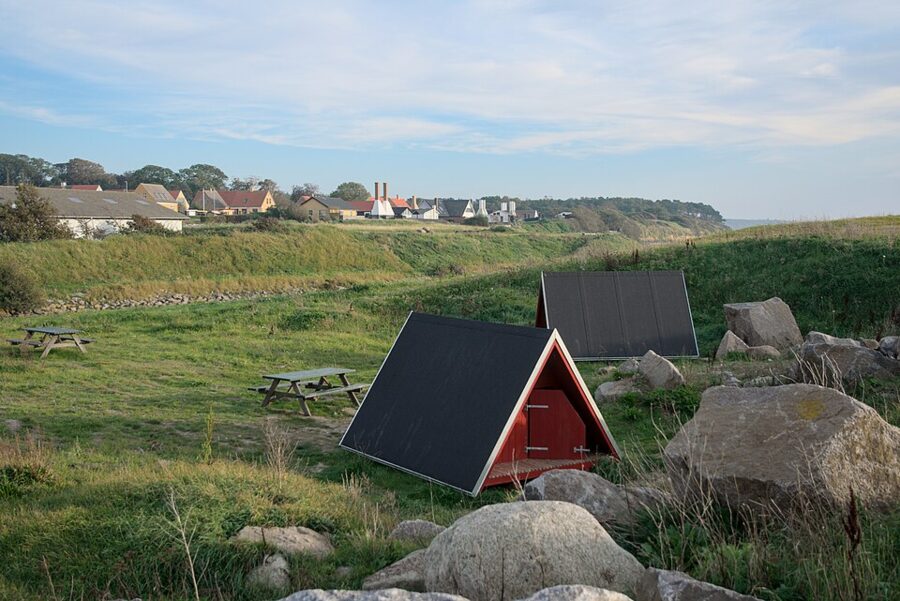
Denmark is the exception. There is no general right to pitch a tent on someone else’s land. What Denmark has instead is a network of state-run places to sleep outdoors, generous enough that you can cross much of the country on foot or by canoe without paying for a bed.

The 275 forests and the 1-2-3 rule
The Danish Nature Agency, Naturstyrelsen, manages state forests and natural areas. In 275 of its forests, free camping is allowed without asking first, under the 1-2-3 rule: one night in one place, no more than two tents, each for no more than three people. The tent has to stand among trees and out of sight of paths, roads, buildings and neighbouring campsites.
That rules out beaches, dunes, heath, meadows and clearings, even inside a forest marked on the agency’s map. Dogs must be on a lead and motor vehicles are not allowed. Fires are allowed only at built fire sites; elsewhere you may use a stove with an enclosed burner, unless an open-fire ban is in force.
Primitive sites and shelters
The agency also runs primitive overnight sites, many with shelters, usually in a clearing and marked with a red post. They are free, meant for individuals, families and small groups, and you may stay up to two nights in a row; many have a fire site and a water tap, and some sit by rivers and coasts for canoeists and kayakers.
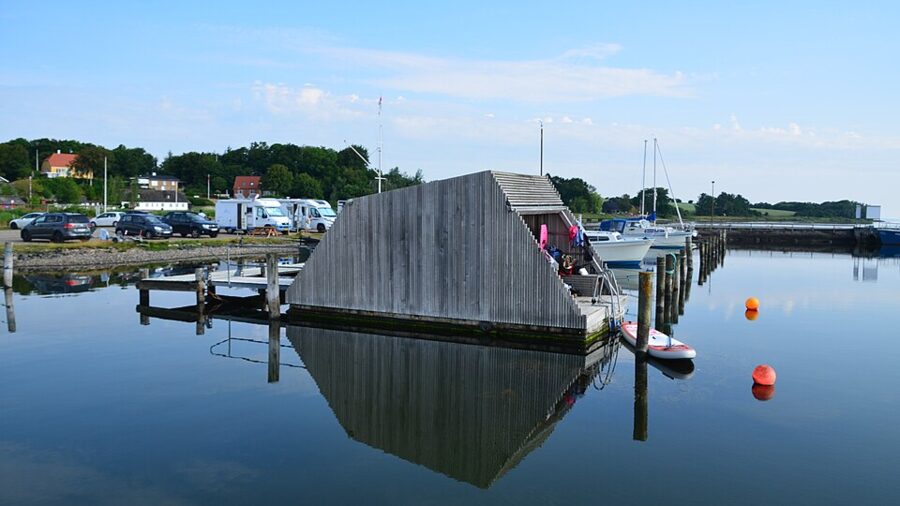

Some shelters are first come, first served; others can be booked up to three months ahead. A booking runs from 12:00 to 12:00, must be confirmed at least six days in advance and lapses if you have not arrived by 20:00. It covers the shelter, not the whole site, so others may pitch beside you.
The agency counts about 500 primitive sites and about 130 larger camps for organised groups. Bookings of shelters and group camps reached 232,000 person-bookings in 2025, up from 205,000 in 2023, and that counts only the places that can be booked.
Without a tent the rules loosen. You may sleep under the open sky on the agency’s forest floor in a sleeping bag, or hang a hammock between two trees. You may also sleep on the beach in a sleeping bag, as long as no tent or tarp is doing a tent’s job.
Fire is the other tight rule. Open fires are not allowed in Danish forests unless the owner permits them, which on the agency’s land means its fire sites. Municipal fire bans in dry weather cover those sites too, and smoking is banned from 1 March to 31 October on heath, vegetated dunes and in conifer plantations.
Where the right to roam stops
The national rules are the floor. Local regulations, park rules and private parking rules sit on top, they concentrate where crowds do, and they change more often than national law.
Lofoten
Lofoten has had a regional outdoor regulation since 22 June 2021, adopted by all six municipalities under section 15 of the outdoor act. The regulation, last amended in June 2024, repeats the national rules and then names places where they no longer apply.
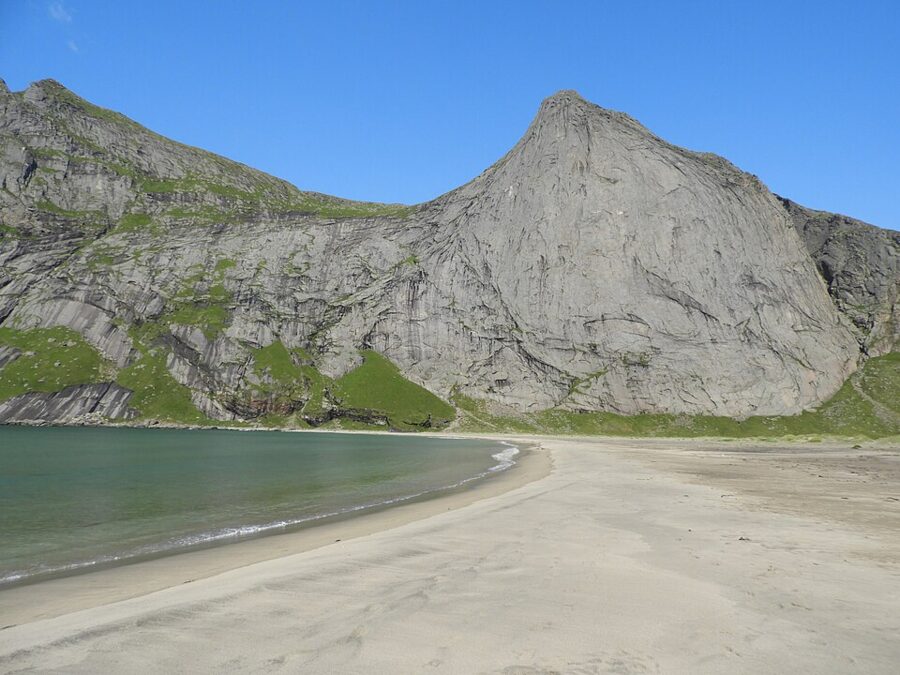
In Vestvågøy, camping is banned all year at Haukland. From 1 May to 1 October tents are also banned at Stranda under fjellet and parts of Kalle and Rørvika in Vågan, and in Moskenes at Olenilsøya, Andøya, Vindstad, Tennes and Veines, Bollhaugen, Reinebringen, Sørvågvatnet, Langhaugen and Reine itself. The ban covers every kind of tent, lean-to and hammock.
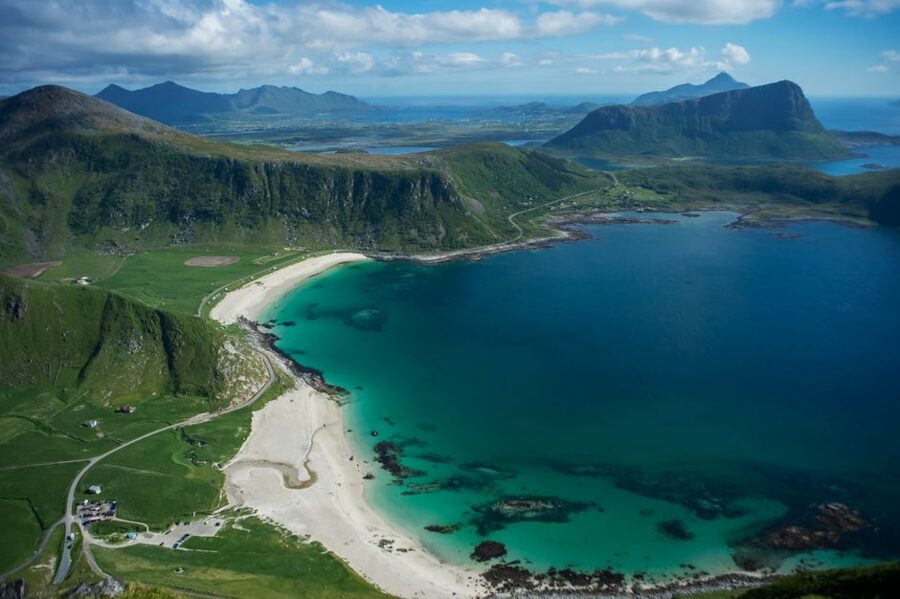
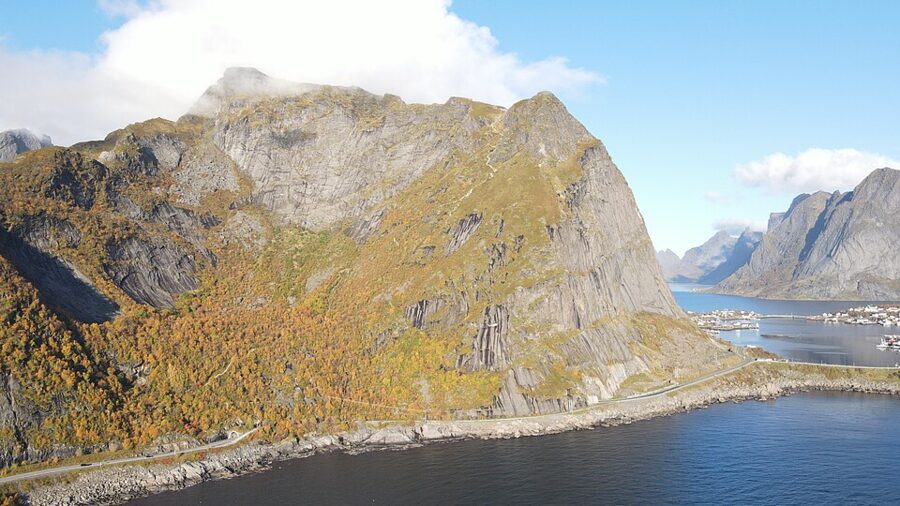

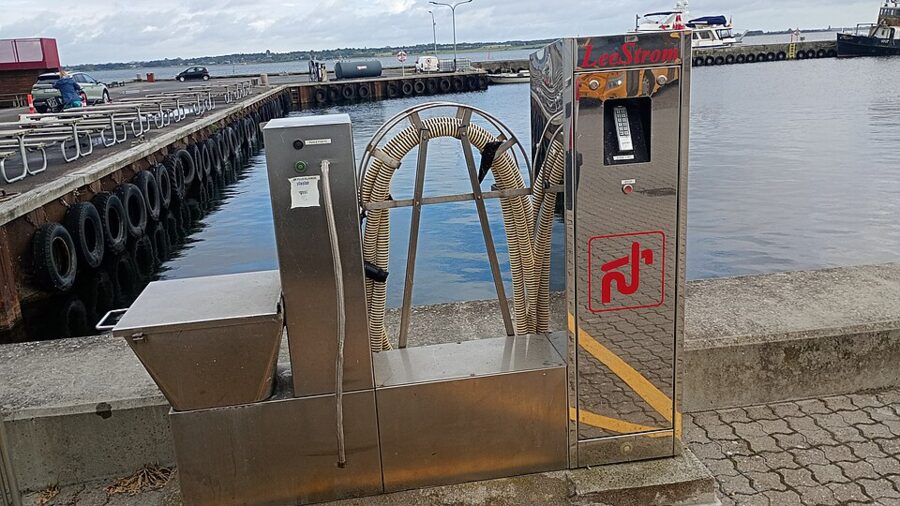
Motorhomes and caravans may not park between 00:00 and 06:00 at four car parks in Vågan (Stranda under fjellet, Kalle, Rørvika and along Lille Kongsvatn) and, since 2024, at eight on Værøy. Breaking the regulation can be reported to the police and can get you sent away. Lofoten’s outdoor council publishes a tourist map marking the ban areas, toilets, rubbish points and waste dumping stations.
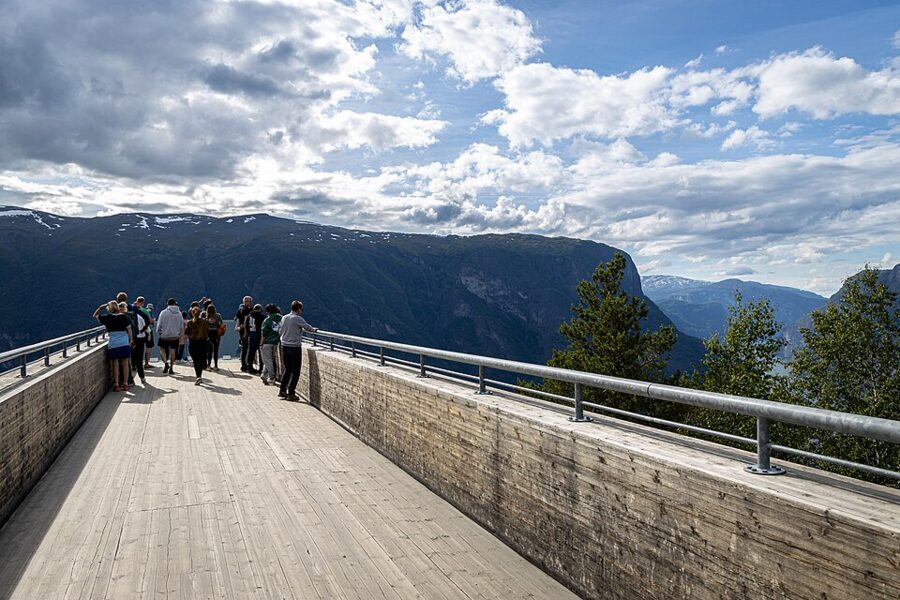
The rest-area limits came next. In July 2025 the Public Roads Administration began a pilot limiting parking to two or four hours at eight or nine rest areas along the E10 in Lofoten, and to one hour at the Stegastein viewpoint above Aurland. The municipalities and the police enforce it, and the signs at each stop are what count.

Paid parking has spread as well. Flakstad’s list of 2026 parking charges sets NOK 58 an hour and a new day rate of NOK 650 for a motorhome or caravan on its pay car parks. At that price a campsite is cheaper than a car park.
Then there is the tourist tax. Norway’s law letting municipalities charge a visitor contribution, besøksbidrag, came into force on 1 July 2026, and NRK reported that Lofoten expects to be among the first to use it, probably during 2027. It is 3 per cent of the price of commercial accommodation, campsites included; tent campers and motorhomes parked for free do not pay.
None of this closes Lofoten to campers. Visit Lofoten’s camping advice still allows motorhomes on lay-bys along public roads for up to two nights where no sign forbids it, asks for four metres between vehicles for fire safety, and confirms that the right to roam applies inside Lofotodden National Park. The famous beaches are now for day visits; the place to sleep is a campsite or a spot you walked to. If you are driving up from the north, the guide to Tromsø to Lofoten covers the roads and ferries.
Senja and the Atlantic Road
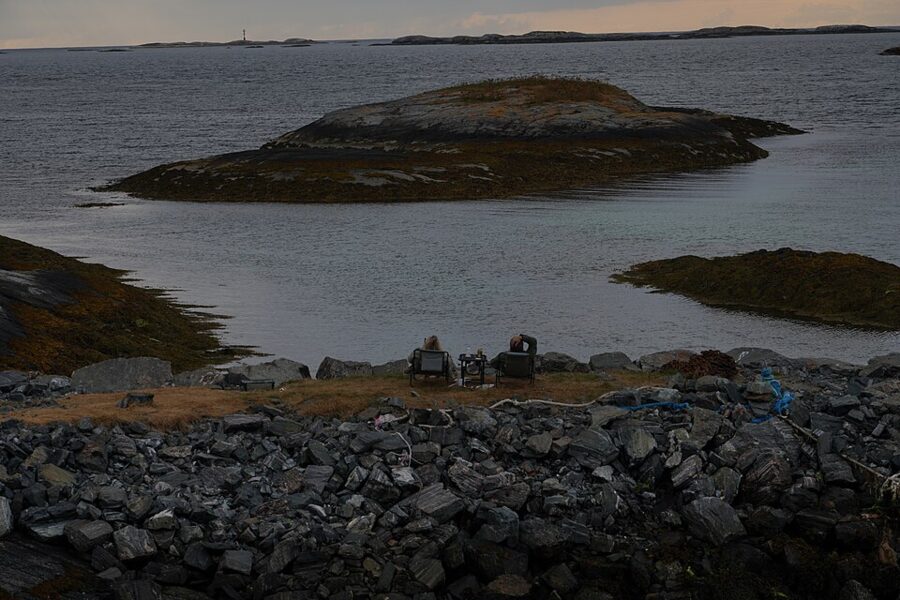
The same mix of tents on headlands and motorhomes on every flat patch of gravel has reached Senja, north of Lofoten, and the Atlantic Road in Møre og Romsdal. There the national rules and the local signs apply, and the signs are worth reading at every stop.


Trolltunga and Preikestolen
The two most famous hikes in western Norway both draw a firm line at the car park. At Trolltunga, camping is not permitted at any of the car parks, and motorhomes and minibuses must use P1 Tyssedal, where overnight sleeping, camping, barbecues and fires are all banned.
Parking at P1 Tyssedal costs NOK 330 for one day, NOK 550 for two and NOK 770 for three. At P2 Skjeggedal, where the price includes the toll road, three days cost NOK 990. Shuttle buses connect Odda, P1, P2 and P3 Mågelitopp.
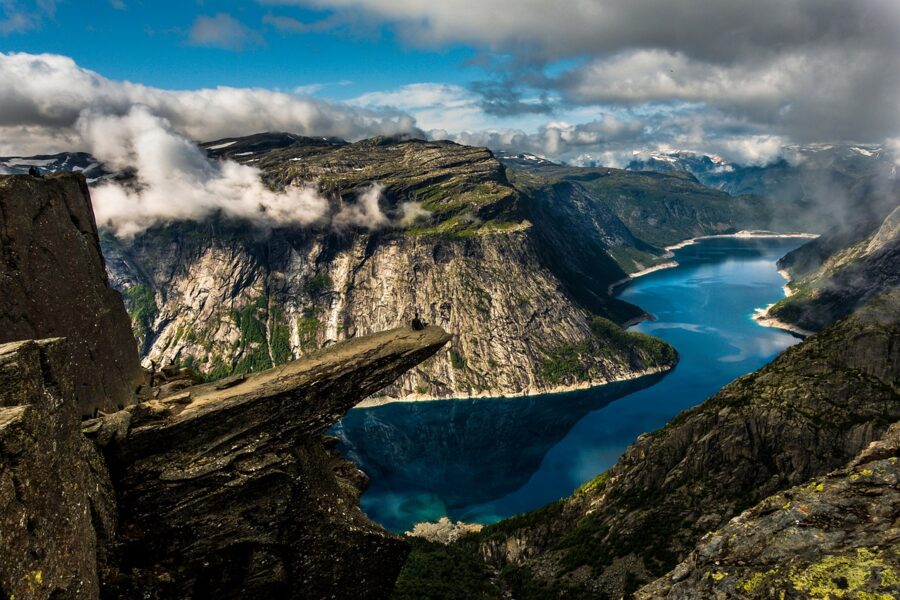
Camping on the mountain is allowed under the right to roam. The trail operators ask campers to use the sites marked with a tent symbol, to camp below the trail and away from water, to pitch on bare rock where possible, and to carry out all rubbish, used toilet paper included. There are no toilets on the mountain, and outside 1 June to 30 September they recommend a guided hike.
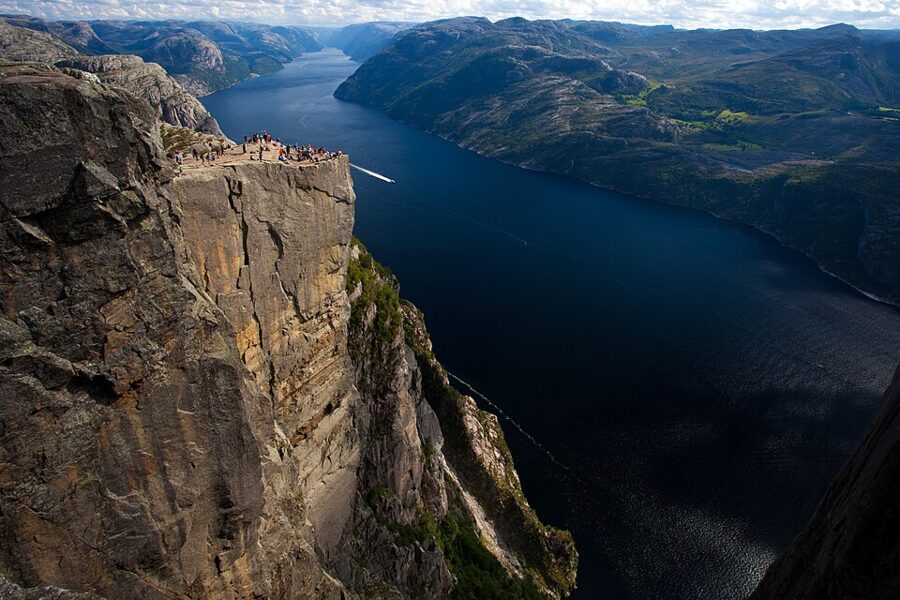

At Preikestolen the line is drawn in the same place. The car park’s operators forbid camping and sleeping in vehicles, motorhomes included, and charge NOK 275 for a car; people on multi-day hikes may leave a car if they tell the staff or put their return time in the windscreen. For a tent they point to Preikestolen Camping, a few kilometres away, open from 27 March to 31 October in 2026 and taking no advance bookings.
National parks and Svalbard
Norwegian national parks keep the right to roam, with extra rules set park by park. In Lofotodden, at the western tip of Lofoten, motor traffic and drones are banned, and you may burn wood but must leave old and dying trees standing. Swedish and Finnish parks often limit tents to marked sites, and Swedish reserves can ban fires, boats or dogs in particular areas.

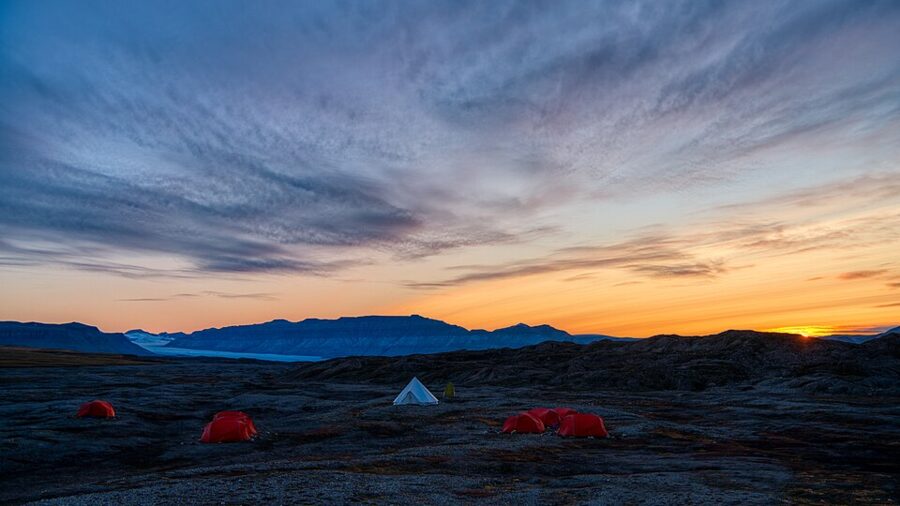
Svalbard is a different system altogether. Outside the settlements you must be able to protect yourself against polar bears, and since 1 January 2026 independent visitors leaving the central area have had to apply to the Governor at least four weeks in advance.

Campsites: how Nordic camping works
Most Nordic campsites have pitches for motorhomes and caravans with electricity, a service building with showers, a kitchen and a laundry, and a row of cabins. In bad weather the kitchen matters more than the pitch.
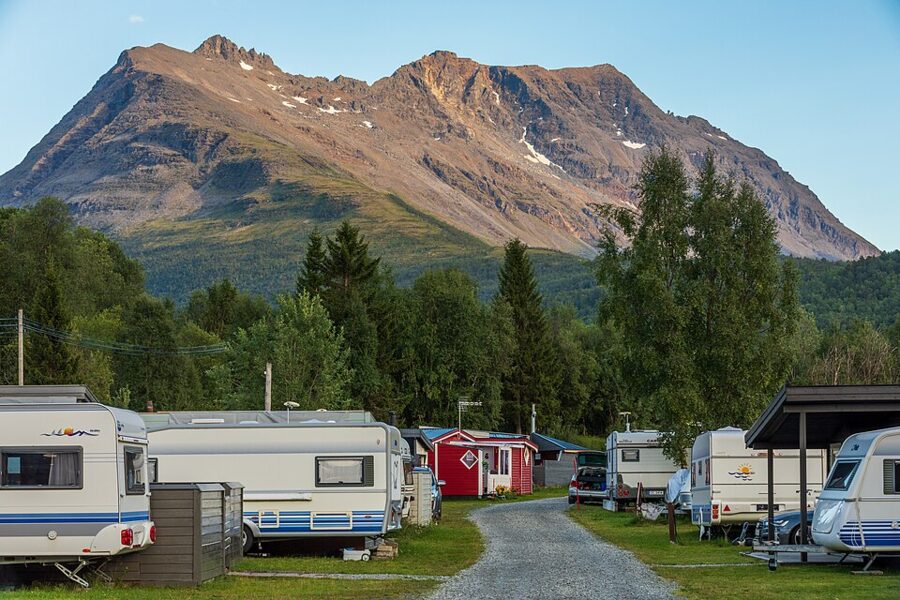

Each country has a trade body and a rating scheme. Norway’s star-rated campsites are listed in the 2026 Norwegian camping guide, free at the campsites; more than a hundred of them stay open all winter. Denmark has just over 400 campsites, according to the booking portal DK-CAMP, and Finland around 200 official ones.
What a pitch costs in 2026
These are examples from campsites’ own 2026 price lists, not averages. At Moskenes Camping in Lofoten, a small tent for one person costs NOK 250 a night, a medium one NOK 300 and a large one NOK 400, plus NOK 50 for each extra person and NOK 50 for a car. A motorhome pitch with electricity and two people costs NOK 490, showers included.
Tent pitches at Moskenes cannot be booked. The same is true in Tromsø, where Tromsø Lodge & Camping charges NOK 250 a night for a tent pitch in high season and NOK 200 in low season, including the service building, Wi-Fi and parking.
In Swedish Lapland, Camp Ripan in Kiruna charges SEK 495 a night for a motorhome or caravan pitch with electricity, water and waste emptying, and SEK 250 for a tent pitch for up to four people. The pitches are gravel and asphalt, because Kiruna lies above the limit of cultivation, where grass wears through quickly and turns to mud.
In Finland, Visit Finland puts a tent pitch at around €15 to €40 a night. In Denmark, DK-CAMP notes that electricity may or may not be included, so check before you plug in.

Cabins on campsites
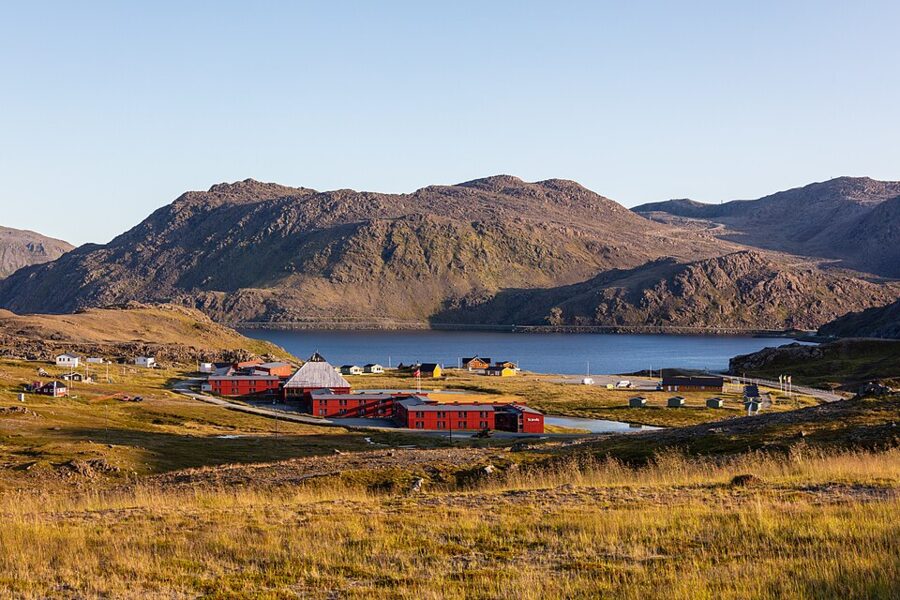
Almost every Nordic campsite rents cabins: hytte in Norway and Denmark, stuga in Sweden, mökki in Finland. They range from a bare room with bunks and a kettle to a small house with a bathroom and kitchen. Bed linen, towels and cleaning are often extra, and some campsites set a minimum stay; Moskenes Camping lets its cabins for at least three nights.
Larger campsites increasingly price cabins by date and demand, as Tromsø Lodge & Camping does, so there is no single rate to quote. Book cabins ahead for July and for the winter aurora season in the north. A week in a rented cabin is a different kind of holiday, covered in the guide to a cabin holiday in Finnish Lapland.
Camping cards
Camping Key Europe is a card sold by the national camping associations. The Swedish association sells it for SEK 229 as a digital card valid for 12 months; it speeds up check-in, gives discounts and includes accident and liability insurance. In Denmark, DK-CAMP says most campsites no longer require a camping pass, and those that ask for Camping Key Europe can issue one on arrival. In Norway and Finland it is a discount card, and nobody will turn you away without it.
Campervans and motorhomes
The right to roam does not include a right to drive off the road in any of the four countries. Sweden’s agency points out that a landowner cannot give anyone permission to drive or park in terrain, because the off-road driving act applies to owners too.
Norway
The Outdoor Recreation Act lets you park beside a public road in utmark as long as it does no appreciable harm or inconvenience. Visit Lofoten reads that as up to two nights on a lay-by on a public road where no sign forbids parking, and never off the road into the terrain. I would keep the 150-metre distance from houses with a motorhome too.
The Public Roads Administration runs nearly 450 rest areas on national and European roads and states that they are for a break, not for camping over time. Signs at each one set any limit.
Sweden
In Sweden you may not park a motorhome, caravan or car with a rooftop tent in nature: forests, beaches, pastures, parks and lawns all count as terrain. On a rest area you may usually stay up to 24 hours on weekdays, and at weekends and public holidays until the next weekday, unless a sign says otherwise.
Finland
In Finland a short night’s sleep in a vehicle at a car park is usually allowed; setting up camp around it is not. Metsähallitus’s guidance for its nature-site car parks draws the line at chairs, tables and awnings, tolerates rooftop tents, and forbids driving beyond the car park for a quieter spot. It also notes that Finland has had Europe’s highest number of motorhomes per head for several years, and that in autumn 2026 Metsähallitus began trial paid parking at a few sites.
Denmark
In Denmark motorhomes may not drive or park on beaches, in forests or in natural areas unless that is expressly allowed, with exceptions on a few beaches that have been public roads since old times, such as at Vejers, Løkken and on Fanø. On private roads in the countryside you may park unless it is banned, but not put out tables, awnings or a rooftop tent without permission. DK-CAMP lists campsites with flexible motorhome pitches as DK-Stellplätze, and many harbours and towns run motorhome stopovers of their own.

Ferries, tolls, weight and winter
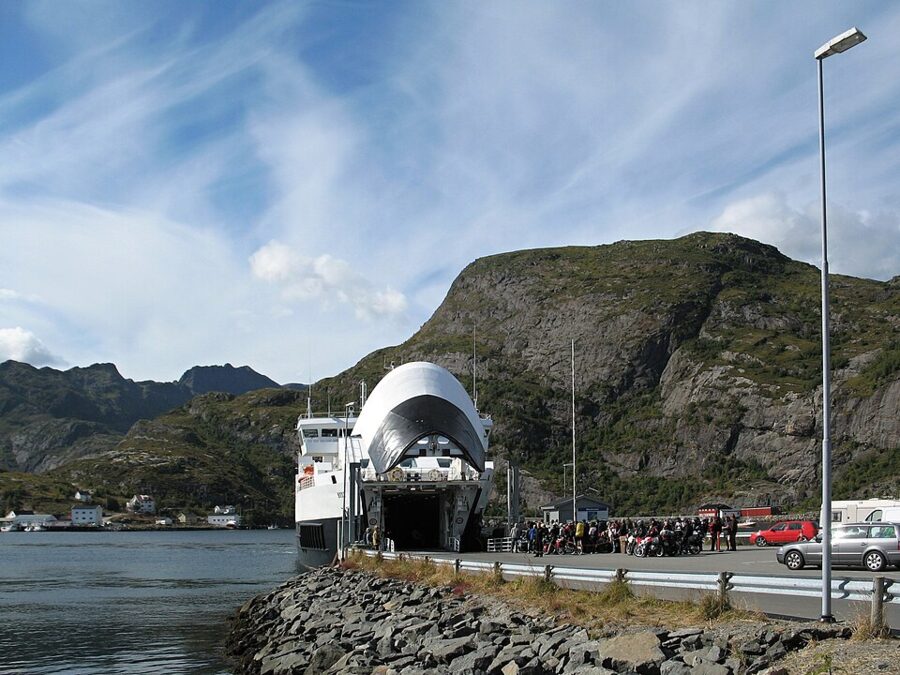
All vehicles pay road tolls in Norway. AutoPASS advises foreign drivers to register with Epass24, which avoids a look-up fee, or to sign a toll-tag agreement for 20 per cent off; a tag for a light vehicle cannot be bought at the border, so order it before you leave home.

Weight decides what you may drive. An ordinary category B licence covers vehicles up to 3,500 kg, and many large motorhomes are heavier. In Norway a vehicle over 3,500 kg must carry snow chains on snow and ice, though the minimum of three chains does not apply to motorhomes between 3,500 and 7,500 kg.
Winter motorhome travel is possible, and more than a hundred star-rated Norwegian campsites stay open all winter. Facilities shrink: at Camp Ripan, grey-water emptying stops in winter except for vehicles with a cassette, and snow clearing cuts the number of pitches. In the north, mountain passes, bridges and ferries can close at short notice in storms, so check the road reports before every long drive.
Weather, light and insects
Rain and wind on the coast
The Norwegian coast is wet, but for campers the wind is the bigger problem. On exposed headlands and beaches in Lofoten, Senja and along the outer coast, gusts tear cheap tents and snap poles. A tent built for mountain conditions, pitched in the lee of rock rather than on open sand, gets through the nights that send other people back to the car.
Finnish summer days run from 15°C to 30°C depending on where you are, according to Visit Finland. Everywhere in the region, the Trolltunga advice holds: do not set out in strong wind, heavy rain or fog, and remember it is always colder up in the mountains than down by the fjord.
Midnight sun and sleeping
North of the Arctic Circle the sun stays up for weeks around midsummer. In Tromsø the midnight sun usually lasts from around 20 May to 22 July, and the further north you go the longer it lasts. Further south the sun sets, but the nights stay bright through June.
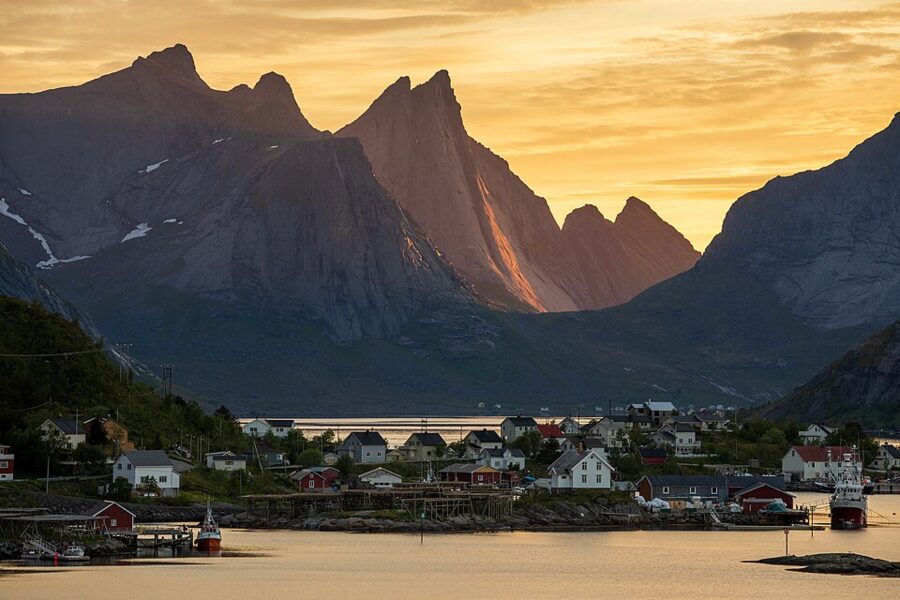

Bring an eye mask, or a tent with a dark inner. Some people sleep well in the light after a few nights; many do not, and shift their days later to match. In winter the opposite applies, and camping under the northern lights means long, cold nights and serious kit.
Mosquitoes and midges
Mosquitoes are the price of July in Lapland. They are worst in forest and bog on still, warm evenings, and far fewer on open fells where the wind blows, which is one reason to camp high in the far north. By August smaller biting midges take over, and after the first frosts the insects are gone. A head net, long sleeves and a tent with a fine inner mesh make July bearable.
Ticks in the south
Ticks live in the grass and undergrowth of the south: Denmark, southern Sweden and Finland, and the Norwegian coast. They can carry Lyme disease and, in some areas, tick-borne encephalitis, and dogs pick them up as readily as people do.


Check yourself every evening, wear long trousers in long grass, and ask your doctor about the encephalitis vaccine if you will spend weeks camping on the southern coasts.
Huts instead of a tent
The alternative to a tent in the Nordic mountains is a hut. Each country runs its huts differently, and each system is worth knowing even if you carry a tent, because the huts are where you dry out.

Norway: DNT cabins
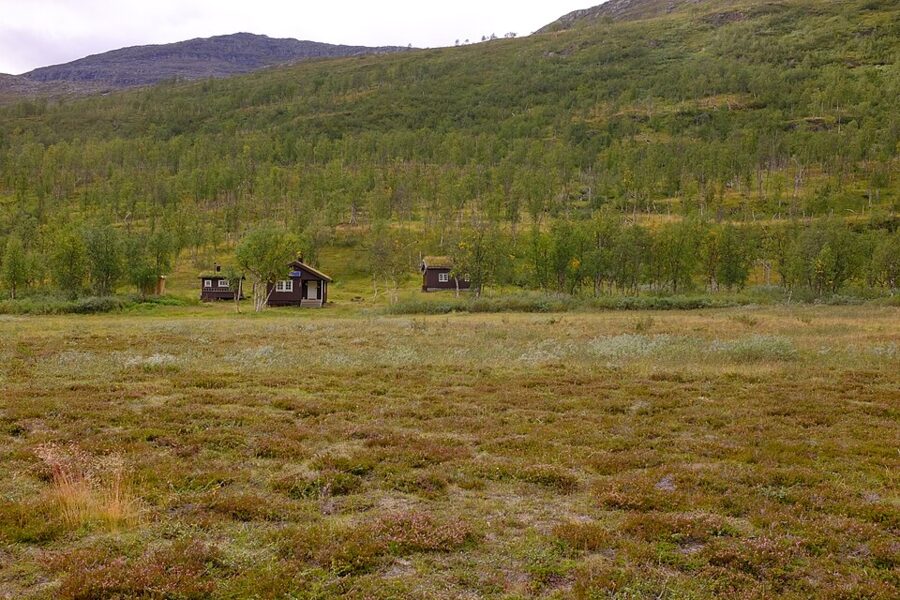
The Norwegian Trekking Association, DNT, runs more than 600 cabins in the mountains, forests and along the coast. Some are staffed, with meals; others are self-service, with a food store, or no-service, where you bring your own. Almost all unstaffed cabins are locked with the standard DNT key, which members can get for a NOK 100 deposit. You sign the cabin book even if you booked online, pay for your bed and food through the DNT app, and bring a sheet sleeping bag.
Sweden: STF mountain huts
The Swedish Tourist Association, STF, runs mountain huts along the Kungsleden and in Jämtland. STF’s 2026 summer price on the Kungsleden and the Vålådalen circuit is SEK 480 a night for an adult member booking ahead and SEK 530 on the spot; non-members pay SEK 100 a night more. Booking ahead guarantees a bed if you arrive by 18:00.
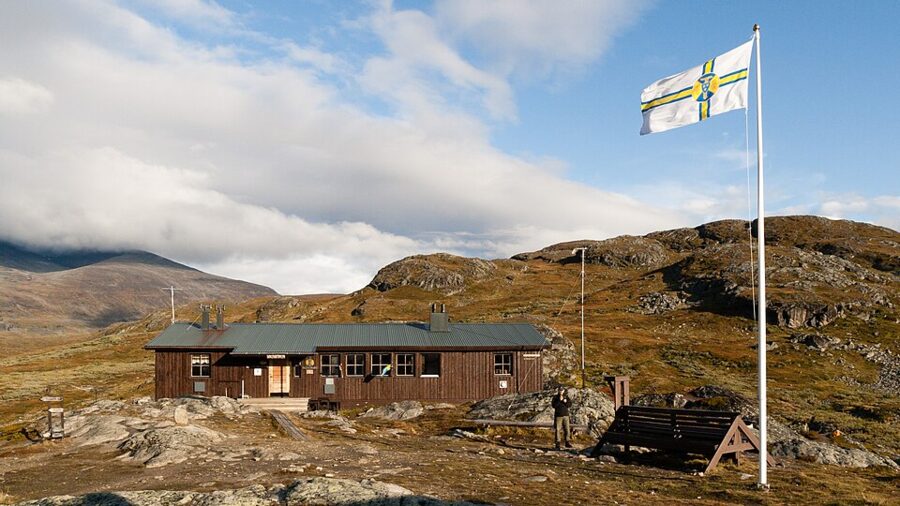

Camping next to an STF hut is free, but the kitchen, drying room and other facilities cost a service fee of SEK 210 an adult a night, SEK 100 more for non-members.
Finland: wilderness huts and lean-tos
Finland’s open wilderness huts, autiotupa, are free, and their doors are left open. Metsähallitus’s hut etiquette says they are meant for independent hikers for one or two nights, that early arrivals make room for later ones, with priority to those travelling under their own power, and that quiet hours run from 23:00 to 06:00. Nobody may claim one by spreading gear out or locking the door.
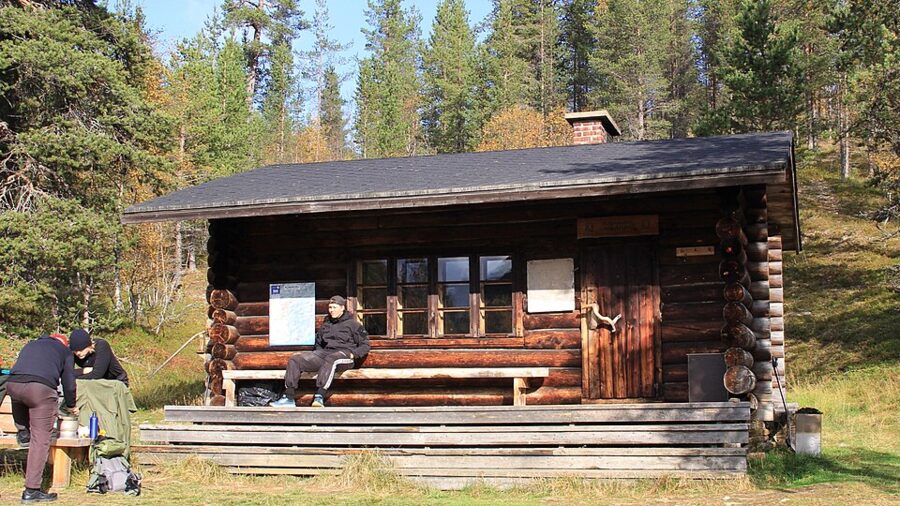

Bring a tent anyway, because a popular hut fills up. Reservable huts, varaustupa, and rental huts guarantee a bed; day huts are for emergencies only at night. Your own stove is not allowed inside, and there is no running water.
Kit and costs, briefly
A three-season tent that stands up to wind, a sleeping bag good to about 0°C, a thick mat, a gas stove, a head net and waterproofs cover most summer trips; for the high mountains and the far north, add a warmer bag. Gear can be hired in the bigger towns and at some trailheads, Skjeggedal below Trolltunga among them.
Wild camping is free; a tent pitch at the campsites named here runs from NOK 200 to NOK 500 in Norway, SEK 250 in Kiruna and €15 to €40 in Finland, and an STF hut bed costs a member SEK 480 to SEK 530. Food in the north is expensive and village shops are small, so stock up in the larger towns.
Back on the E10
Parking a motorhome by the E10 overnight is not, in itself, against the law. What changed in Lofoten was the number of them, and the islands have spent five years writing rules around that. A tent carried an hour from the road, pitched 150 metres from the nearest house and taken down after two nights still needs nobody’s permission.
If Lofoten is on your list for summer 2027, open the outdoor council’s tourist map before you go and note the ban areas around Reine and Haukland. Then drive past the lay-bys on the E10, take a tent pitch at Moskenes Camping for NOK 250, and walk out the next morning with the tent on your back, away from the road, to the open ground the right to roam was written for.