

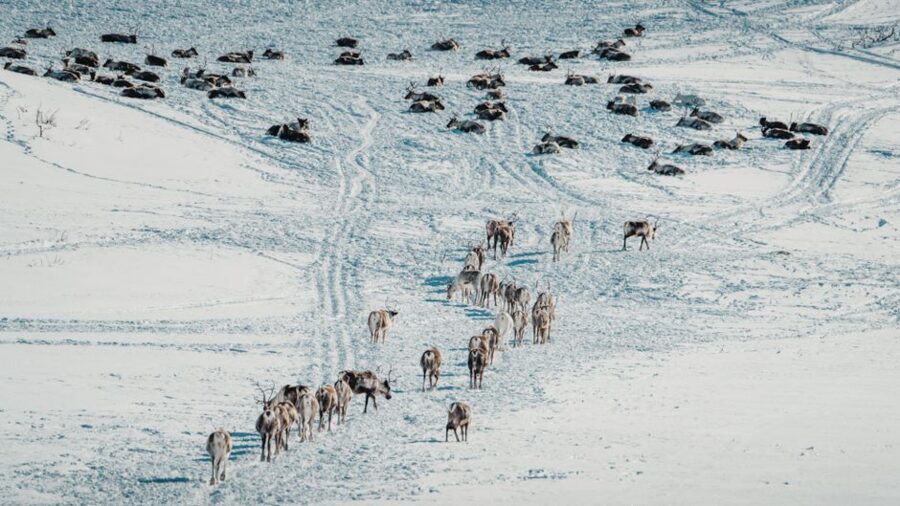
On 31 March 2025, the last day of Norway’s herding year, the country counted 217,152 reindeer, and 3,063 people in the Sámi family units that own almost all of them. That same winter a run of thaw, rain and hard frost had sealed the pastures of Nordland, Troms and Finnmark under several layers of ice, and about 147,000 of those reindeer were caught in it.
Most of what visitors believe about Sámi reindeer herding sits somewhere between those two numbers. It is a small industry by any economic measure. It is also the part of Sámi life that carries the most language, the most law and the most argument, and it is changing faster now than at any time since the snowmobile arrived in the 1960s. Some of the standard myths about it turn out to be half true, and one is less a myth than an argument still running in Norway’s courts.


Contents 6 parts
Who herds, and how many reindeer
The short answer: a minority of Sámi, in every country, and the share is smaller than most people guess. None of the three countries counts its Sámi population by ethnicity in a census, so the denominator is soft. The herders are easier to count, because the law requires every reindeer to carry its owner’s registered earmark.
| Norway | Sweden | Finland | |
|---|---|---|---|
| Reindeer | 217,152 (31 March 2025) | 225,000 to 280,000 in the winter herd | 179,509 live reindeer (end of 2024–25) |
| People | 3,063 in 538 siida shares (Sámi herding) | About 5,000 registered owners; just over 1,000 work at it professionally | 4,197 owners (2024–25) |
| Units | 82 grazing districts; about 99 summer and 152 winter siidas | 51 samebyar | 54 paliskunnat (herding cooperatives) |
| Who may own | People with a right to a reindeer earmark, in practice Sámi from herding families | Sámi members of a sameby (plus local owners in the 8 concession samebyar) | Any EEA citizen living permanently in the herding area |
The Norwegian figures come from the resource accounts for the 2024–25 herding year, the Swedish ones from the Sámi Parliament’s overview of reindeer herding in Sweden, and the Finnish ones from the Reindeer Herders’ Association’s statistical review for 2024–25. Norway’s total includes about 10,500 reindeer kept by the herding companies of the southern mountains, which work under government concession.
Finland is the odd one out. Its Sámi Parliament puts the number of Sámi in Finland at about 10,000, and most of the 4,197 reindeer owners are Finns, not Sámi. Sámi herding there is concentrated in the far north, in Utsjoki, Inari, Enontekiö and northern Sodankylä. In Sweden 40 per cent of registered owners are women, but only about 18 per cent of full-time herders.

So why does a trade of a few thousand people matter so much? Partly because the law treats it as culture, not farming. When Norway’s Supreme Court struck down the Fosen wind farm licences in 2021, it did so under the article of the UN Covenant on Civil and Political Rights that protects a minority’s right to enjoy its own culture, and reindeer herding was the culture in question. Norway’s own directorate calls herding an important basis for keeping Sámi culture, community life and language alive.
The language part is not a figure of speech. North Sámi has words for a reindeer by sex, age, colour, antler shape and temperament, and much of the vocabulary of snow and grazing that goes with them is kept in daily use by herding families. Lose the herding, and a large part of the working language goes with it.
The herding year, in eight seasons
Sámi herding runs on eight seasons, not four. In North Sámi: giđđadálvi (spring-winter), giđđa (spring), giđđageassi (spring-summer), geassi (summer), čakčageassi (autumn-summer), čakča (autumn), čakčadálvi (autumn-winter) and dálvi (winter). Each has its own pasture, and the year is a loop between them.
The official calendars differ slightly. In Norway the herding year starts on 1 April with the move to the calving grounds; Finland’s runs from 1 June to 31 May; Sweden’s slaughter statistics count from 1 July. The Norwegian directorate’s account of the year gives distances for the main spring and autumn moves of anything from 10 to about 500 kilometres.
Spring: the move and the calving
From March into April the herds leave the inland winter pastures and head for the calving grounds. The pregnant cows need to arrive before calving begins at the end of April or early in May; a cow that calves on the move, crossing rivers, often loses the calf or gets left behind. Good calving land is small-scale and hummocky, without rivers or steep drops.
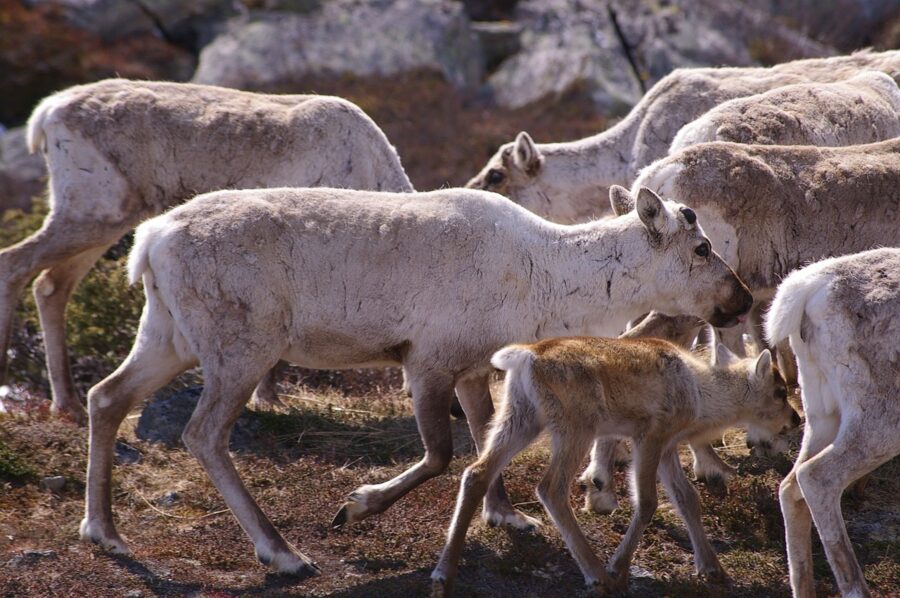
This is also the most fragile part of the year for anyone else on the fell. Sweden’s Norrbotten County Administrative Board, in its advice for hikers on the Kungsleden, asks walkers in May to keep away from cows with calves, keep dogs on a lead and quiet, and sit down and wait if a herd comes past.
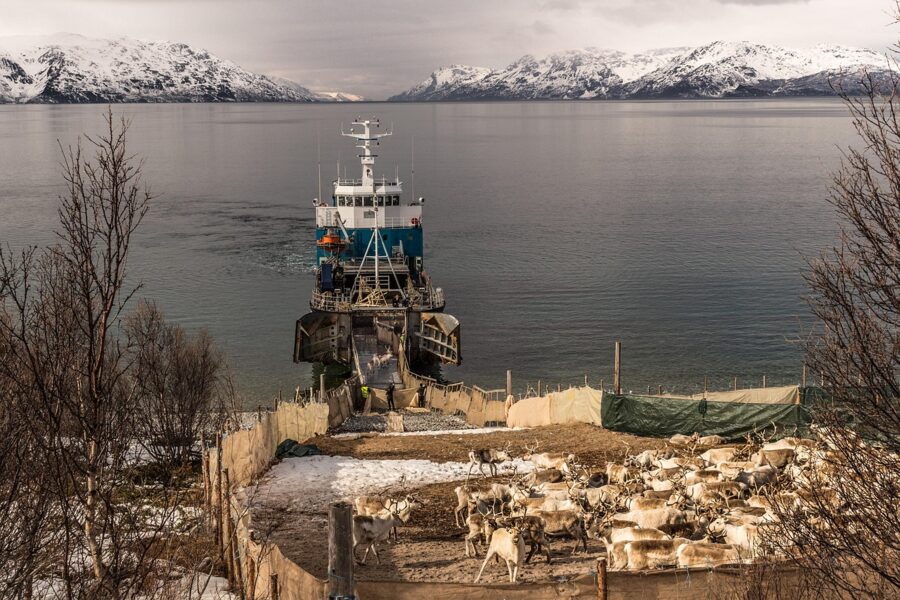
Summer: insects, snow patches and calf marking
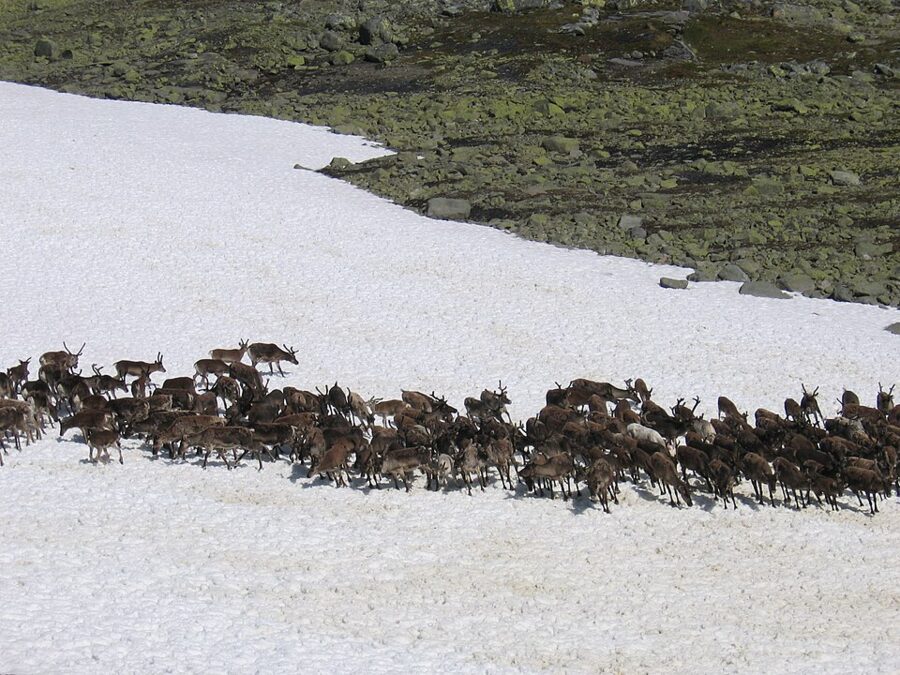
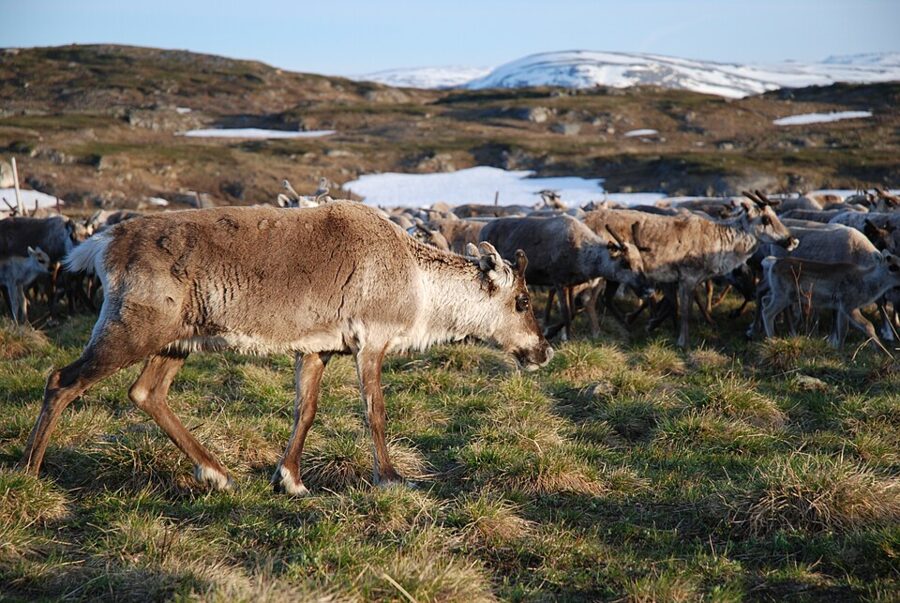
As the weather warms the reindeer bunch into larger herds and climb, partly for fresh grazing and partly to escape the mosquitoes and warble flies. On a hot July afternoon you will see them standing on the last snow patches, which looks like a postcard and is really a way of staying cool and out of reach of the insects.

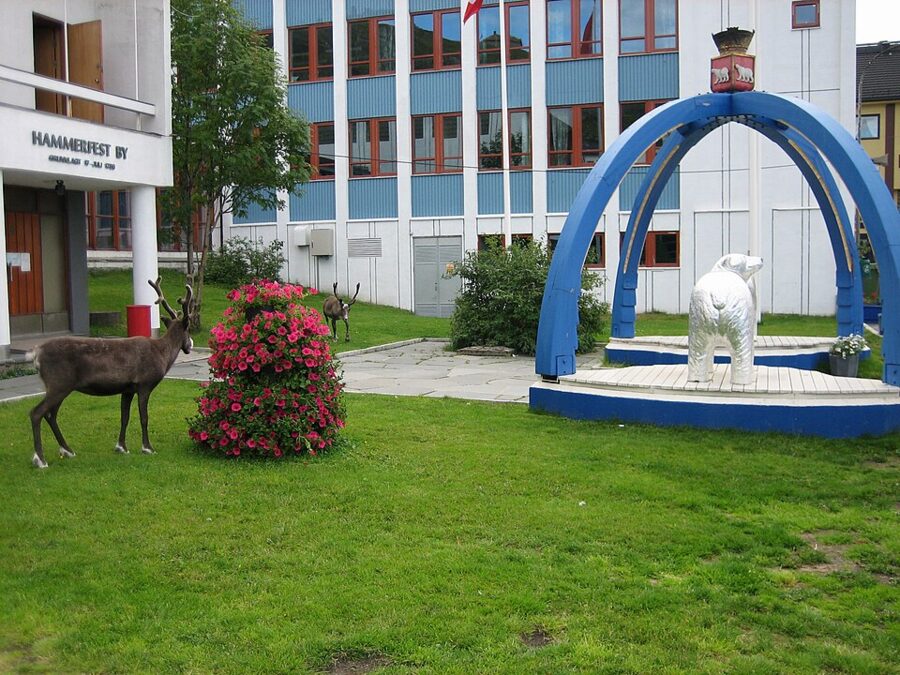
The same summer instinct brings reindeer into towns. If you are staying in Tromsø, the closest summer herds are on Kvaløya and Ringvassøya, the islands west and north of the city.

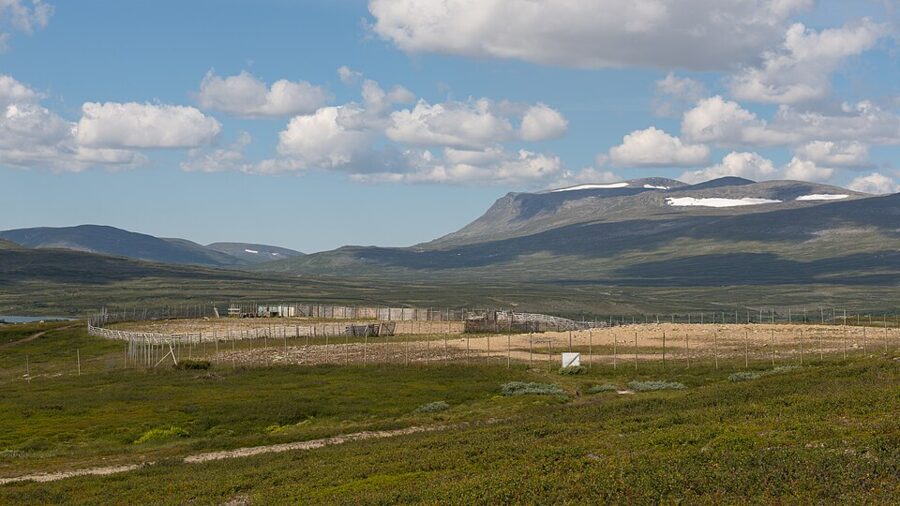
Midsummer is calf-marking time. In Finland the Reindeer Herders’ Association puts it in June and July, when the insects drive the reindeer into tight groups that are easier to gather into a corral. Each calf gets its owner’s mark cut into its ears, the bealljemearka or earmark, and the logic is simple: a calf follows its mother, so it takes the mark of the mother’s owner. Finland’s reindeer act says so in almost those words.


Autumn: gathering, separation, slaughter
The rut comes in September. In Norway the biggest bulls are slaughtered before it, because a bull in rut loses condition fast and the meat suffers; the herd has to be gathered in the short window between the mushroom season, when reindeer scatter to eat fungi, and the rut. A second slaughter follows in November and December, once snow has fallen, and this one takes more cows.
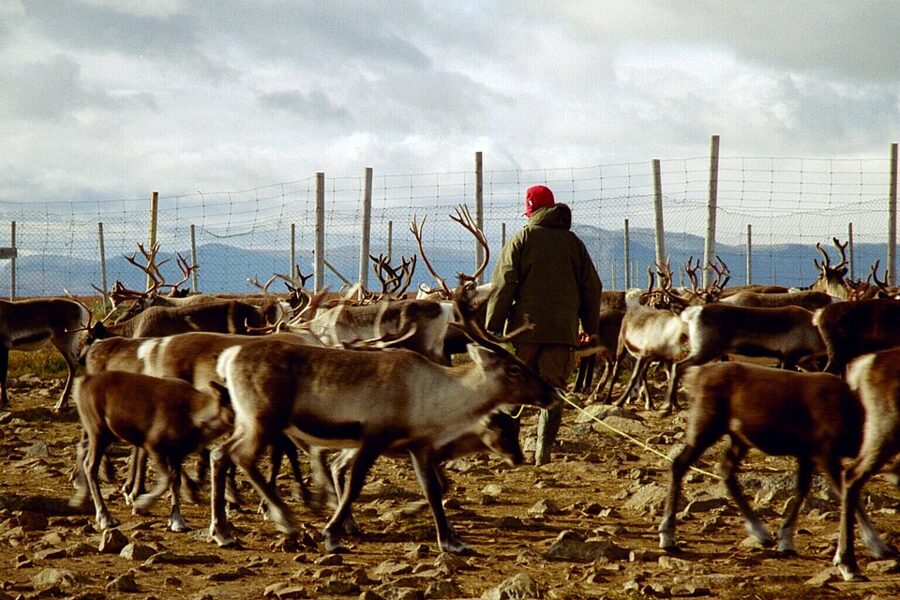
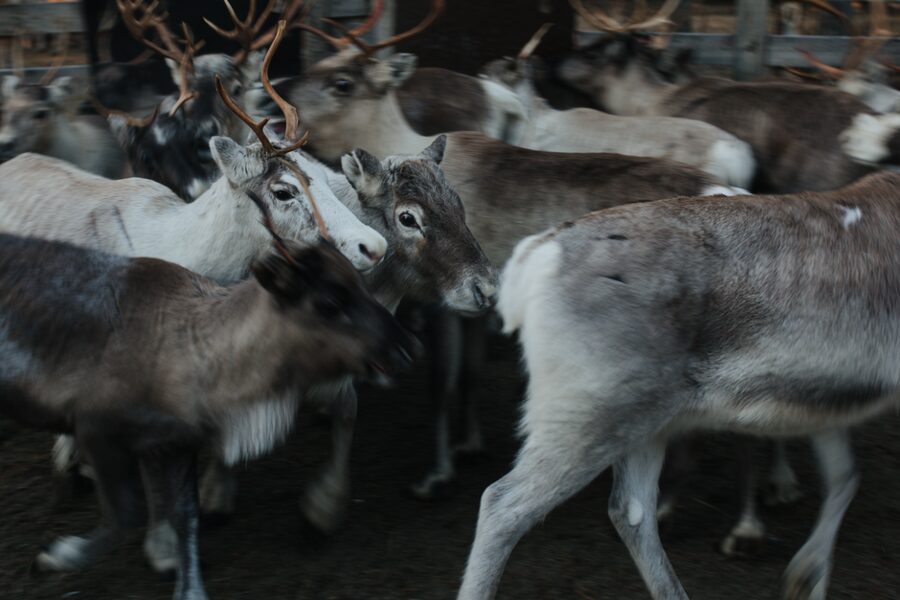
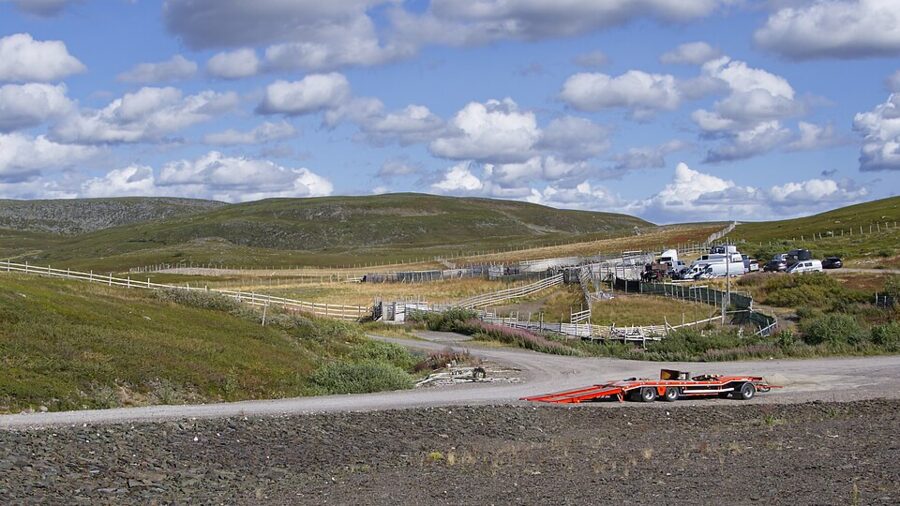
Separation is the other autumn job. Herds that have mixed over the summer are run into a corral and sorted by earmark, each animal pulled out to its owner’s group. In Finland this is poroerotus, the round-up season, and it runs from late September into January. Norwegian herders took 64,207 animals to slaughter in 2024–25; in Sweden the figure for the season to June 2025 was 51,330.

Winter: lichen under snow
Winter pasture is the bottleneck of the whole system. Through the winter a reindeer lives mainly on lichen, digging it out through the snow with its front hooves; the lichen is rich in energy and poor in protein, and the reindeer gets through the winter on that thin budget. Early winter’s light, dry snow is easy to dig. Later, wind and thaw pack it hard, and every crust makes the food harder to reach.

The reindeer is also the only domestic grazing animal in Norway that has to find its own food 365 days a year. A sheep spends about three months on the open range. That single fact explains most of the land conflicts that follow.
Six myths, tested
“Earmarking is cruel”
This is usually filed as a myth, and it is half of one. Earmarking is a set of cuts made with a knife in a calf’s ears, done by hand, usually in the calf’s first summer. It hurts. It is also quick, done once in an animal’s life, and the cuts heal.
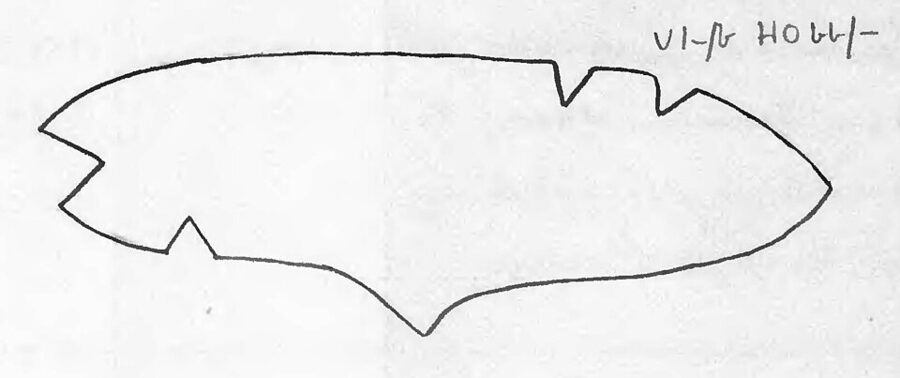
What gets left out is why the mark matters. All three countries require every reindeer to carry its owner’s mark: in Norway by 31 October of the year it is born, under the Reindeer Husbandry Act, which also ties marking to the animal welfare law. Finland’s act allows each owner only one registered mark. In a corral of a thousand reindeer the earmark is how a herder sees, at a glance and from the side, whose animal is whose; and because the right to own reindeer in Norway runs through the right to a mark, the mark is also a legal document.
“A shaggy reindeer is a sick reindeer”
In early summer reindeer look terrible. The old winter coat comes away in big tufts, patches of short dark summer hair show through, and the antlers are swollen and soft in velvet. The Reindeer Herders’ Association in Finland explains the cycle on its page about the reindeer itself: the winter hair falls out in large clumps over the summer, and the new winter coat starts growing in August.
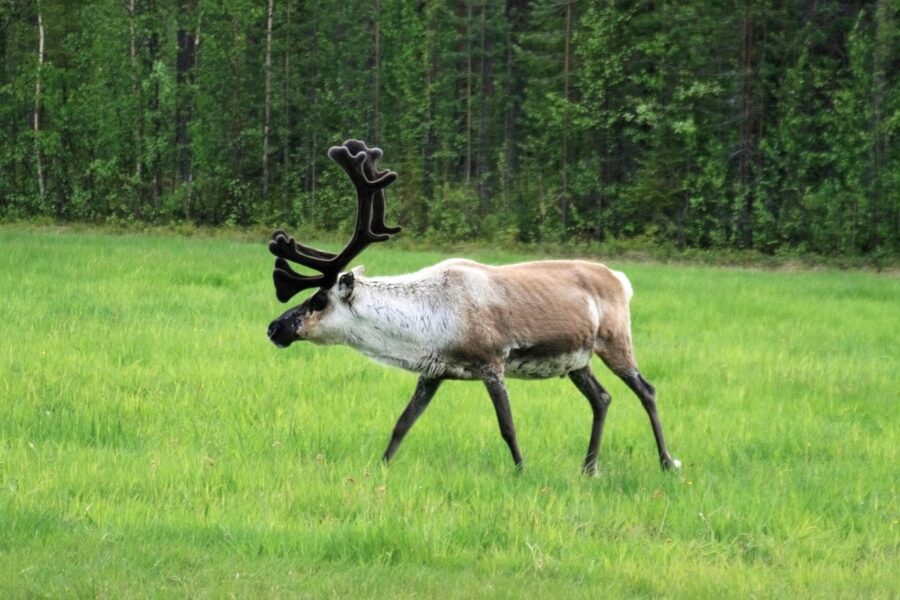
That winter coat is the reason reindeer can live where they do. The guard hairs are hollow and full of air, an adult can carry 1,700 hairs per square centimetre, and a reindeer in good condition copes with -50 °C without burning extra energy to stay warm. A tatty animal in July is an animal on schedule.
“They are wild animals”
The reindeer you see in Finnmark, Swedish Lapland or Finnish Lapland are not wild. Every one has an owner and an earmark, and the herds are moved, gathered, counted and sold. Norway’s directorate describes them as semi-domesticated: tame enough to herd, shy enough to abandon good grazing if it is disturbed too often.
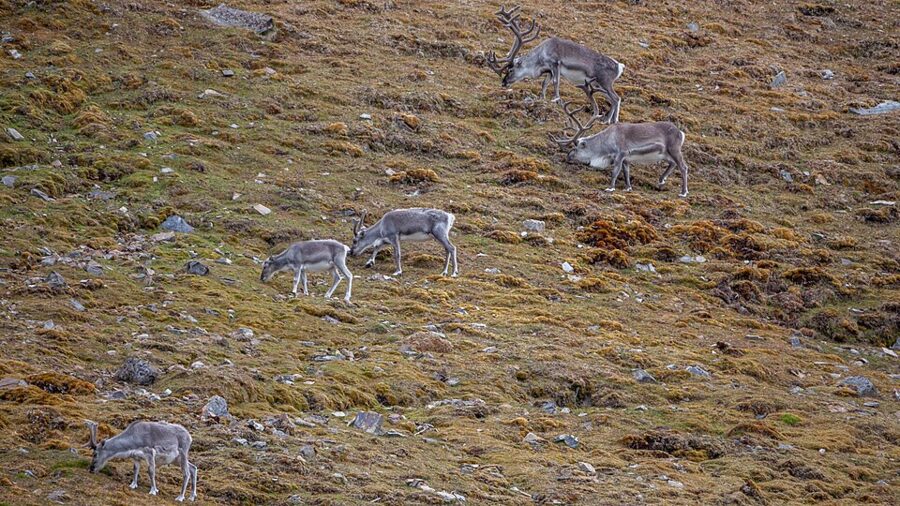
There are wild reindeer in the Nordic countries, just not in the herding areas. Norway’s wild mountain reindeer, villrein, live in the southern mountains, Finland has a small wild forest reindeer population in Kainuu, and the reindeer of Svalbard are a separate wild subspecies that nobody herds.

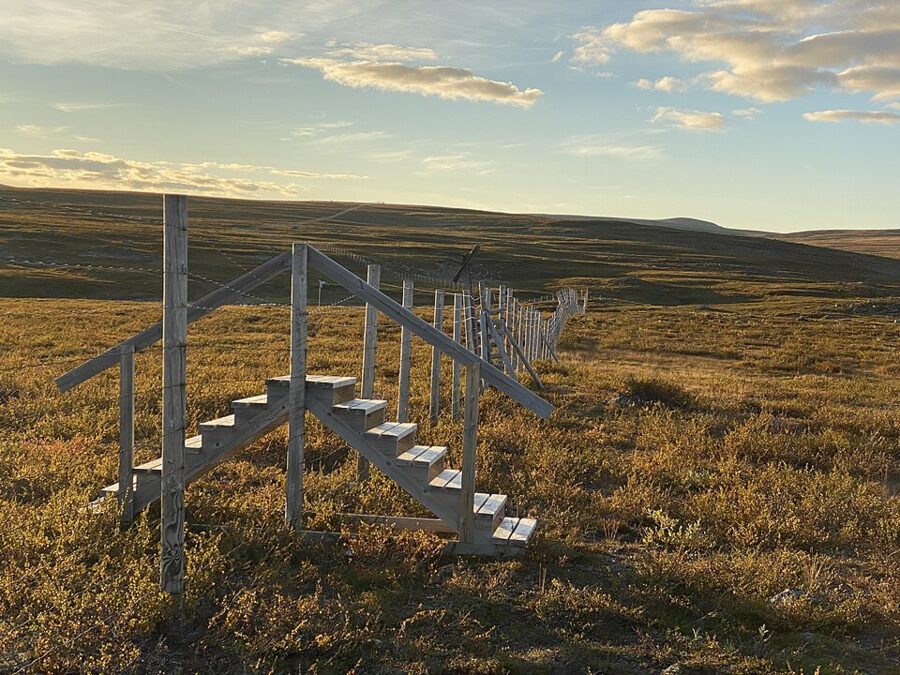
A related myth has reindeer kept in by small fences. No fence holds a herd on a fell. The long fences you cross on a hike are barriers between grazing districts, or between countries, built to stop herds drifting into the neighbours’ pastures. Norway’s act gives herders the right to put up working and barrier fences; the most famous ones follow the national borders.

“Reindeer are wrecking the tundra”
This one is usually waved away as a myth. It is better described as an argument, and one that is very much alive.
The Norwegian state’s position, set out year after year in its resource accounts, is that reindeer numbers in parts of Finnmark have been too high for the grazing for a long time. The accounts point to low slaughter weights and to monitoring that shows a general fall in lichen cover on Finnmarksvidda, and herders in those districts have been ordered to cut their herds. In 2017 Norway’s Supreme Court ruled that a young herder from Kautokeino, Jovsset Ánte Sara, had to comply with an order to cut his herd of 116 by 41 animals.

The other side has its own scholarship. A 2016 book from the Sámi University of Applied Sciences in Kautokeino, the International Centre for Reindeer Husbandry and the Norwegian University of Life Sciences, edited by Tor A. Benjaminsen, Inger Marie Gaup Eira and Mikkel Nils Sara, carries the blunt title Samisk reindrift, norske myter, “Sámi reindeer herding, Norwegian myths”. Its authors argue that tradition-based herding is ecologically sustainable, and that the real threats are lost land and state management that ignores herders’ own knowledge.
Two other facts belong next to this argument. The Swedish county board reminds hikers that the mountains they call wilderness are Sámi cultural land, their meadows and heaths shaped by thousands of years of reindeer grazing. And in Finland, where overgrazing was the standard complaint a generation ago, the herders’ association reports that the total herd has stayed below the state’s ceiling of 203,700 for twenty years; in 2024–25, 26 of the 54 cooperatives were 10 per cent or more under their quota, several of them because of heavy predator losses.
“Every Sámi owns reindeer”
A myth, and the numbers make the point: a few thousand owners in each country, against a Sámi population that runs to tens of thousands. In Finland more than 60 per cent of Sámi live outside the Sámi homeland altogether, and Oslo, Stockholm and Helsinki all have sizeable Sámi communities working at the same things as everyone else.
What is true is that herding carries a weight beyond its numbers. But treating every Sámi person as a herder is the mistake the Sámi Parliament in Finland had in mind when it adopted its guidelines on Sámi tourism in 2018: they were written to stop tourism that exploits Sámi identity and spreads false information about it.
“Santa’s reindeer are Sámi reindeer”
Santa’s team was born in New York. The eight named reindeer come from the poem now known as “The Night Before Christmas”, first published anonymously in a newspaper in Troy, New York, in December 1823 and usually credited to Clement Clarke Moore. Rudolph arrived in 1939, invented by the copywriter Robert May for a Christmas booklet given away by the Montgomery Ward department stores.
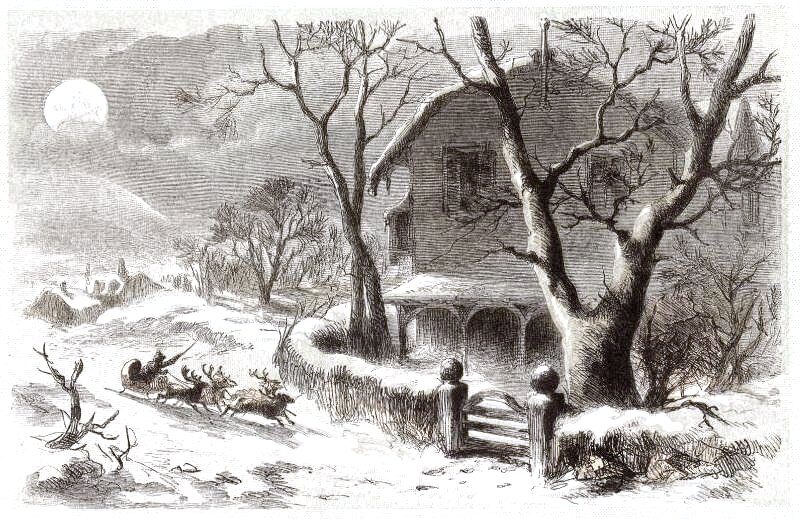
There is one piece of real biology in the image, and it tells against the usual casting. Both male and female reindeer grow antlers, the only deer where the females do. The bulls drop theirs in autumn after the rut; the cows keep theirs through the winter and shed them in spring after calving. A team flying with full antlers on Christmas Eve is, in all likelihood, a team of cows.
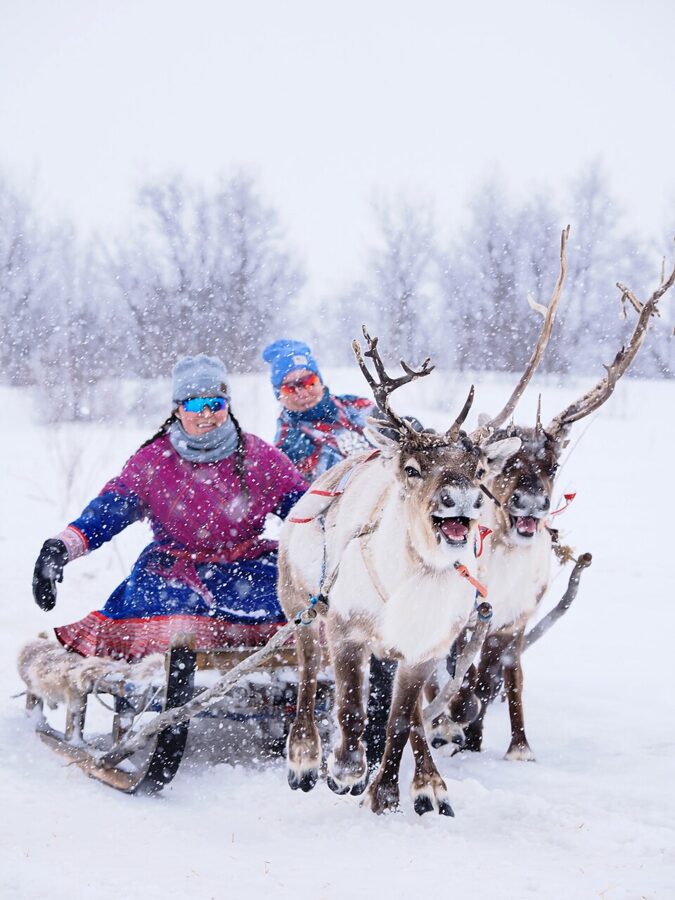
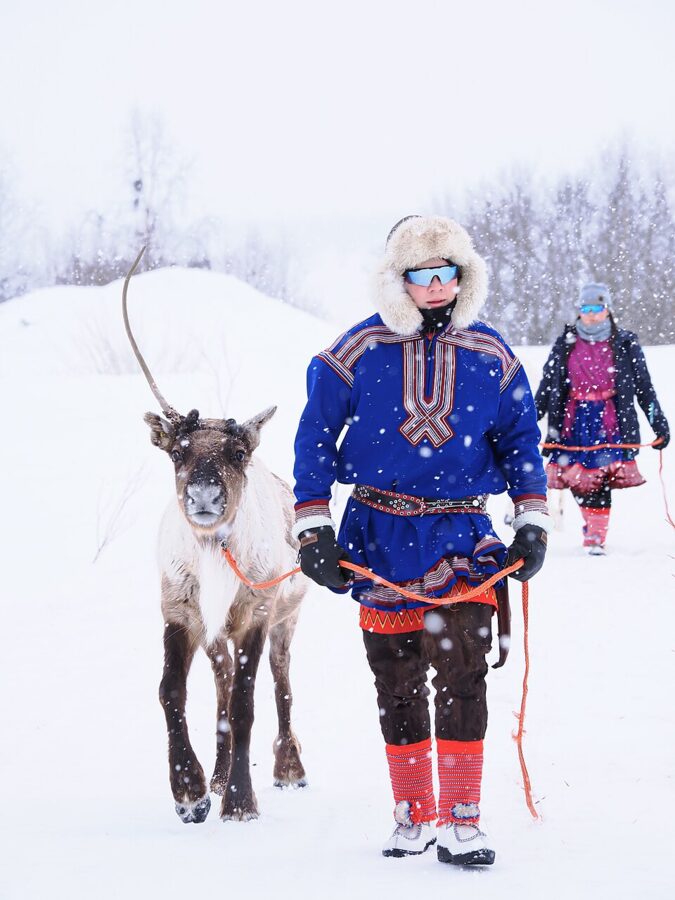
Real reindeer have pulled sledges in Sápmi for centuries: the trained draught reindeer, the heargi, carried loads and people. The sleigh rides sold in Finnish Lapland today use trained animals too, and the ethics guide to Arctic animal tourism covers who runs them, how the laws differ between Norway and Finland, and what a good visit looks like.
Five facts that explain the rest
The siida is the unit, not the person
The siida is the old Sámi working community: a group of families who herd together on a shared range. It is still the basic unit in Norway, where the law recognises a summer siida and a winter siida, since the people who share summer pastures are not always the same as those who share winter ones. Inside each siida are siida shares, each with one responsible leader, and the shares are what the state counts: 538 of them, holding 3,063 people, at the end of March 2025.
Sweden’s equivalent is the sameby, which is both a territory and an economic association with its own board; Finland’s is the paliskunta, the herding cooperative. The Finnish association notes that the word comes from the Sámi verb palgat, the restless milling of reindeer, so even the administrative unit is named after what the animals do. The association’s page on the cooperatives traces the system back to the 18th century.
You are born into it, mostly
Herding passes through families. In Norway the act gives the right to a reindeer earmark to people of Sámi descent whose parents or grandparents had herding as their main occupation, plus a few others such as spouses of a share’s leader and adopted children. There is a separate recruitment share for young people setting up beside their parents. Without a mark you cannot own reindeer in the Sámi herding area at all.

The age profile is better than people expect. In Finland 27 per cent of reindeer owners in 2024–25 were under 25 and only 15 per cent over 65, and among the under-25s 42 per cent were girls. The difficulty is that owning reindeer young is not the same as making a living from them: the Finnish association warns that in the southern districts, where predator losses have run high for years, young herders are getting scarce.
Three countries, three laws
Norway reserves herding in the Sámi reindeer area to the Sámi, on the basis of use “since time immemorial”, as the act puts it. The area runs from Finnmark to Engerdal in Innlandet, with Trollheimen under a separate law. Outside it, herding needs a government concession; that is how the four herding companies of Lom, Vågå, Fram and Filefjell operate.
Sweden’s law is close to Norway’s in principle and different in detail. Only a Sámi member of a sameby may herd, and the right rests on immemorial custom, which the Sámi Parliament points out makes it a property right rather than a privilege granted by the state, though the burden of proof differs. The Swedish Sámi Parliament’s page on herding rights notes that in Sweden the Sámi must prove their use of the land in court, while in Norway the landowner must prove it was not used. In the Torne and Kalix valleys, eight concession samebyar herd reindeer that partly belong to local farmers, a historical arrangement that lets non-Sámi own reindeer there.
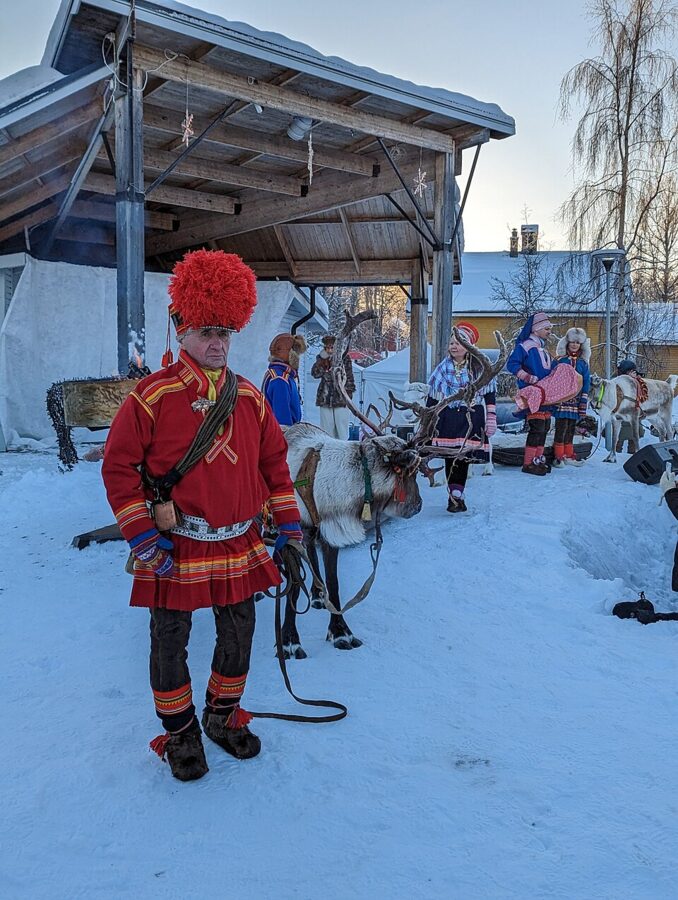

Finland is the open system. Under the 1990 Reindeer Husbandry Act, anyone who is a citizen of an EEA country and lives permanently in the herding area may own reindeer. That area covers 122,936 square kilometres, 36 per cent of Finland, and reaches far south of the Sámi homeland. Herding in Finland grew up among Finnish settlers as well as among the Sámi, and the reindeer is the official province animal of Lapland.
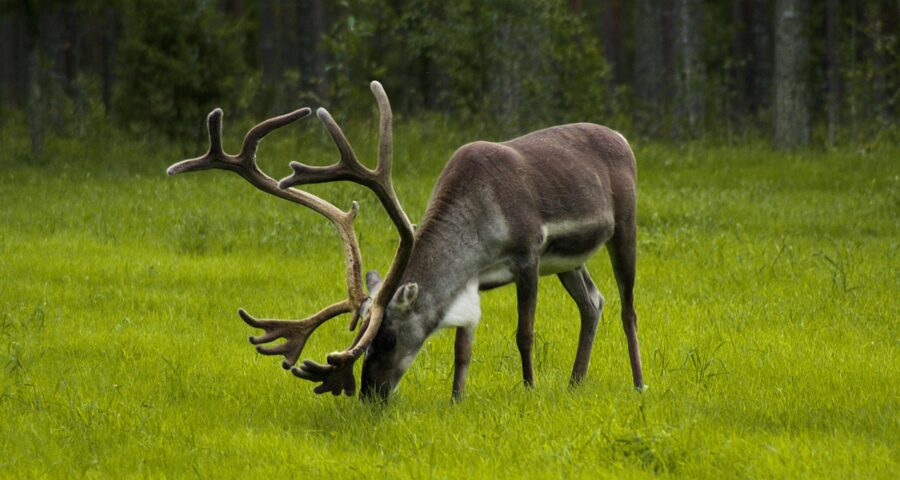
Never ask how many
This one holds. A herder’s reindeer are the family’s capital, and asking how many someone owns is like asking a stranger at a party what is in their bank account. The Finnish association says it plainly on its page on the herder’s trade: a reindeer owner’s numbers are a private matter that is not spoken aloud.
It also records the standard replies, which are worth knowing. Ask a Finnish herder and you will hear “a bogful”, “both sides of the tree” or simply “I don’t know”. If you want to talk herding, ask about the weather, the grazing or this year’s calves instead.
Few reindeer have names, and the ones that do work for it
The usual line is that only lead reindeer have names. That is close enough, though practice varies between families. What is certain is that herders know their animals by a vocabulary rather than by names. North Sámi has separate words for a calf, a year-old, a young bull, a breeding cow and a castrated draught animal, and dozens more for colour; the Finnish association counts dozens of colour terms in Finnish alone.
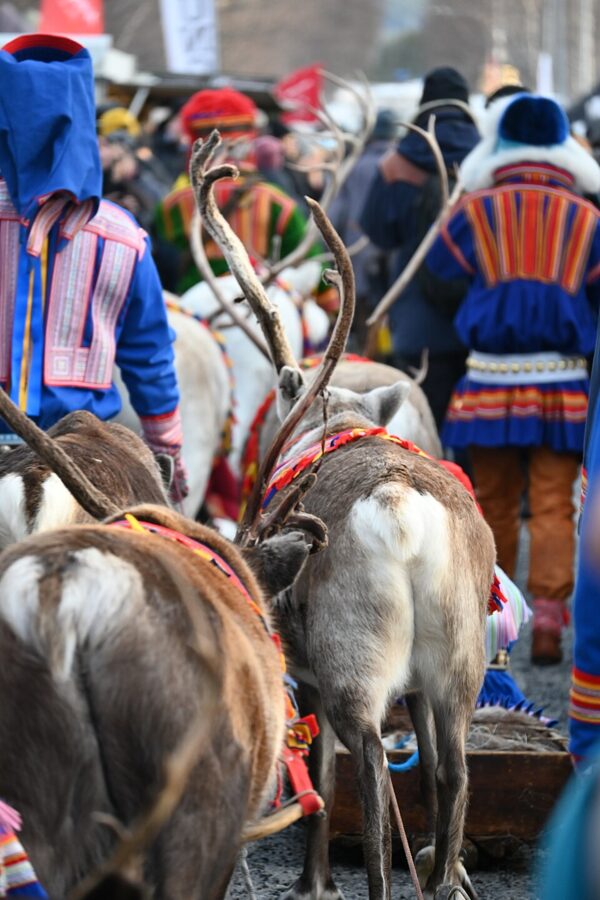

The animals that do get names are the ones people handle every day: the trained heargi that pulls a sledge, the racing reindeer, the tame bell-wearing animal that leads the herd. That is a working distinction, not a sentimental one. In Finland a well-trained sled reindeer is now estimated to bring in about €10,000 of turnover a season, and an animal worth that much gets a name.
What is squeezing it
Rain on snow, and the grazing crises
Herders have always lived with bad winters, which they call locked pastures: a thaw or a spell of rain, then frost, leaving a sheet of ice over the lichen. What has changed is how often it happens. The Norwegian resource accounts list grazing crises in 2017, 2020, 2021–22 and 2024, and then the big one in 2025, when alternating mild spells, rain, hard frost, strong wind and snow built several ice layers that reindeer could not dig through. About 147,000 reindeer, 68 per cent of the national herd, were affected.
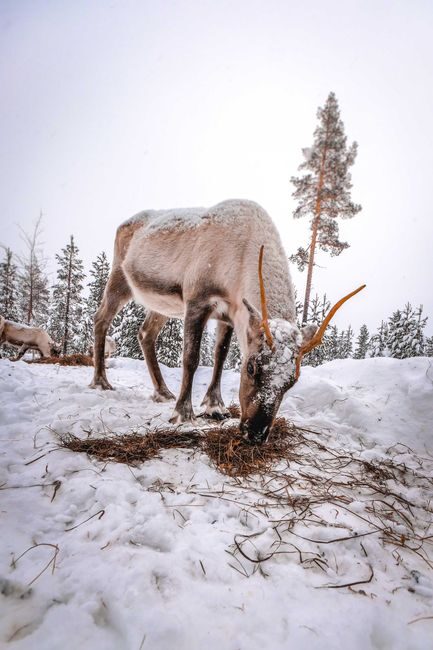
It did not stop there. The 2025–26 winter brought another crisis, this time in parts of Troms and eastern Finnmark, from early December to the middle of May; about 80 siida shares and 30,000 reindeer were hit. The directorate’s report from the emergency committees’ meeting in Alta says NOK 7.4 million was paid from the central emergency fund that winter, and NOK 173 million since 2017. From now on districts will have to cover the first 45 days of a crisis from their own funds, up from 30, which herders at the meeting said was too heavy a load.
The long-term numbers explain why. Inner Finnmark’s mean annual temperature for 1991–2020 was 1.2 °C higher than for 1961–1990, and with continued high emissions inner Troms and Finnmark are expected to warm by 4.0 to 4.6 °C by 2100, more than anywhere else in Norway. Finland had its own version: the herders’ association blames the hard winters of 2020–22 and the record-hot, dry summer of 2024 for a sharp drop in slaughter numbers in 2024–25, down 16.4 per cent on the year before.
Fosen: a Supreme Court win and what followed
On 11 October 2021 Norway’s Supreme Court, sitting as a full bench of eleven judges, ruled unanimously that the licences for the Storheia and Roan wind farms on the Fosen peninsula, north-west of Trondheim, were invalid. The ruling, HR-2021-1975-S, found that the turbines violated the South Sámi herders’ right to practise their culture under Article 27 of the UN Covenant on Civil and Political Rights, because the winter pastures around them were in practice lost to herding.
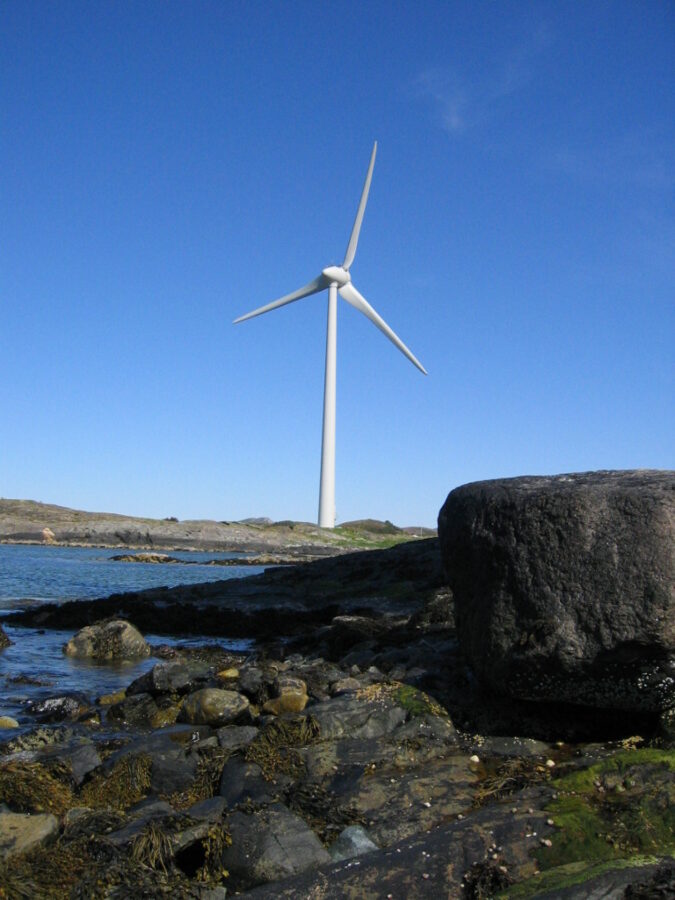

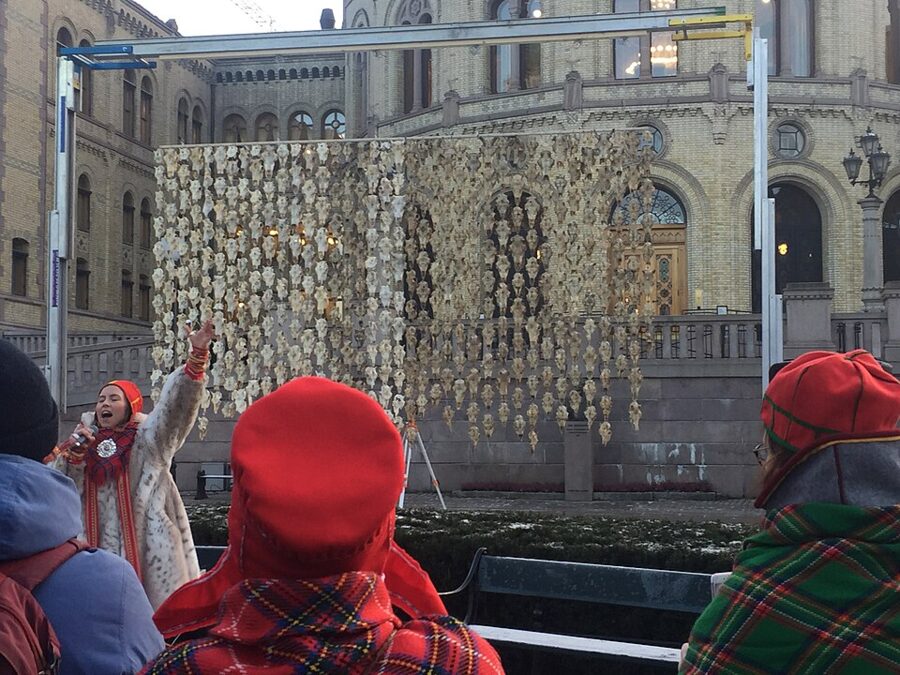
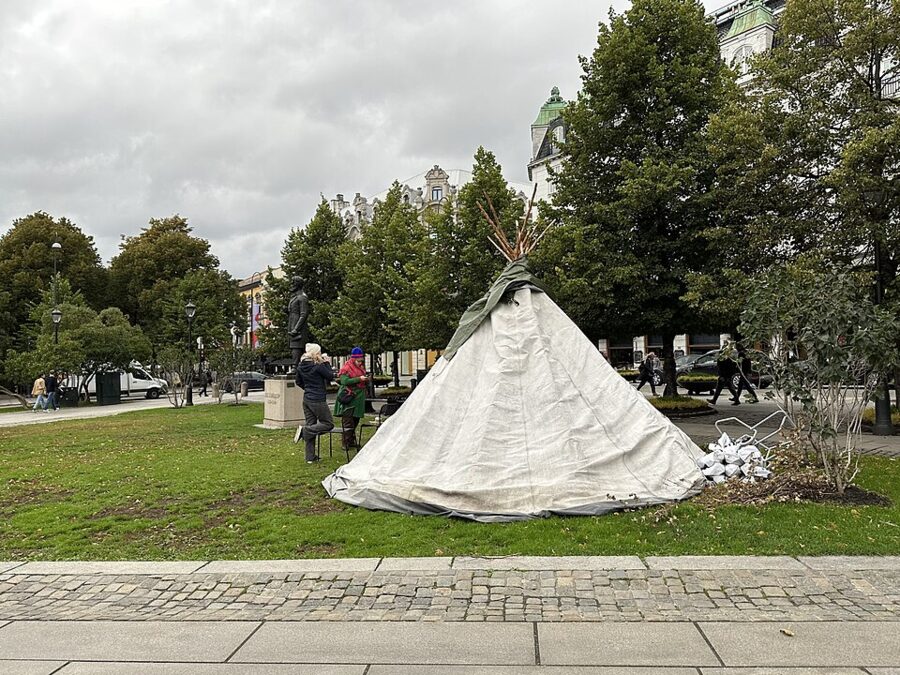
The turbines kept turning for more than two years after the ruling while the state and the developers looked for a solution. Young Sámi and environmental activists protested in Oslo through 2023, with lavvus pitched outside the ministries and the Storting.

The two siidas settled separately, after mediation. Sør-Fosen sijte signed for Storheia in December 2023; Nord-Fosen siida signed for Roan on 6 March 2024. Under the Roan deal, as the operator’s announcement sets out, the turbines stay until the licence ends in 2043, Roan Vind pays the siida NOK 7 million a year, the siida gets a veto over any new licence, and the state promised to find extra winter pasture outside the Fosen district, to be ready for winter 2026–27. Nord-Fosen siida said it would rather have fought on in court, but that its herding would have gone under in the meantime.
That pasture is the loose end. In November 2025 the local paper on Fosen reported that the search for it was delayed, and in May 2026 Nord-Fosen siida asked for the dismantling of the Roan and Haraheia turbines to be studied as an alternative to new grazing land.
Mines, roads and cabins
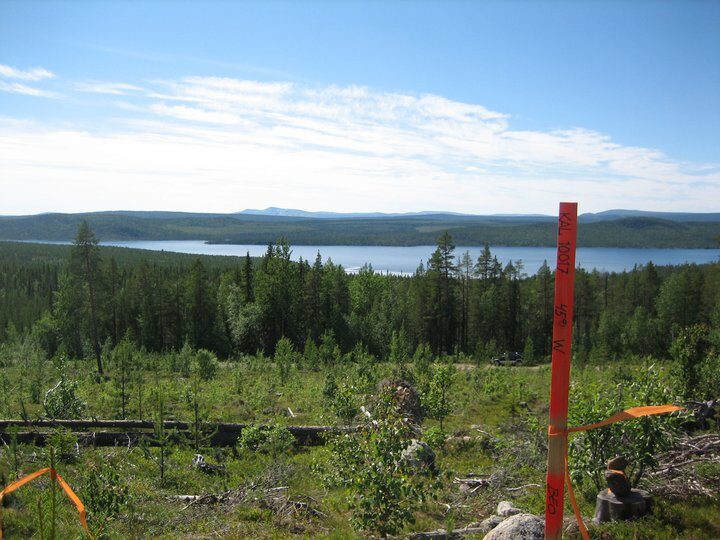
Wind farms make the headlines; ordinary building does most of the damage. A Statistics Norway study in 2020 found that about 89 per cent of Sámi herding’s seasonal pastures and migration routes lie within 5 kilometres of buildings or infrastructure, and the share of grazing land more than 5 km from any such structure fell by 71 per cent between 1900 and 2019. Reindeer avoid disturbed ground well beyond the footprint itself.
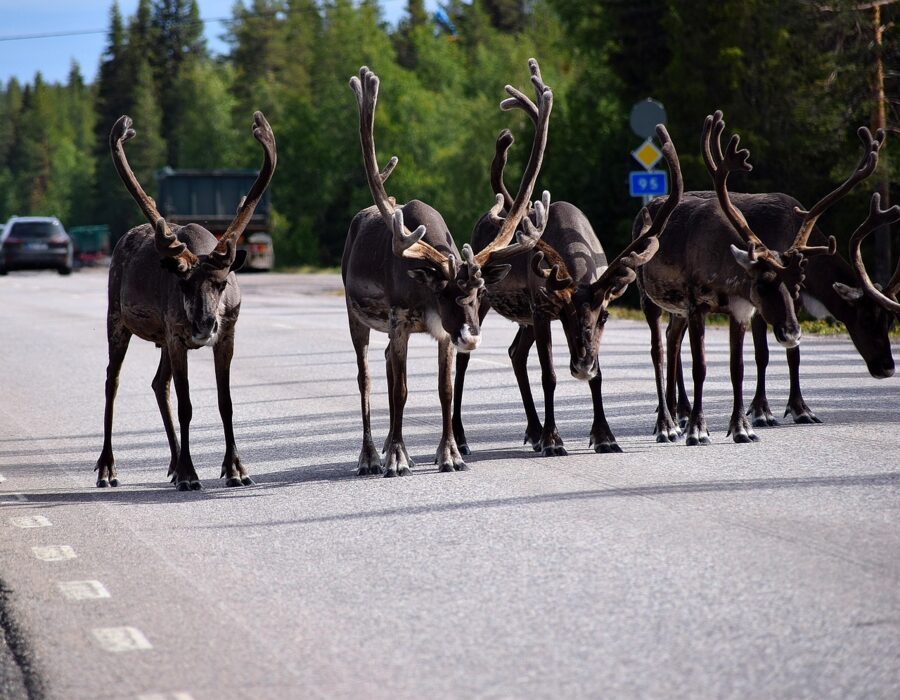
Mines are the sharpest cases. In Norway, a permit issued in January 2016 lets the Nussir copper project dump mine tailings into Repparfjorden in Finnmark; the mountains above it are reindeer pasture, and the fight over it has run for twenty years. In 2026 four parties, SV, Rødt, MDG and Venstre, put a proposal to the Storting to withdraw the discharge permit. In Sweden, the government approved the Gállok (Kallak) iron ore mine near Jokkmokk in March 2022, over the objections of the samebyar whose land it lies in.


Predators, and the gap in the compensation
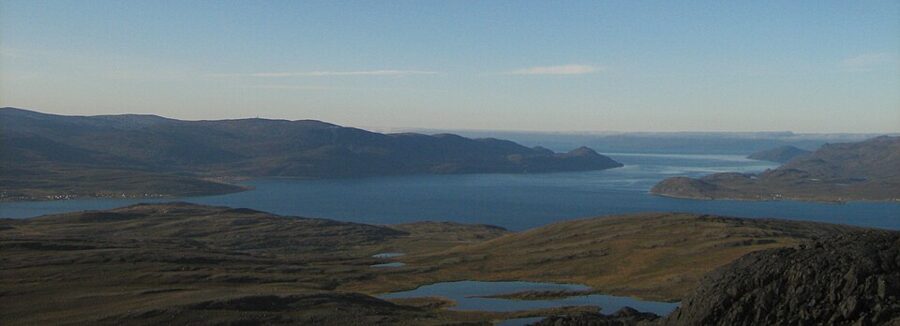
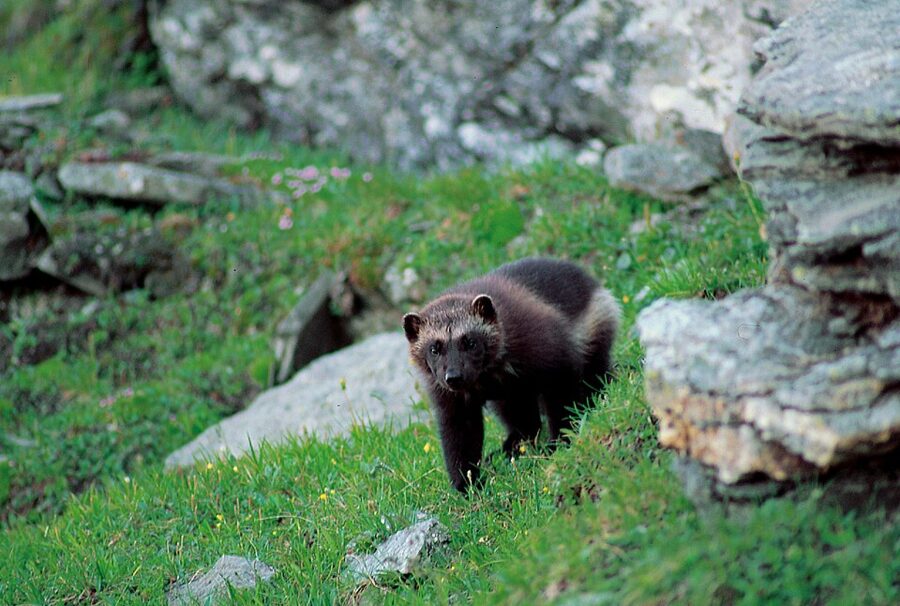
Norway protects the wolverine, the lynx, the golden eagle, the bear and the wolf, and herders lose animals to all five. In 2024–25 herders reported 79 per cent of the adult reindeer they lost as predator kills. By their reports the golden eagle took 49 per cent of the calves lost to predators, while the wolverine took 46 per cent of the adults and the lynx 40 per cent.

Compensation is where the anger lives. For the 2023–24 year the state paid NOK 107.2 million for reindeer lost to predators. But herders claimed predator compensation for 90 per cent of all reindeer lost, and only 29 per cent of what they claimed was paid. The resource accounts themselves note that for only about 5 per cent of the reindeer claimed can the cause of death actually be established; the rest is assessment, and both sides distrust the other’s numbers.
Finland is no calmer. The herders’ association calls the rise in predator damage over the past ten years unsustainable, and says it is now wearing down the herds themselves in the southern, eastern and northern parts of the herding area.
How to see it on Sámi terms
Who is running the visit?
Most visitors meet herding through a reindeer farm or a sleigh ride, and the question to ask is who owns the animals and who is doing the talking. In Norway the answer near Tromsø, Alta or Karasjok is almost always a Sámi herding family; in Finland it may be a Finnish herder, a tourism company renting trained reindeer, or a Sámi family in the far north.
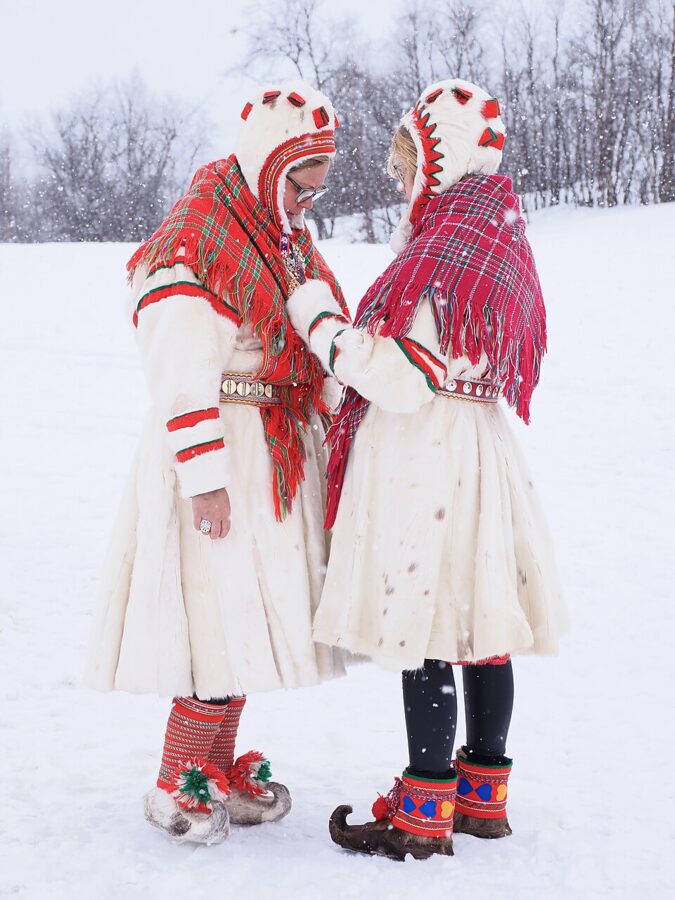

Finland’s Sámi Parliament adopted its principles for responsible and ethically sustainable Sámi tourism on 24 September 2018, with a visitors’ guide built on them, and is now developing a certificate for Sámi tourism businesses that meet them. Until that exists, ask directly: whose reindeer are these, which siida or sameby or cooperative do they belong to, and is the guide from a herding family? A business with nothing to hide answers in one sentence.
Museums worth the detour
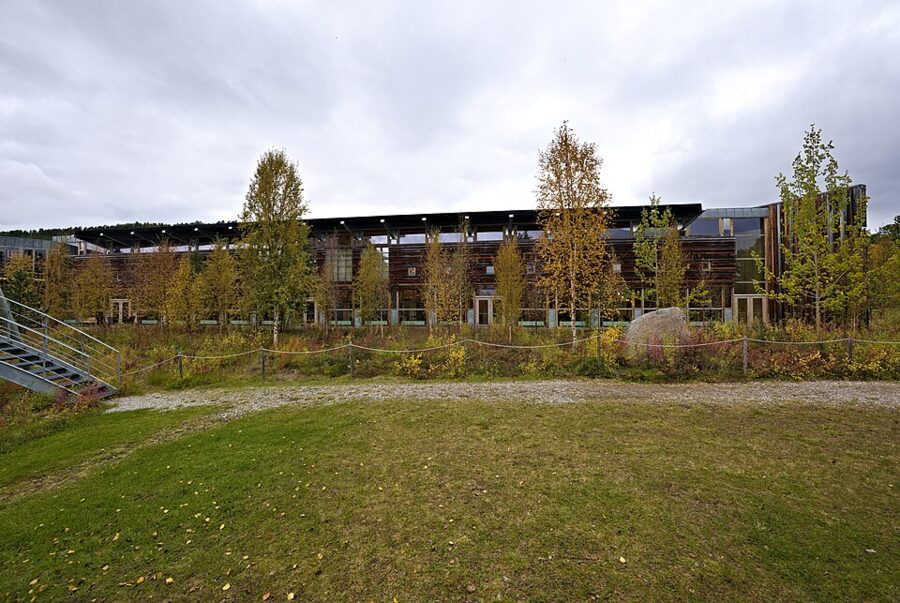
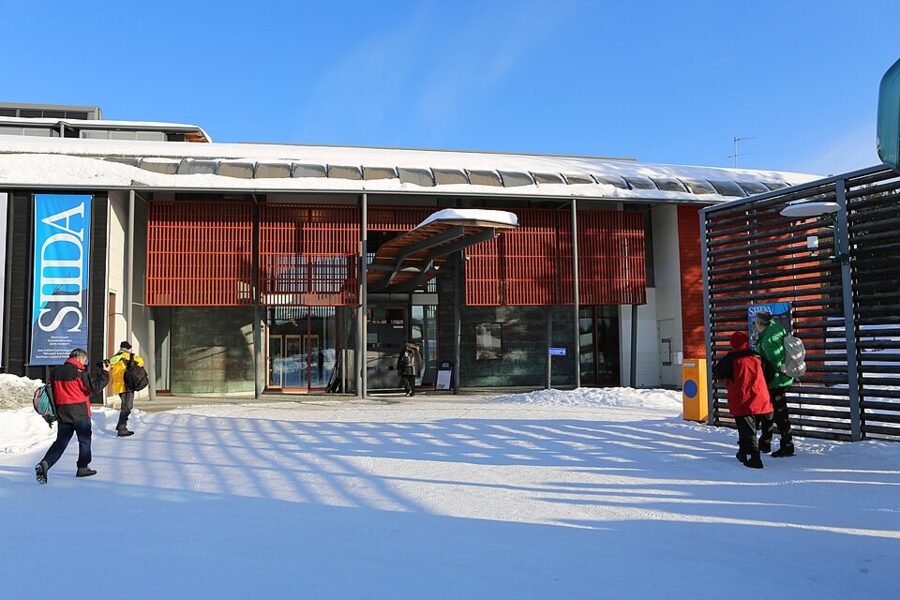
Siida in Inari is the best single introduction to Sámi herding I know of. Its main exhibition, made with Metsähallitus, the Finnish parks agency, reads the land around you as a Sámi cultural environment, and its learning material is built round the eight seasons. Opening hours from 5 October 2026 to 31 May 2027 are Monday to Saturday, 10:00 to 17:00, closed on Sundays, and adult tickets cost €18. Inari is an easy base for a cabin holiday in Finnish Lapland.

Ájtte in Jokkmokk is Sweden’s main Sámi museum and doubles as a museum of the mountains; the name means a storehouse. From 14 September to 31 December 2026 it opens Tuesday to Friday, 10:00 to 16:00, and Saturday, 12:00 to 16:00, with entry at SEK 120 and children free with an adult (Ájtte’s hours and prices list the closed days around Christmas). In high summer, from mid-June to mid-August, it opens every day.
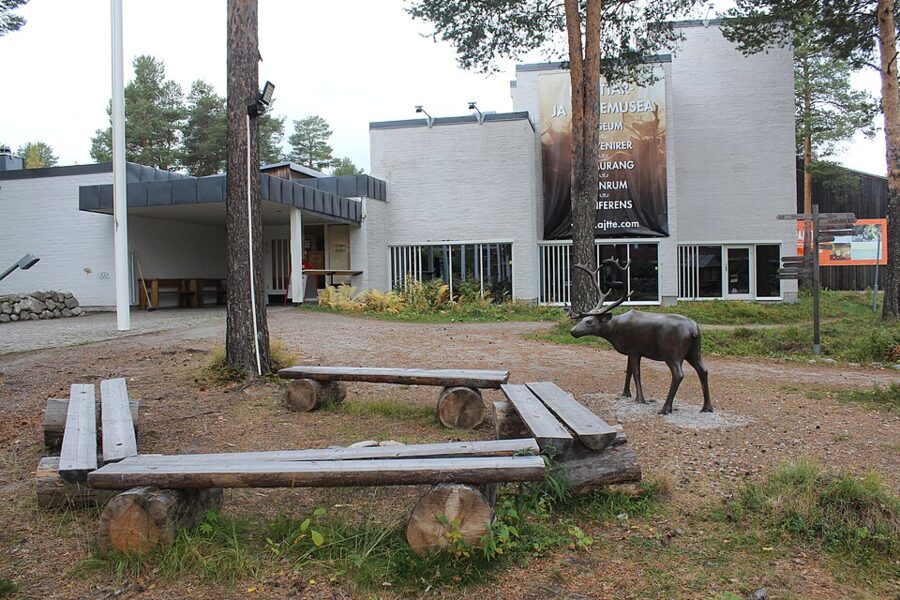

In Norway, RiddoDuottarMuseat runs four Sámi museums in western Finnmark. Its flagship, De Samiske Samlinger in Karasjok, has a problem you should know about before driving there: the museum’s own page says the exhibitions in the main building are permanently closed while the collection is moved, and only the open-air museum remains. Karasjok still repays a stop for the Sámediggi building in the same village.

Festivals: when the herding communities come to town
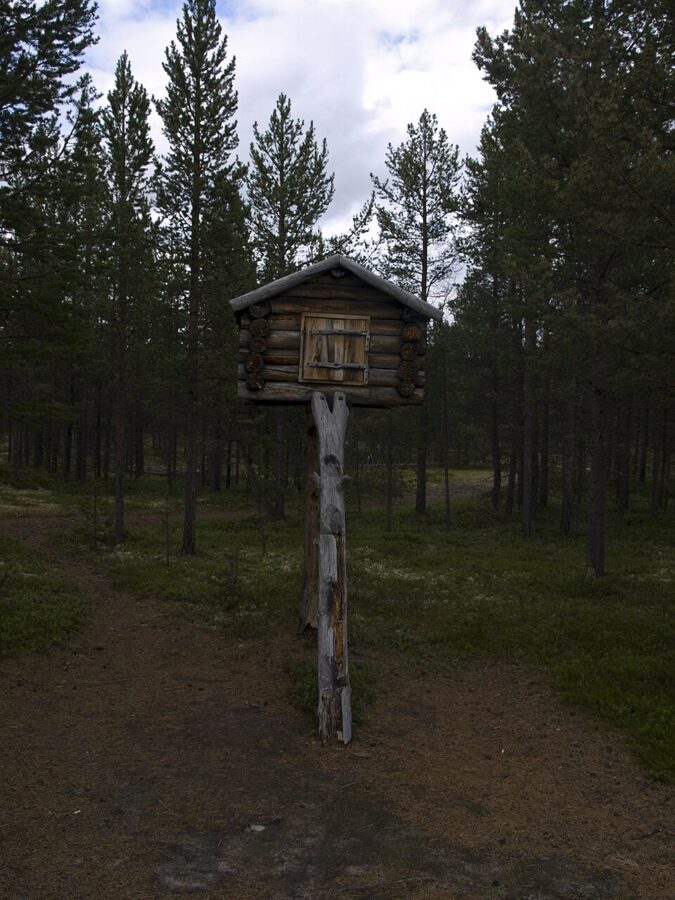
Easter is the herders’ festival, the last good snow before the spring move and the time families have always gathered in the inland villages for weddings, christenings and confirmations. In Kautokeino this became the Sámi Easter Festival, with reindeer racing, lasso competitions, a market, concerts and the Sámi Grand Prix song contest; the 2027 festival runs from 20 to 29 March. Karasjok holds its own Easter festival.
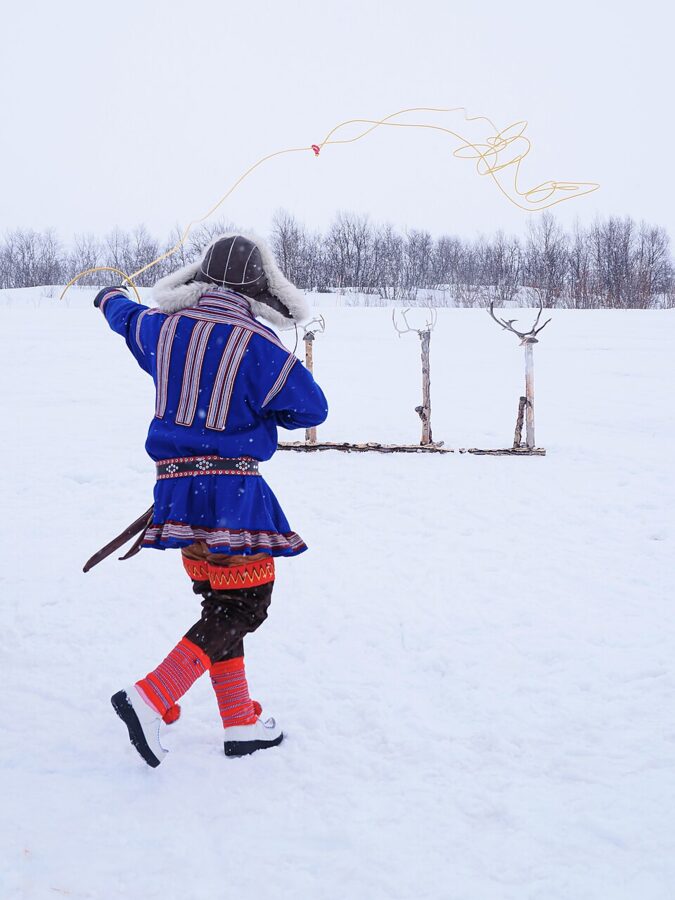

Late March in Kautokeino still has dark nights, and inland Finnmark is drier than the coast, so the festival is a fair bet for the northern lights too. Book a bed early.


In summer the place to be is Riddu Riđđu, the international Indigenous festival held every July in Manndalen, Olmmáivággi in North Sámi, in Kåfjord municipality east of Tromsø. The 2027 festival runs from 7 to 11 July, with music, film, a children’s festival and free camping in tents and lavvus on the festival ground. In Sweden, the Jokkmokk winter market has run since 1605; the 2027 market is from Thursday 4 to Saturday 6 February.
Manners that matter
Ask before you photograph people, especially children, and especially in a corral; a separation is somebody’s workplace and income. Don’t touch reindeer that are not offered to you, and never walk into a herd to get a better picture. On the fell, if a herd is coming your way, sit down and let it pass: a scattered herd can cost a family a day’s work.
Keep dogs on a lead from spring to autumn and away from herds at all times. Keep your drone in the bag near reindeer. And if you buy reindeer meat, hides or duodji, Sámi handicraft, buy from the people who make it; at a market like Jokkmokk or a festival like Kautokeino Easter, that is easy to do.
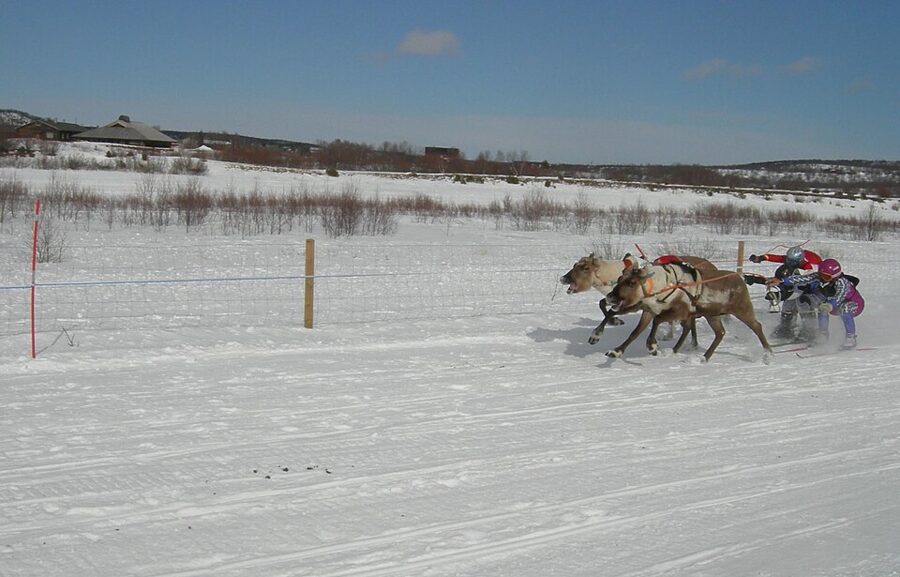

Back to that counting day. Norway’s herding year will close again on 31 March 2027, two days after the Easter festival in Kautokeino ends, with the herds still on the winter pastures around the village and about to turn for the coast. Go for the festival week, and watch the races on the river ice before you watch anything else.