

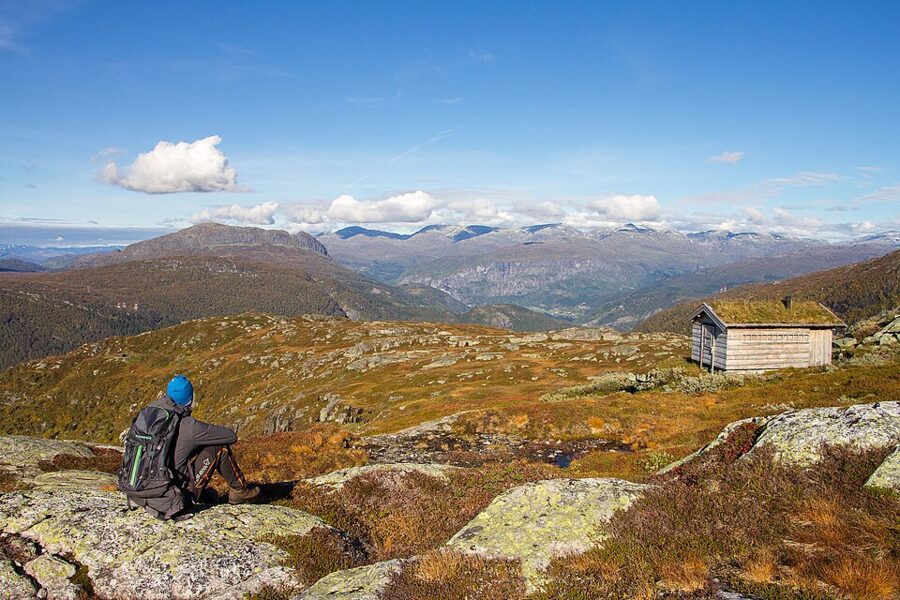

Bergen’s weather station at Florida, in the middle of the city, measured 371.3 mm of rain in September 2026, against a normal of 248 mm for the month. On 5 October it caught 89.1 mm in a single day. Then November turned dry and cold, and by the 24th only 72.3 mm had fallen, about a quarter of what the month usually brings.
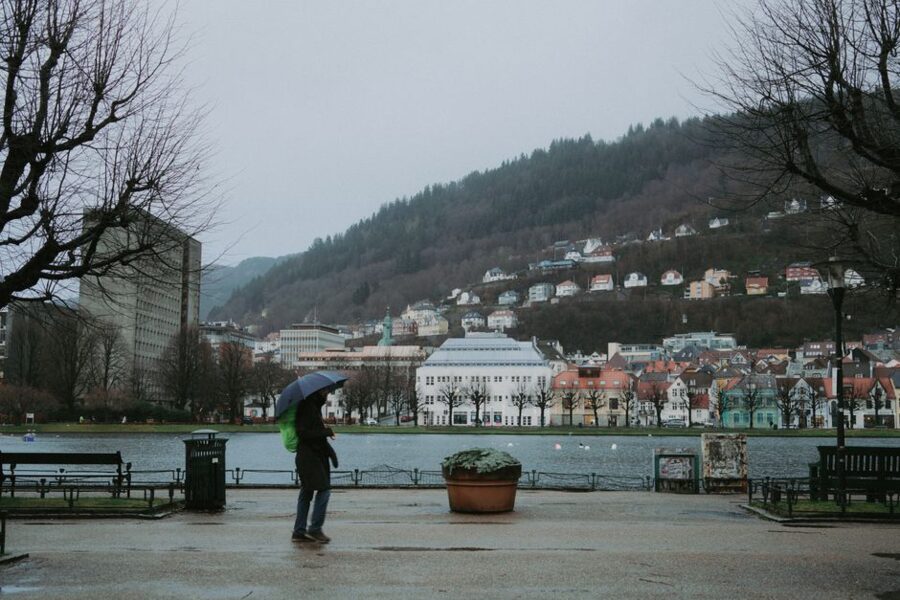
That is western Norway in autumn: three months of weather rather than one season, changing fast, with the averages hiding the swings. September still has long evenings and most of the summer services. October brings the colour, the fullest rivers and the first snow on the high ground. November is dark, quiet, often wet and now and then beautifully clear, while the mountain roads close one by one.
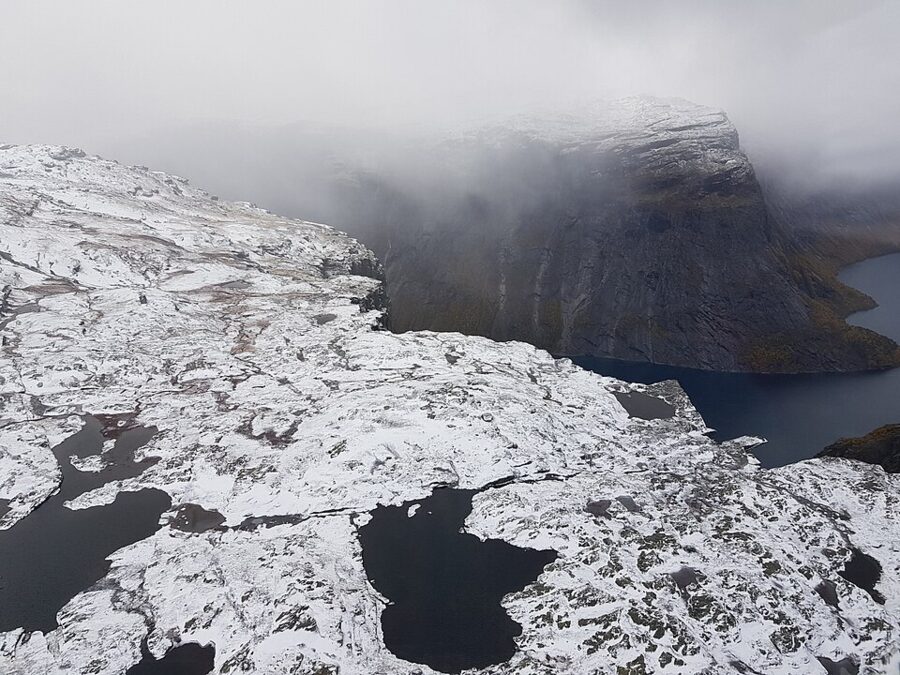
It suits you if you want the fjords without the summer crowds, can move a day around the forecast, and are happy to see the famous cliffs at a guide’s pace or from the water. It does not suit a fixed itinerary built around one summit photo on one particular day. The wider choices, which region, which month, which route, are part of planning a trip to Norway; the west coast from Stavanger to Geiranger between September and November has rules of its own.


Contents 9 parts
- 01What the weather does from September to November
- 02Colour, quiet fjords and full rivers
- 03Preikestolen, Kjerag and Trolltunga after the summer
- 04Mountain roads that close for winter
- 05Ferries, the Flåm Railway and the Bergen Line off-season
- 06Northern lights in the west
- 07Autumn food and events in Bergen, Stavanger and Hardanger
- 08What to pack
- 09A sample autumn week
What the weather does from September to November
The west coast is wet because the weather arrives straight off the North Sea and runs into mountains. Bergen’s normal year, on the 1991–2020 figures for the Florida station, brings 2,495 mm of rain, and the monthly normal climbs through the autumn: 248 mm in September, 268 mm in October, 275 mm in November. Stavanger, lower and further south, gets far less, with normals of 155 mm, 170 mm and 160 mm for the same three months.
| Bergen (Florida station) | September | October | November |
|---|---|---|---|
| Normal rainfall, 1991–2020 | 248 mm | 268 mm | 275 mm |
| Rainfall in 2025 | 206.6 mm | 231.9 mm | 321.8 mm |
| Rainfall in 2026 | 371.3 mm | 355.6 mm | 72.3 mm (1–24 Nov) |
| Normal mean temperature | 12.6 °C | 8.6 °C | 5.3 °C |
| Sunrise and sunset on the 1st, 2026 | 06:32 and 20:43 | 07:44 and 19:11 | 08:02 and 16:41 |
Read the swings, not the averages. September 2026 was half as wet again as normal and October a third wetter, while a year earlier both months came in under normal and November 2025 was the wettest month of the year, at 321.8 mm. The more useful number for planning is the count of wet days: the Florida station’s record shows rain on 23 days in September 2026 and 23 in October. Plan on roughly one dry day in four, and build the week so that the big walk can move.
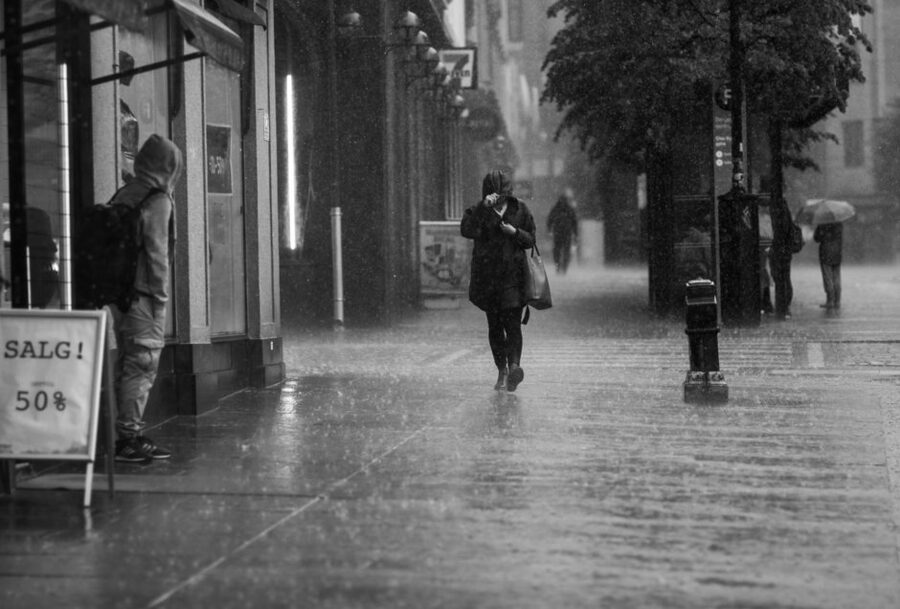
Temperatures are mild for the latitude. The normal mean falls from 12.6 °C in September to 5.3 °C in November, and Bergen’s afternoon highs averaged 15.6 °C in September 2026 and 13.5 °C in October. Frost at sea level is a November event and not a yearly certainty: on 24 November 2026, in a dry, cold spell, the Florida station dropped to −6.2 °C. The mountains are a different climate, and the company that runs the Trolltunga trail warns that snow can settle up there from mid-October, with snow showers earlier.
The light goes faster than the warmth. On 1 September the sun is up in Bergen from 06:32 to 20:43, more than fourteen hours; on 1 November, a week after the clocks go back on 25 October, it is 08:02 to 16:41. By 30 November the day runs from 09:14 to 15:39, under six and a half hours, and Stavanger, further south, gains only twenty minutes on that with 09:01 to 15:49.
Colour, quiet fjords and full rivers
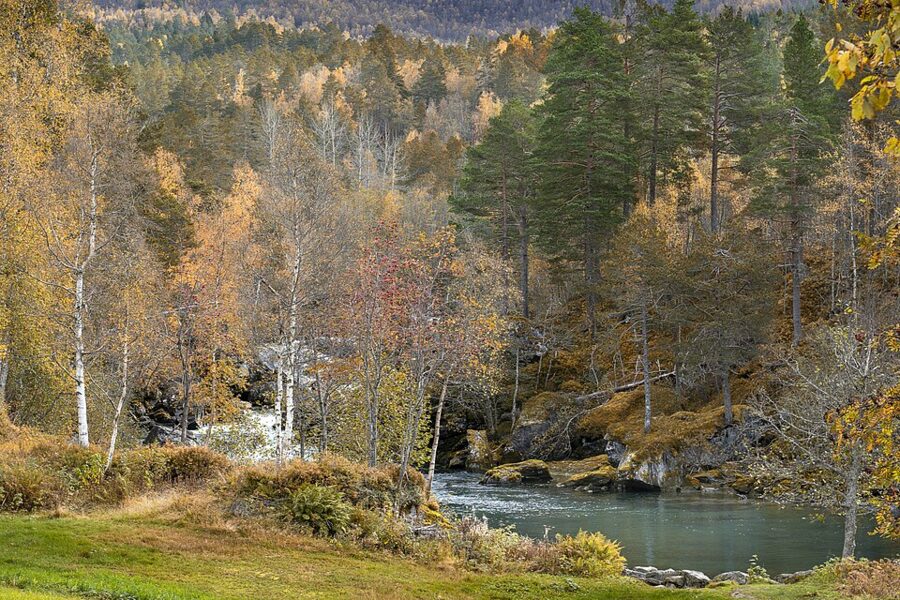
Autumn colour in the west runs downhill. The dwarf birch, bilberry and heather on the high plateaus turn red and orange first, often in the first half of September, and the yellow works down through the birch woods to the fjord villages over the following weeks. Along Hardanger and the inner Sognefjord the lower slopes are usually at their best between mid-September and mid-October. One autumn gale can strip a hillside overnight, so a good week is luck as much as timing.
The crowds leave faster than the leaves. Trolltunga’s own figures put the peak in July and August, when the wait for the photo on the rock runs to 60 or 90 minutes on a Saturday. At Preikestolen the managing foundation reports that visitor numbers from October to May are usually very low. The cruise traffic thins out as well, and the trains and fjord boats switch to their shorter winter timetables in October and November.
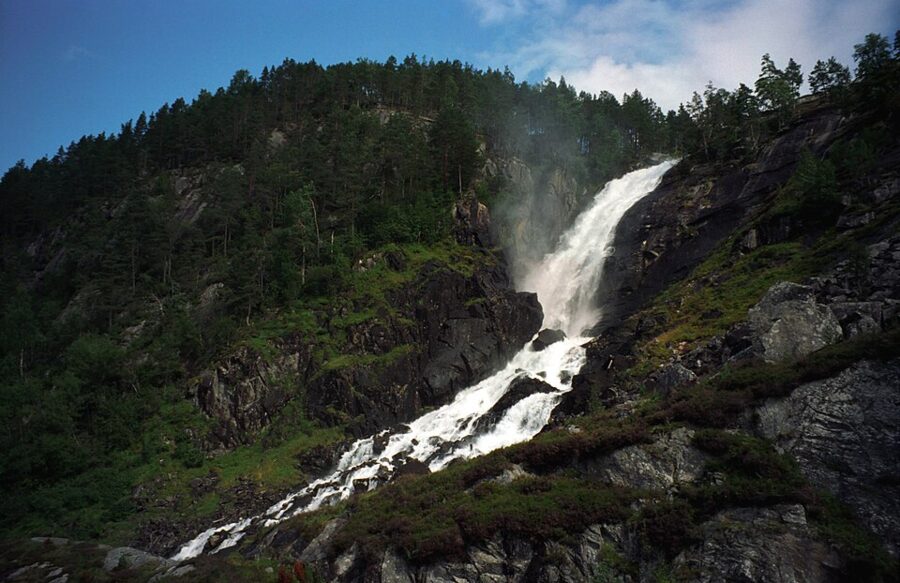
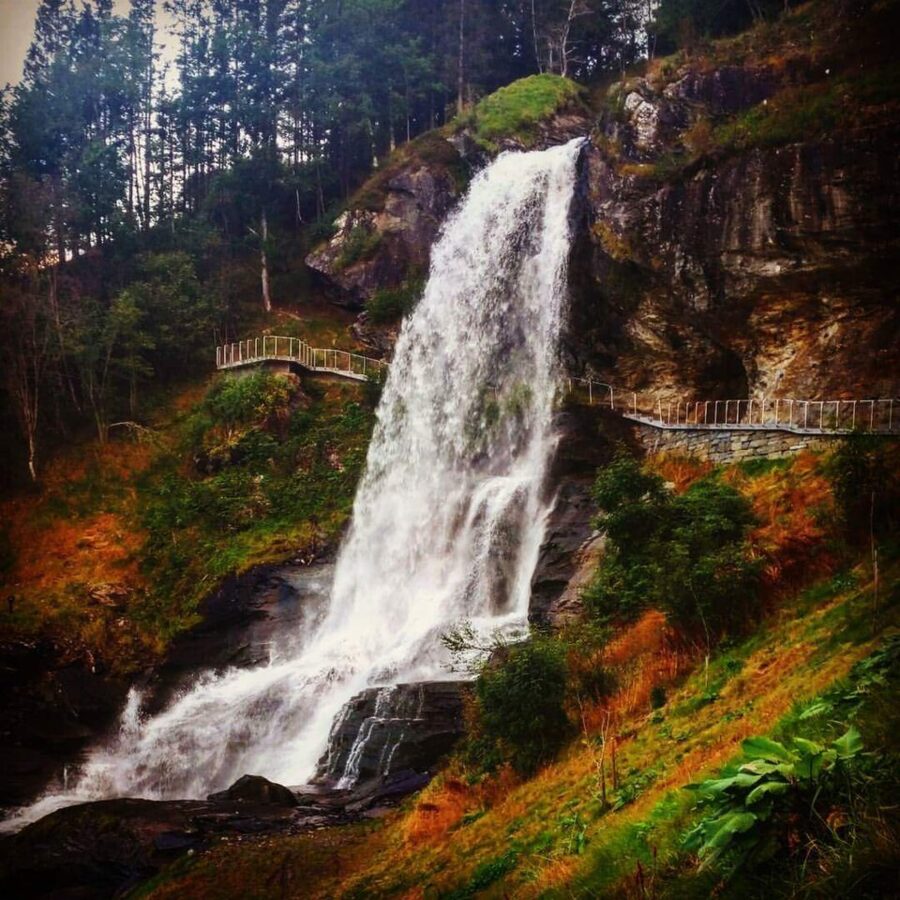
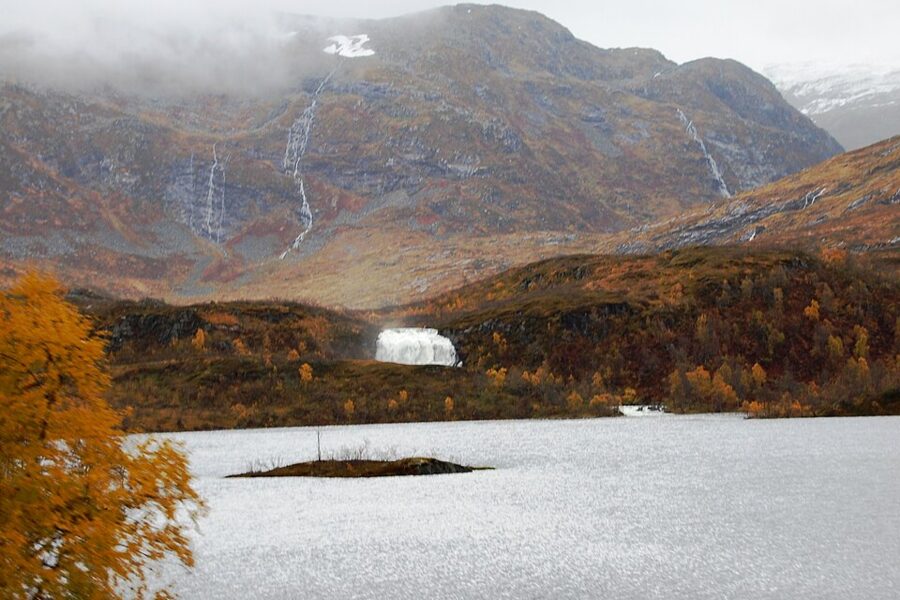
Rain has one obvious reward: water. The free-flowing rivers of Hardanger run hardest after a wet spell, and autumn has plenty of them. Låtefossen falls in two streams right beside the road south of Odda, close enough to soak a car, and at Steinsdalsfossen near Norheimsund a path runs behind the falling water. Both are on main roads, both are free, and both are better on a grey October day than on a dry one in August.

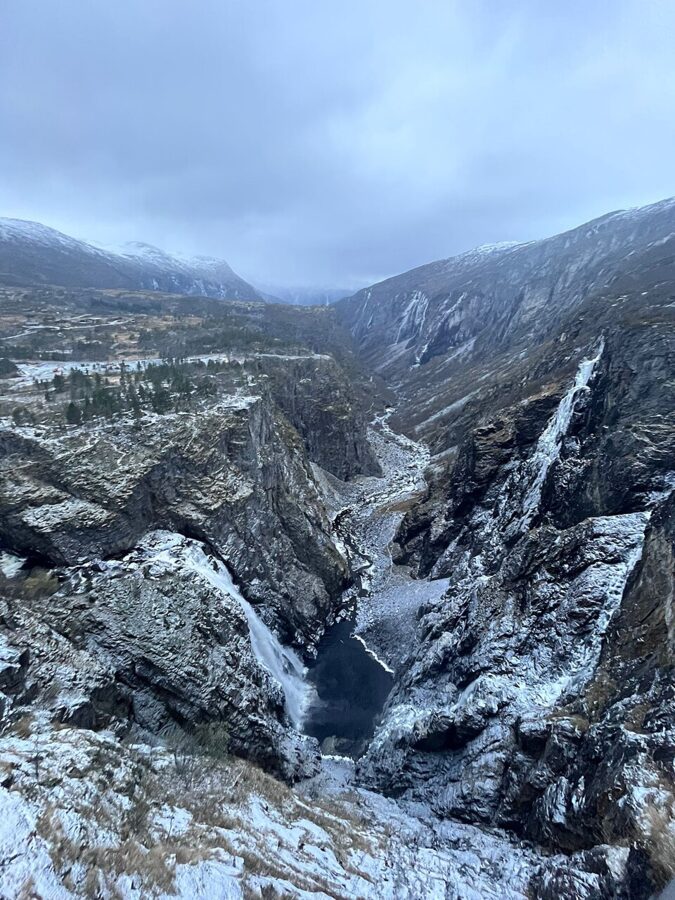
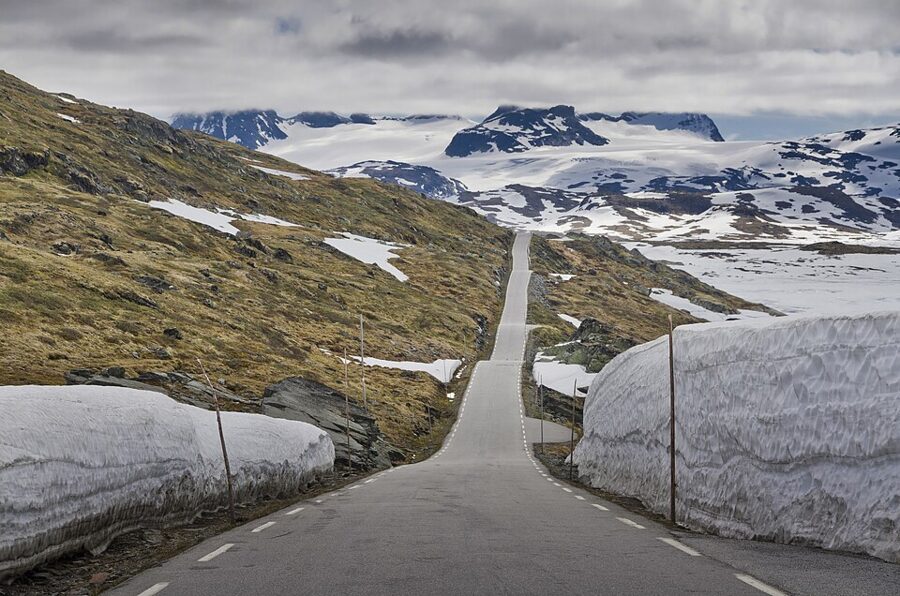
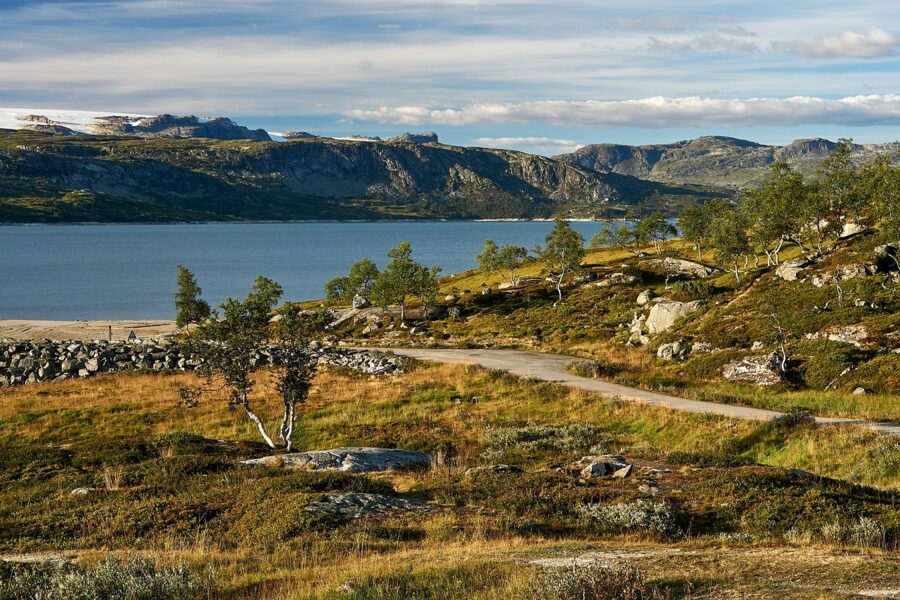
Higher up, autumn already looks like winter. On Hardangervidda, the plateau above Eidfjord, snow in October is normal rather than news, and the road past Vøringsfossen and over the plateau is one of the main east–west crossings kept open through the winter. Kept open does not mean always open: convoys and short closures in storms are part of the deal from October.

Preikestolen, Kjerag and Trolltunga after the summer
All three are on every list of Norwegian hikes, and all three carry the national quality label for scenic trails: Kjerag and Preikestolen were certified at the end of 2020, Trolltunga later. They are very different walks, though, and autumn treats them very differently. One is a realistic half day into November, one ends when its road closes, and one turns into a guided expedition from October.
Preikestolen: the realistic one
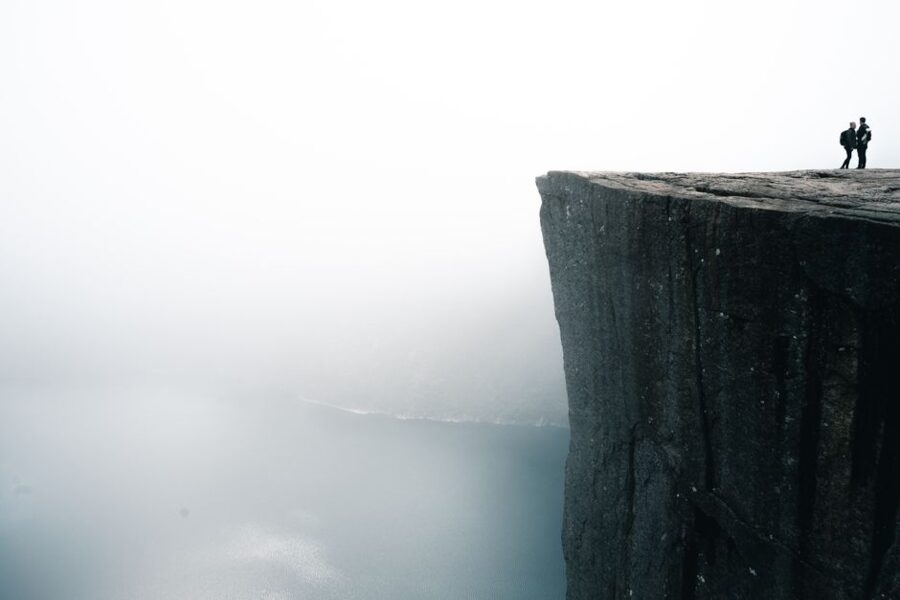
Preikestolen, the flat-topped block that stands about 600 metres above the Lysefjord east of Stavanger, is the autumn hike I would plan around. The foundation that runs the trail gives it as 8 km there and back, about four hours for most people and roughly 500 metres of climbing in total, graded moderate. It is open all year, and the foundation names September and October as popular months for colour and fewer people. The plateau at the top has no railings, which matters more on wet, windy days than on calm ones.
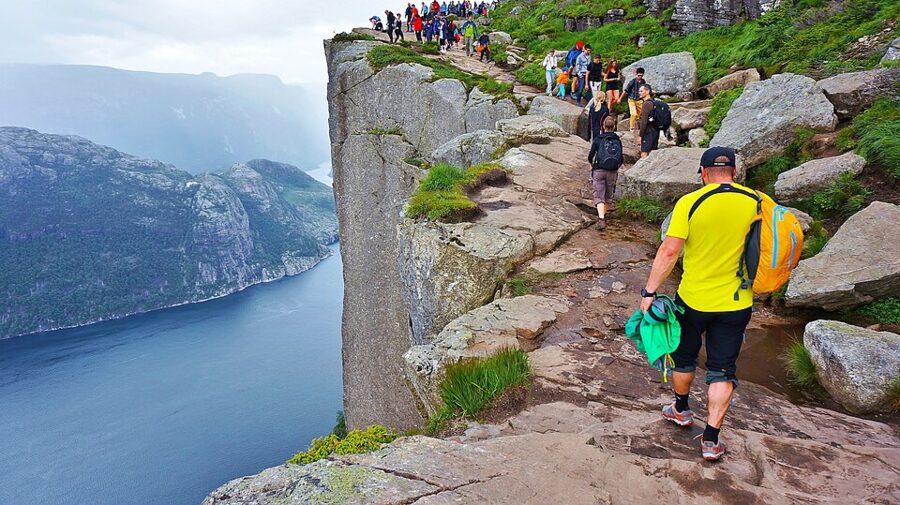

The practical changes after summer are small but real. The car park is open around the clock all year and charges NOK 275 for a car staying more than two hours; staff are on site from 09:00 to 14:00 in winter rather than 07:00 to 18:00. The direct bus from Stavanger runs in the main season, and for winter the foundation recommends a taxi. From late autumn the trail can be icy, and the outdoor shop at the trailhead rents boots and spikes all year.
Mind the clock as much as the weather. In mid-November the sun rises around 08:30 in this part of Rogaland and sets soon after 16:00, so a four-hour walk with a stop on top wants a start by 10:00. Carry a headlamp anyway; the stony steps on the way down are where tired legs slip.

Kjerag: over when the road closes
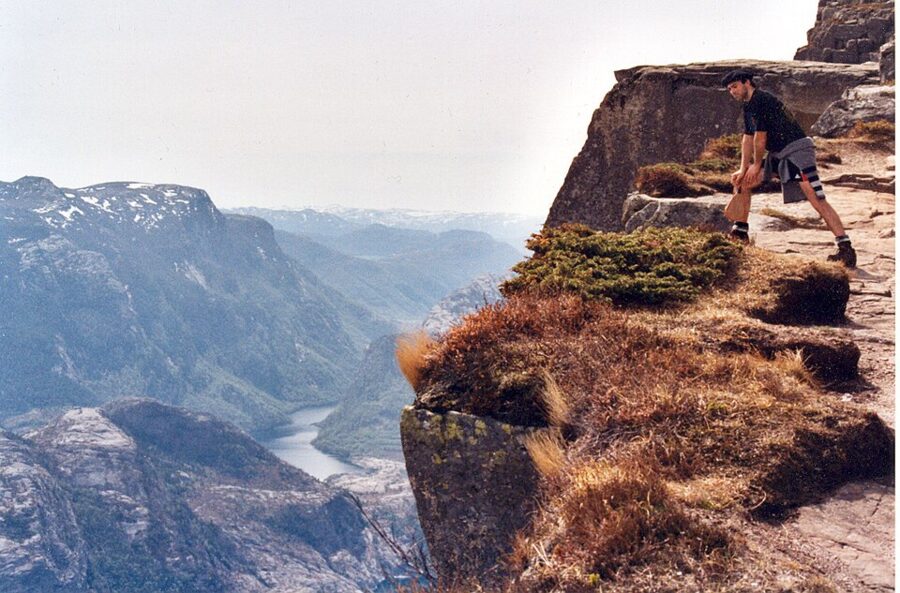
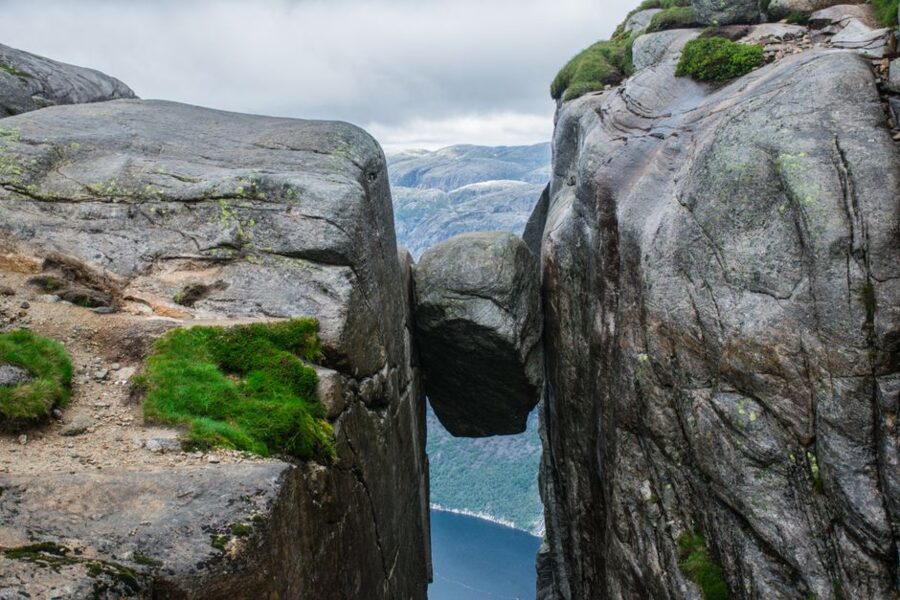
Kjerag, at the inner end of the Lysefjord, is the harder walk: about 11 km there and back with about 620 metres of climbing by the trekking association’s count over three steep climbs, several of them on bare slabs with fixed chains. The reward is Kjeragbolten, a boulder wedged in a crack roughly 1,000 metres above the water. In dry weather a fit walker manages it in a long day; in rain the slabs turn greasy, and I would not do it in the wet at all.
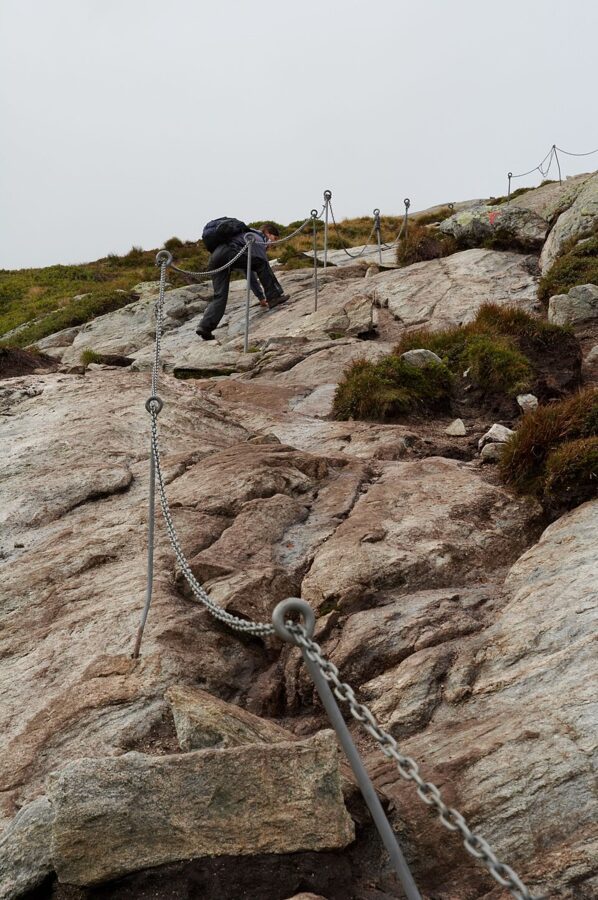

The season is short at both ends. The plateau often holds snow into June, and the walk ends for the year when snow closes Lysevegen, the mountain road that climbs from Lysebotn to the trailhead at Øygardstøl; that usually happens with the first snow in October or November. Before the closure, autumn is a fine time to go if you get a dry, calm day, but have Preikestolen as the fallback.
Trolltunga: guided from October
Trolltunga is the one autumn changes most. Trolltunga AS’s season rules are plain: from 1 June to 30 September experienced hikers may go on their own, and for the rest of the year the company recommends a guided hike, and in winter a guide only. The ledge sits at about 1,100 metres, roughly 700 metres above Ringedalsvatnet, and the walk from the main trailhead at Skjeggedal is 27 km there and back, 8 to 12 hours, graded very demanding.
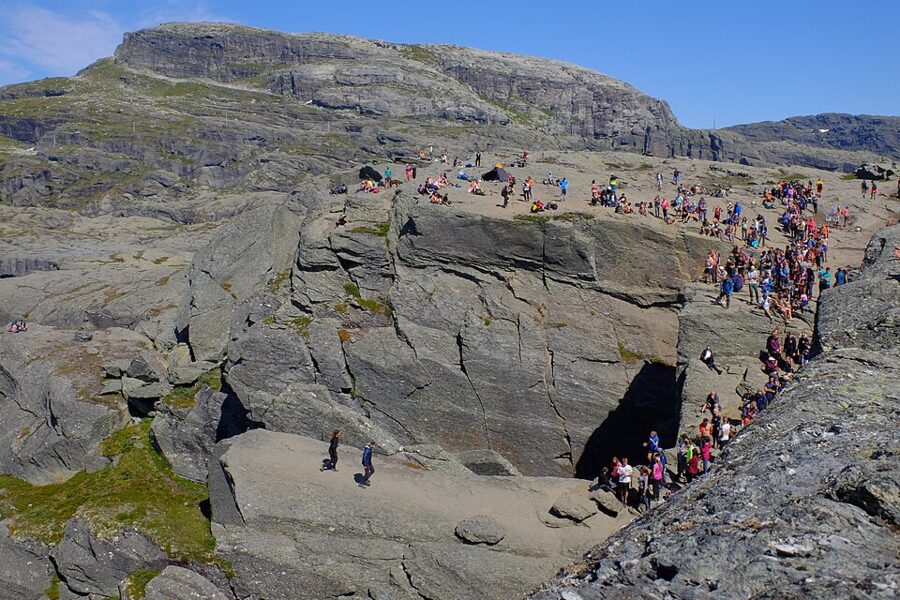

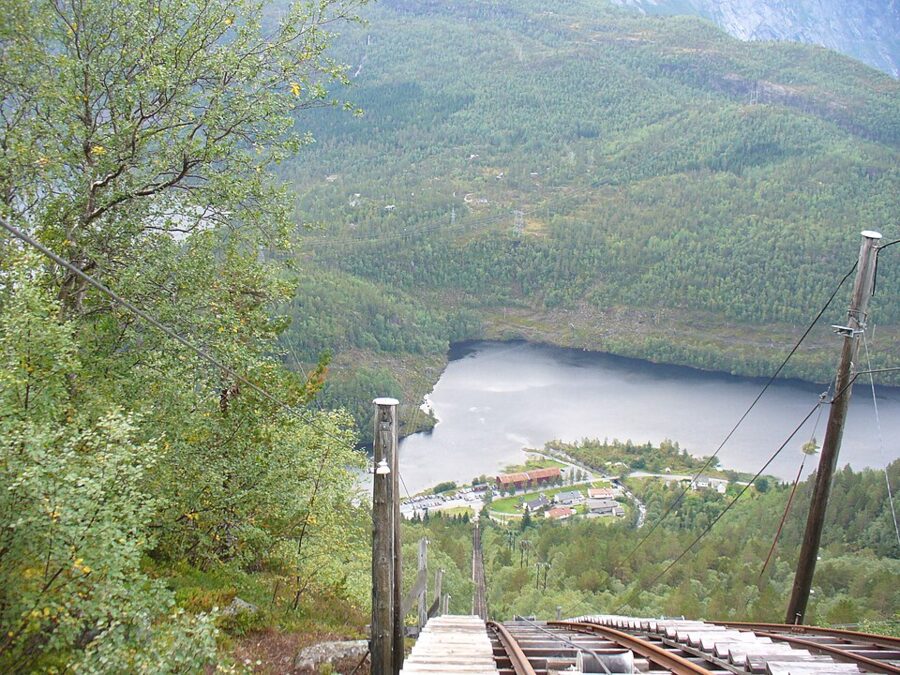
The support around the walk shrinks with the season. In 2026 the shuttle buses from Odda to Skjeggedal ran from 15 May to 27 September, and the upper car park at Mågelitopp, which cuts the walk to 20 km, was open from 8 June to 30 September. Skjeggedal stays open all year, at NOK 550 for a car for the day including the private road toll. The mountain rangers’ cabin is staffed around the clock only from about 17 May to mid-October.

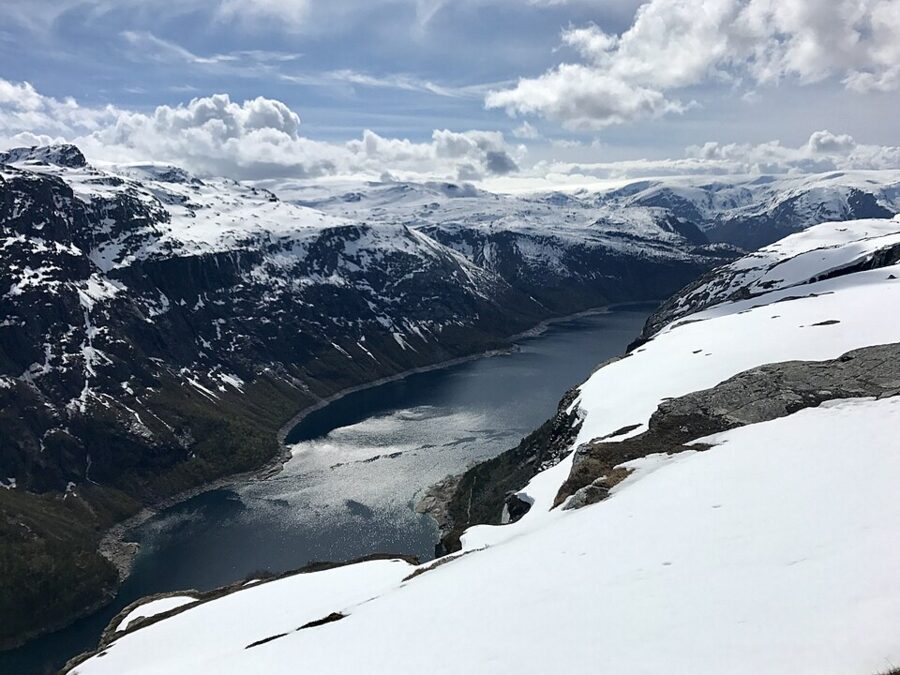

Two local companies, Trolltunga Active and Trolltunga Adventures, run the guided hikes listed by the trail company, with snowshoes and poles supplied once there is snow. If you are set on Trolltunga in October or November, book one of them and keep two days free for the weather. If you are not set on it, I would swap it for Preikestolen: a bigger crowd in summer, but in autumn a cliff, a fjord and a dry lunch in half the time.
Rescues, and why they happen
Trolltunga’s rescue history explains the rules. Visitor numbers rose from 800 in 2010 to 87,000 in 2018, 86 per cent of them from abroad by 2024, and in 2016 there were 42 rescue operations. Many walkers were poorly dressed, carried too little food and water, and ended up exhausted on the long walk back. Emergency shelters went up in 2016, mountain rangers started in 2017, and a third shelter opened near the rock in 2023; the company reports that rescues have dropped sharply, with a sprained ankle now the commonest injury.
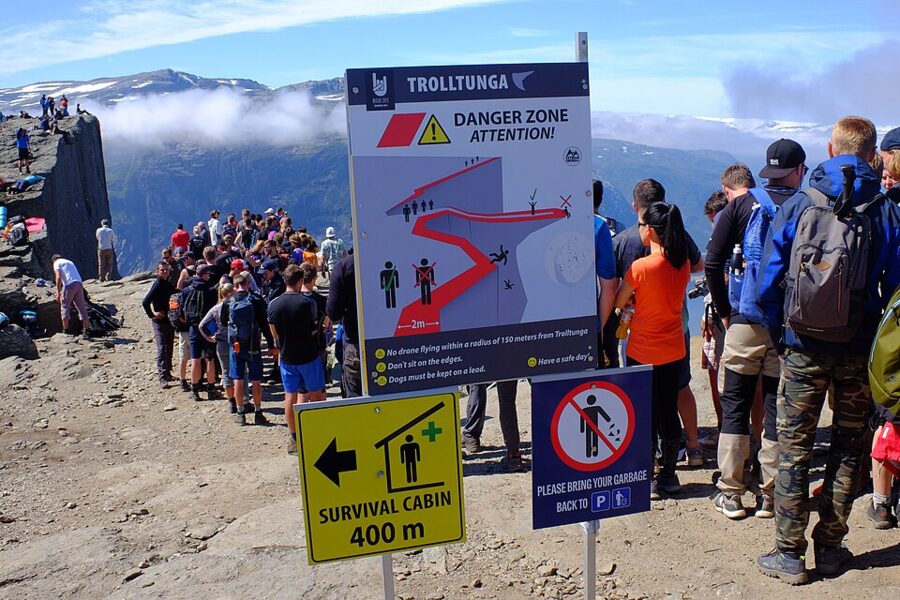

Autumn is when the margins are thinnest. On the evening of Monday 9 September 2024, still inside the unguided season, 15 walkers who were wet and cold took refuge in one of the shelters and called for help while the rangers worked to reach them. The pattern behind many call-outs on all three hikes is familiar: a late start, a long walk back in fading light, rain or wind that was in the forecast, and clothing that stopped working once it was wet.
The trail company’s advice fits all three: never set out in strong wind, heavy rain or fog, remember that the mountain is colder than the fjord, and start early enough to be down before dark. Emergency help in Norway costs the person rescued nothing, and much of the mountain rescue work is done by volunteers.
What to wear on the hill
Dress in layers, and keep cotton off your body. Trolltunga’s packing advice is sound for any of the three: wool next to the skin, a warm middle layer of wool, fleece or a synthetic jacket (down loses its warmth once wet), and a fully waterproof, windproof shell on top. Add a hat and gloves even in September, spare dry layers in a bag, more food than you think, and something to eat every couple of hours.
For nights out, the season has moved on too. Most staffed DNT lodges close by the second weekend of September, with only a handful open through the autumn school holidays in weeks 40 and 41. After that the self-service huts and the rules for camping in Scandinavia apply, and a tent at 1,000 metres in October is a winter camp.
Mountain roads that close for winter
The high scenic roads of the west are summer roads. Each Norwegian Scenic Route page lists the earliest and latest dates on which its mountain stretch has closed and opened in past seasons, and those ranges are the best planning guide there is. None of them has a fixed date: the snow decides, and in autumn a road can shut for a storm, reopen, and shut again for the winter a week later.
| Road | Stretch closed in winter | Past winter closures began | Recent seasons |
|---|---|---|---|
| Trollstigen (Fv63) | Trollstigen | between 5 October and 7 December | Shut for weather 21 September 2025 and again 16–23 October 2025 |
| Geiranger–Langvatnet (Fv63) | Langvatnet to Geiranger | between 18 November and 9 January | Shut for weather 21 September 2025 |
| Aurlandsfjellet (Fv5627) | Kvammadal to Vardahaug | between 7 October and 6 November | Closed for winter 24 October 2026 at 18:00 |
| Sognefjellet (Fv55) | Rustasætre/Vegaskjelet to Turtagrø | between 17 November and 17 December | Closed for winter 10 December 2025; reopened 2 April 2026 |
| Gaularfjellet (Fv613) | Mel to Mjell | between 20 November and 3 January | Reopened 27 March 2026 |
Trollstigen is the most fragile. The Geiranger–Trollstigen route has closed for winter as early as 5 October, and in 2025 both ends of the road shut on 21 September ahead of a warning for heavy rain, floods and landslides, as the local paper Storfjordnytt reported. In October 2025 Trollstigen stayed shut from the 16th to the 23rd on a snow warning; the snow never came, and the road team’s leader said the weather would decide when the ordinary winter closure followed.
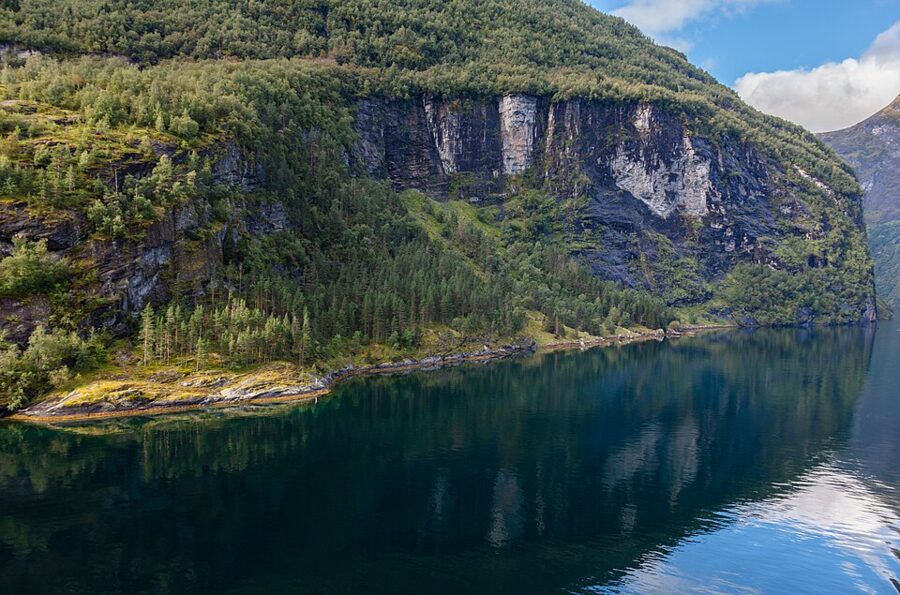

Aurlandsfjellet, the “snow road” between Aurland and Lærdal, goes early. Its route page gives past closures from 7 October, and in 2026 the mountain stretch closed at 18:00 on 24 October, with the lower sections on either side kept open until 1 November. The road up from Aurland to the Stegastein viewpoint stays open all year, so you can still stand on the platform above the Aurlandsfjord in November.
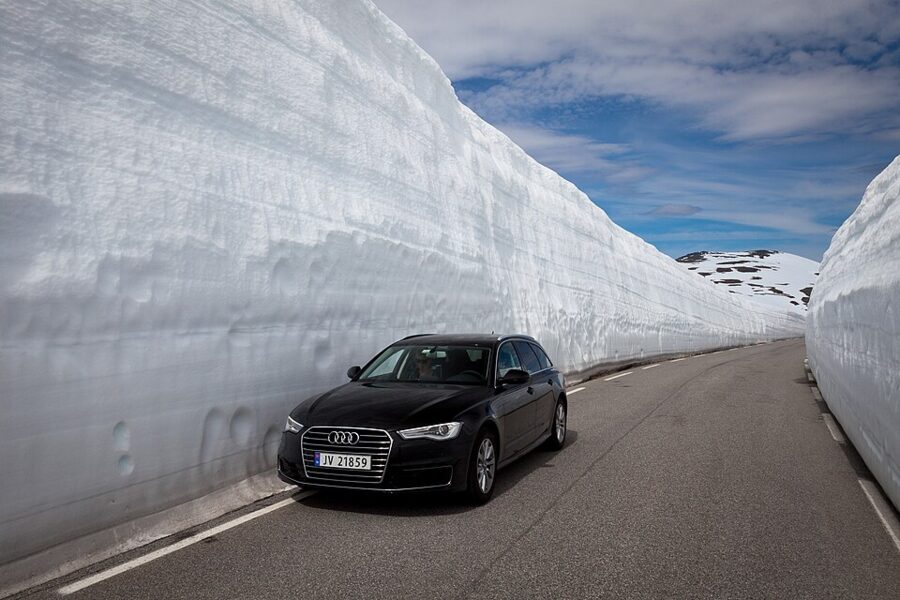



Sognefjellet and Gaularfjellet usually stay open longer. Sognefjellet, the highest mountain pass in Northern Europe at 1,434 metres, has closed between 17 November and 17 December; in 2025 Statens vegvesen closed it for the winter on 10 December. Gaularfjellet, much lower at 743 metres, has closed between late November and early January, and after a snow-poor winter Vestland county reopened it on 27 March 2026. Both can close for a night or two in any autumn storm.


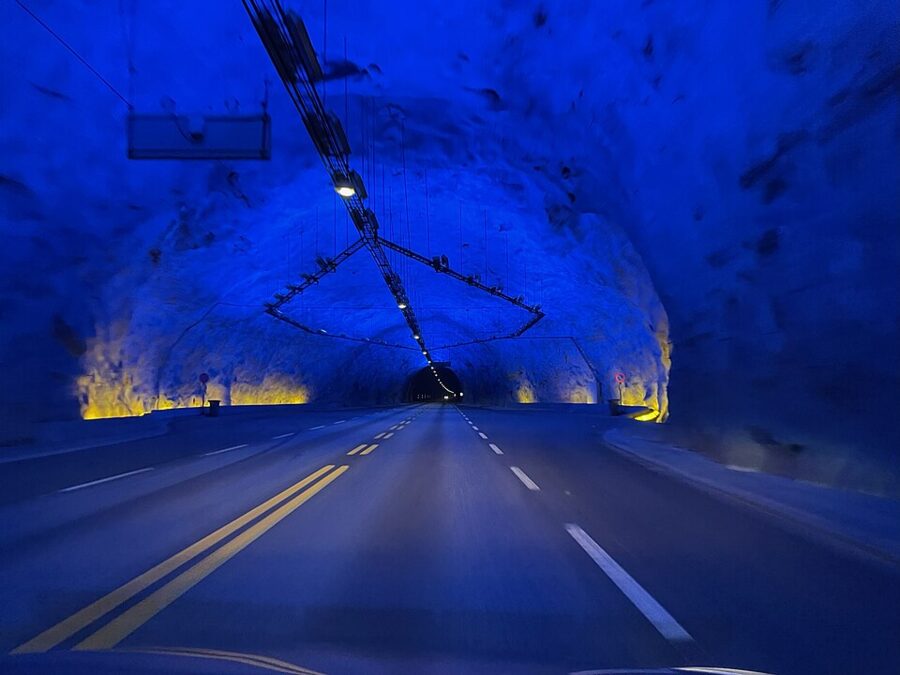
One closure in late 2026 matters more than any pass. From 18:00 on 16 November 2026, the E16 Lærdal Tunnel, at 24.5 km the longest road tunnel in the world, closes every night from 18:00 to 06:00 for an upgrade, with buses through at set times. The work is planned to run until 2030 or 2031. If you drive between Oslo and Flåm or Bergen in late 2026, be through the tunnel by evening or plan the night on the near side.

My rule for a car: in September, plan the high roads and keep a low-road alternative; in October, check the Statens vegvesen traffic map every morning; in November, assume every scenic pass on the list is shut until the map says otherwise, and drive the valleys, tunnels and ferries.
Ferries, the Flåm Railway and the Bergen Line off-season
Public transport is the easier way to see the inner fjords in autumn, because the train and the boat do not care about snow on the passes. The cost is fewer departures, and a missed connection in November can mean waiting until the next morning rather than the next hour.
The Flåm Railway
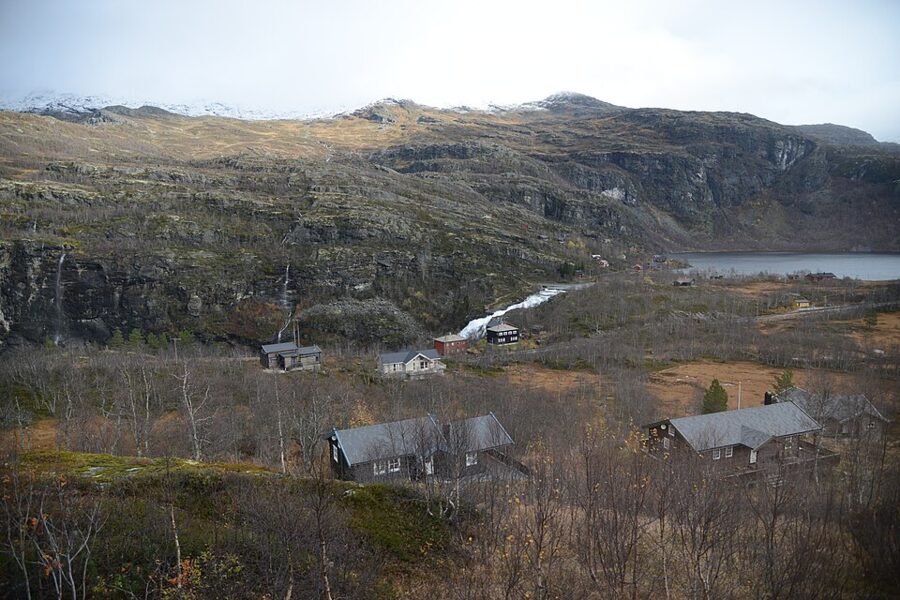
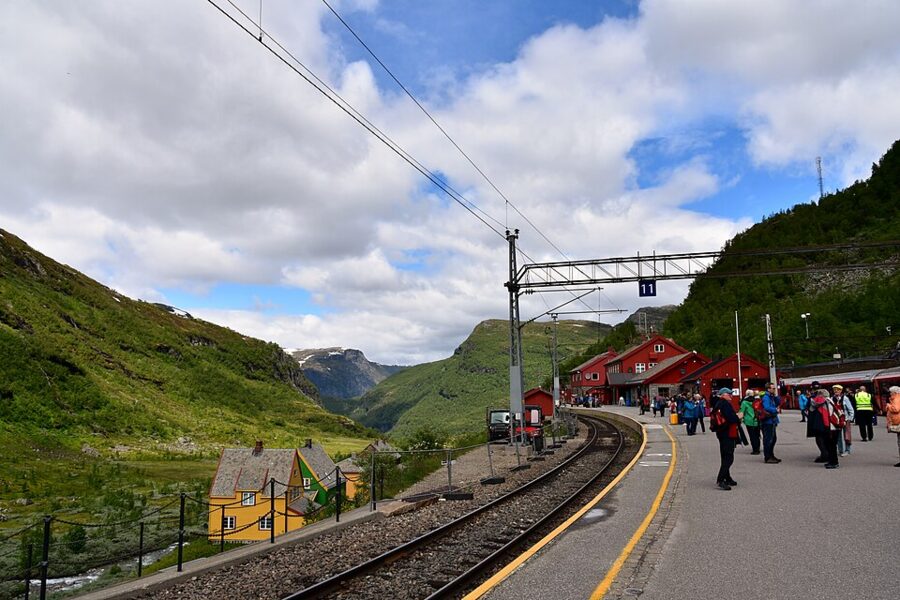
The Flåm Railway runs every day of the year, 20 km and about an hour from Myrdal, 867 metres up on the Bergen Line, down to Flåm at the head of the Aurlandsfjord, with single adult fares from NOK 399. What changes is frequency. The timetable from 1 November 2026 to 31 March 2027 has four departures a day from Flåm, at 09:00, 11:45, 14:30 and 16:50, against up to ten on summer weekdays. In late autumn the last trains run in the dark, so take one of the first two if you want to see the valley.

Boats on the Nærøyfjord and the Geirangerfjord
The fjord boat between Flåm and Gudvangen, through the Aurlandsfjord and the narrow, UNESCO-listed Nærøyfjord, takes about two hours each way on an electric vessel. Its winter timetable runs from 16 October 2026 to 31 March 2027, with two departures a day from Flåm, at 09:30 and 14:45, down from four in September and early October. In bad weather the operator can turn the sailing into a return trip from Flåm, with a bus to Gudvangen instead.
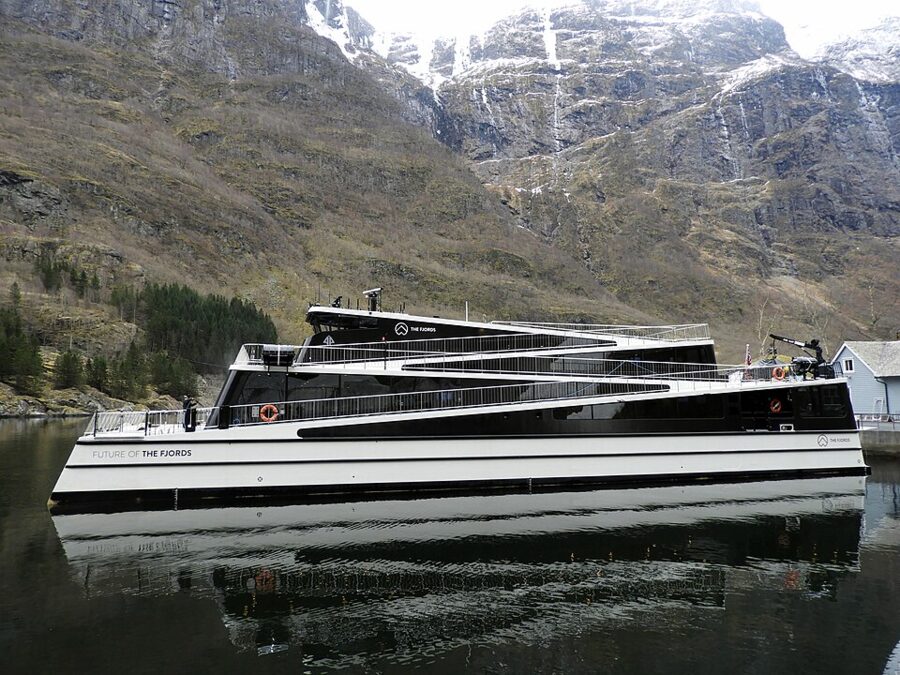

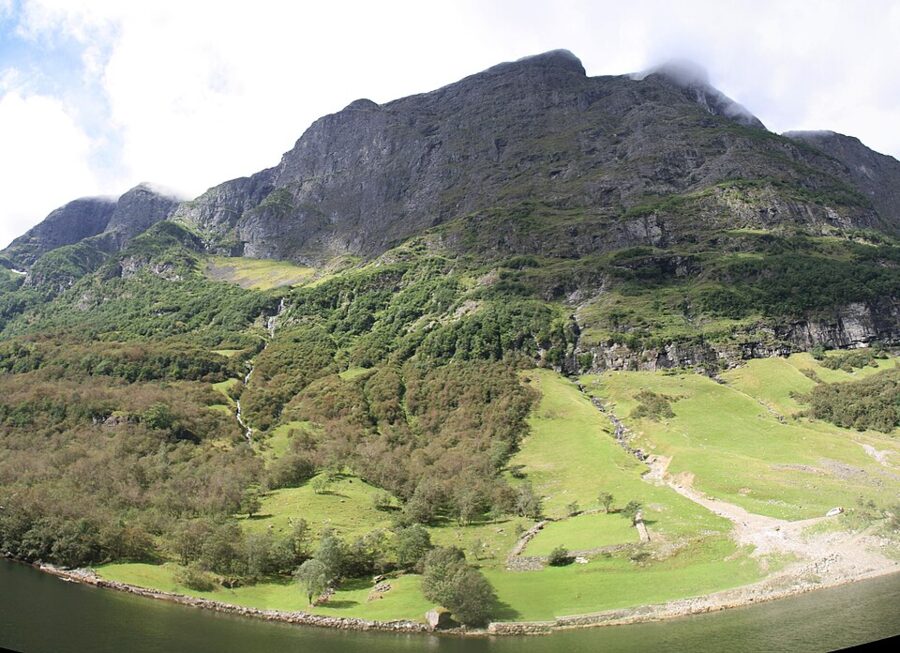

Further north, the car ferry between Geiranger and Hellesylt takes 1 hour 5 minutes past the Seven Sisters falls, run for now by the old ferries Skånevik and Ullensvang while electric replacements are built. It is a seasonal service: the next sailings on its published timetable start on 1 March 2027. In September and early October it is the best way to see the Geirangerfjord; after that, Geiranger is a road destination only, and the road out to the south has its own winter closure.
The Bergen Line
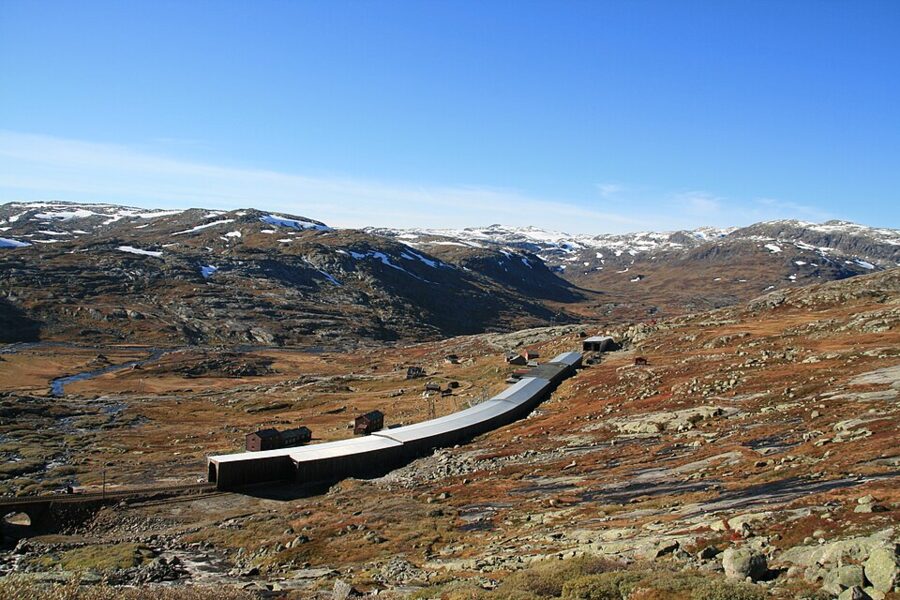
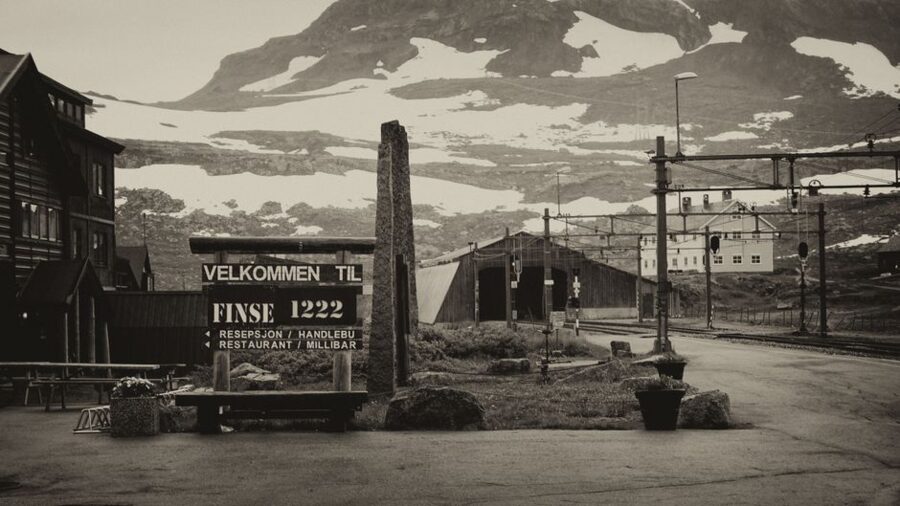
The Bergen Line between Oslo and Bergen takes six and a half to seven and a half hours over 471 km and 182 tunnels, with six or seven departures a day, including a night train. It is the one high crossing that autumn does not close: the line tops out on Hardangervidda near Finse, at 1,237 metres, where snow often arrives in October. Vy’s own advice for the dark months is to take a morning or early-afternoon train, since on Hardangervidda there is daylight only from about 09:00 to 15:00 in winter.

Northern lights in the west
Expect little here. Stavanger lies at 59 degrees north and Bergen just above 60, well south of where the aurora normally hangs, so you need a strong geomagnetic storm, a clear sky and a dark spot away from town all on the same night. The first two rarely line up on a coast that sees rain on three days in four. When they do, the display is real: on 29 October 2025 NRK reported aurora over large parts of the country after an eruption on the sun.


Photos from nights like that are long exposures, and the camera sees colour the eye often does not. If the lights are the point of the trip, go north: the best places to see the northern lights lie far beyond Bergen, under the auroral oval. If they turn up over a fjord in the west, take it as a bonus.
Autumn food and events in Bergen, Stavanger and Hardanger
Autumn is harvest time in the west, and the cities fill their calendars once the cruise season ends. A useful date to know is the Norwegian autumn school holiday, høstferie: in 2026 Bergen’s schools were off from 5 to 9 October, and that week is the busy one for cabins, the few staffed mountain lodges still open and the car parks at the big hikes.
Bergen
Bergen opens the autumn with food. In 2026 Bergen Matfestival ran from 3 to 5 September on Festplassen and Torgallmenningen in the city centre, alongside Norsk Siderfestival, a national cider festival, with cider makers from Sogn, Ryfylke and further afield pouring side by side. Seafood features heavily, which suits a city built on the fish trade.
Mid-October belongs to film. The Bergen International Film Festival, BIFF, ran from 14 to 22 October 2026, with fiction, documentaries and previews of films due in Norwegian cinemas later in the year. It is the best reason I know to be in Bergen on a wet week in October, because the whole programme is indoors.
Stavanger
Stavanger’s famous food festival, Gladmat, is a summer event, so autumn is quieter. The big September date is Kapittel, the city’s international festival of literature and free speech, run by the Sølvberget library and culture house; the 2026 edition ran from 16 to 20 September, with readings and talks in English as well as Norwegian. The rest of the autumn is the city itself: the white wooden streets of Gamle Stavanger, the harbour, and walls of street art.
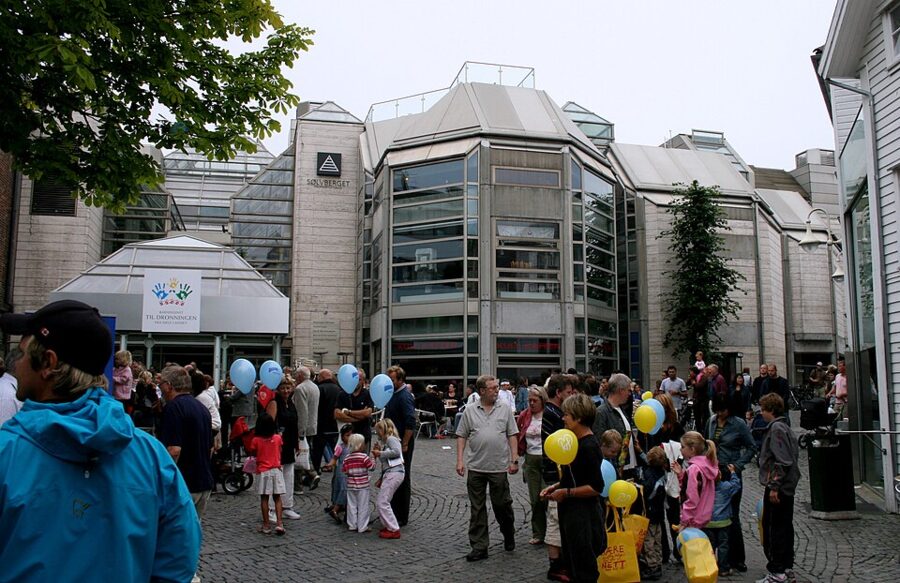

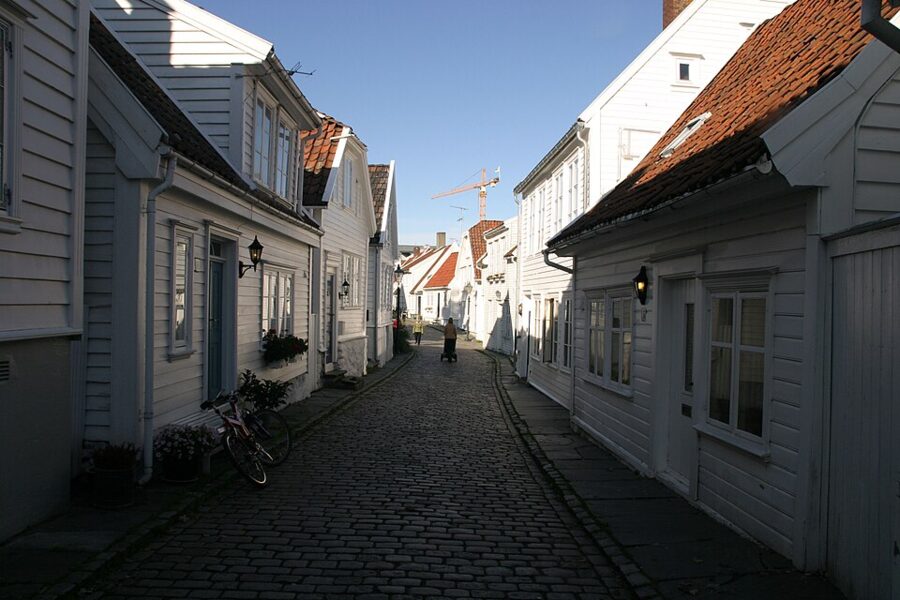

The street art needs a note. For years the Nuart festival brought international street artists to Stavanger every September and made the city the best-known street art destination in Norway. The Stavanger festival is taking a break, so do not plan a September trip around it; the murals it left across Stavanger and Sandnes are still there, and a rainy afternoon is a good time to walk between them.
Hardanger’s harvest and the cider route
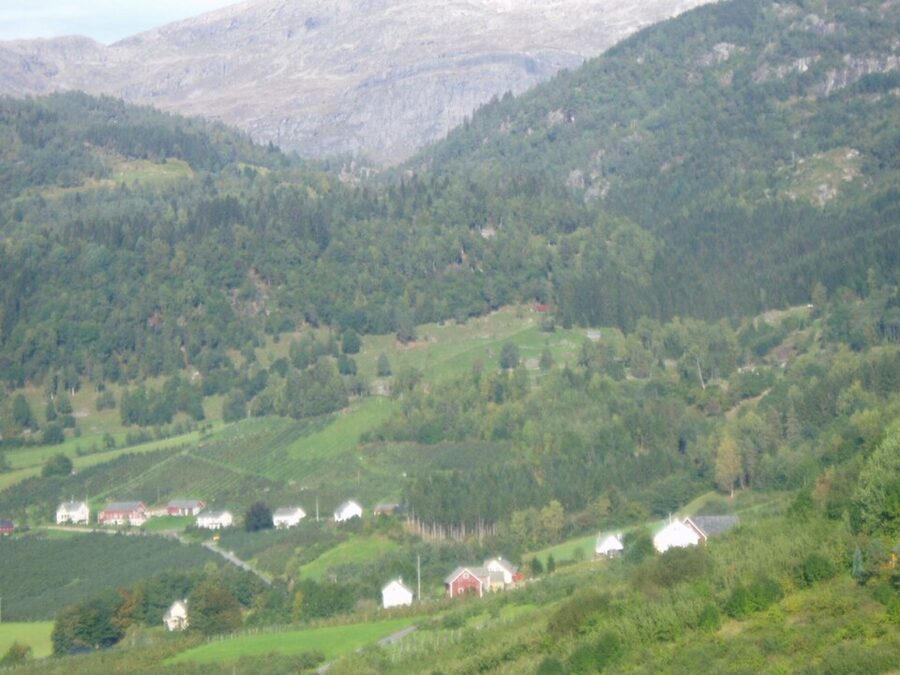
Hardanger is the fruit garden of the west, and autumn is its busy season. Monks were growing fruit along the fjord by about 1300, and today the slopes of the Sørfjord and the inner fjord arms are lined with apple, plum and pear trees. Through September and October the apples are picked, pressed and bottled, and farm stalls along the road sell fruit, juice and jam.
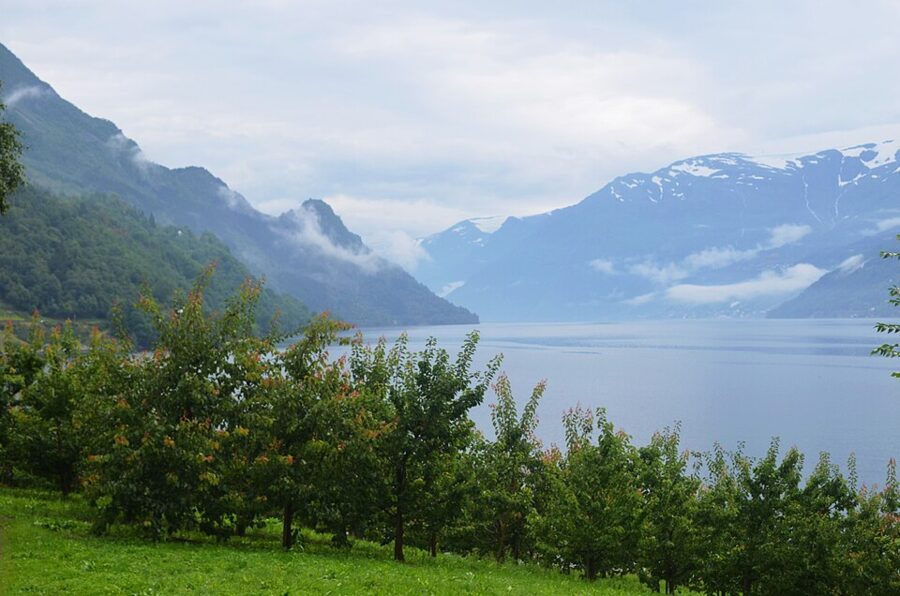

The drink to look for is Sider frå Hardanger, cider from Hardanger, which in 2009 became the first Norwegian alcoholic drink with a protected designation, in the same way as Champagne. The regional tourist board lists cider farms around the Sørfjord, in Kvam and in Ulvik, most with farm shops and tastings; in autumn many cut their hours or take groups by arrangement only, so check before you drive out.
Ulvik has the only marked fruit and cider route in Norway, linking three farms within walking distance of the village: Ulvik Frukt & Cideri, Syse Gard and Hardanger Saft- og Siderfabrikk at Lekve. The route holds two festivals a year, Siderslepp in May for the cider and Fruktslepp in October for the harvest. Nearer Stavanger, Ryfylke has grown into a cider district of its own, with farms such as Fevoll gard in Hjelmeland, where OmCider grows apples and cherries on 20,000 fruit trees.

What to pack
Pack for rain first and cold second. A Bergen October is rarely freezing, but it is wet for days at a time, and the mountain above it can be in winter while the town is not.
- A real waterproof shell, jacket and trousers. Not a showerproof windbreaker. On a fjordside path in a westerly, rain comes sideways.
- Wool base layers and a warm middle layer. Wool or synthetics keep working when damp; cotton does not.
- Hat and gloves, from September. You will not need them in town until November, but you will on any summit.
- Boots with a good grip, and spikes from late October. Wet granite and early ice are the hazard on Preikestolen and Kjerag; spikes can be rented at the Preikestolen trailhead.
- A headlamp. With sunset before 16:00 in late November, every long walk ends near dusk.
- Quick-drying shoes for town and a spare pair. Leather that stays wet for two days is a misery.
- Dry bags or a pack liner, and a small umbrella for Bergen’s streets.
A sample autumn week
This week works from mid-September to late October by public transport and car, and it puts the big walk at the end, where a spare day can absorb the weather. In November drop the boat if the winter timetable does not fit, and treat the Trolltunga day as a Hardanger day.
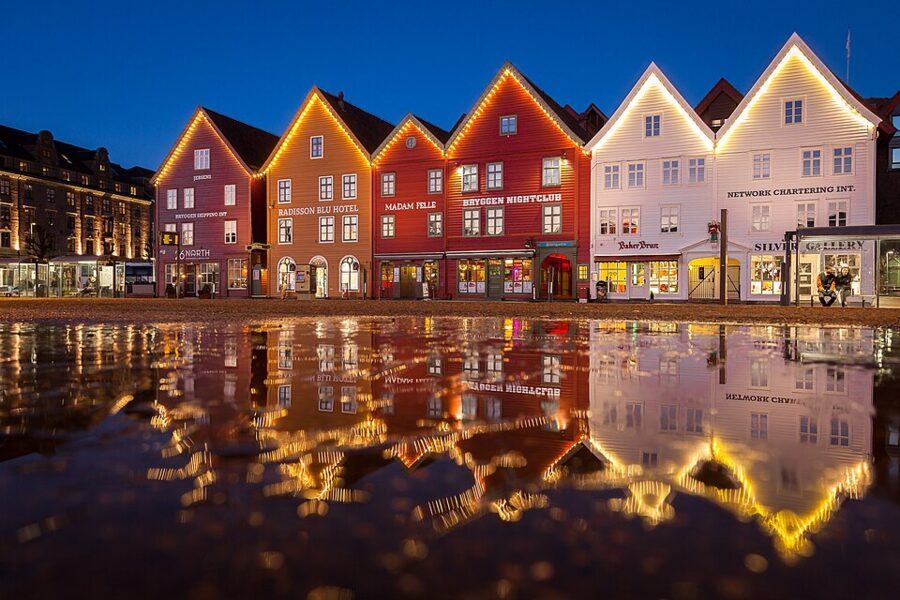
- Day 1, Bergen. Bryggen, the fish market and the town on foot. If it rains, it is a day for museums and the cinema; if it is clear, go up the hills above the city for the view.
- Day 2, Bergen Line and Flåm Railway. A morning train to Myrdal, then down the Flåm Railway to Flåm. Stay the night in Flåm rather than rushing back.
- Day 3, Nærøyfjord. The 09:30 boat to Gudvangen, then on by bus to Voss. Drive or bus on to Hardanger in the afternoon.
- Day 4, Hardanger. Ulvik and the fruit and cider route, then the Sørfjord road past the orchards at Lofthus towards Odda.
- Day 5, Odda. Trolltunga with a guide if the forecast allows, or Låtefossen and the lower walks around Odda if it does not.
- Day 6, south to Stavanger. Gamle Stavanger and the street art in the evening.
- Day 7, Preikestolen. An early start on the first dry morning, back in Stavanger for dinner. If day 7 is wet, swap it with day 6.


The 89.1 mm that fell on Bergen on 5 October 2026 would have ruined any plan that depended on that day, and it barely touched one that did not. That is the trick of the west coast in autumn: keep the walk mobile, take the train and the boat for the fjords, and let the forecast choose your hike. The Preikestolen car park is open around the clock all year; on the next dry morning in the Stavanger forecast, be on the trail by ten.