

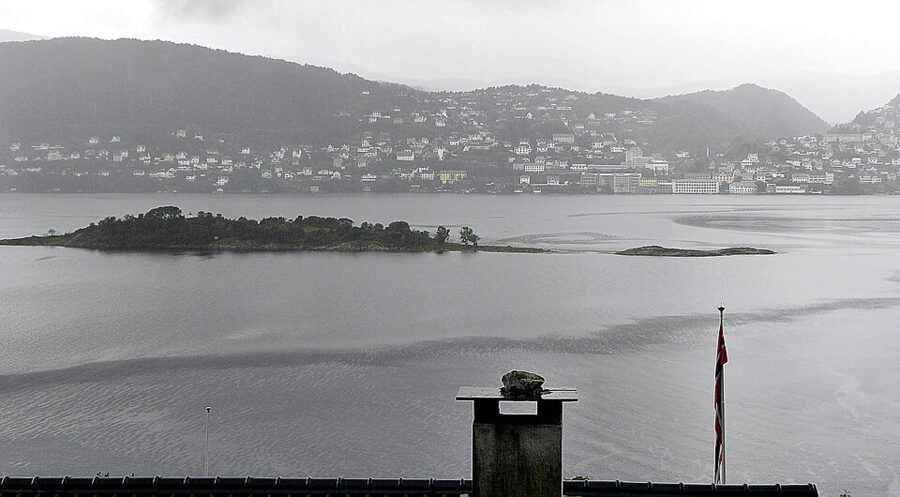

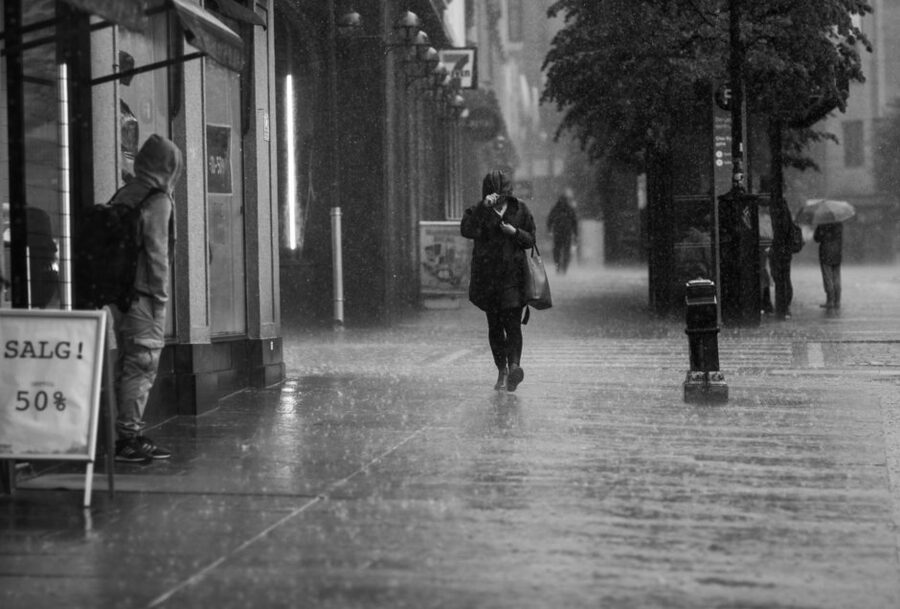
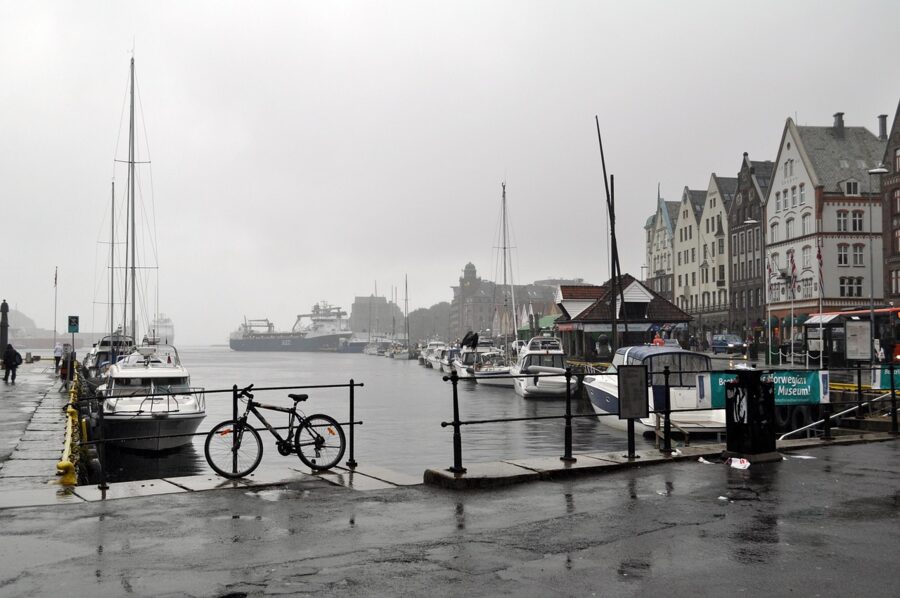
The weather station at Florida, in the middle of Bergen, records at least a millimetre of rain on about 201 days of an average year. May is the driest month, and it still manages 13 of them. If you camp on the Norwegian coast for a week in summer, plan on rain for half of it.
That is not a reason to stay home. Norwegians camp in it all summer, and a wet night in a tent is only miserable when one of five things goes wrong. In order of how often they ruin a trip:
- The site. Most wet nights start with a pitch chosen in the dry at 17:00 that is a puddle by 02:00.
- The tent. On the coast, wind is the bigger problem, and a tent that flaps all night loosens itself.
- The pitching. Fly first, inner second, every guyline out. A tent pitched slack in the rain lets water through where the fabric touches.
- The layers. Wool or synthetic next to the skin, a real shell outside, nothing cotton anywhere.
- One dry set, kept dry. A base layer, socks and a hat in a sealed bag that only comes out inside the sleeping bag.
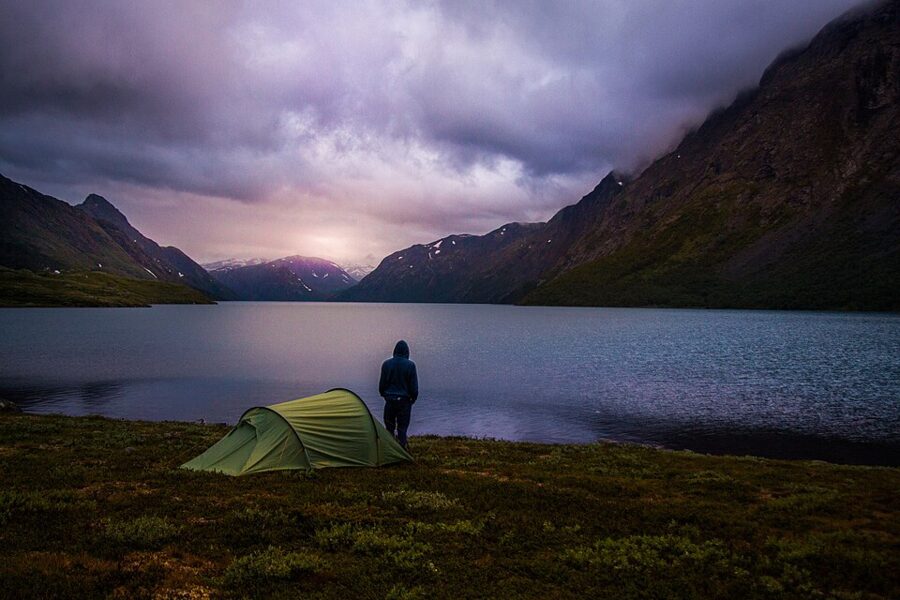

The rest is judgement: which forecast to trust, when a stream will be too high to cross by morning, when to walk to a hut. Where you may pitch at all depends on the right to roam, and camping in Scandinavia works under four slightly different versions of it.
Contents 6 parts
How wet the coast is, and when
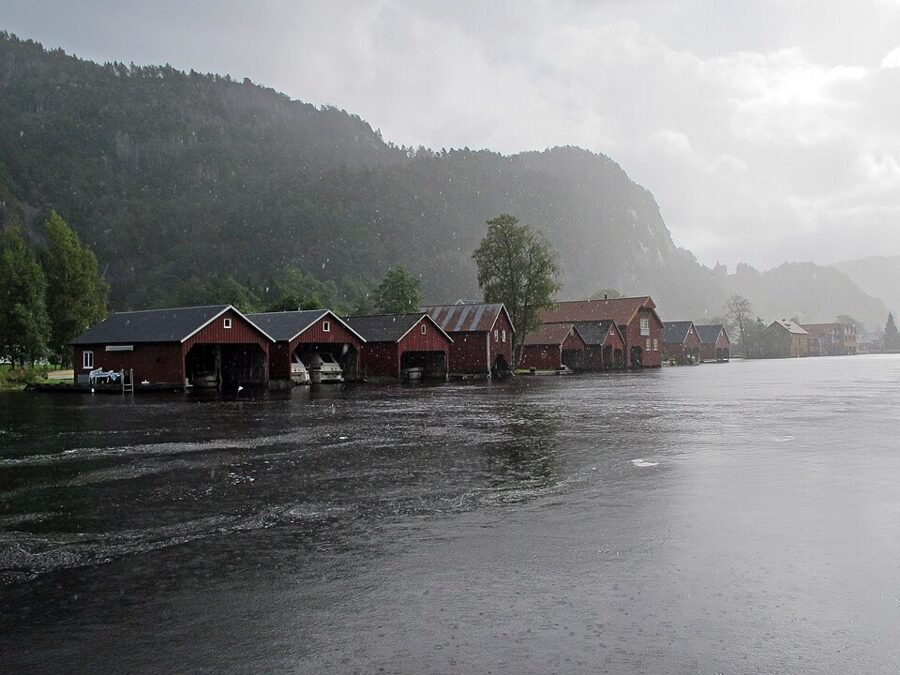
The west coast of Norway is wet because the mountains stand right behind it. Moist air comes in off the Atlantic, hits the first ridge and rises, cools and drops its water on the coast and the first mountains. That is why Bergen gets about 2,495 mm in a year and Skjåk, on the far side of the same mountains, gets less than 300.
The 1991–2020 normals for the Florida station show how the year divides:
| Month | Rain (mm) | Days with 1 mm or more |
|---|---|---|
| April | 141 | 14 |
| May | 109 | 13 |
| June | 132 | 13 |
| July | 158 | 15 |
| August | 208 | 17 |
| September | 248 | 18 |
| October | 268 | 19 |
| Year | 2,495 | 201 |
The pattern matters more than the totals. May and June are the driest months on the coast, and the rain builds steadily from July into the autumn, peaking in December at about 290 mm. A coastal camping trip in late May or June is drier than one in August, and much drier than one in October. Western Norway in autumn has its draws, but it is a season for huts more than tents.
Wind and rain together
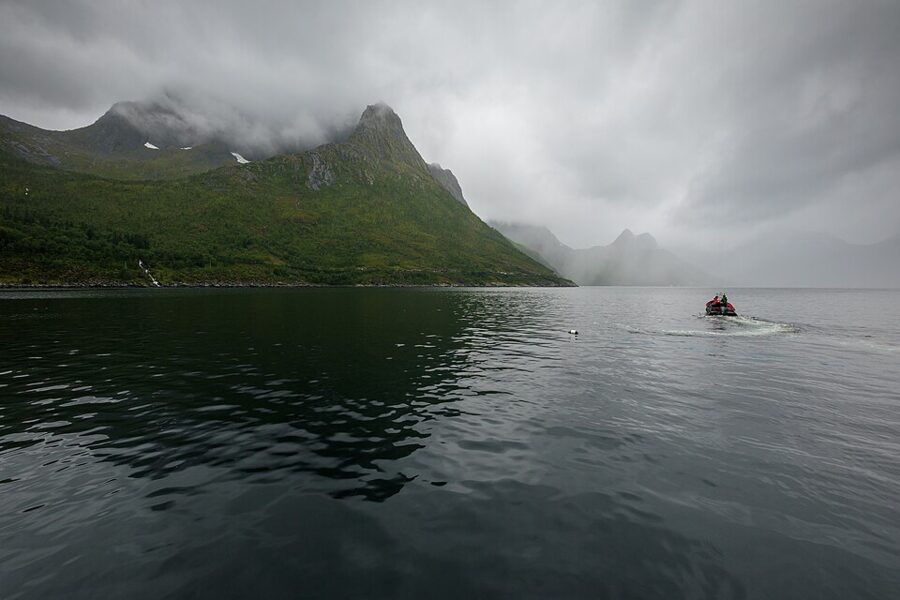
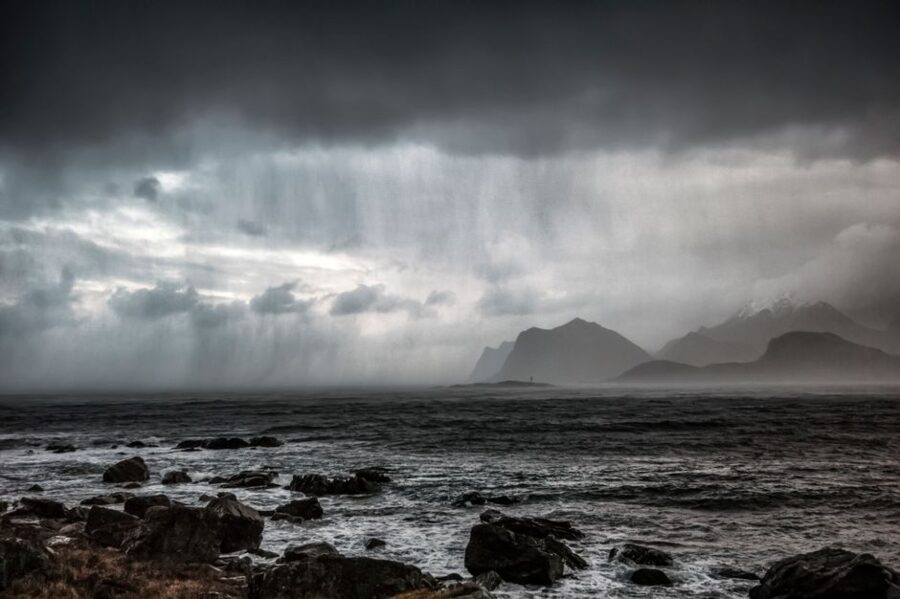
Rain alone is a nuisance; rain driven sideways is what tests a tent. Forecasts give the mean wind over ten minutes, and the gusts are always stronger. On the Norwegian coast gusts run about 1.4 times the mean wind, and over land the gap is wider, because valleys, fjords and ridges funnel the air. A forecast of 11 m/s on an exposed headland means gusts of about 15 m/s, enough to bend the poles of a cheap dome.
Those numbers set the practical limit. Below about 8 m/s mean wind, most decent tents are fine almost anywhere. Between 8 and 14 m/s, choose a sheltered pitch and guy out everything. Above that, on open coast or on a mountain plateau, I would not pitch at all and would walk to a hut or drop into the trees.

Reading yr.no
Yr, run by the Norwegian Meteorological Institute (MET) and NRK, is the forecast Norwegians actually use, and it is free in English. Its hourly table gives temperature, rain, mean wind and the gust in brackets. Three habits get more out of it:
- Read the meteorologist, not just the symbols. The symbols for each place are computed by a model; the text forecast for the county is written by a person. Yr’s own advice is to compare the two and trust the meteorologist when they disagree.
- Look at the gust figure, not the mean. The tent cares about the gust.
- Add up the rain for the night, not the symbol. A string of small hourly amounts can still add up to enough water to fill a badly chosen hollow.
Then check the warnings. MET grades them in three colours: yellow means pay attention, orange means be prepared, red means act now to protect life and property. Warnings usually come up to two days ahead and never more than five. A yellow warning for “mye regn” (heavy rain) or wind where you are heading is a reason to change the plan.
Where to pitch, and where not to
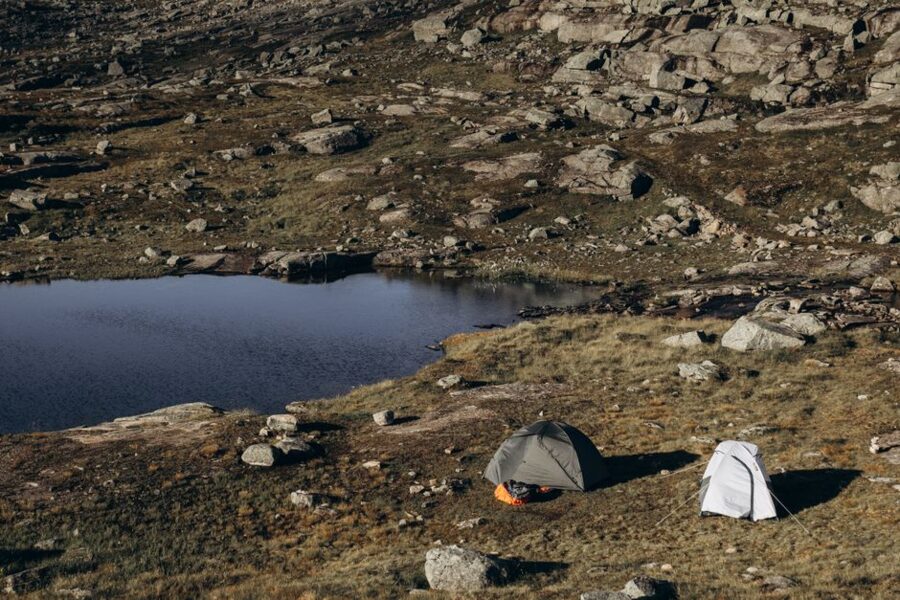
The best rain pitch is slightly raised, slightly sloping, on ground that drains, with something between you and the wind that is not directly above you. That rules out more than it sounds.
- Hollows and flat grassy bowls. They fill in the night. Bright green grass or rushes on flat ground usually means a spring or a bog.
- Directly under trees. Branches drip for hours after the rain stops, and in wind they break.
- River and stream banks. Also the flat gravel beside a river, the dry channel next to it and the floor of a narrow side valley. Mountain streams rise fast in hard rain.
- Bare rock slabs. They shed water in sheets, a tent at the edge of one sits in the runoff, and pegs will not go in.
What works is a small knoll of heather or crowberry, a bench on a hillside with a slight fall away from the door, or the lee side of a large boulder or a band of low birch. Lie down on the spot before you pitch. If you can feel the slope, put your head uphill; if water would run under you, move.
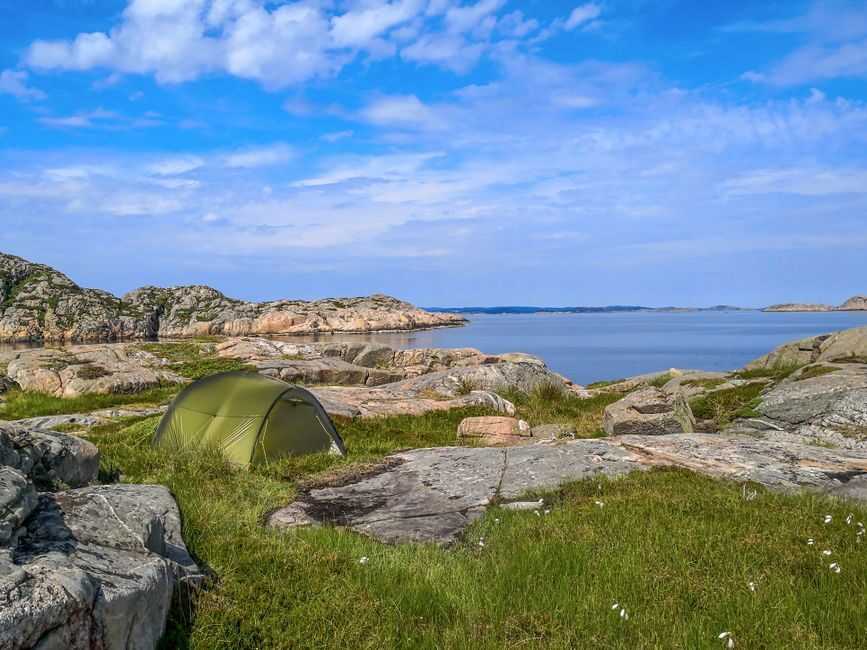
Tunnel or dome on a windy coast
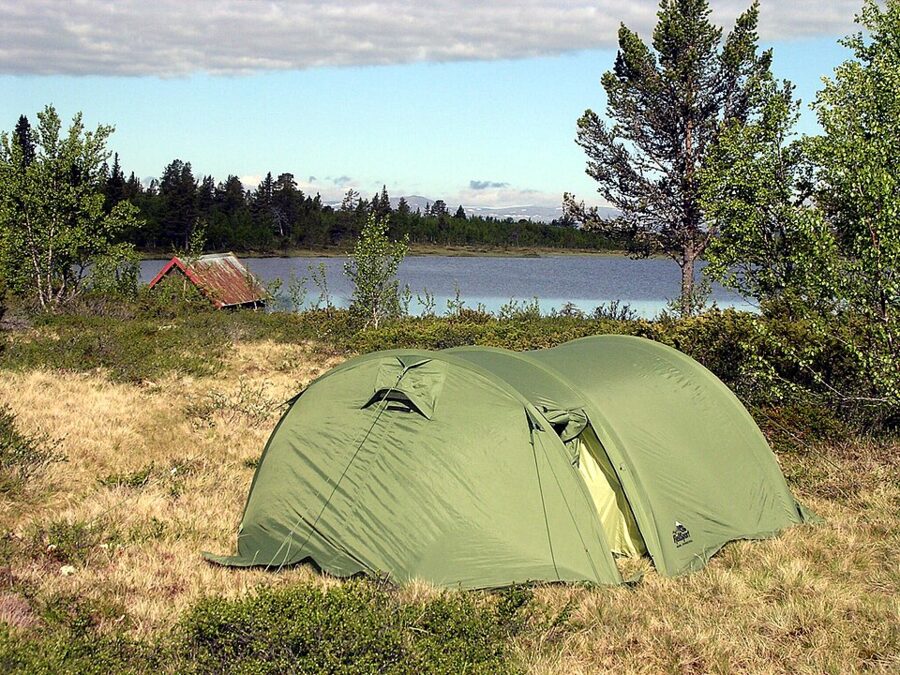
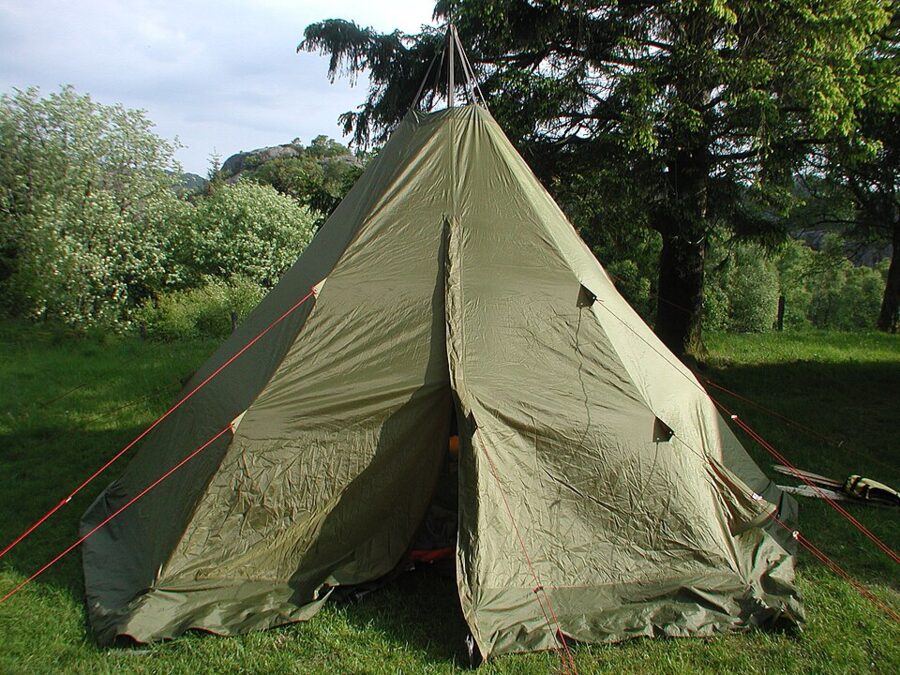
The Nordic answer to wind and rain is the tunnel tent: two or three parallel hoops, a long fly that reaches the ground all round, and an inner tent that is often attached so the whole thing goes up in one. Pitched narrow end into the wind with every guyline tight, a good tunnel stands up to very strong winds and has a porch big enough to cook in. Its weakness is a crosswind on the long side, so check the forecast wind direction before you choose the angle.
A dome, with crossing poles, stands on its own and copes with wind from any side, which helps on rock and when the wind shifts in the night. Most domes have smaller porches, and many pitch inner-first. I would take a tunnel for the coast and the open plateaus, and a dome for forest and sheltered valleys.
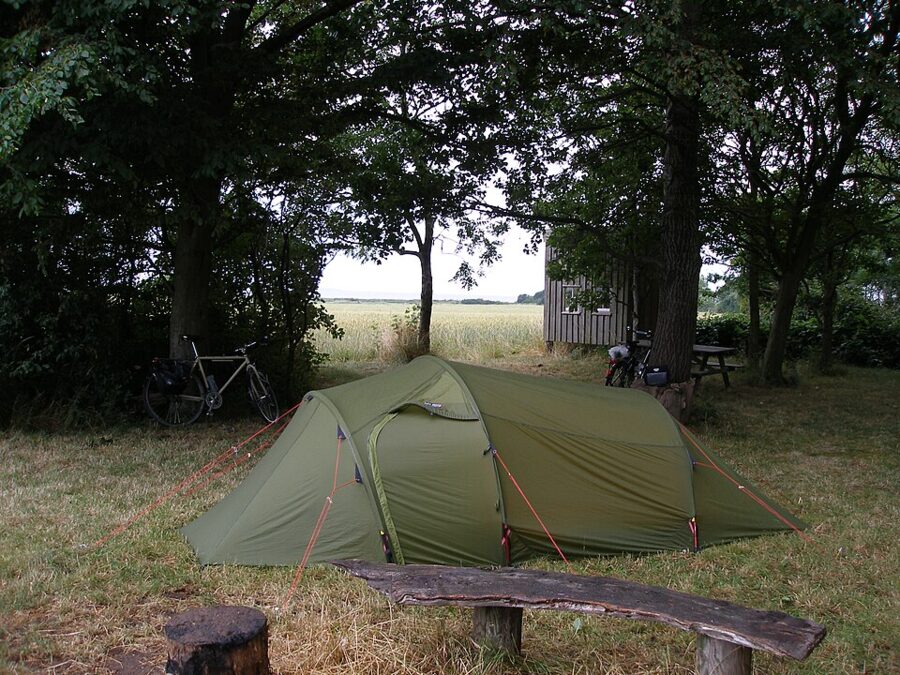

Pitching fly-first in the rain
If the inner tent goes up before the fly, it gets wet, and so does everything you put in it. Tents with the inner already clipped to the fly avoid the problem; with others, practise at home pitching the fly alone, then clipping the inner in from underneath.
In the rain: peg the windward end first, insert the poles, peg the other end, then tension and guy out. Keep the inner and the sleeping kit bagged until the fly is taut. Take wet shells off in the porch and leave them there.
Guylines and pegs
Every guyline you leave in the bag is a panel of fabric that will flap. Peg them all out at about 45 degrees to the ground, in line with the seam they pull on, and re-tension after an hour: nylon fly sheets stretch when wet and sag onto the inner. Where the soil is thin, as on most of the coast, push the peg in at an angle and lay a flat stone on top of it; in sand or peat, bury it sideways.
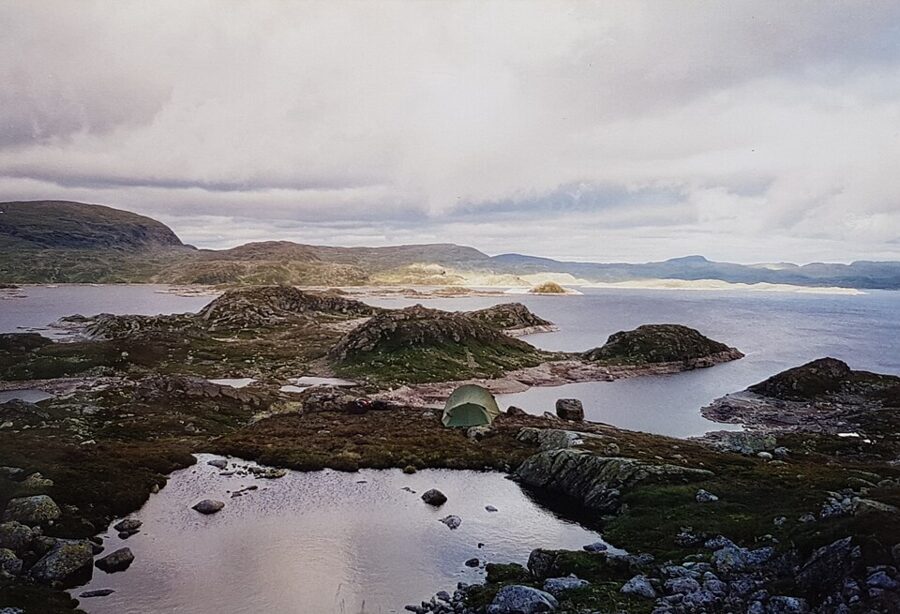

Condensation is not a leak
On a wet, still night most of the water inside a tent comes from you: your breath and your wet clothes. When the outside air is near saturation, that moisture condenses on the cold fly and drips onto the inner, and people wake up damp and blame the tent.
Ventilation is the cure, even when it feels wrong. Open the high vents, and leave the porch door open a hand’s width on the side away from the wind. Keep wet clothes out of the inner, and wipe the fly with a sponge before you pack it.
Clothing and sleeping in the wet
Norwegians dress for rain in layers that work wet. Next to the skin goes merino wool or a synthetic base layer, which keep some warmth when damp; cotton does not, and jeans are the classic mistake. Over that goes a fleece or wool sweater, and on top a waterproof, breathable shell jacket and trousers.
Rain trousers are not optional: wet heather soaks trousers from the knee down even when it is not raining. Gaiters keep water out of boots, and lined boots stay dry for a day or two of steady rain. After that, accept wet feet, change into dry socks at camp and keep the wet pair for the morning.
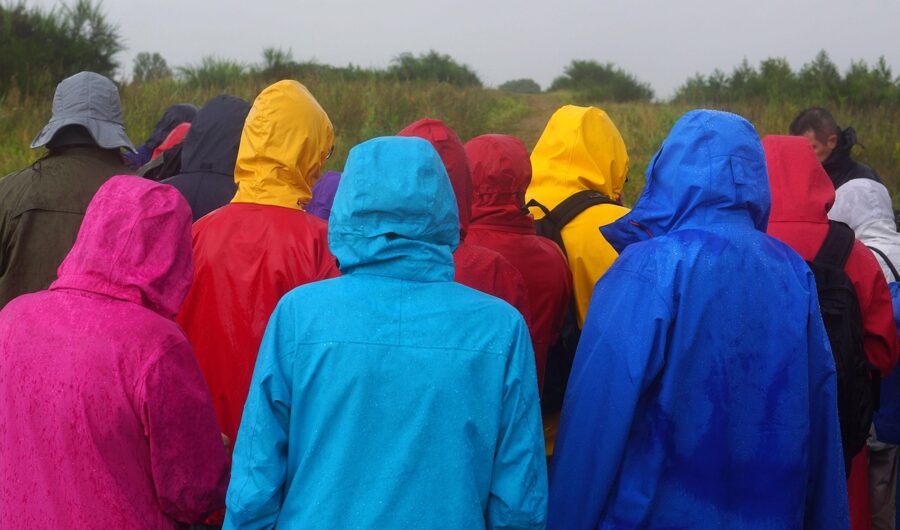
The dry set
Pack one set of base layers, wool socks and a hat in a sealed dry bag, and wear them only inside the sleeping bag. In the morning, put yesterday’s wet clothes back on, cold and clammy as they are. Ten minutes of walking warms them, and the dry set stays dry for the next night.
That is the whole point. Wear the dry set outside once and you have two wet sets.
Sleeping bag and mat
Down is warmer for its weight but loses most of its insulation when wet, and on a long wet trip it slowly takes on moisture. Synthetic fill is heavier and keeps more warmth when damp. For a week on the coast I would take synthetic, or down with a water-resistant shell and the discipline to keep it bone dry.
The mat matters as much as the bag, because cold comes up fast from saturated ground. Take an insulated inflatable, or a closed-cell foam mat under a thinner inflatable. Pack the bag in a dry bag, and line the rucksack with a heavy plastic bag too; rain covers leak at the back panel.
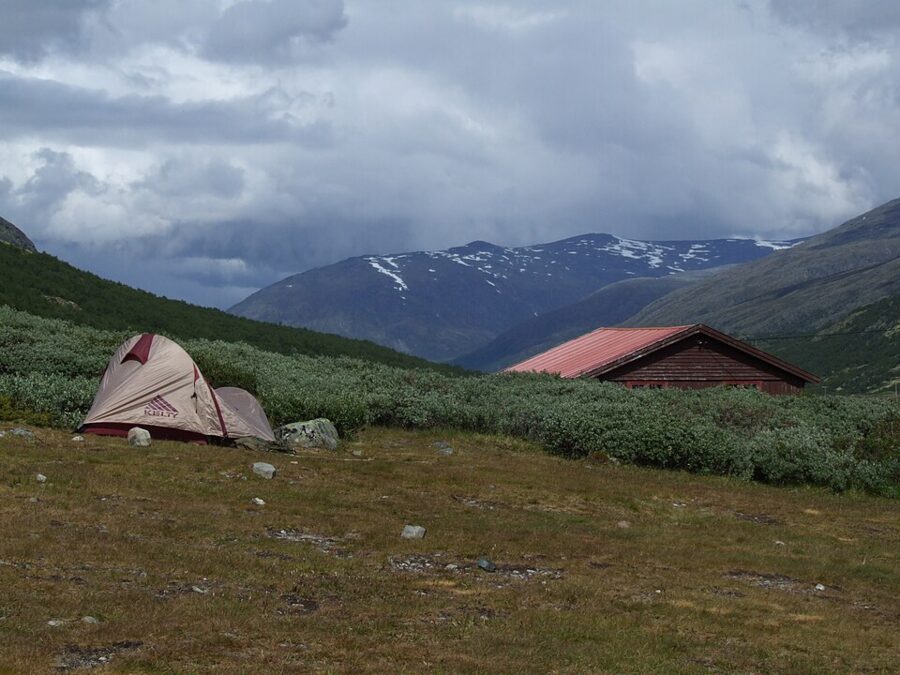

Cooking, fires and drying kit
The stove in the porch
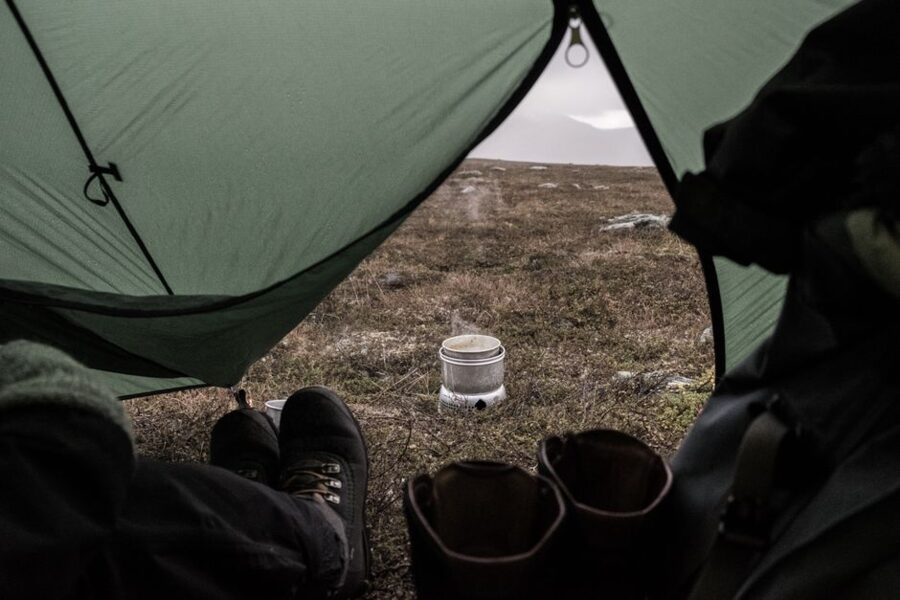
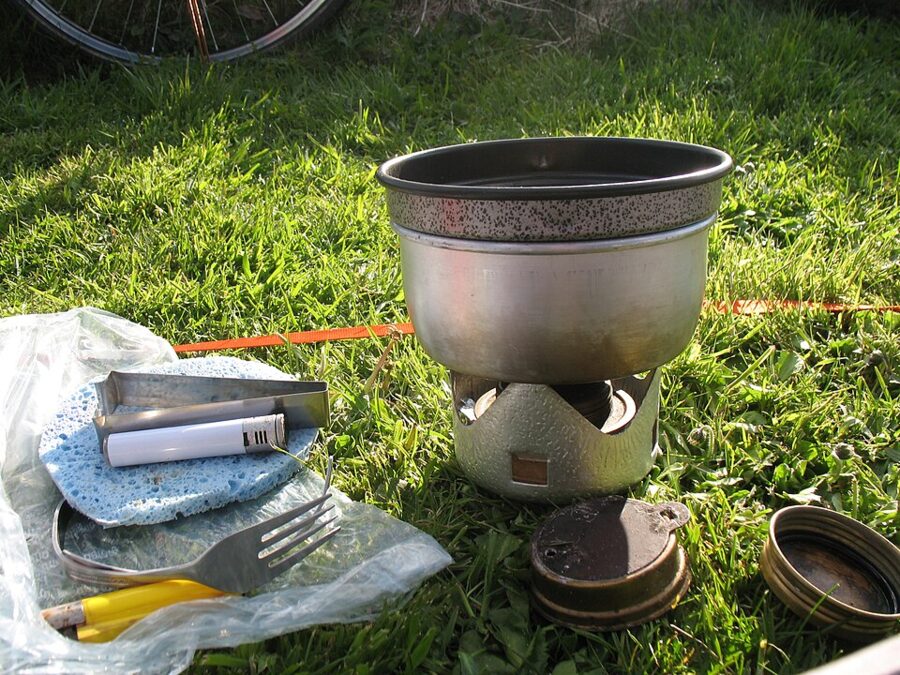
In heavy rain you will cook in the porch, as most Nordic campers do. Never cook in the inner tent. Keep the porch door partly open, set the stove on a flat stone so it cannot tip, and keep the flame well away from the fly.
The bigger danger is carbon monoxide, which a stove produces in a closed space and which has no smell. Headache, dizziness or nausea with a stove running mean turn it off and get outside. Never take a stove into the sleeping area to warm it.

Fires in the wet, and the fire ban
Rain does not lift Norway’s fire ban. Under the fire prevention regulation, lighting a fire in or near forest and other utmark (uncultivated land) is forbidden from 15 April to 15 September. The exceptions are a permit or local rule from the municipality, or a fire where it is obvious that it cannot spread.
That judgement, and the liability, is yours. A small fire on a wet shingle beach may qualify; a fire on a pine ridge two days after the rain stopped does not. The municipality can also ban fires anywhere, at any time of year.
Sweden has no fixed dates: the county administrative board or the municipality declares an eldningsförbud (fire ban) when it is dry. In Finland an open fire needs the landowner’s permission, which Metsähallitus gives in general terms on state land in Lapland, North Ostrobothnia, Kainuu and North Karelia, with many protected areas excluded. During a wildfire warning fire is forbidden almost everywhere.
Where a fire is allowed, dead spruce twigs from under the canopy stay dry, and splitting a wet log exposes dry wood. Never strip bark from a living birch. A fire is a morale boost, not a drying machine: clothes held over it scorch before they dry.
Drying kit
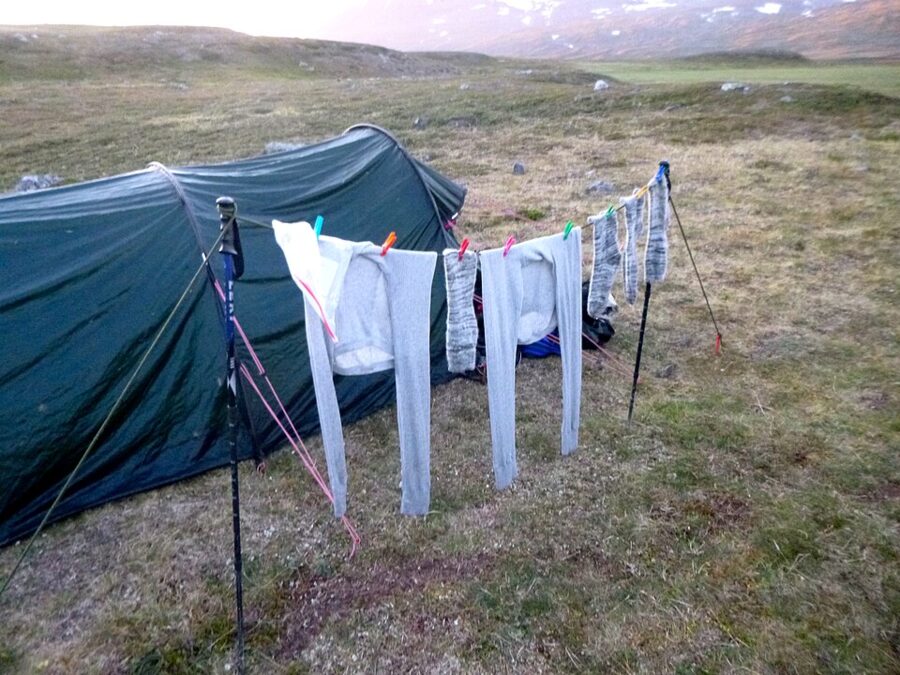
A tent in rain dries nothing. Wring out socks and hang them in the porch, and in the first dry hour put everything on a line. Socks and a thin base layer will dry overnight in the sleeping bag, at the cost of a slightly damp bag.

The real drying happens indoors. Most staffed DNT cabins have a tørkerom, a heated drying room, and DNT’s rules for tenting at its cabins let you use it: pay for a tent pitch at a staffed cabin and you may shower, dry clothes and buy dinner. Stay inside after 18:00 and you pay for a night in the cabin; at self-service and unstaffed cabins, pitch at least 150 metres away.
At Reindalseter in Tafjordfjella, a night in a tent costs NOK 100 for a DNT member and NOK 175 for a non-member, with the fireplace lounge, toilets and showers included. On a wet week, that is the best value in Norwegian camping.
Campsites do the same job lower down, with common rooms and cabins to rent when the tent is beyond saving. Shared between four, a campsite cabin is one of the cheapest roofs in the fjords, and worth building into any budget for a trip to Norway.
The lavvo and the stove
The Sámi solved the problem of drying in the rain long ago. The lávvu (lavvo in Norwegian), a cone of poles with a smoke hole at the top and a fire in the middle, has been used for more than 2,000 years in Norway, Sweden, Finland and on the Kola Peninsula, traditionally as a herder’s tent in Sámi reindeer herding. It is lower than a tipi and sheds wind better.
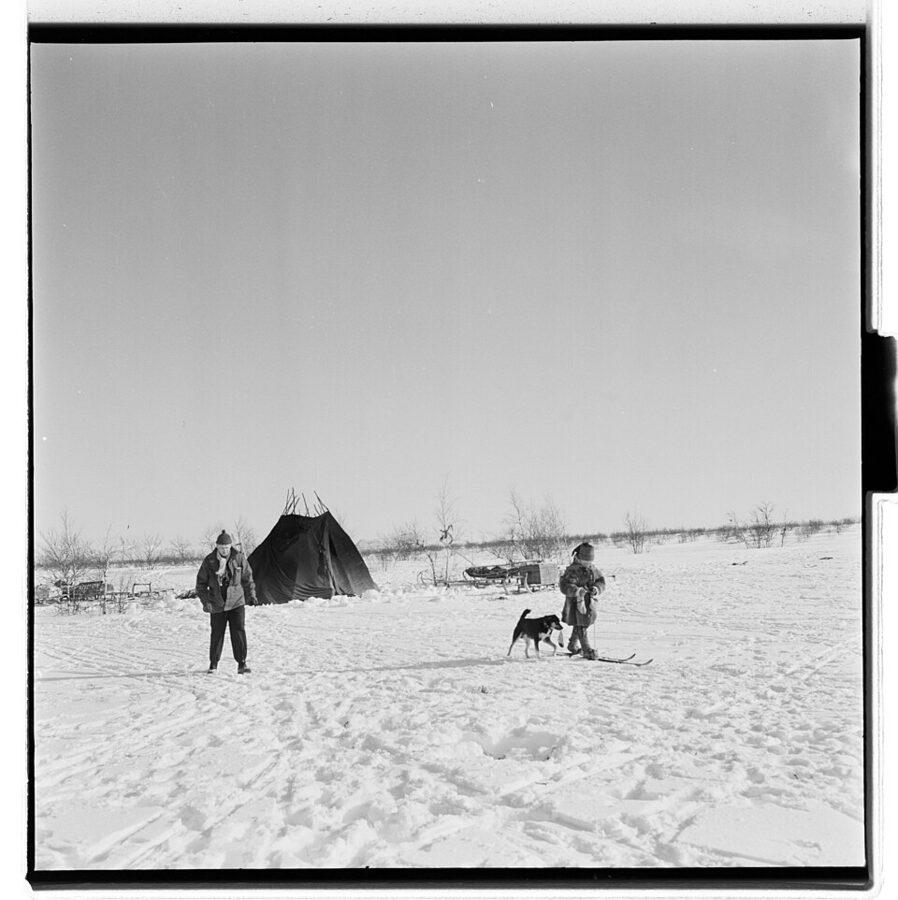

Since the 1980s, lavvos with aluminium poles and light synthetic covers have spread from Sámi use to outdoor people all over Norway, and a small wood stove inside is now normal. With the stove lit, a lavvo is one of the few tents where clothes dry overnight. It is heavy for one or two people, but for a wet base camp or a family trip it changes what rain means.

Safety: cold, rivers and slides
Hypothermia in summer
Norway’s national health portal is blunt about it: the risk of hypothermia in Norway is high all year. In summer it rarely comes from cold air alone. It comes from rain, wind and tiredness together, on a plateau at 8 °C, in clothes that stopped keeping you warm hours ago.
Helsenorge describes the stages simply. Mild: awake, cold and shivering. Moderate: drowsy or confused, and no longer shivering, which is the sign people miss. Severe: unconscious but breathing.
The first aid is to get the wet clothes off quickly, wrap the person in dry insulation with something wind- and vapour-proof outside, add warmth such as bottles of hot water (not on bare skin), get indoors if you can and call 113. With nothing dry, wrap the wind- and vapour-proof layer round them in their wet clothes.
Rising rivers and fords
Mountain rivers in Norway and Sweden rise fast after heavy rain, and faster when warm rain falls on snow. A stream you stepped across at noon can be thigh-deep and fast by evening. Many trails cross rivers on bridges, but some of these are summer bridges that local DNT groups take in for the winter, as with the bridge over Sandvasselva near Lurfjellhytta in Bodø; check before you rely on one early or late in the season.
If you must wade: unclip the hip belt and chest strap so you can shed the pack if you fall, keep your boots or sandals on, face upstream and use poles as a third and fourth leg. Cross where the river is wide and braided, never above a waterfall or a gorge. If it looks marginal, wait: a rain-fed stream drops once the rain stops, and a night on the near bank, well above the water, costs only time.

Flood and landslide warnings on varsom.no
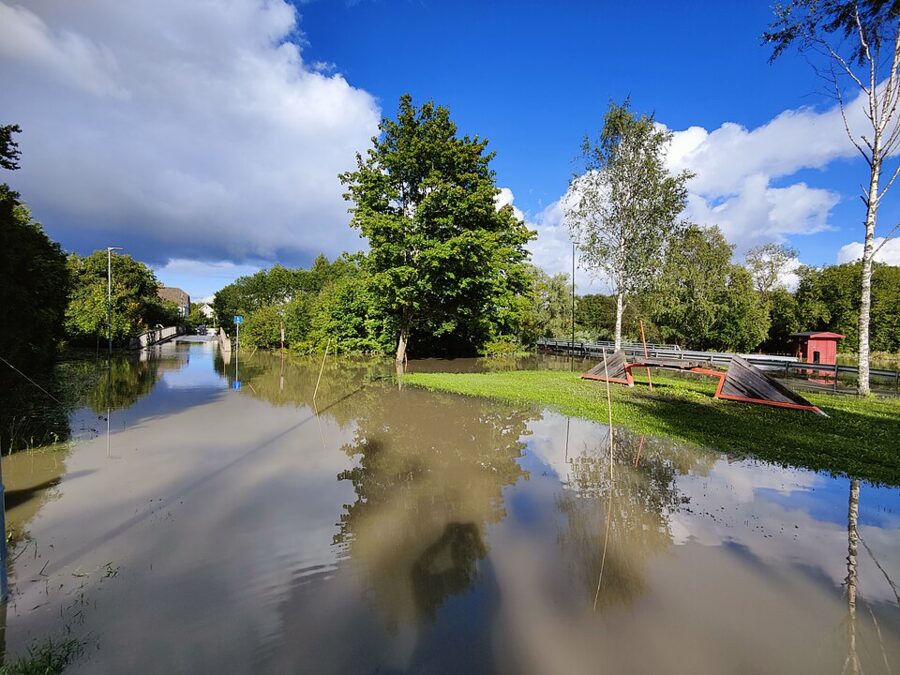
Varsom, run by the Norwegian Water Resources and Energy Directorate (NVE) with the roads agency and MET, issues the flood and landslide warnings. Its warning levels are green, yellow, orange and red, and even the yellow level names campsite owners and people out walking in steep terrain and along rivers and streams among those who should take care. Landslides after heavy rain are mostly jordskred (soil slides) and flomskred (debris flows down stream channels), and most happen in places already known to be exposed: steep gullies and stream beds with old slide scars below them. Do not camp at the foot of one.
Two warnings in autumn 2026 show how this plays out. On 18 October NVE issued an orange warning for soil slides and debris flows in Troms, with 50 to 80 mm of rain expected in 24 hours; the outer coast got flooded roads and a few small slides, while inner Troms got far less rain than feared. Five days later the extreme weather Boelo brought an orange flood warning to parts of Telemark, Buskerud and Vestfold, with 40 to 60 mm forecast in 12 hours. Neither was in Bergen.

When to bail out
The eighth of the Norwegian mountain code reads Vend i tide, det er ingen skam å snu: turn back in time, there is no shame in turning round. Bail out when the tent will not stay up, when someone in the group is shivering and cannot get warm, when the river you need to cross tomorrow is rising, or when an orange warning covers where you are going. In Norway there is nearly always somewhere to go.
DNT, the Norwegian Trekking Association, runs about 600 cabins, 47 of them staffed, and anyone can use them. Most self-service and unstaffed cabins are locked with a standard DNT key, so one person in the group needs to be a member; the key costs a NOK 100 deposit.
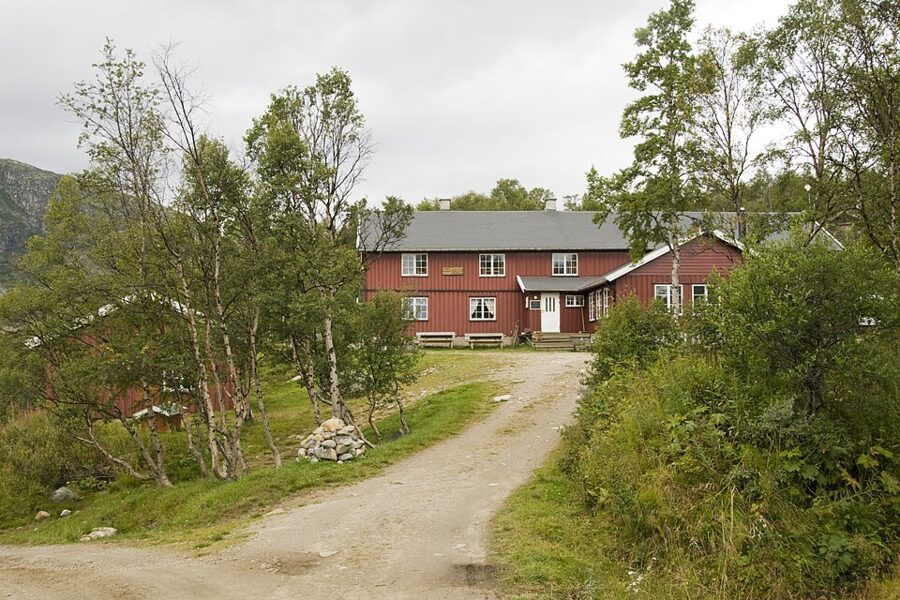
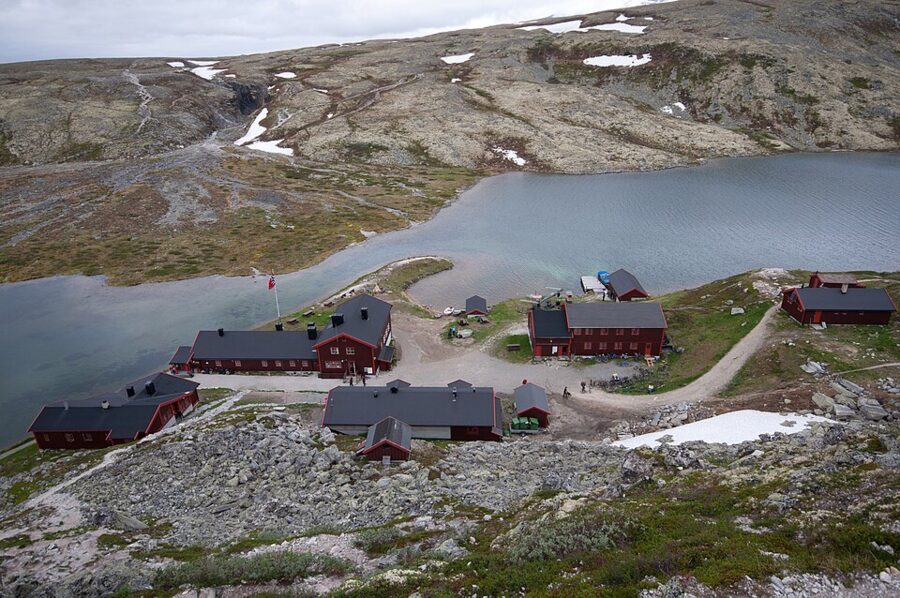
A night in an unstaffed cabin costs NOK 250 to 350 at member prices, and if every bed is taken you will usually still get a mattress on the floor. Check opening dates first: Rondvassbu in Rondane closed its self-service quarters permanently from 6 April 2026 to protect wild reindeer, so outside the staffed season there is no roof there.


Where to go when the forecast is bad
The simplest way to stay dry is to camp where it rains less, and in Scandinavia that usually means going east, behind the mountains. The same ridges that wring the rain out of the Atlantic air over Bergen leave the valleys and plateaus behind them in a rain shadow.
The Otta valley and eastern Jotunheimen. Skjåk, at the top of the Otta valley, has the driest ground in Norway, with less than 300 mm a year on the 1961–1990 normals. Farmers there dug kilometre-long channels, vassveger, to bring mountain water to their fields.
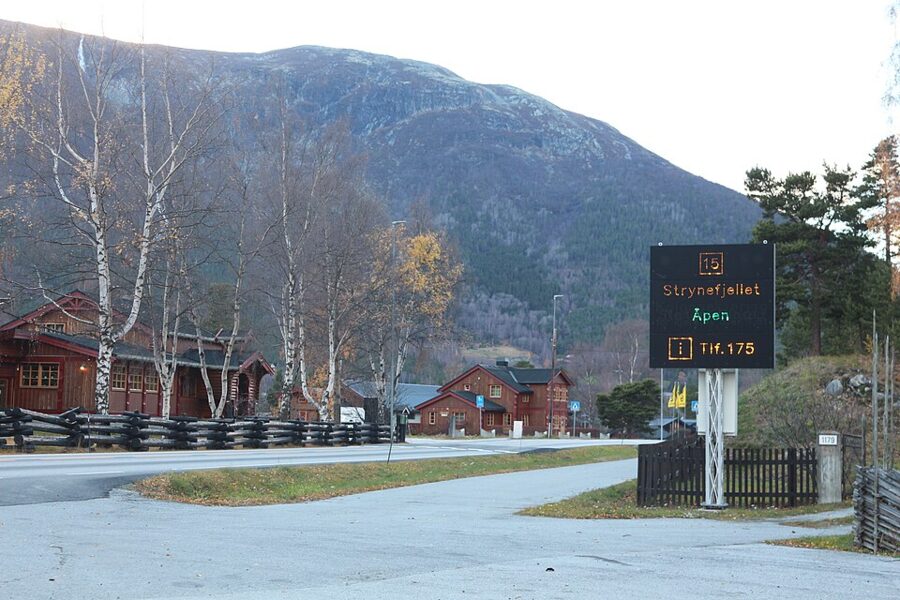
Lom and the eastern side of Jotunheimen share some of that shelter. When the west coast forecast is a week of rain, the drive over Strynefjellet or Sognefjellet can put you under a different sky.

Rondane and Femundsmarka. Further east, Rondane and the forests of Femundsmarka lie behind the whole mountain chain. They are not dry, but they are a long way from the Atlantic fronts that soak the coast.
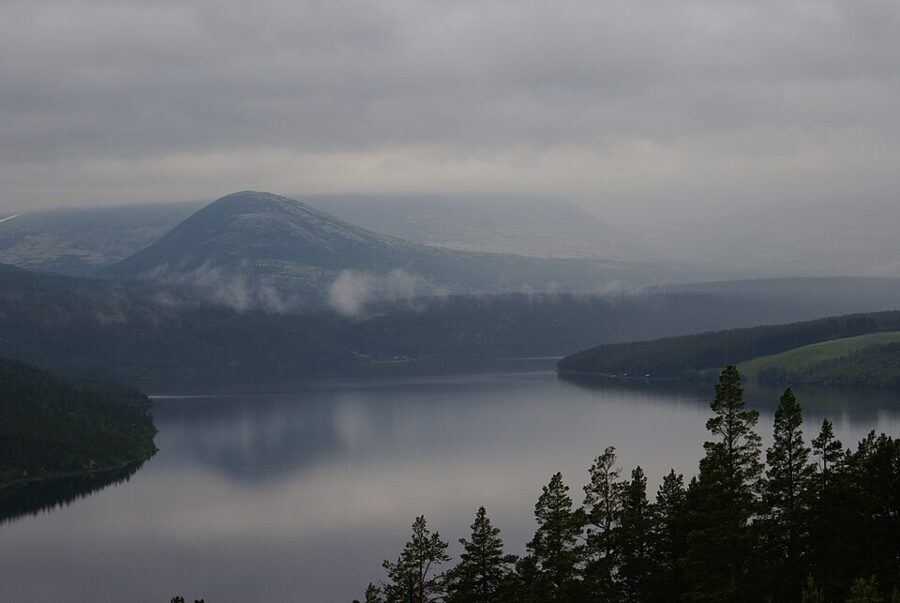

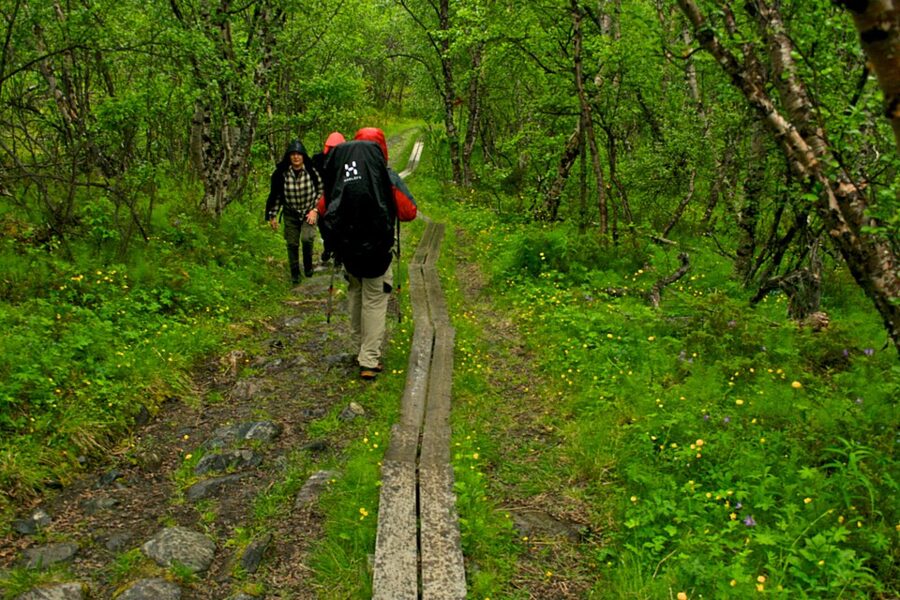
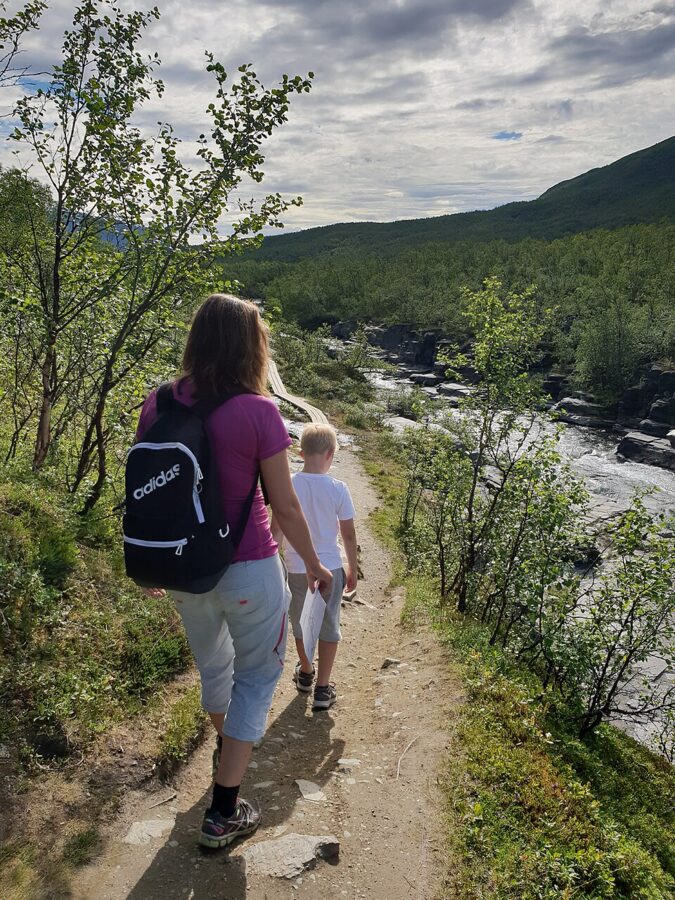
Abisko. In Swedish Lapland, Abisko National Park is the classic rain-shadow escape. SMHI’s measurements for 2002–2020 average 349 mm a year at Abisko, about a seventh of Bergen, and Riksgränsen, just west at the Norwegian border, gets more than twice as much. Better known for clear winter skies and the northern lights, Abisko is also the northern start of Kungsleden, and the railway from Narvik runs straight there from the wet Norwegian side.
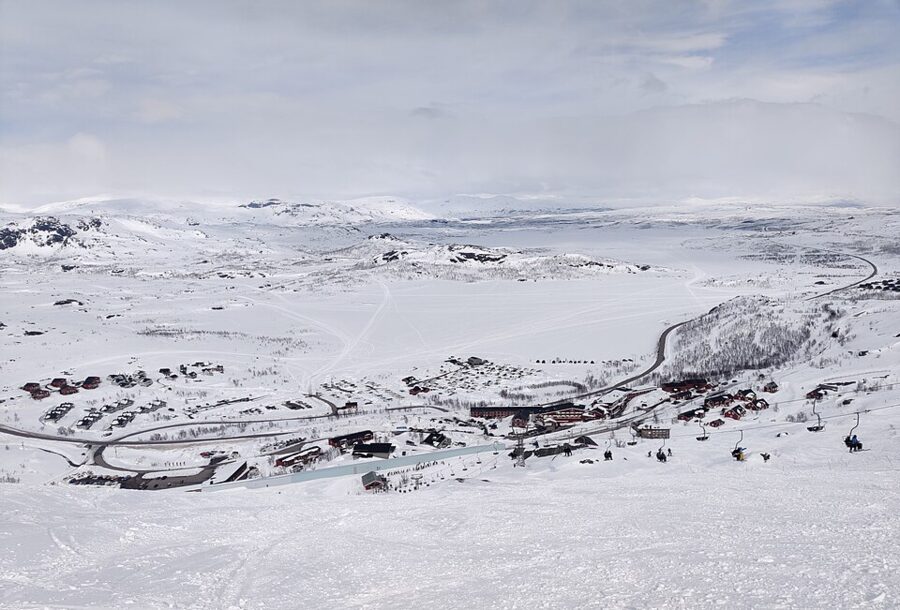


Finnish Lapland. Finland is a long way from the Atlantic and has no mountain wall to catch the rain. In northern Finland annual precipitation is only about 600 mm, and about half of it falls as snow, so summer rain is more often a passing shower than a week of drizzle.
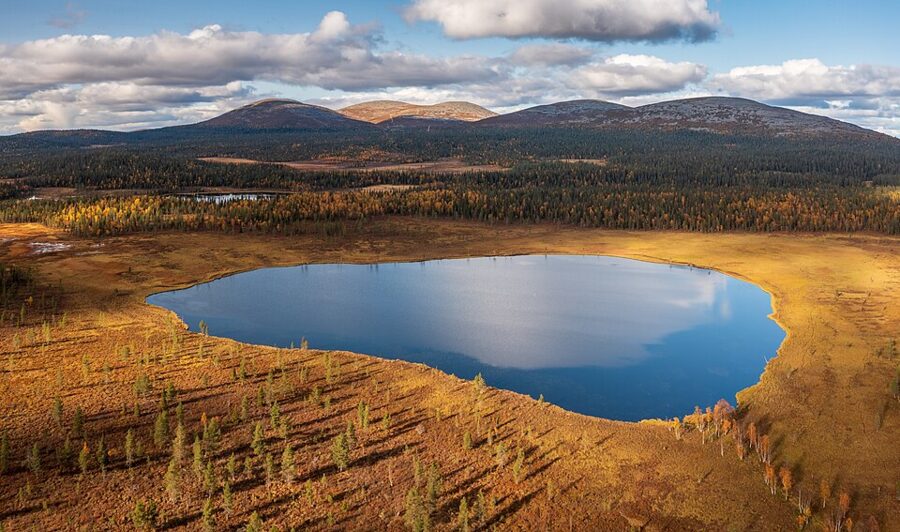
The fells of Pallas-Yllästunturi and their wilderness huts, among the best of hiking in Finland’s national parks, make a good wet-weather alternative to the Norwegian coast. If the tent loses its appeal altogether, there is always a cabin holiday in Finnish Lapland.

None of these places is immune. Hans flooded the east of Norway in August 2023, and Boelo brought orange flood warnings to Telemark and Buskerud in October 2026. The rain shadow improves the odds; the site, the tent, the pitching, the layers and the dry set still decide the night.
Back in Bergen, the Florida gauge will count its 201 wet days again, and May will have the fewest. If the coast is your goal, go then: the tent narrow end to the wind on a heather knoll above the shore, the dry set sealed in its bag, and a campsite cabin or a DNT cabin marked on the map for the night it all goes wrong.