

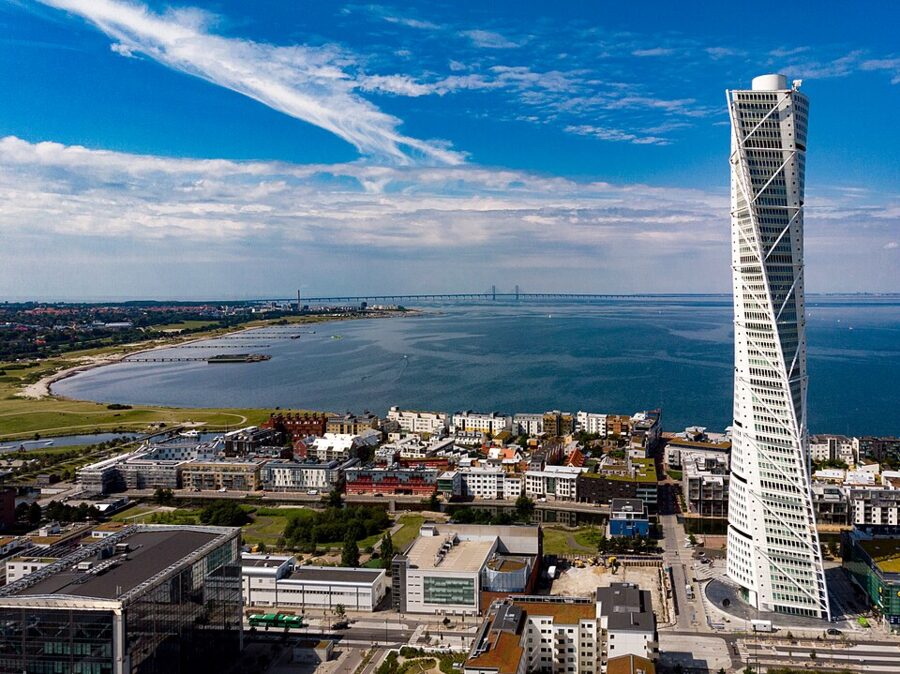

In the summer of 2002 Malmö took apart the 146-metre gantry crane that had stood over the Kockums shipyard since 1974 and shipped it to Ulsan in South Korea, sold to Hyundai Heavy Industries for a symbolic one US dollar. Three years later a 190-metre apartment tower, twisted a quarter turn over its height, opened a short walk from where the crane had worked. Most of what makes Malmö worth the trip sits in the space between those two shapes.
Malmö is Sweden’s third city. Statistics Sweden counted 368,994 people in the municipality at the end of September 2026, and Sweden’s national tourist board puts the share under 35 at around half, with residents from more than 170 countries. It shows in the food first: young restaurateurs around Möllevångstorget and Davidshallstorg cook with influences from Lebanon, Iran, Japan, Italy and France, and the sandy city beach is ten minutes from the old town.
It is also small: almost nothing in the city is more than a 15-minute bike ride away. Copenhagen is about 35 minutes by train, Lund nearer still, and the whole of Skåne, Sweden’s southernmost province, opens up from the central station.

How long? Two full days cover the city: one for the harbour, the beach and the castle, one for the old town, Möllan and a museum. A third or fourth day buys Lund, the Österlen coast or the island of Ven. Malmö works as a day trip from Copenhagen, but I would do it the other way round and sleep here.

Contents 17 parts
- 01How the shipyard city got here
- 02Västra Hamnen and the Turning Torso
- 03Ribersborgsstranden and the cold bath house
- 04Malmöhus: castle, aquarium, submarine
- 05Three parks and a people's park
- 06Gamla staden, Stortorget and Lilla torg
- 07Möllevången, or Möllan
- 08Moderna Museet Malmö and the free Konsthall
- 09Falafel, fika and the food hall
- 10The Öresund Bridge (and the TV series)
- 11Copenhagen for the day, and the ID check
- 12Day trips by train, bus and ferry
- 13Getting there
- 14Getting around
- 15Where to stay, by area
- 16What it costs in SEK
- 17When to go
How the shipyard city got here
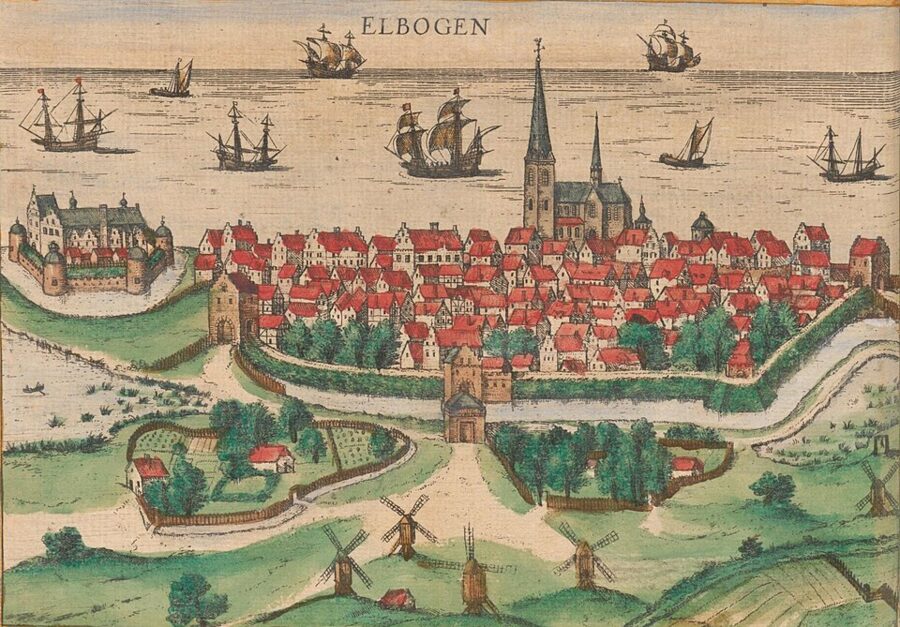
For most of its life Malmö was Danish. A town was laid out on the shore in the mid-1200s, possibly by the archbishop in Lund, and its oldest surviving charter is dated 20 December 1353. Herring in the Öresund made it rich; by the late Middle Ages it was the second town of the Danish kingdom after Copenhagen, and German merchants called it Elbogen, the elbow, after the curve of the shore.
Erik of Pomerania built a fort and mint by the western gate in 1434, the start of Malmöhus. The town backed the deposed Christian II in the civil war of 1534 to 1536 and lost; the winner, Christian III, ringed the castle with a moat and cannon towers and garrisoned it.
Then came 1658. Under the Treaty of Roskilde, Denmark handed Skåne to Sweden, and Malmö went from a Danish trading town facing Copenhagen to a Swedish border fortress facing an enemy. Trade collapsed under new tolls and taxes, and in 1677 a Danish army of 14,000 besieged the town for a month before the garrison of under 2,000 drove it off.
Recovery came with a proper harbour at the end of the 1700s and the railway to Lund in 1856; in the 1860s Malmö overtook Norrköping as Sweden’s third city. In the 1870s the Kockums works moved its shipbuilding onto newly filled land in the harbour, and for a century the yard set the rhythm of the place.
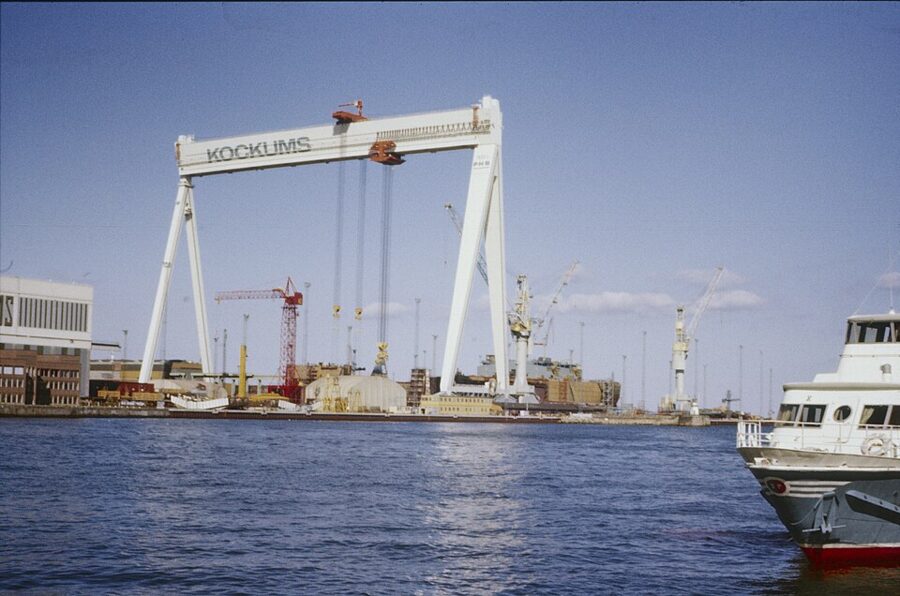

The crane went up in 1973 and 1974, still described as the largest gantry crane in the world, just as the shipbuilding boom ended. Kockums, the city’s biggest employer in the 1970s, cut and cut again until civilian shipbuilding stopped in 1986–87. Between 1990 and 1994 roughly one job in four in Malmö disappeared as the remaining factories and the Limhamn lime works shut.
The decisions that made today’s Malmö were taken in that slump, most of them in 1995. Work began on the Öresund Bridge on 18 October; the city won its own university college, separate from Lund; a housing exhibition was planned for the old harbour; and it was agreed the crane would go. Its last job in Sweden, in 1997, was lifting the foundations for the bridge’s pylons.
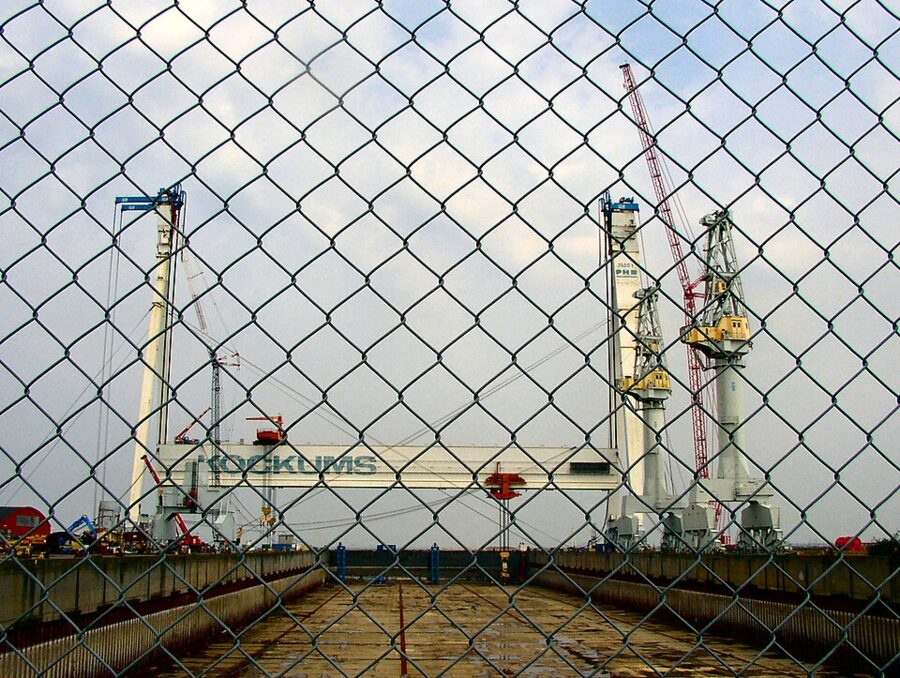

Malmö högskola opened on 1 July 1998 (a university since 2018), the bridge on 1 July 2000. The Bo01 exhibition of 2001 started the new district of Västra Hamnen, the crane left in 2002, and Turning Torso was inaugurated on 27 August 2005. On 12 December 2010 the Citytunneln opened under the city, so trains from Copenhagen no longer had to loop around it.
Västra Hamnen and the Turning Torso
Västra Hamnen (the Western Harbour) is made land, filled out into the sea from the 1770s onwards. It was the oil harbour until about 1945, then the shipyard. Since Bo01 it has filled with flats by dozens of architects, which is why no two blocks look alike, along with Malmö University’s campus and a string of small parks on the water. The dry docks and slipways are still there; Kockums, owned by Saab since 2014, keeps its head office in Malmö but has built nothing here since 1998.
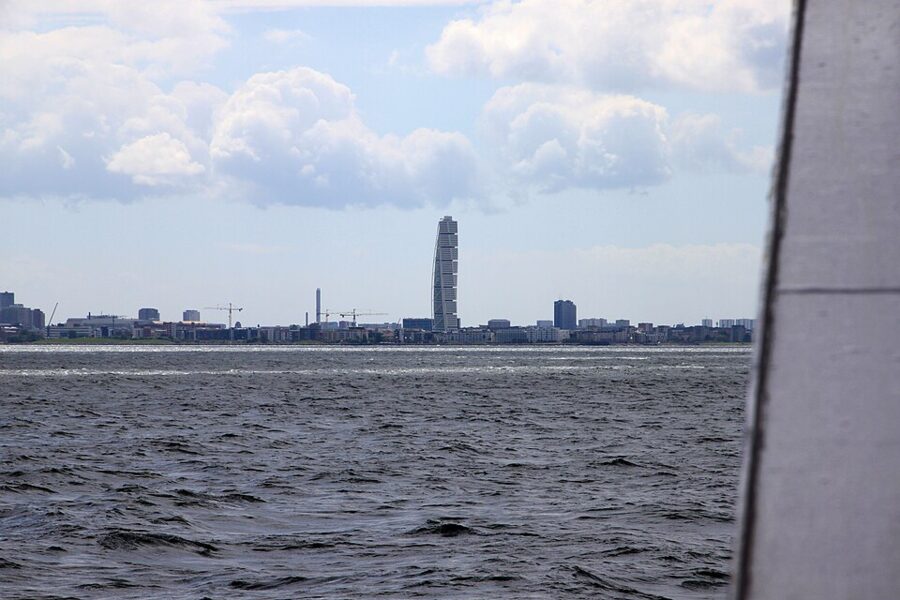

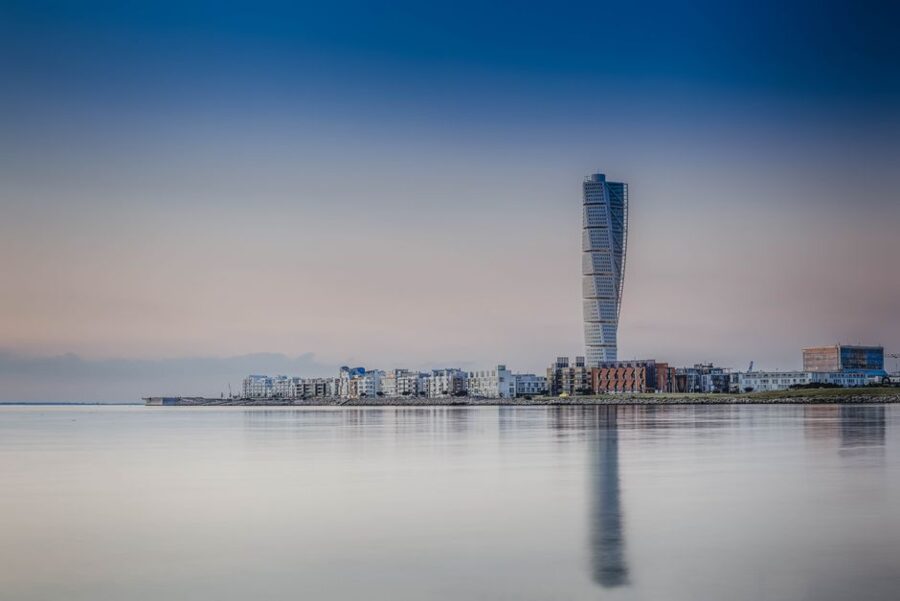
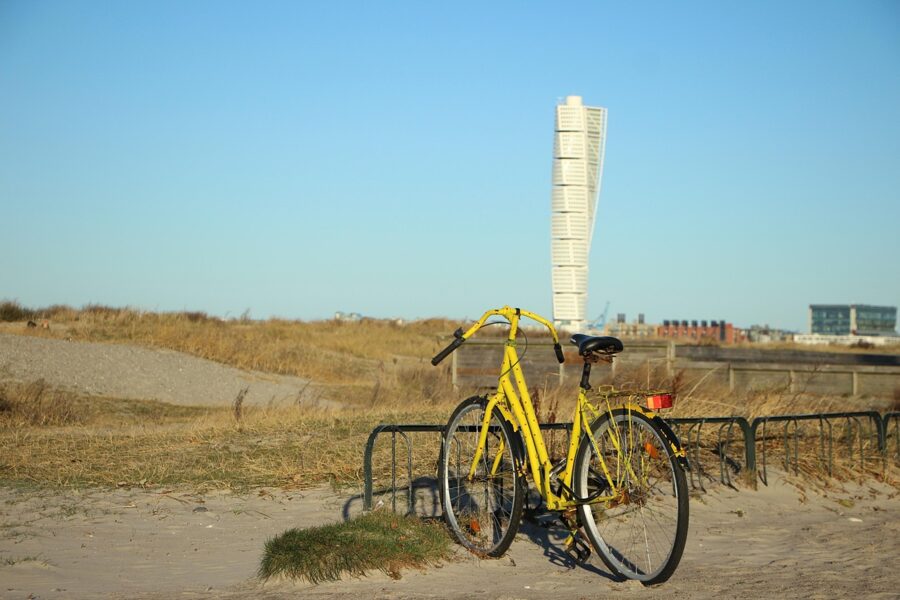
Turning Torso was designed by Santiago Calatrava, who took one of his own sculptures as the model, for the housing cooperative HSB Malmö. It is 190 metres high with 54 floors, and it was Sweden’s tallest building until Karlatornet in Gothenburg passed it in September 2022. Budgeted at 800 million kronor, the complex cost at least 1.8 billion.
The two lowest cubes are offices, the rest hold 147 flats, and floors 53 and 54 are a conference venue rather than a public viewing deck. For most people the tower is something to look at, not out from.
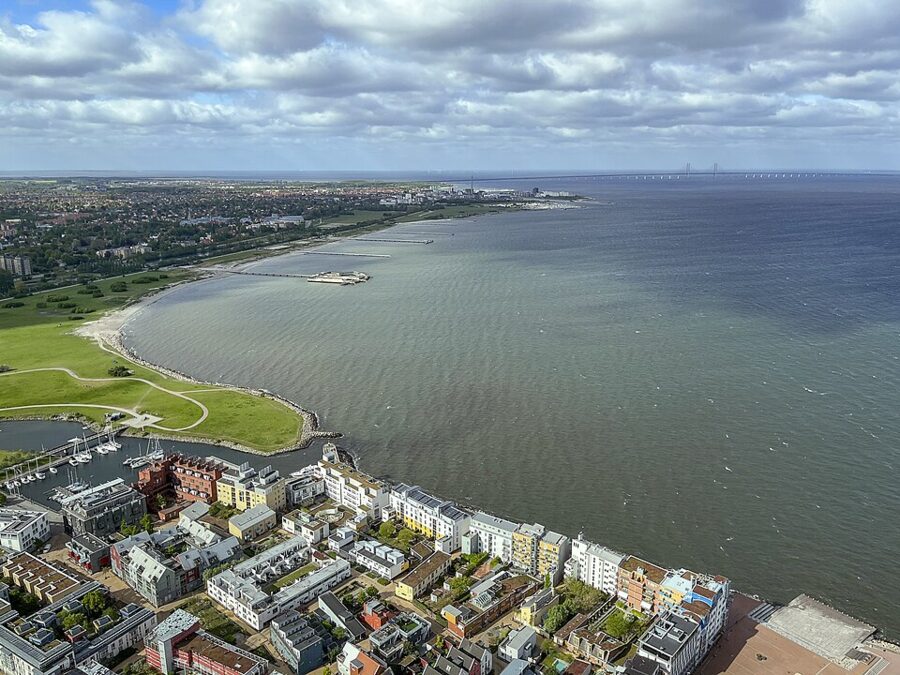

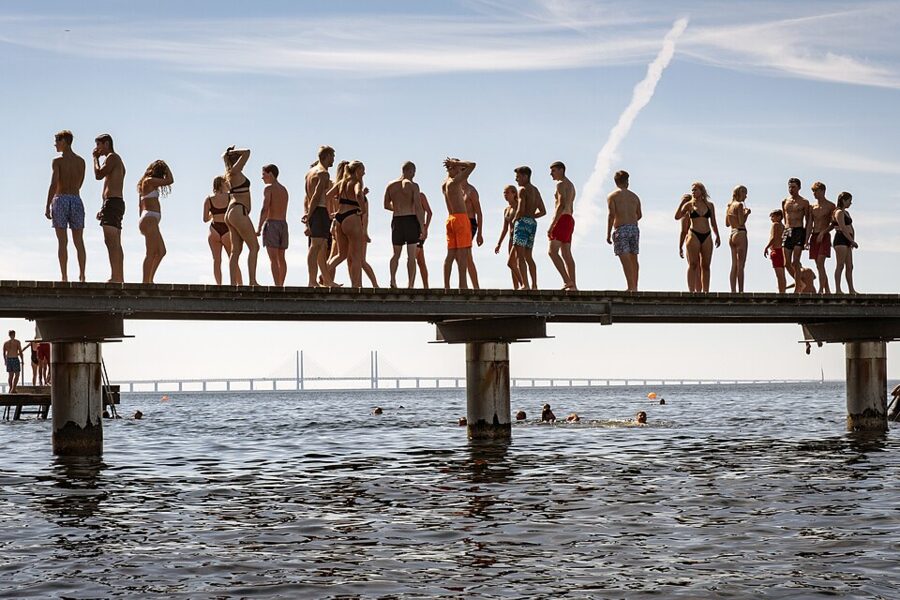
Walk it instead. The seafront promenade became a bathing spot almost as soon as Bo01 opened, to the annoyance of the people living along it, so in 2005 the city built Scaniabadet, bathing jetties in Scaniaparken at the northern end. Follow the water from the tower to the Scaniapromenaden at sunset. On the way, Daniaparken is one of the most scenic spots in the city, and Stapelbäddsparken, on the old slipways, is a skate park with climbing rocks.

Ribersborgsstranden and the cold bath house
Ribersborgsstranden, always shortened to Ribban, runs south-west from Västra Hamnen towards Limhamn and is the city’s most visited beach: more than 1.5 kilometres of sand with a promenade, cycle path and parkland behind it. The water is shallow a long way out, good for children and tedious for anyone who wants to swim properly; for that, walk out on one of the numbered piers.
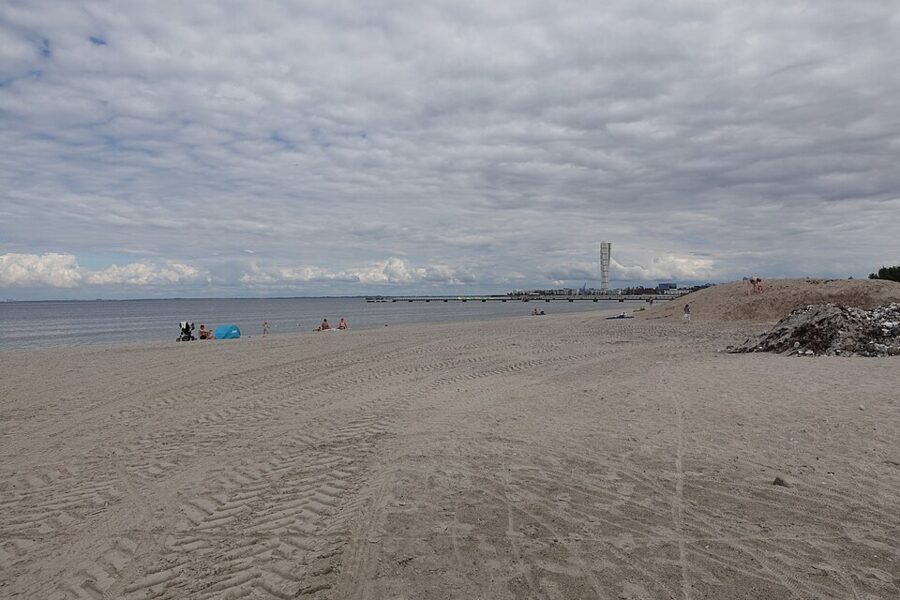

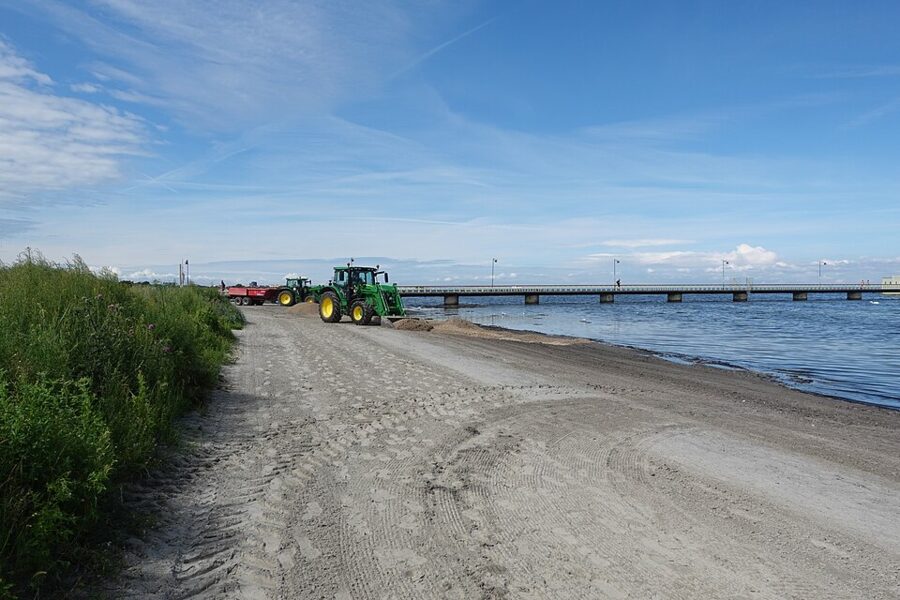
It was not always a beach. The area began as a smelly marsh of rotting seaweed, and only became usable after the railway embankment to Limhamn, built out in the water in 1889, was reinforced after a storm in 1902. The city still tops up the sand every spring and clears thousands of tonnes of seaweed before each season.

Dogs are banned from the sand from 15 March to 30 September, even on a lead, except in the two dog areas. Barbecues between 09:00 and 17:00 are allowed only at the city’s fixed grill sites, and never directly on the ground. There is a nudist section out by pier 10, a step-free bathing jetty called Öresunds Funkis, and naturum Öresund, a small visitor centre about the sea.
Ribersborgs kallbadhus
Near the Västra Hamnen end, a long pier leads to a wooden bath house on stilts: Ribersborgs kallbadhus, a kallbadhus (cold-bath house), known in town as Kallis. It opened in June 1898, built by a walking-stick maker, C.H. Richter, from the timber of an older bath he had bought at auction. Storms wrecked it in 1902 and badly damaged it in 1988, when the council proposed demolishing it and a public outcry saved it.
Nude bathing and a screen between the men’s and women’s sides arrived in the 1930s, the first wood-fired sauna in 1962. It became a listed building on 14 August 1995; the men’s side burned down in February 2001 and reopened in 2002, and in 2009 almost every pile under it was replaced.
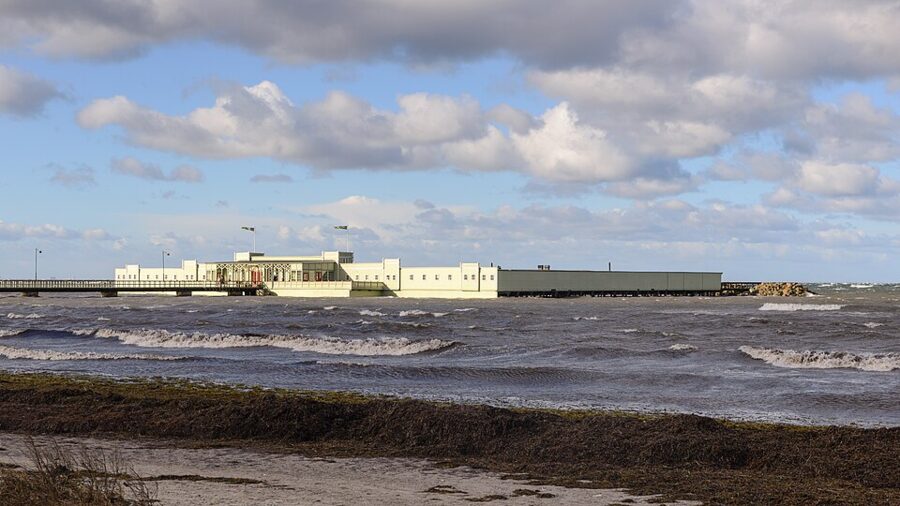

The routine is simple: sauna (bastu), cold sea, rest, repeat. Almost everyone bathes without a costume. On the first Monday of each month, Mix Kallis opens the whole bath to everyone regardless of gender, and since February 2026 there has also been a mixed early dip on Tuesdays from 07:00 to 09:00.
A single visit costs SEK 90 according to the bath house’s price list; children up to 11 go free, and 12- to 17-year-olds pay SEK 45 and must come with an adult. Winter hours (1 October to 31 March) are 09:00 to 21:00 Monday to Wednesday, 10:00 to 19:00 Thursday and Friday, and 09:00 to 18:00 at weekends; in summer it opens 09:00 to 21:00 on weekdays. Last entry on the late evenings is 20:30.
Shower before the sauna, dry off so you do not cool it down, take only water in a plastic bottle inside, and keep your voice down. Alcohol is allowed only in the restaurant and on its terraces.
Malmöhus: castle, aquarium, submarine
Malmöhus sits on its own island between the old town and the parks, a low brick fortress with round cannon towers and a moat. The main building went up between 1526 and 1539, making it the oldest surviving Renaissance castle in the Nordic countries; older books give 1537 to 1542, and the argument turns on scars left in the walls when townspeople tore down part of the defences in 1534.
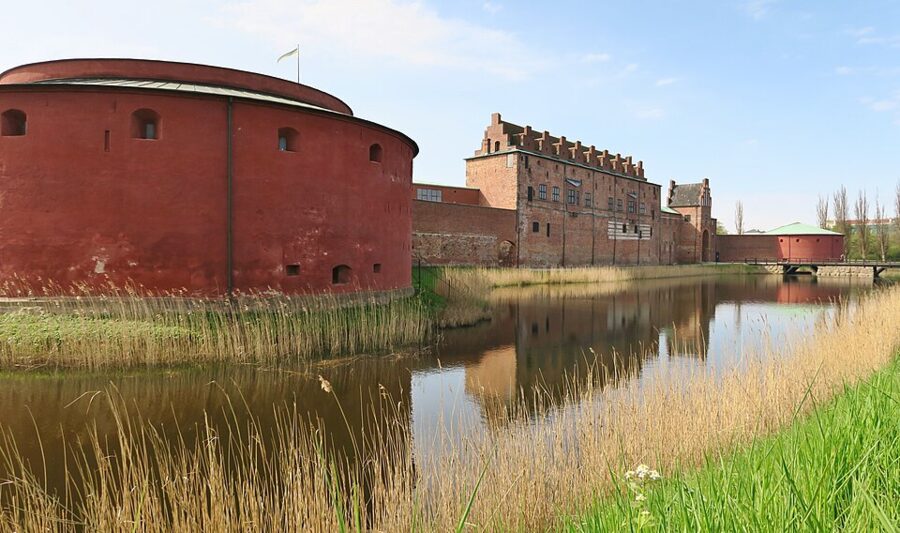

It has been a royal residence, a mint and a prison. The Earl of Bothwell, third husband of Mary, Queen of Scots, was held here from 1567 to 1573, and from 1828 it was Sweden’s largest prison. The museum moved in only in 1937.
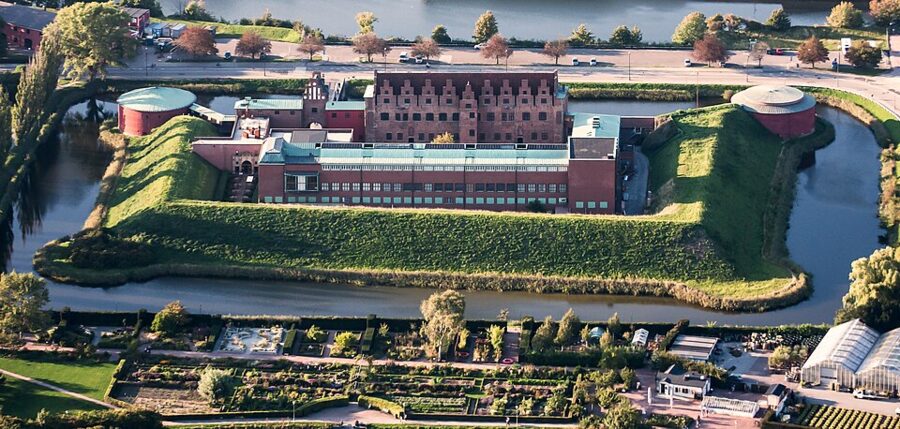
The institution inside is now Malmö museum (formerly Malmö Museer), the largest museum in southern Sweden. One ticket covers the castle, with its history and natural-history exhibitions and an aquarium of fish, reptiles and spiders, and Teknikens och sjöfartens hus, the technology and maritime museum along Malmöhusvägen. There you can climb through the submarine U3, built in 1941–44, which was cut into three pieces in a Kockums dry dock in 1965 and welded back together inside the museum.
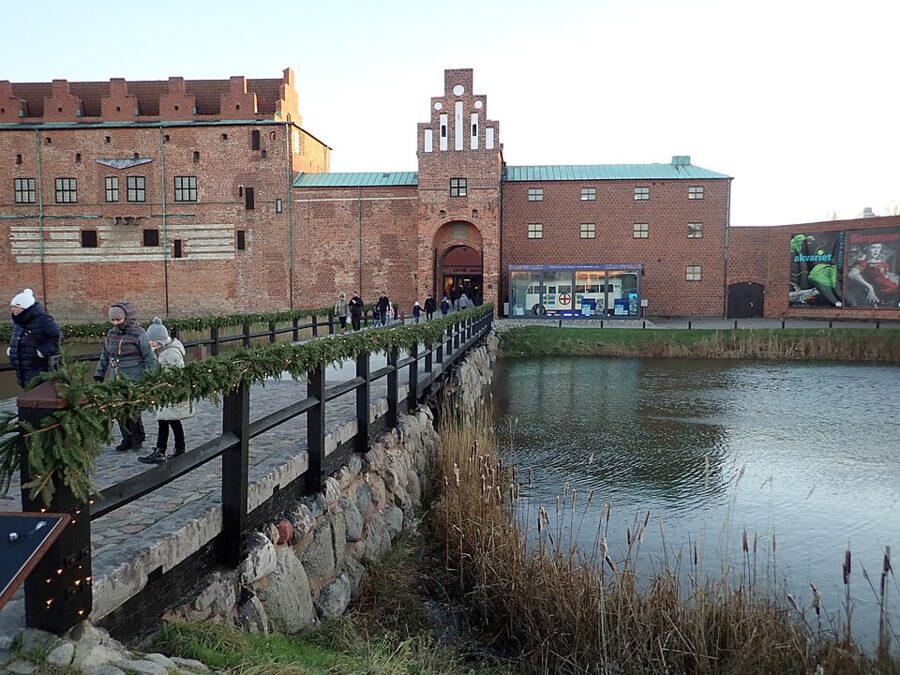

Malmö museum’s hours and prices for 2026: closed on Mondays (except in school holidays), open 11:00 to 17:00 Tuesday to Sunday and until 19:00 on Thursdays. The combined ticket for both buildings is SEK 100 for adults and SEK 50 for students and pensioners; under-20s go free. One building only costs SEK 60.
Check before you go: the lift replacement at the castle, due to finish in March 2027, has closed the first-floor natural-history dioramas and part of the costume gallery. Malmö Konstmuseum, the city art museum, has paused its galleries in the castle and runs exhibitions in the old restaurant pavilion in Kungsparken instead.
Moored at Skeppsbrokajen in the inner harbour is the other Kockums survivor, S/S Bore. Built at the yard in 1894, she broke ice on the Öresund for more than 70 years and is the oldest steam-powered icebreaker in the world. The city has owned her since 2023 and opens her to visitors from May to September.
Three parks and a people’s park
Malmö used to be called Parkernas stad, the City of Parks, after the big parks laid out in the early 1900s. Statistically it now has less green space than most Swedish cities, but the famous ones are still there. Kungsparken, the oldest, was made on land that had belonged to the castle’s defences; Slottsparken beside it is one of the city’s favourite walking loops.
Next to Slottsparken, with the windmill as its backdrop, is Slottsträdgården, an organic garden started on an idea from a group of residents in 1994. You can walk in at any time of year; there is a café, and by the mill what the gardeners describe as possibly the world’s largest insect hotel.
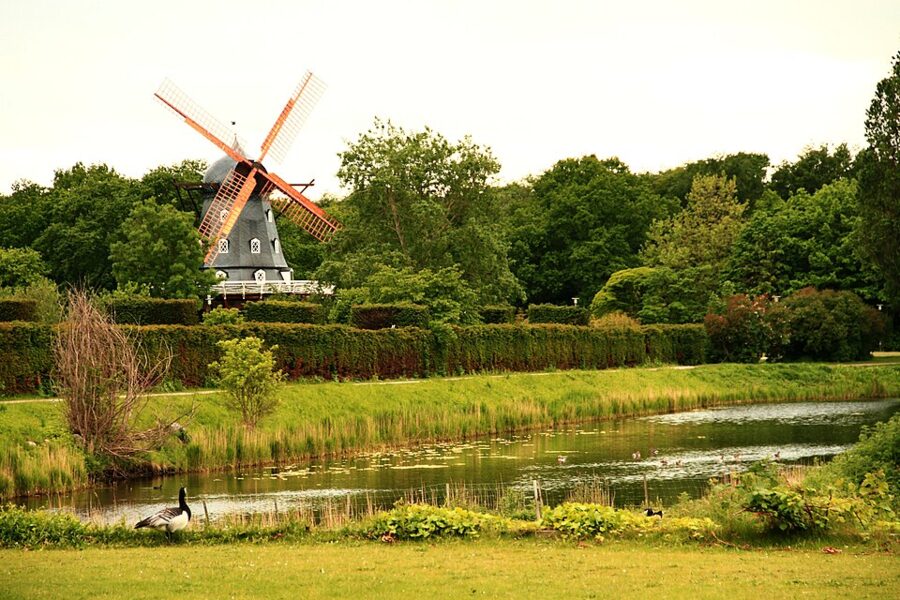

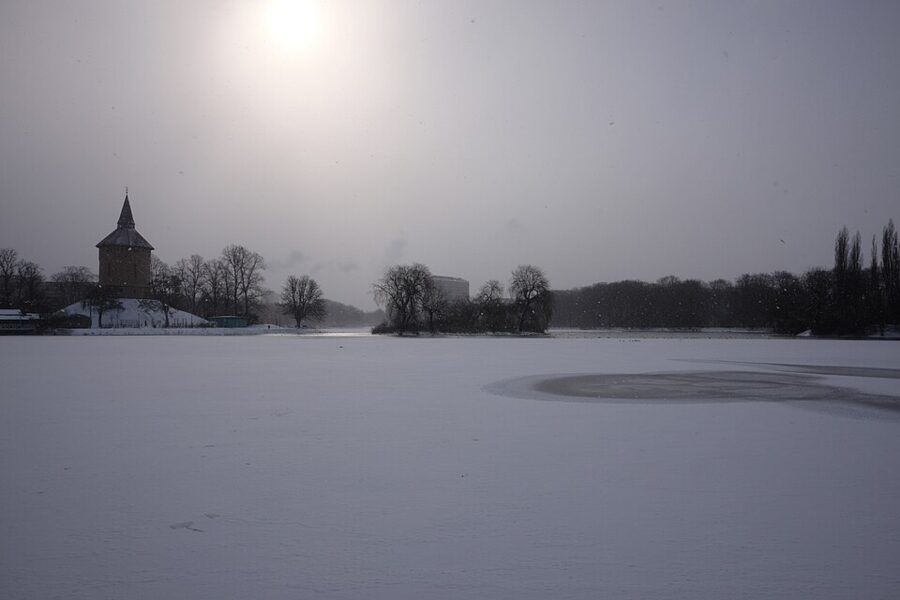
Pildammsparken, south of the centre, is the most interesting of the three. Its ponds were the town’s water reservoir, edged with willows (pil) to strengthen the banks. In 1914 it hosted the Baltic Exhibition, designed by Ferdinand Boberg with the help of Crown Princess Margareta, which drew close to a million visitors; the Margareta Pavilion and the flower walk survive.

Folkets Park, on the edge of Möllevången, is what the city calls the world’s oldest folkpark (people’s park), a private garden of the early 1800s that the Social Democrats bought in 1891. It has concert stages, playgrounds, cafés and the Moriska Paviljongen club. Vinter i Folkets Park opens on 27 November 2026 for just over two months, with two ice rinks, free skates and helmets to borrow, and around 70 events.
Gamla staden, Stortorget and Lilla torg
The old town, Gamla staden, is an island ringed by the canal. Stortorget, its big square, was cleared from 1538 on the site of a demolished monastery; the town hall on its east side came into use in 1547. The equestrian statue in the middle, put up in 1896, is Karl X Gustav, the Swedish king who took Skåne in 1658.
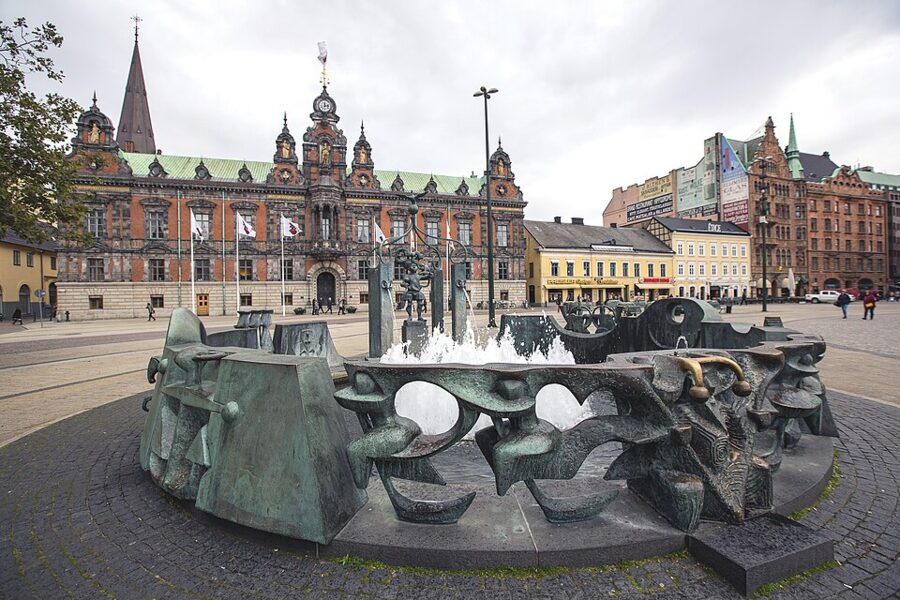

Kockska huset, the brick palace on the square, was built in 1522–24 by Jörgen Kock, mint master to all of Denmark, who moved the kingdom’s coin-making into his own house. As mayor he led the town into the civil war of 1534 and lost, was pardoned, and in 1540 gave the town its present square and town hall.
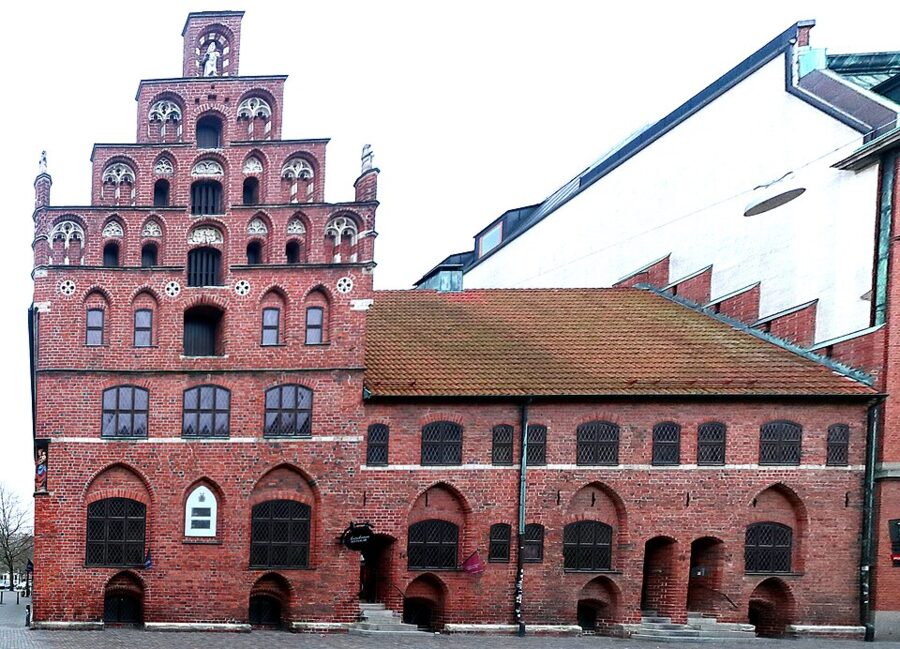

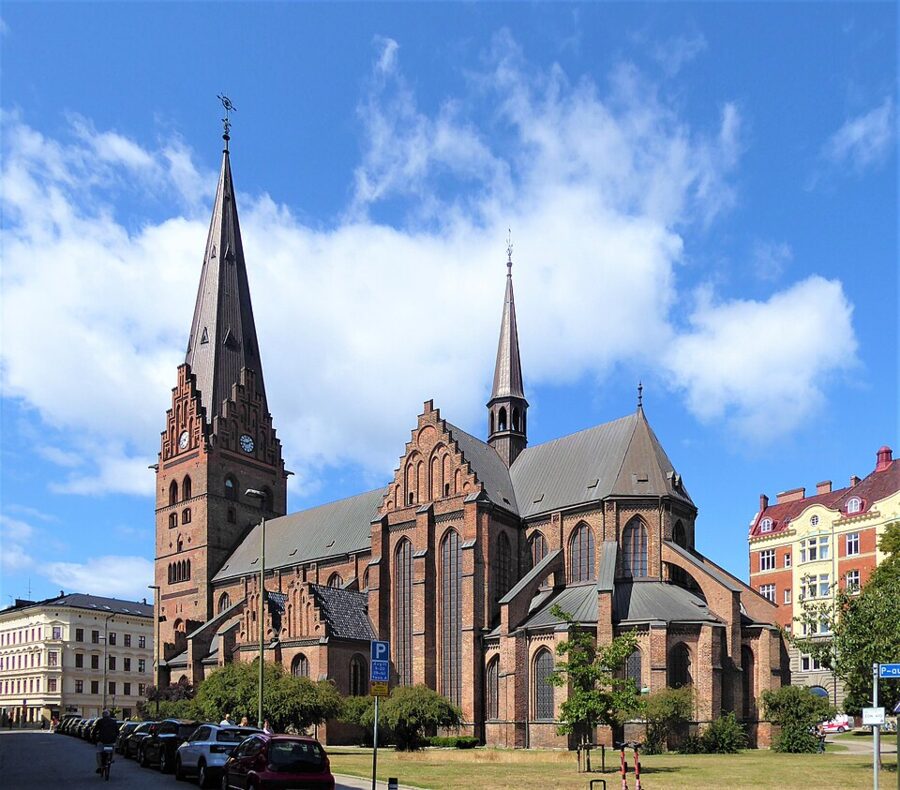
One block north-east is Sankt Petri kyrka, the brick Gothic church finished around 1380, which shares the title of oldest building in Malmö with a vaulted cellar complex by Adelgatan.

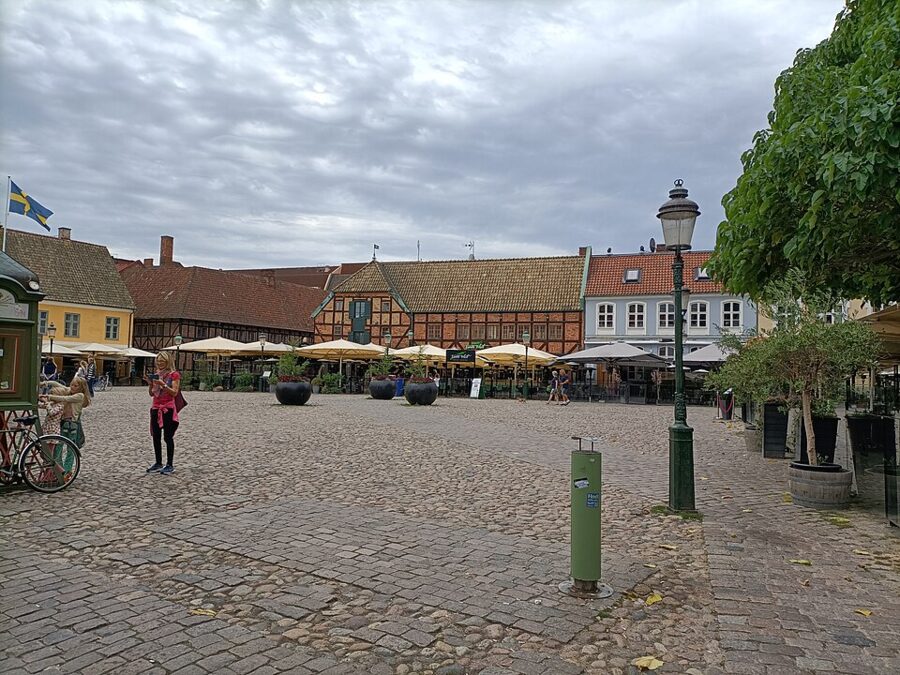
Lilla torg, just south-west of Stortorget, is the one on the postcards: cobbles, half-timbered houses and outdoor tables across the whole square from spring to autumn. Just south of it, Form/Design Center shows Swedish and Scandinavian design around a courtyard café.

West of Lilla torg, towards Kungsparken, is Gamla Väster, the old quarter of craftsmen and poorer families in small houses. It survived the clearances that flattened much of the eastern old town in the 1970s because its residents formed an association and, with the museum’s backing, stopped a planned through road. It is the quietest part of the centre.
Möllevången, or Möllan
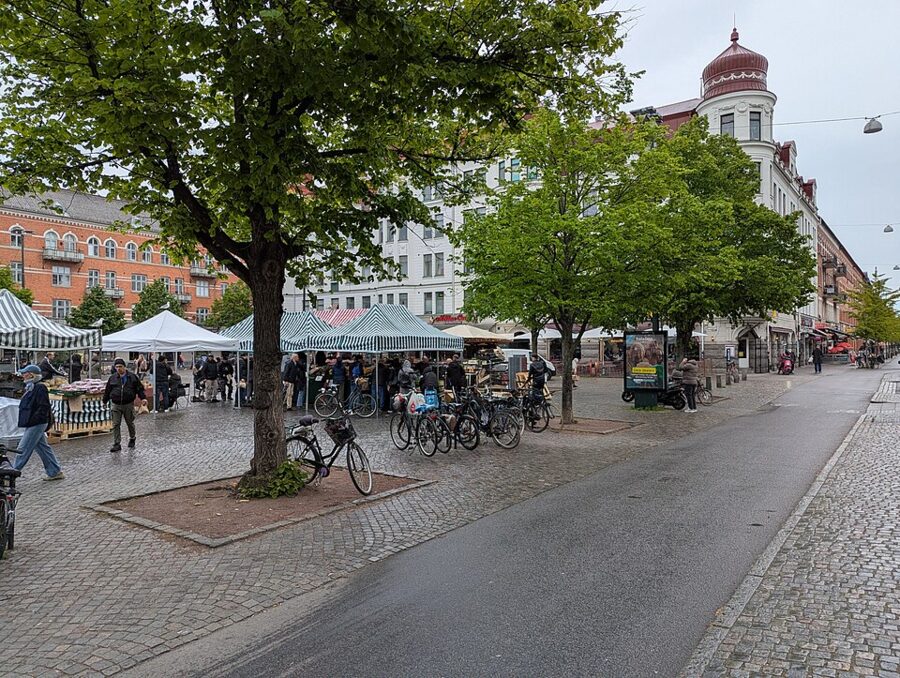
South of the centre, past Triangeln, is Möllevången, always called Möllan. The name joins two Skåne words, mölla (mill) and vång (field): windmills stood on common fields here before the town grew over them. It was planned from 1903 for factory workers, in dense blocks with plenty of Jugendstil plasterwork.
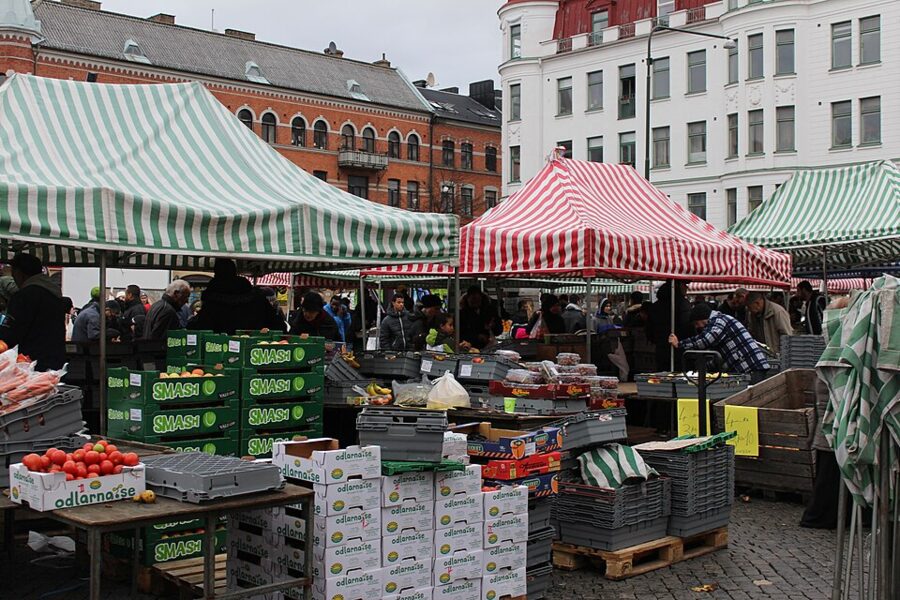

Möllevångstorget, laid out in 1904–06, is its heart: fruit and vegetables by day, pubs, pizzerias and clubs by night. It saw the Möllevång riots of 1926 and is still where Malmö’s labour marches start. Over recent decades Möllan has gone from working-class to artists and small restaurants, with the gentrification that follows, but it remains the most mixed part of the centre for food shops and cheap meals.
Folkets Park is at the bottom of the square, and the former Mazetti chocolate factory nearby is now a culture centre. Möllan is loud on Friday and Saturday nights; if you sleep lightly, stay elsewhere and come for the evening.
Moderna Museet Malmö and the free Konsthall
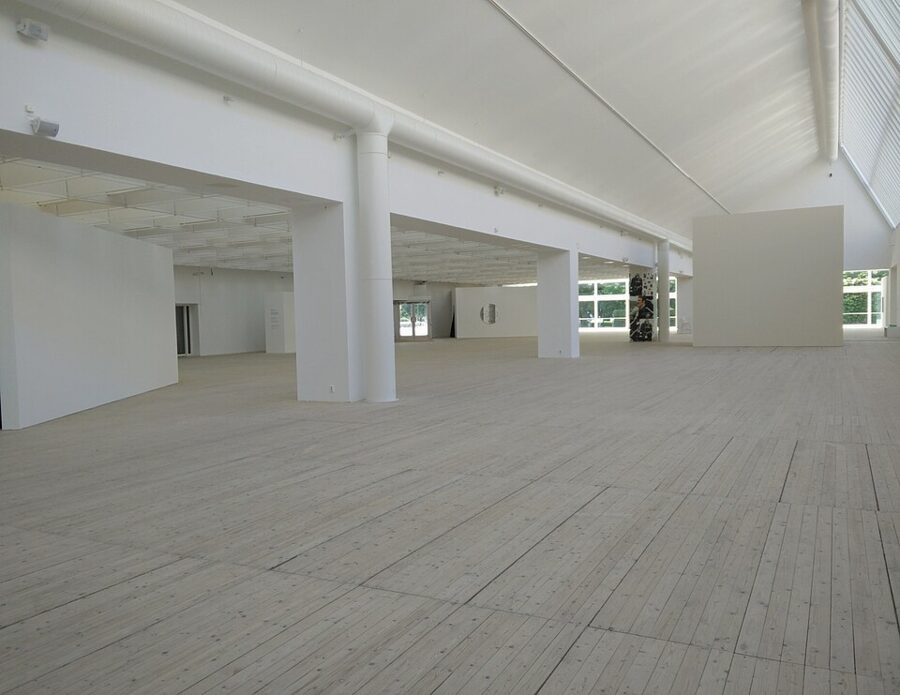
Moderna Museet, Sweden’s national museum of modern art, opened its first branch outside Stockholm here in 2009. It occupies an electricity works of 1900–01 by John Smedberg, later the Rooseum art centre, with a new entrance wrapped in perforated orange steel by the architects Tham & Videgård.
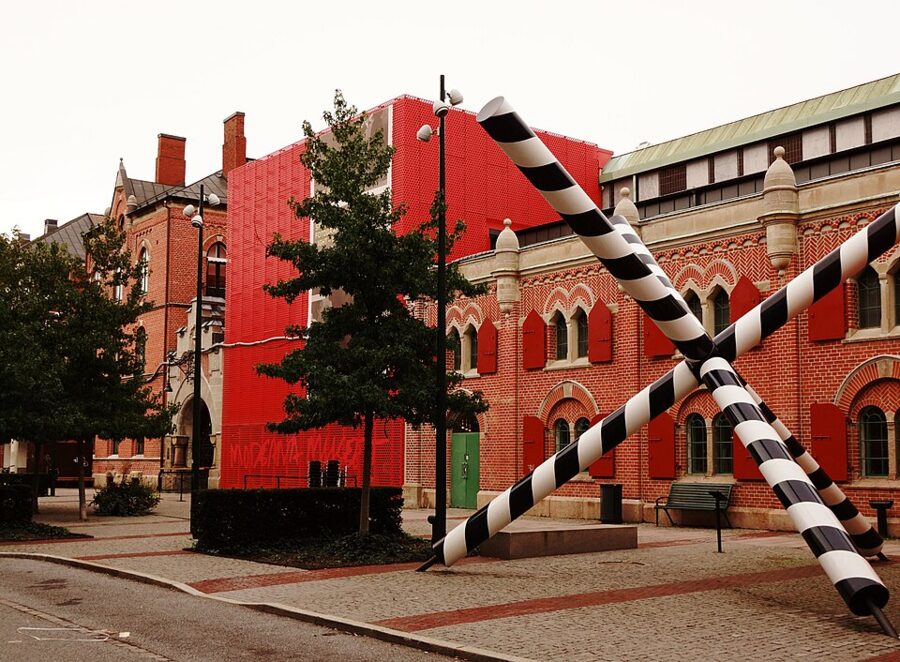

It is at Ola Billgrens plats 2–4, ten minutes’ walk from the central station and five from Stortorget. Moderna Museet Malmö is closed on Mondays and open 11:00 to 17:00 Tuesday to Sunday, until 19:00 on Thursdays. Entry is SEK 50, free for anyone 25 or under; photography without flash is allowed.
Malmö Konsthall, at St Johannesgatan 7, is one of Europe’s larger contemporary art halls, a single space of some 2,000 square metres with three or four new shows a year. Entry is free. It opens 11:00 to 17:00 Tuesday to Sunday, until 19:00 on Wednesdays, with free guided tours at 14:00 and on Wednesdays also at 18:00.

Falafel, fika and the food hall
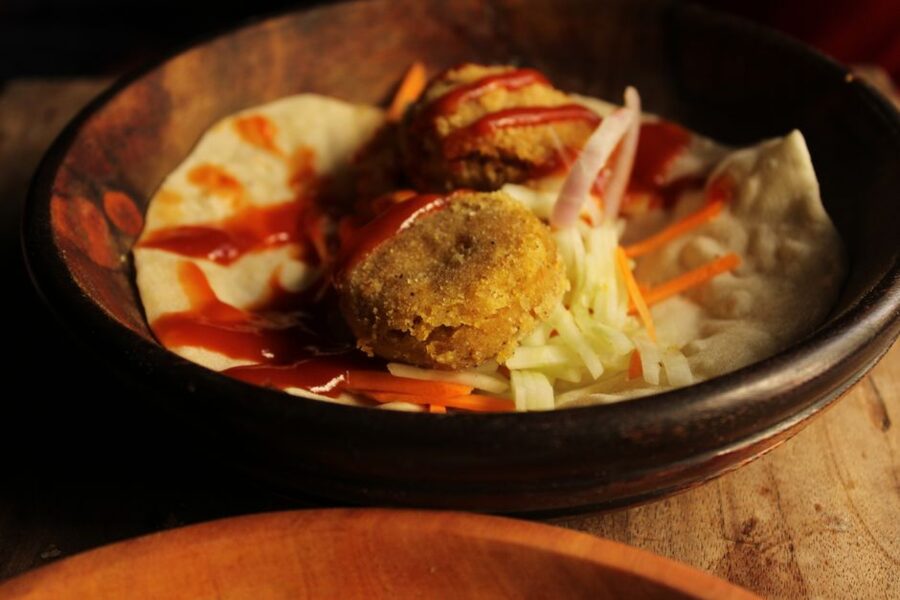
Malmö’s street food is falafel; Visit Skåne calls the city Sweden’s falafel capital. How it started is disputed: the usual story credits a cart run by Youssif Ismael on Drottningtorget around 1985, but that rests on later interviews, and the first stand provable from public records is Falafel Mästaren, which Amnon Tsubarah opened on Simrishamnsgatan on 10 February 1988.
Order it in pitta, rolled in thin lavash bread with salad and hummus or sauce, or as a falafeltallrik (falafel plate) with chips or rice. Stands come and go, so eat where the queue is longest, which tends to be out towards the edges of the city rather than in the old town.
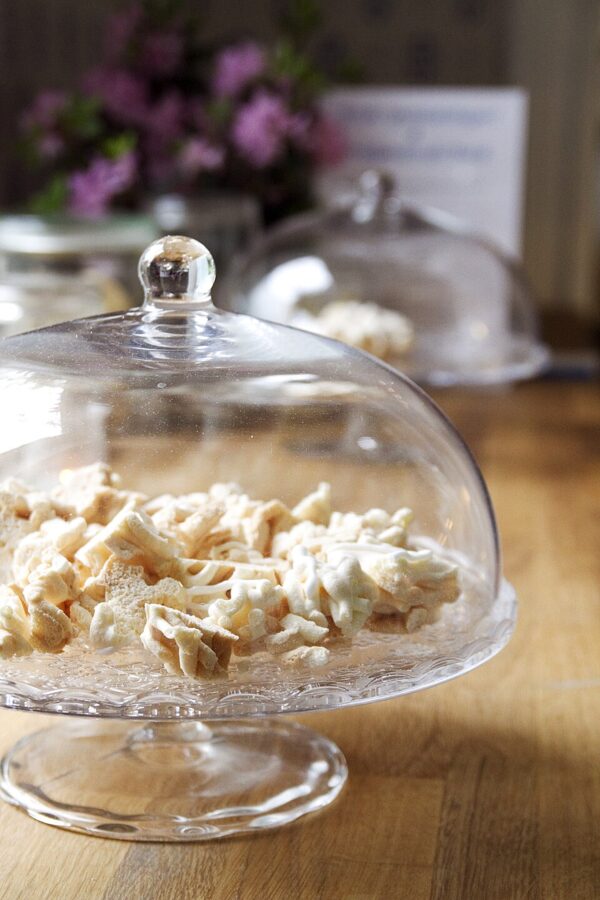
Fika, the coffee-and-cake break, is a national habit, but Skåne has its own pastries. Spettekaka is a tall, hollow cone made by trickling batter onto a turning wooden spit; since 19 July 2000 “Skånsk spettkaka” has been a protected EU name, so it must be made in Skåne to carry it.

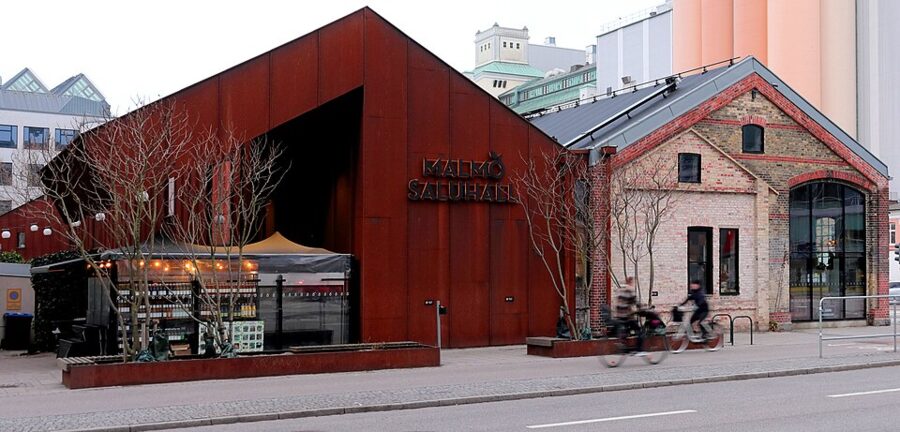

Malmö Saluhall, the food hall at Gibraltargatan 6, is a few minutes’ walk from the central station. The architect Gert Wingårdh kept the 50-metre warehouse largely as it was and filled it with around 20 traders: bakery, fishmonger, butcher, cheese and chocolate counters, and places to sit for lunch. It opens 11:00 to 20:00 Monday to Thursday, 11:00 to 21:00 Friday and Saturday, and 11:00 to 17:00 on Sunday.
At the other end of the scale, Malmö has Michelin-starred restaurants; book them well ahead. Visit Skåne claims the city has more restaurants per head than anywhere else in Sweden, and for everything in between the streets around Möllevångstorget and Davidshallstorg are where to look.
The Öresund Bridge (and the TV series)
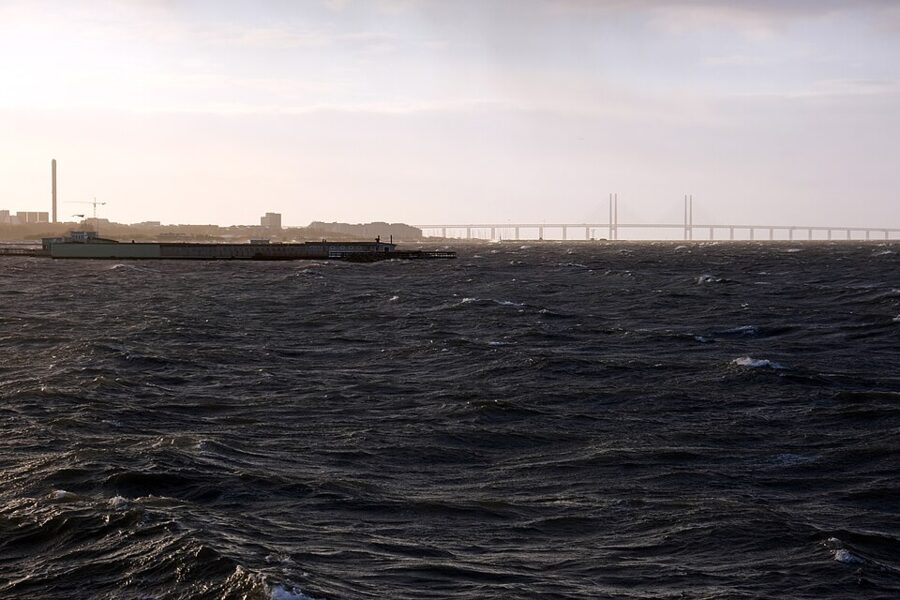
The Öresund Bridge has joined Sweden and Denmark since 1 July 2000. The fixed link is 15.9 kilometres long and only half of it is bridge: 7,845 metres from Lernacken south of Malmö to Peberholm, an artificial island 4,055 metres long, then a 4,050-metre tunnel to Kastrup. The tunnel was needed because a high bridge at the Danish end would have been in the way of planes at Copenhagen Airport.
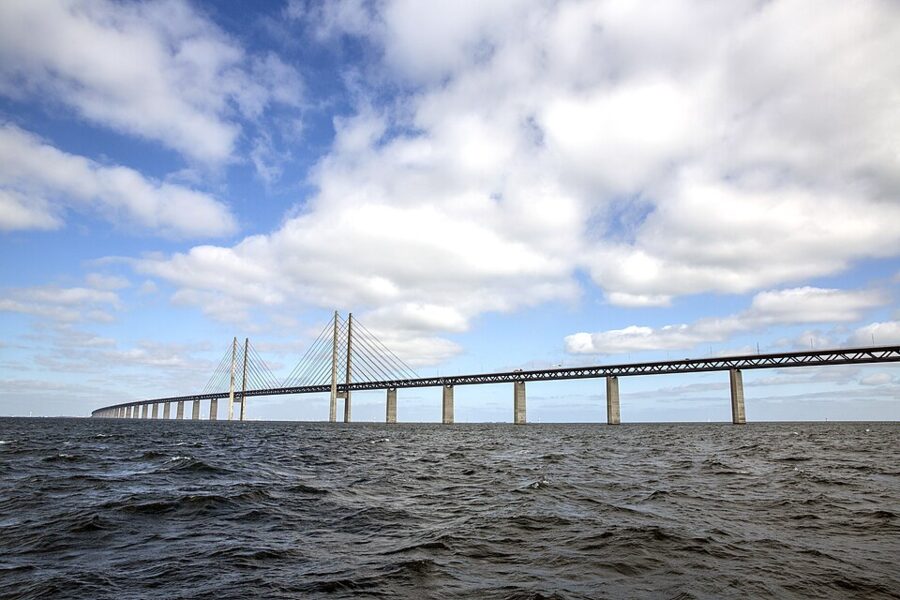

It was built in 1995–99 for 30.1 billion Danish kroner at 2000 prices and is paid for by the tolls. The motorway runs on the upper deck and the railway on the lower one, and there is no way to walk or cycle across. Peberholm is a nature reserve, closed to the public.
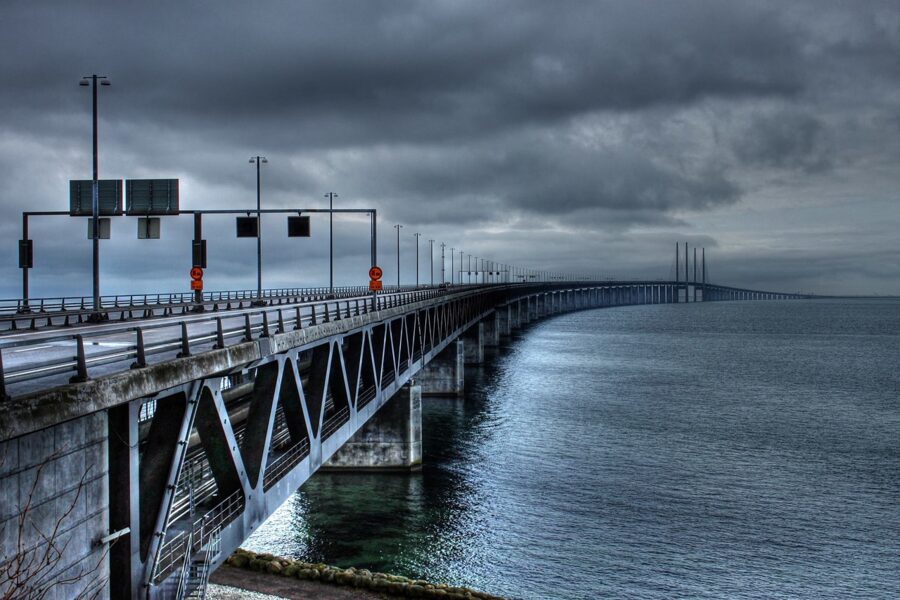
If you drive, the toll for a car up to 6 metres is SEK 690 one way at the toll station, from 14 September 2026. An online ticket bought in advance costs SEK 620 if you sign up for the operator’s newsletter.
The bridge gave its name to a television series. Bron (Danish Broen, English The Bridge) began on SVT on 21 September 2011 with a body left on the bridge exactly on the border, forcing a Swedish detective, Saga Norén, and a Danish one, Martin Rohde, to share the case. It ran for four seasons until February 2018, and the scripts were sold to around 190 countries.
Copenhagen for the day, and the ID check
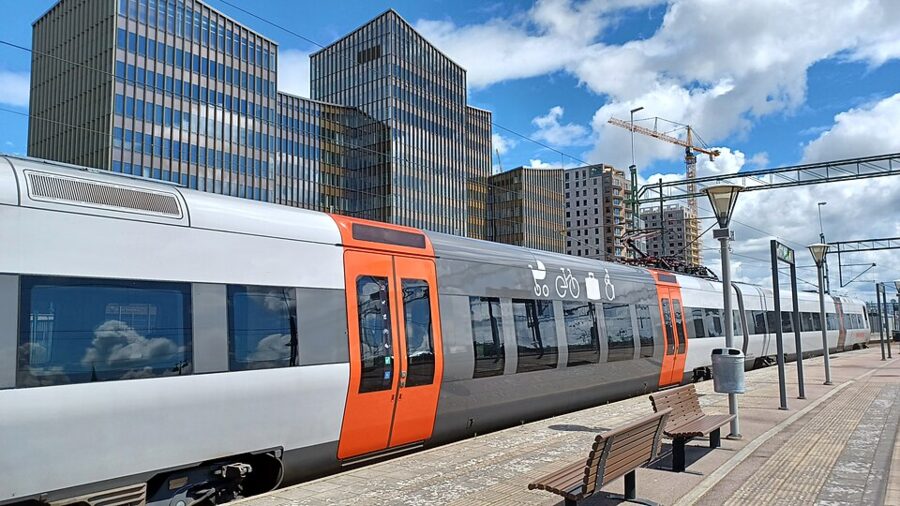
Copenhagen is the obvious day trip, about 35 minutes by Öresundståg, the regional train that runs from Malmö C via Triangeln and Hyllie over the bridge to Copenhagen Airport and Copenhagen Central. Tickets can no longer be bought on board, so buy before you get on, in the Skånetrafiken app or at a machine.
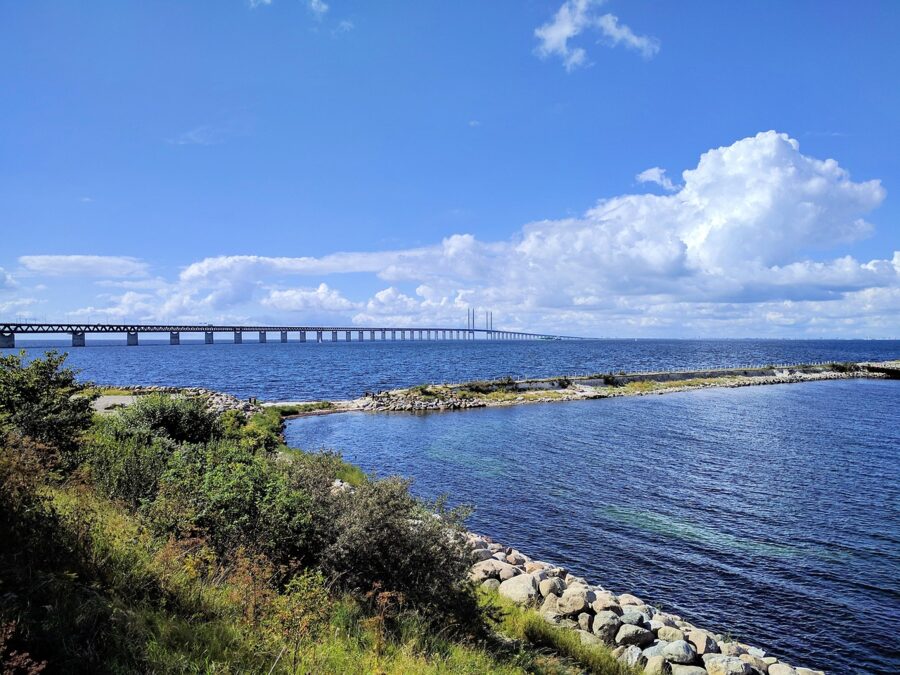
Skånetrafiken prices trips by zone and shows the fare when you search a journey. A single to Denmark is valid for two to five hours depending on distance and includes the Copenhagen Metro within your zones; a 24-hour ticket costs the same as two singles. Skånetrafiken’s Turistbiljett Öresund costs SEK 599 for 48 hours of unlimited travel in Skåne and on the Danish side, Metro included, sold only in the app.
Carry ID. Swedish police carry out border checks on traffic entering Sweden over the bridge, and Danish police say every traveller must be able to show identification. A Nordic driving licence is often enough for Nordic citizens, but the bridge operator advises that a passport is safest; EU citizens can also use a national ID card.
Denmark uses the Danish krone (DKK), worth more than the Swedish krona, so a Copenhagen price tag looks lower than it is. I would pay by card and not bother changing cash.
Day trips by train, bus and ferry
Skåne is compact and well served by Skånetrafiken’s trains and yellow regional buses. For a busy couple of days, Turistbiljett Skåne costs SEK 299 for 48 hours of unlimited travel in the province (SEK 179 for 7- to 19-year-olds), sold in the app.
Lund
Lund was the archbishops’ seat for the whole of the Nordic countries in the 1100s, which is why its cathedral is so large. Lunds domkyrka, a sandstone Romanesque basilica, had its crypt consecrated in 1123 and its high altar in 1145, and its astronomical clock dates from around 1380. It calls itself Sweden’s most visited church, is open daily, and on almost every Saturday at 10:00 there is a free concert, usually on the organ.
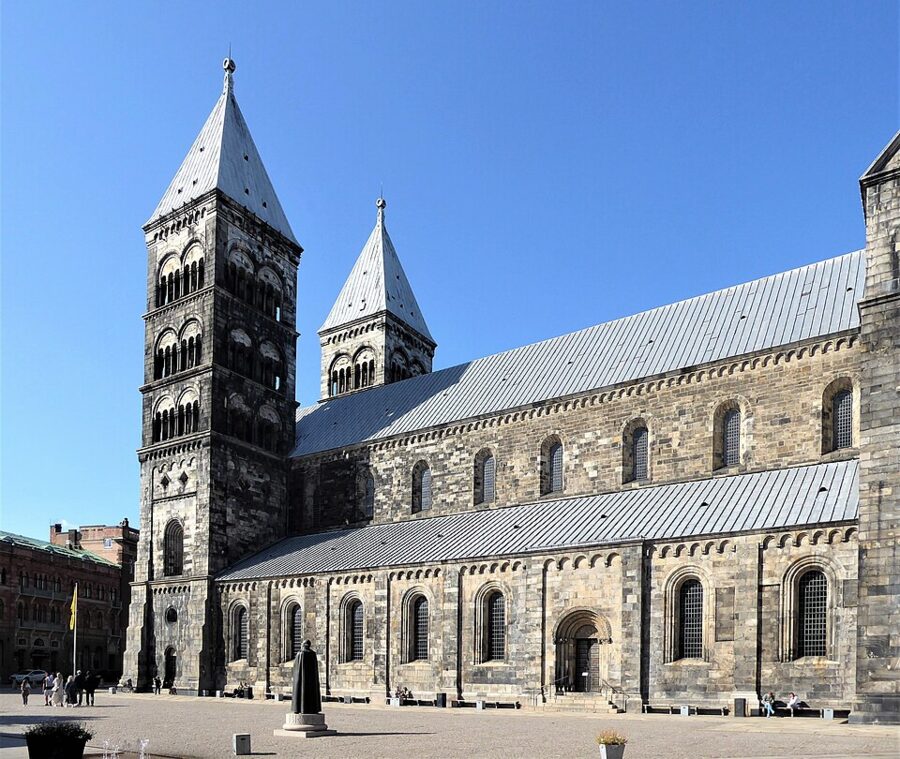

The university was inaugurated in the cathedral in 1668, and Lund’s near 50,000 students still set the pace of the town. Kulturen, the open-air museum, fills two blocks with historic houses, and the botanical garden holds over 7,000 species. Lund is a short hop north on the main line, and its station is in the middle of town.
Skanör and Falsterbo
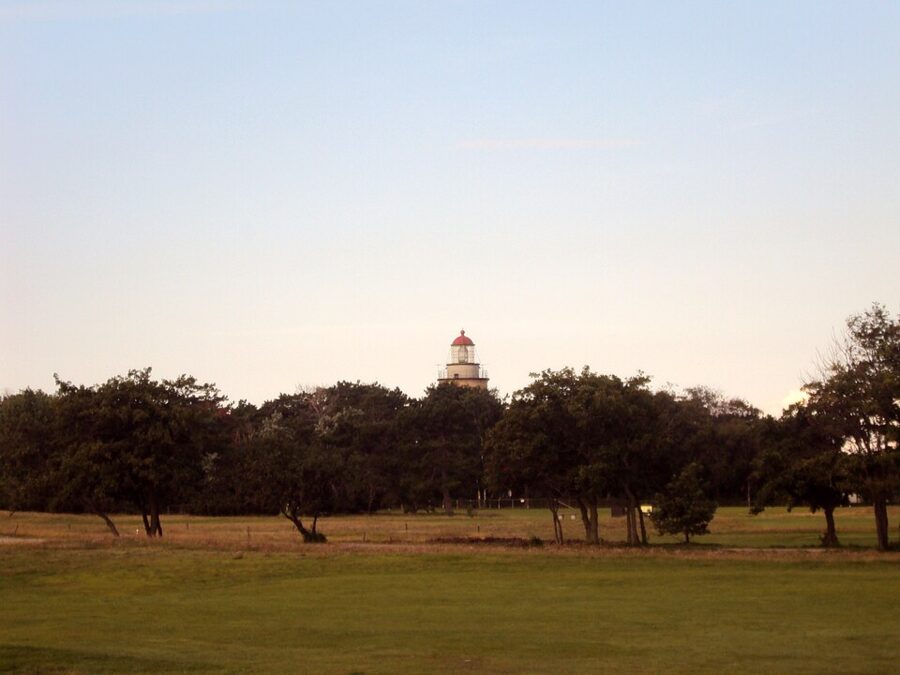
On the tip of the Falsterbo peninsula, Sweden’s south-western corner a little over 30 kilometres from Malmö by road, two medieval towns have grown together. In the Middle Ages the Skåne Market on the shore between them was one of the great herring fairs of northern Europe, drawing German and other foreign merchants every late summer and autumn.
Today it is white beaches, dunes and birds: migrating birds pass over the peninsula and seals swim off it. Falsterbo has Sweden’s oldest links golf course and, every July, the Falsterbo Horse Show. It is flat, so bring or hire a bike.

Österlen and Ales stenar
Österlen is Skåne’s south-east corner: farmland, apple orchards, fishing villages and the old towns of Ystad and Simrishamn, both on the railway east from Malmö. In spring, during Konstrundan, local artists open their studios; in September the apple market at Kivik draws more than 90 growers.
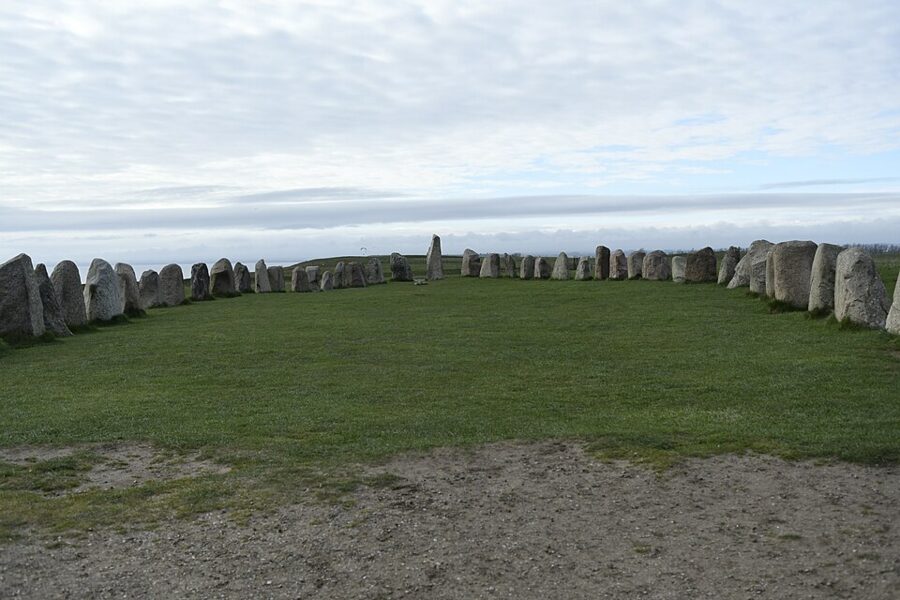

The reason to go is Ales stenar, on the cliff above the fishing village of Kåseberga: 59 standing stones in the outline of a ship, 67 metres long and 19 wide, the largest surviving ship setting in Sweden. It is usually dated to the Vendel period, around 540 to 790. On a quiet November day you may well have it to yourself.
Ven
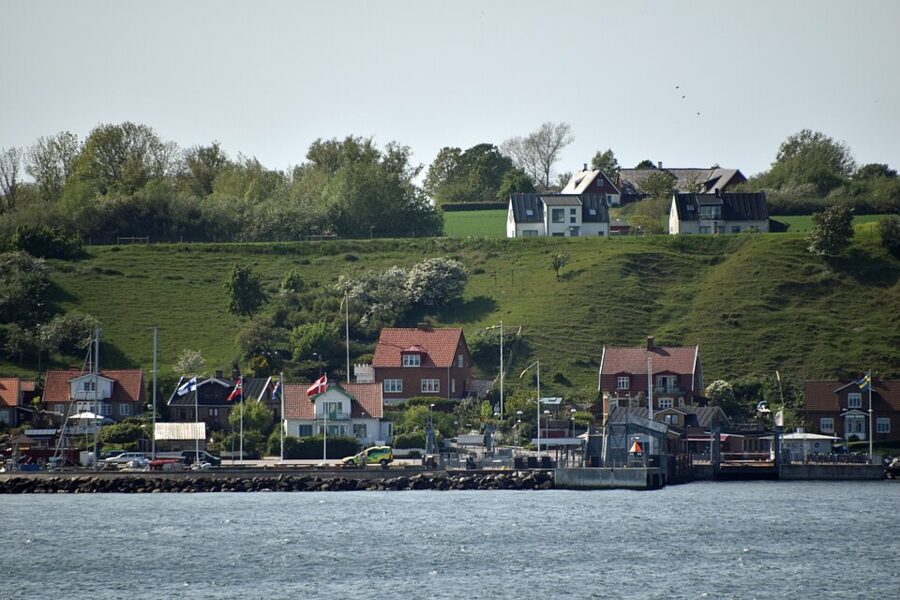
Ven, a small island in the Öresund off Landskrona, has cliffs dropping into the sea, white beaches, cafés and hills best tackled on the yellow hire bikes it is known for. The astronomer Tycho Brahe built his observatories here, and the remains of Stjerneborg, his underground one, are still there.
The Ventrafiken ferry crosses from Skeppsbron in Landskrona to Bäckviken in about 30 minutes. Boats leave Landskrona at 06:05 (weekdays), 08:20, 10:00, 11:30, 14:15, 16:00, 17:35 and 20:15, and the last boat back leaves Ven at 20:55. An adult single is SEK 99 until 30 April 2027, and booking ahead is recommended in high season.

Trelleborg
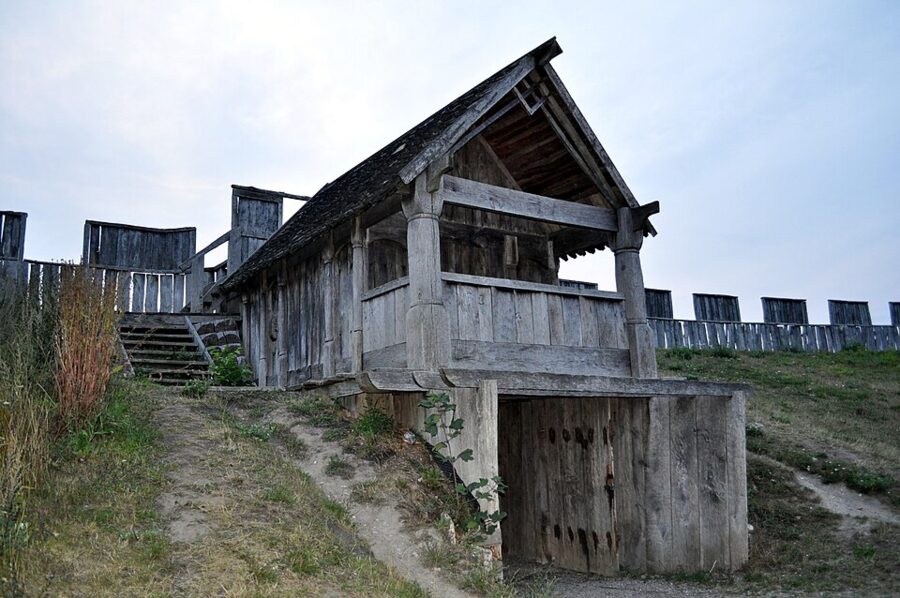
Trelleborg, on the south coast, takes its name from a Viking fort. When an old sugar mill site was cleared for flats in 1988, archaeologists found a ring fort with an inner diameter of 125 metres, one of the circular fortresses built under Harald Bluetooth and dated to around 974 to 980. A quarter of it was rebuilt in oak in 1995.

Getting there
Most people arrive through Copenhagen Airport at Kastrup, the biggest airport in the Nordic countries, which has its own station. Öresundståg trains run from there across the bridge to Malmö C in under 30 minutes; buy the ticket before you board.
Malmö Airport, formerly Sturup, lies about 28 kilometres east of the city. Vy Flygbussarna buses connect it with Malmö C in 40 to 50 minutes, timed to the flights, from SEK 139, leaving from stop K at the central station.
From the rest of Sweden, SJ trains reach Malmö from Stockholm in about four and a half hours and from Gothenburg in about three.
Getting around
On foot, the centre is easy, and the beach is about ten minutes from the old town. Beyond that, ride: the city has some 515 kilometres of cycle paths. Malmö by Bike, the city’s bike-share, sells 24- and 72-hour passes, and Donkey Republic also rents bikes. You cannot take a bike on a city bus.
The green city buses are run for Skånetrafiken, the regional transport authority. Buy a ticket in the app or tap a bank card on the reader as you board; tapping is quickest, but none of the discounts for children, students or seniors apply. The trains also stop at Triangeln and Hyllie, handy for Malmö Arena and the Emporia shopping centre.
Where to stay, by area
Around Malmö C and Gamla staden. The most practical base, with trains to Copenhagen on the doorstep and the old town and castle on foot. Clarion Hotel Malmö Live, next to the station, has a restaurant on its 25th floor; MJ’s, in the old town, combines a hotel with a bar that fills up after work.
Västra Hamnen. Quieter, newer and next to the sea, with the evening swim on the doorstep. Best Western Plus Park City Malmö is close to Turning Torso and the promenade.
Möllevången and Davidshall. The best eating and drinking within a short walk, and weekend noise to match.
Hyllie. A new district on the Copenhagen line with Malmö Arena and Emporia: convenient for a concert or an early train, otherwise on the edge of town.
What it costs in SEK
Plenty of the best things in Malmö are free: the beach, the parks, the Konsthall, Lund cathedral, the skating in Folkets Park in winter. Prices were current in November 2026.
| Item | Price |
|---|---|
| Ribersborgs kallbadhus, single visit | SEK 90 (under 12 free) |
| Malmö museum, combined ticket | SEK 100 (under 20 free) |
| Moderna Museet Malmö | SEK 50 (25 and under free) |
| Malmö Konsthall | Free |
| Turistbiljett Skåne, 48 hours | SEK 299 |
| Turistbiljett Öresund, 48 hours | SEK 599 |
| Airport bus, Malmö Airport to Malmö C | from SEK 139 |
| Ven ferry, adult single | SEK 99 |
| Öresund Bridge toll, car, at the toll station | SEK 690 one way |
Two or more people travelling together on one Skånetrafiken ticket get 25 per cent off within Skåne and 20 per cent off to Denmark, and children up to six travel free in Skåne.
When to go
Malmö is mild by Swedish standards, with an average annual temperature of about 8.4 °C in the centre, but it is windy, and winters are mostly grey. At midsummer the sun is up from about 04:25 to 21:55; at the December solstice from about 08:35 to 15:40, short but civilised next to anywhere further north.
Late spring and early autumn are the best compromise: warm enough to cycle, quiet on Ribban, and Österlen at its best. Winter has its own reasons: the Christmas market at the castle in late November, the ice rinks in Folkets Park, and a cold sea dip that makes more sense in January than in July.
Whenever you come, end a day where the city changed shape. Start at the foot of Turning Torso, a short walk from where the crane once worked, and walk the seafront south to the kallbadhus as the light goes. Pay your SEK 90, take the cold sea first, then sit in the sauna facing Denmark while the lights come on along the bridge.